Agricultural Technology: A Technique for Baling Raw Cotton to Prevent Impurities
By yash chouhan 2026-05-07 11:34:49
Innovative Cotton Baling Technology for Reducing Contamination in Raw Cotton
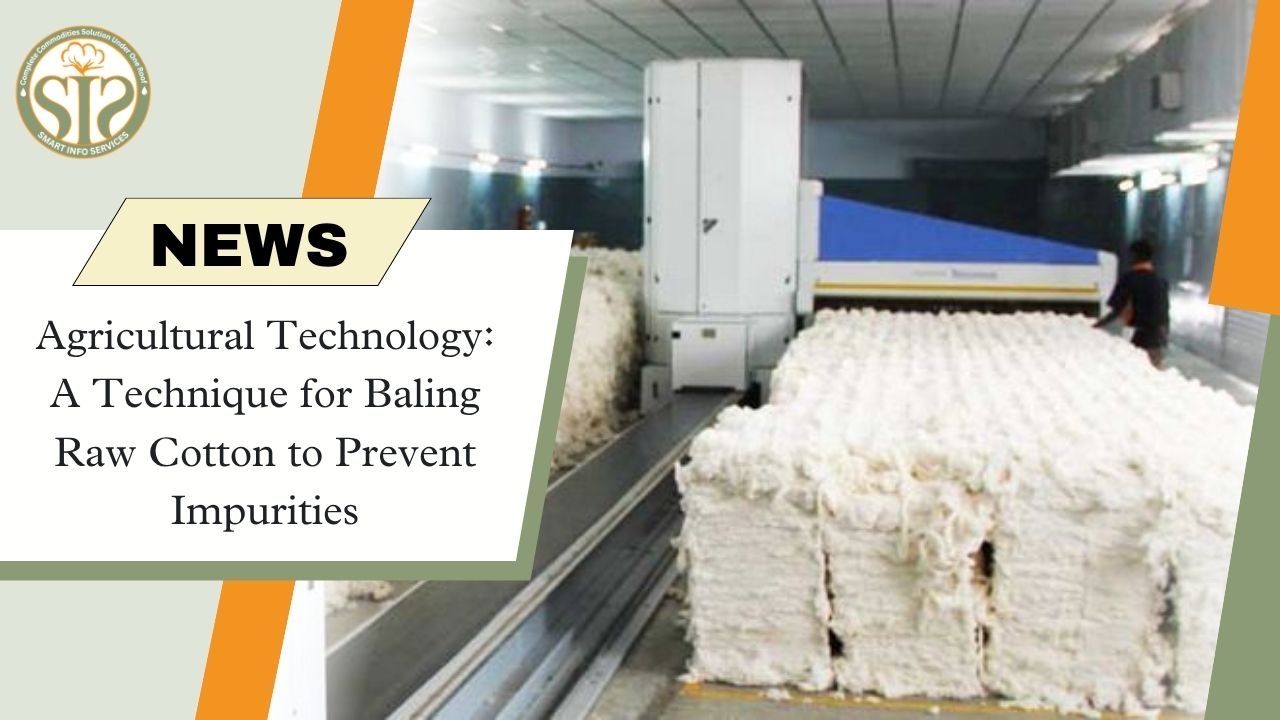
Rising levels of impurities have become a serious challenge within the cotton processing industry. Removing these contaminants requires expensive machinery, which drives up production costs and negatively impacts farmers' incomes. To address this issue, Krishna Somani—a young innovator from Parbhani (Maharashtra)—has developed an innovative machine capable of baling raw cotton directly in the field itself.
A Memorandum of Understanding (MoU) has been signed with the Central Institute for Research on Cotton Technology (Nagpur) for the further upgradation and testing of this prototype machine. This institute stands as a leading research center in the field of cotton technology.
Background of the Problem
Cotton cultivation in India spans an area of approximately 13 million hectares, with Maharashtra making a significant contribution to this total. In India, cotton harvesting is typically carried out in a phased manner (usually 3 to 4 times). Farmers often store their entire harvest at home for months on end so they can sell their entire yield at once. During this storage period:
Dust, debris, and other impurities get mixed into the cotton.
The risk of infestation by rats and pests increases.
There is a decline in both quality and weight (resulting in a loss of up to 5–6 kg per quintal).
Fire hazards and health-related risks also escalate.
The Solution: On-Farm Baling Technology
Designed to tackle these challenges, this machine bales the cotton immediately after it has been harvested. This process offers the following benefits:
The cotton is not left exposed, thereby minimizing the accumulation of impurities.
Storage becomes both easier and safer.
Transportation costs and labor requirements are reduced.
While large bales weighing 2.5 tons are typically produced in other countries, this Indian technology produces smaller, lighter bales weighing approximately 35 kilograms—making them easy to lift and handle manually.
Technical Specifications
Initially electrically powered; now, tractor (PTO)-driven units are available.
Production Capacity: Approximately 40 bales per hour.
Developed through the modification of a silage machine (Total development cost: ~₹9–10 lakhs).
Current Machine Price: ₹7–7.5 lakhs.
Baling Cost per Quintal: ₹100–₹150.
Storage and Economic Benefits
Due to the uniform size of the bales, storage becomes significantly more organized—a 10×10-foot room can accommodate 35–40 quintals of cotton.
In one instance involving a farmer, the use of baling and warehouse storage—which facilitated securing a better market price—resulted in an additional profit of ₹1.1 lakhs on a total yield of 110 quintals.
Institutional Collaboration and Future Prospects
Partnerships have been established with the Central Institute for Research on Cotton Technology and Bajaj Industries for the development and dissemination of this technology. Additionally, financial assistance amounting to ₹20 lakhs has been provided under the ‘RAFTAAR’ scheme.
According to the Institute's Director, Dr. S. K. Shukla, efforts are currently underway to incorporate this machine into government subsidy schemes, thereby ensuring that this technology reaches a wider base of farmers.
Conclusion
The technology for field-level baling of raw cotton not only minimizes impurities but also enhances the efficiency of storage, transportation, and marketing. Although awareness regarding this technology remains limited at present, it holds the potential to bring about a transformative change within the cotton industry in the future.