Maharashtra: Cotton sowing begins amidst scanty rainfall; acreage likely to shrink in Ahilyanagar
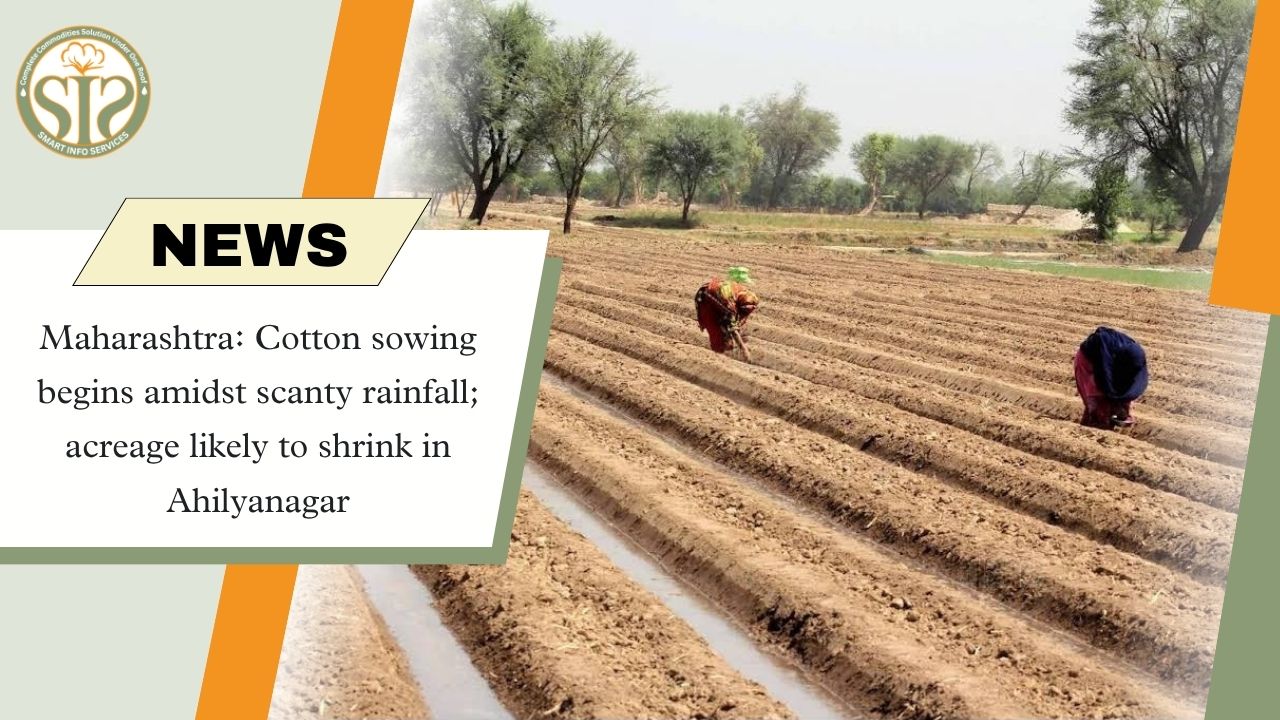
It has been nearly a month since the onset of the monsoon in Maharashtra's Ahilyanagar district, yet the lack of widespread, normal rainfall is affecting Kharif season sowing. However, following light showers over the past two days, some farmers have commenced cotton sowing, relying on irrigation facilities. The Agriculture Department anticipates that if there is no significant rainfall in the coming days, the total area under cotton cultivation in the district could decrease this year.
Cotton sowing has begun on a limited scale in talukas such as Shevgaon, Pathardi, Rahuri, and Nevasa. However, the majority of farmers are still waiting for adequate rainfall. Farmers point out that sowing in soil with low moisture levels carries the risk of seed failure, potentially necessitating re-sowing. Given the high cost of cotton seeds, re-sowing would impose an additional financial burden on farmers.
Cotton cultivation acreage in Ahilyanagar district has steadily increased over the past few years. While cotton was previously grown in a limited area, farmers in sugarcane-growing regions have also recently turned towards cotton cultivation. Currently, cotton is being cultivated in several areas, including Ahilyanagar, Shevgaon, Pathardi, Nevasa, Jamkhed, Karjat, and Kopargaon. The average area under cotton in the district over the last three years has been recorded at 122,086 hectares, whereas last year, cotton was cultivated across approximately 150,000 hectares.
So far, the highest cotton sowing has been recorded in Rahuri taluka, covering 5,045 hectares. This is followed by Nevasa (1,551 hectares), Shrigonda (571 hectares), Karjat (318 hectares), Shevgaon (300 hectares), and Shrirampur (238 hectares). Agricultural experts state that cotton sowing usually gains momentum with good rainfall during the Mrig Nakshatra; however, the slow progress of the monsoon this year has heightened farmers' concerns. Over the past two years, farmers suffered significant financial losses due to crop damage caused by excessive rain and the inability to secure fair market prices. Consequently, they are now hoping for both timely, adequate rainfall and better market rates for cotton this year. If sufficient rain does not arrive soon, the area under cotton cultivation in the district could be lower than that of the previous year.