“Cotton crisis in Maharashtra: Declining cultivation and changing attitude of farmers”
By yash chouhan 2026-04-20 12:09:17
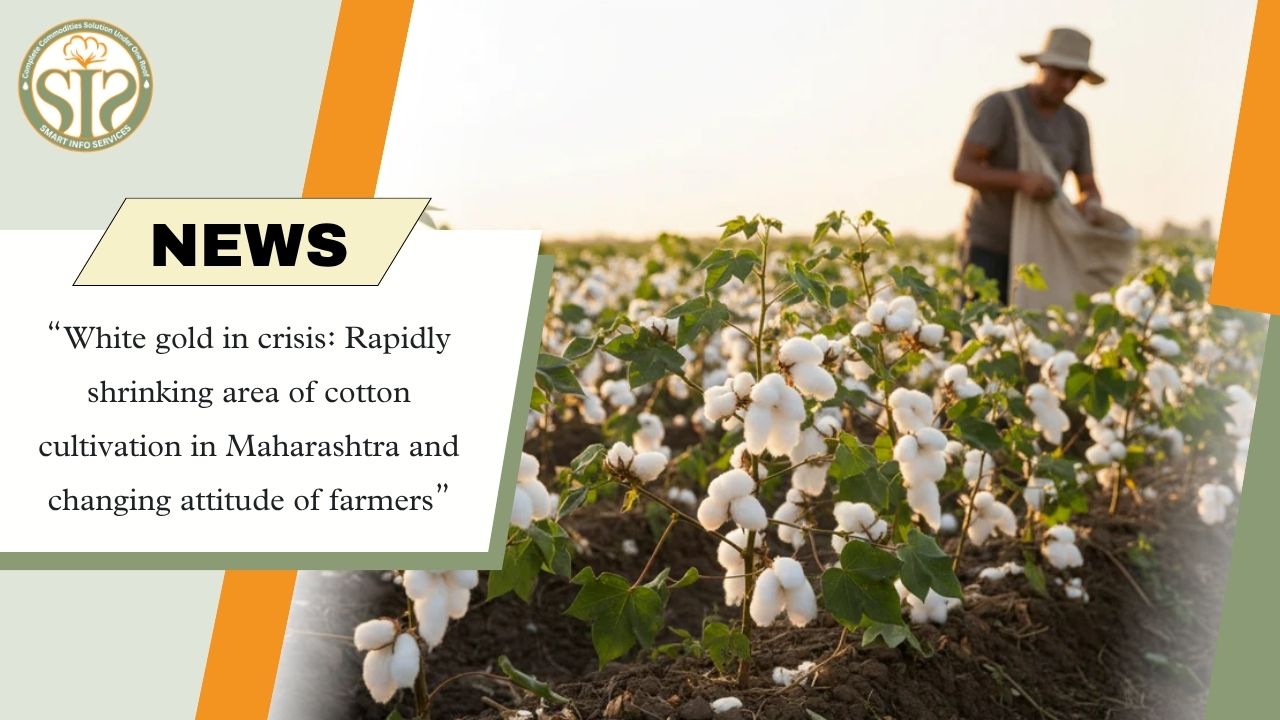
“White gold in crisis: Rapidly shrinking area of cotton cultivation in Maharashtra and changing attitude of farmers”
Cotton cultivation, once known as “white gold” in the Marathwada and Vidarbha regions of Maharashtra, is now going through a serious crisis. In the areas which were once considered the major “cotton belt” of the country, especially Dharashiv and surrounding districts, the area under cotton is decreasing rapidly and in many places it is almost on the verge of extinction.
The situation is extremely worrying in Dharashiv district, where cotton cultivation is now left in only 172 hectares of the 5.5 lakh hectare Kharif area. It has reached even lower levels in Kalamb taluka, where cotton is being grown in only 5 hectares out of 78,000 hectares. Where earlier this crop was mainly grown in thousands of hectares, now it has registered a decline of more than 99 percent. In other districts including Jalgaon, the area under cotton has been continuously decreasing for the last few years.
Cotton, which became the major cash crop for farmers in the 1990s, is now proving to be a persistent loss-making business. Its cultivation costs around ₹ 35,000 per acre. Rising wage rates, a heavily labor-dependent harvesting system and rising expenditure on pesticides are increasing the burden on farmers. Invasion of pests like pink bollworm, irregular rainfall, climate change and declining soil fertility have further affected production.
Although the government has consistently increased the minimum support price (MSP) of cotton—from ₹5,726 in 2021-22 to ₹7,521 in 2024-25—but farmers say the increase is not enough to keep up with rising costs. Many times the confidence of farmers has weakened due to getting lower prices than MSP in the market. Also the productivity in Maharashtra is only about 350 kg per hectare, which is less than the national average.
Due to these circumstances, farmers are increasingly turning to crops like soybean and corn, because these have lower costs and yield income relatively quickly. The impact of the decline in cotton production is not limited to the fields only, but it is also affecting the ginning industry, employment and the supply chain of the textile industry.
Experts believe that if policies like mechanization, better seeds, effective pest control and stable market prices are not addressed, this crop may completely disappear from many areas in the coming years.