


STAY UPDATED WITH COTTON UPDATES ON WHATSAPP AT AS LOW AS 6/- PER DAY

Start Your 7 Days Free Trial Today

News Details

Cotton No Longer the Top-Earning Crop in Kurnool Region

By 2024-06-27 18:34:05
First slide


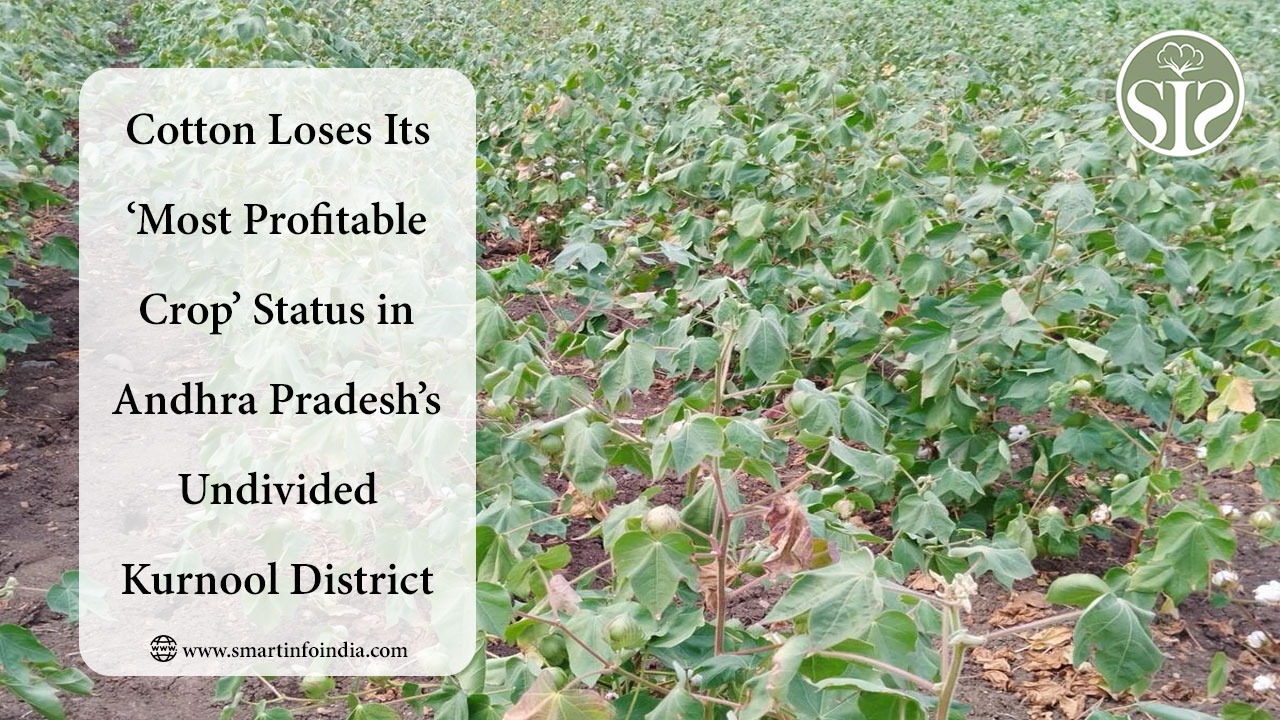
Cotton Loses ‘Most Profitable Crop’ Tag in Undivided Kurnool District


Cotton cultivation in the undivided Kurnool district of Andhra Pradesh has declined sharply in recent years, raising concerns among farmers as well as agricultural experts.


Once contributing nearly 70% of the state’s total cotton output, the region was known for its naturally colored cotton with strong export potential. The traditional Mungari variety, cultivated since the early 1900s, earned the reputation of ‘white gold’. During the 1990s, farmers achieved average yields of 10–25 quintals per acre, supported by popular hybrids like Mallika, Bunny, Brahma, and NHH-44. The introduction of Bt cotton between 2002 and 2006 initially boosted expectations.


However, cotton has gradually lost its position as the most profitable crop due to multiple challenges. Following the reorganization of Kurnool district, a large portion of cotton-growing areas shifted to rainfed zones, leading to a significant drop in acreage. In Kurnool, the cultivated area declined by 26%, from 2.50 lakh hectares to 1.83 lakh hectares in 2023-24. Nandyal saw an even sharper fall of around 70%, from 25,586 hectares to just 7,932 hectares.


Despite being a cash crop with attractive prices, cotton has become less viable over the past decade. Erratic weather patterns—such as delayed monsoon onset, early withdrawal, and unseasonal cyclones during October-November—have negatively impacted production, largely due to climate change.

Pest attacks have further worsened the situation. The incidence of pink bollworm has increased significantly, as pests have developed resistance to Bt cotton. In addition, tobacco streak virus has affected crops in both Kurnool and Nandyal districts, according to agricultural scientists.

As a result, many farmers are shifting to short-duration and more reliable crops like maize and soybean. This trend is particularly visible in Nandyal, where assured irrigation from projects like the Kurnool-Cuddapah Canal and Telugu Ganga Canal supports alternative cropping. Meanwhile, farmers in rainfed Kurnool continue to struggle with pest-related losses and limited options.


Experts suggest several measures to revive cotton cultivation, including adopting early-maturing Bt hybrids (around 150 days), maintaining a strict six-month crop-free period, and using pest control techniques such as mating disruption technology to manage pink bollworm during the off-season.


Read More :> SISPA Urges CCI to Prioritize Cotton Sales to MSME Mills



Videos