Cotton Prices Rise as Lower Sowing Area and Global Rates Support Market
By jayesh chouhan 2026-07-15 14:46:26
Cotton prices rise due to reduced cultivation area and higher global prices
Indian cotton prices have strengthened amidst a surge in global rates and concerns over reduced cultivation acreage caused by scanty rainfall. According to recent data from the Ministry of Agriculture, the area under cotton cultivation has dropped by 15 percent to 79.54 lakh hectares (lh) as of July 10, down from 93.95 lakh hectares previously.
Over the past two days, the Cotton Corporation of India (CCI) has raised its prices by ₹800 per candy (356 kg), while demand from both mills and traders remains robust.
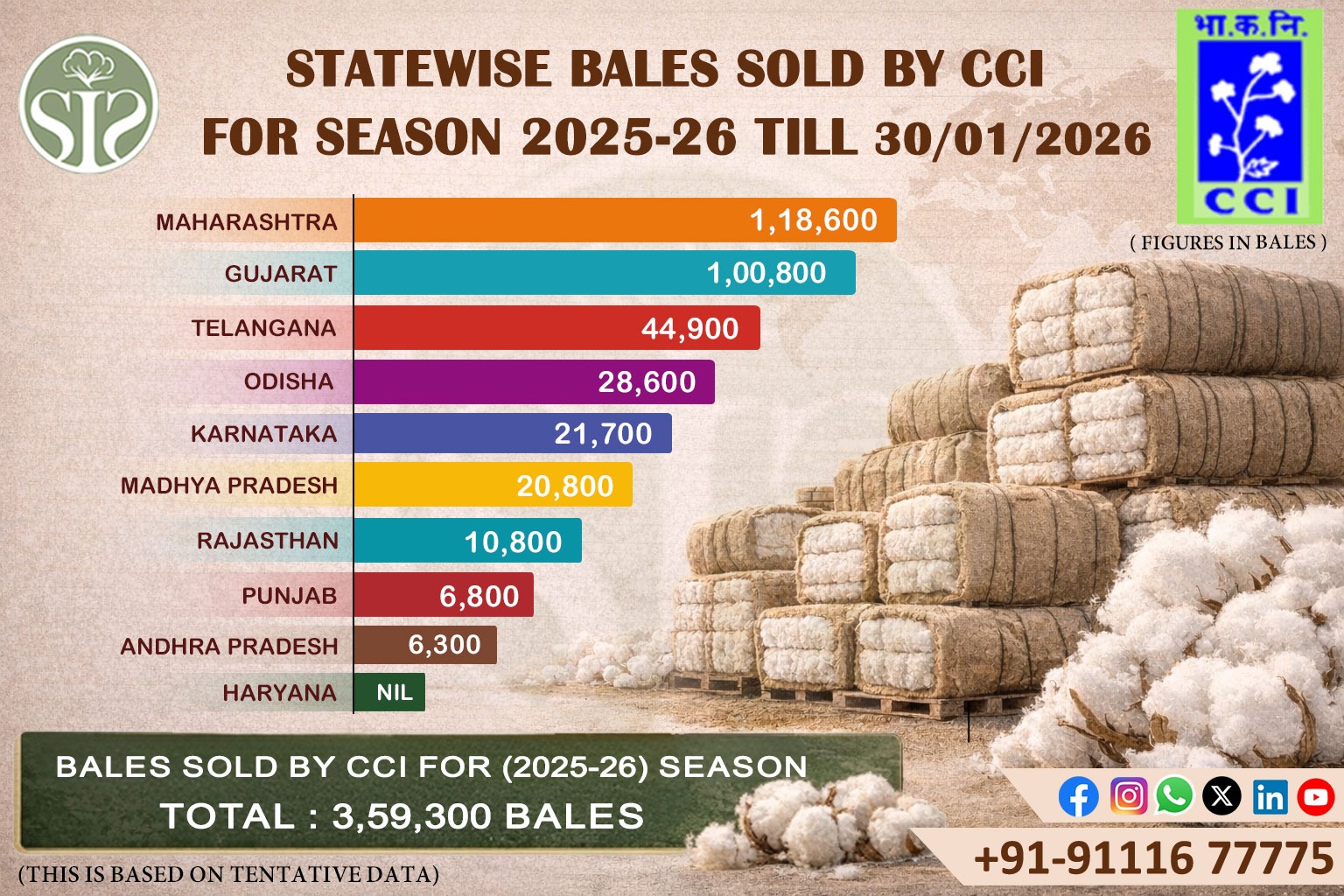
Ramanuj Das Boob, a sourcing agent in Raichur, said, "Market supply is low, and prices in New York have also risen; futures prices on the ICE have climbed from around 75-76 cents per pound to approximately 81-82 cents." He added, "Uncertainty regarding the upcoming crop due to the delayed monsoon is impacting the market." He further noted that the CCI is witnessing strong demand, with sales of 1.2 lakh bales on Monday and 1.5 lakh bales on Tuesday.
Das Boob mentioned that multinational companies are also offloading their stocks, with their prices running about ₹1,000 per candy higher than the CCI's rates.
He further stated that the cotton crops that have already sprouted require rainfall. "There is a lack of rain in parts of Karnataka and Telangana where sowing has already taken place. If it doesn't rain now, it could lead to difficulties," he said.
Atul Ganatra, Chairman of the Crop Committee at the Cotton Association of India (CAI)—the apex body for the cotton trade—remains optimistic about cotton prospects despite concerns over deficient rainfall. He said, "El Niño will not impact the cotton crop. In fact, it will help increase the cotton sowing area. Lower rainfall will result in better yield, quality, and quantity."
Ganatra stated, "Cotton sowing has been completed on approximately 8 million hectares so far, compared to 8.6 million hectares during the same period last year. Sowing will exceed 10 million hectares by July 25, as almost all cotton-growing regions have received good rainfall. Farmers are rapidly sowing cotton due to the current lull in the rains." In South India, the cotton acreage this year is 20 percent higher than last year. Ganatra added, "Due to the delayed rainfall, farmers are left with cotton sowing as their primary option. Consequently, total cotton sowing is expected to reach 12.5–13 million hectares, an increase of about 10–15 percent over last year." Ready Availability
Ganatra noted that large mills are purchasing cotton at ₹64,000, even though they already hold stocks sufficient for 3–4 months. He said, "Since they had purchased at lower rates earlier, they are buying at current prices as well to average out their costs." Major Indian mills hold cotton stocks sufficient until November, with some holding supplies lasting until December 31.
Rajkot-based broker Anand Popat stated in his weekly newsletter that overall cotton availability in India remains robust. However, premium-quality cotton is relatively scarce, and a significant portion of the available stock is held by the CCI and multinational trading companies. Popat remarked, "This could keep cotton prices firm for the remainder of the season."
Daily cotton arrivals have dropped to approximately 7,000–8,000 bales. He stated that demand from spinning mills remains steady, while a gradual improvement in yarn demand has been observed in both domestic and export markets.