Cotton Procurement Policy to Change: Bhavantar Scheme to Replace MSP
By yash chouhan 2026-04-15 11:59:26
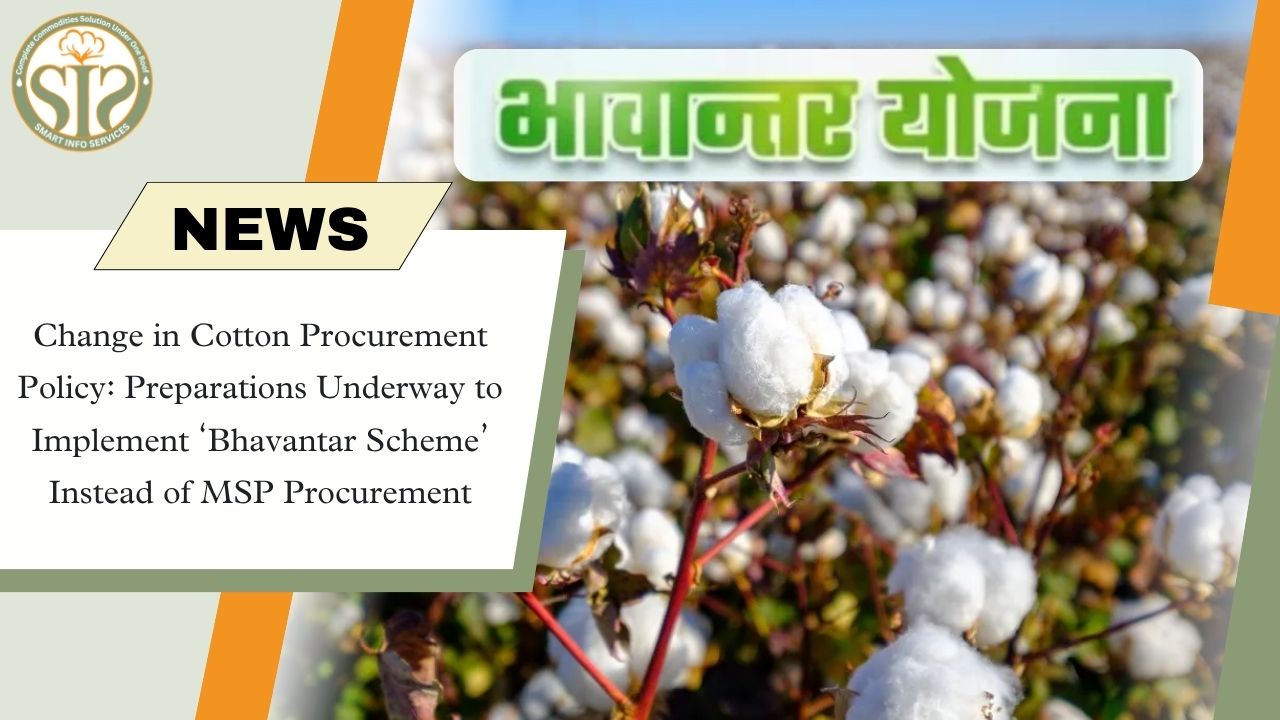
Change in Cotton Procurement Policy: Preparations Underway to Implement ‘Bhavantar Scheme’ Instead of MSP Procurement
A major policy update regarding the cotton market has emerged. The Cotton Corporation of India (CCI) is now taking steps toward implementing the ‘Bhavantar Scheme’ (Price Difference Scheme) instead of directly procuring cotton at the Minimum Support Price (MSP). A pilot project for this new system is set to be launched in Andhra Pradesh and Telangana during the 2026-27 season. The industry has welcomed this proposal and has demanded its implementation across the entire country.
Until now, the government provided a safety net to farmers by procuring cotton at the MSP through the CCI whenever market prices dipped. However, over the last two seasons, the CCI faced immense pressure and was compelled to procure over 100 lakh bales of cotton. Despite this effort, not all farmers were able to avail the benefits of the MSP.
In light of this challenge, a meeting was held in December 2024, chaired by NITI Aayog member Ramesh Chand, to deliberate on how to ensure better benefits reach the farmers. During this meeting, the decision was taken to move forward with the ‘Bhavantar Scheme.’
What is the Bhavantar Scheme?
Under this scheme, farmers will sell their cotton in the open market. If the prevailing market price falls below the MSP, the difference between the two prices will be deposited directly into the farmer's account via DBT (Direct Benefit Transfer).
For instance, if the MSP is ₹8,110 per quintal and a farmer receives ₹7,000 in the open market, the government will directly transfer the difference of ₹1,110 into their bank account.
How will payments be processed?
This scheme will be implemented under the Central Government's PM-AASHA program. Registered farmers will be able to sell their cotton at mandis (agricultural markets) at their own convenience, and the amount representing the price difference will be credited directly to their bank accounts.
What are the concerns?
Experts believe that while the scheme appears effective on paper, its ultimate success will depend heavily on its effective implementation.
Rather than relying solely on the Bhavantar scheme, the option of MSP-based procurement should also remain available.
Imposing a specific time limit on the scheme could increase the potential for market manipulation. Benefits for the Industry and Farmers
Farmers will have the freedom to sell their produce at any time, according to their needs.
They will receive the benefit of the MSP even if market prices fall.
Industries will have access to cotton at prevailing market rates. This could make cotton, yarn, and textile exports more competitive in the global market.
Overall, the ‘Bhavantar Scheme’ has the potential to bring about a significant transformation in the cotton market; however, its success will depend on its transparent and effective implementation.