Cotton Sowing Gains Momentum in July, Still Behind Last Year Despite Better Monsoon
By jayesh chouhan 2026-07-11 12:08:36
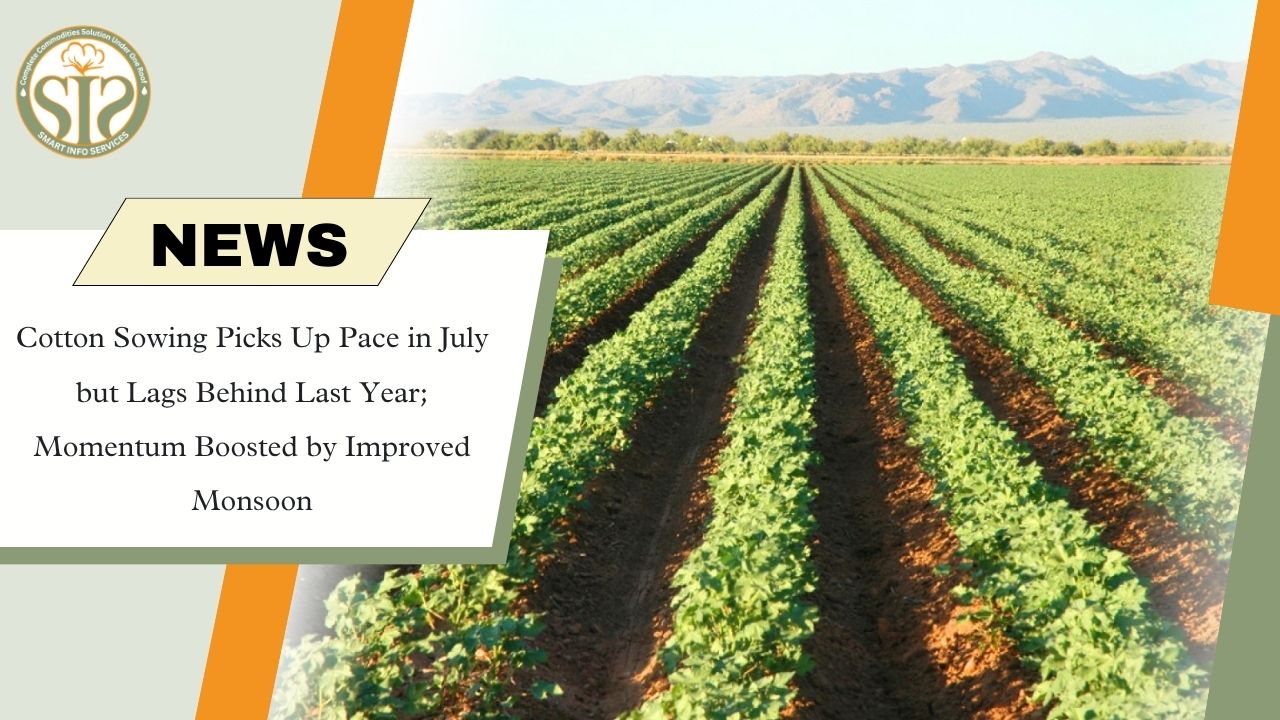
Cotton Sowing Picks Up Pace in July but Lags Behind Last Year; Momentum Boosted by Improved Monsoon
New Delhi: Cotton sowing across the country has accelerated in July following the revival of the southwest monsoon. However, the total sown area remains lower compared to the previous year. Agriculture Commissioner P.K. Singh stated that improved rainfall has boosted the pace of sowing in major cotton-producing states, and this gap is expected to narrow further in the coming days.
According to the Agriculture Commissioner, cotton had been sown across 63.18 lakh hectares by July 5, whereas the figure stood at 82 lakh hectares during the same period last year. While the season started slowly, farmers have ramped up sowing activities following good rainfall in July.
He noted that cotton sowing in India takes place at different times across various states. It begins in Punjab and Haryana before extending to Gujarat, Maharashtra, Madhya Pradesh, Karnataka, Telangana, Andhra Pradesh, and Tamil Nadu. Under normal circumstances, cotton sowing concludes by July 15; however, due to the delayed monsoon this year, the deadline has been extended to July 30.
An agricultural trader from Ahmedabad reported a significant surge in cotton sowing recently, driven by good rainfall in Gujarat, Maharashtra, Madhya Pradesh, and Karnataka. He mentioned that some farmers are shifting from paddy to cotton and pulses in anticipation of better prices. Meanwhile, in Maharashtra, many farmers have resumed cotton sowing after reporting poor germination of soybean crops.
Gujarat, Maharashtra, and the central region of Madhya Pradesh are the most critical areas among India's major cotton-producing regions. Other key producing states include Punjab, Haryana, Rajasthan, Telangana, Andhra Pradesh, Karnataka, and Tamil Nadu. According to the latest estimates from the Ministry of Agriculture, the country's cotton production for the year 2025-26 is projected at 290.91 lakh bales (170 kg per bale), down from 297.24 lakh bales in the previous year.
P.K. Singh noted that the pace of sowing during the Kharif season is highest in July. While sowing covers an average of approximately 50 lakh hectares per week in June, this figure rises to between 200 and 250 lakh hectares per week in July. He stated that an accurate assessment of production and productivity would only be possible after sowing is completed. The government verifies sowing data through preliminary estimates, remote sensing, and block-level digital crop surveys.