Cotton Sowing Picks Up Pace; Target Likely to be Met by July 30 – Atulbhai Ganatra
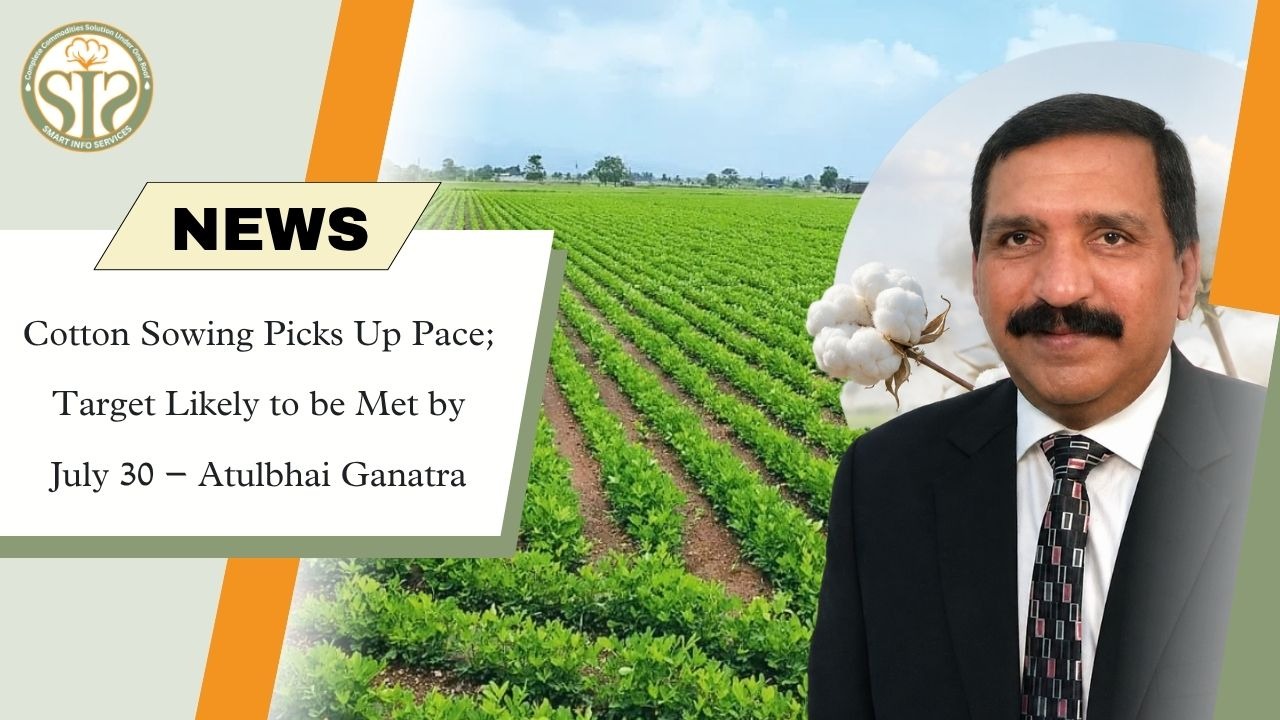
Mr. Atulbhai Ganatra, CMD of Radha Laxmi Group and former CAI President, shared key insights on the "Impact of Monsoon on Cotton Sowing & Farmers' Mood for Crop Switch" during an interview with CNBC Awaaz on July 9, 2026.
He noted that while there had been earlier discussions regarding a 20–30% deficit in Kharif crop sowing, the situation has improved significantly following good and widespread rainfall across various regions of the country in recent days.
According to data available as of July 9, 2026, cotton sowing had covered approximately 7.2 million hectares (72 lakh hectares) by the same period last year; in the current season, the figure has reached approximately 6.6 million hectares (66 lakh hectares). This means the sown area is now lagging behind last year's figures by only about 9%.
He further mentioned that good rainfall has been recorded in the Central and South Zones over the past few days. According to the Meteorological Department, a "pause period" in rainfall is expected over the next 8–10 days, providing farmers with ample opportunity to accelerate sowing operations. Consequently, the total cotton sowing acreage could rise well beyond initial estimates.
He highlighted that record sales of cotton seeds have taken place this year, indicating that farmers possess adequate seed stocks. Farmers are simply waiting for the rain to subside and for field conditions to become favorable so they can rapidly complete the sowing process. He estimates that the national target for cotton sowing could be achieved by July 30.
The Government of India has set a cotton sowing target of 12.5–13.0 million hectares (125–130 lakh hectares) for the current year. Given the prevailing conditions, it is expected that cotton sowing across approximately 10 million hectares (100 lakh hectares) will be completed by July 20–25. Mr. Ganatra stated that it is well known that when the monsoon is delayed or rainfall is deficient, farmers prioritize cotton over other Kharif crops; this is because cotton can be successfully cultivated with relatively less water compared to crops like soybean, sugarcane, maize, and groundnut.
He also noted that the Minimum Support Price (MSP) for cotton has been raised by approximately 7% this year, whereas the MSP for other crops like groundnut has seen an increase of only about 3%. Furthermore, in the previous season, farmers fetched market prices of up to ₹10,000 per quintal for cotton. Reports indicate that farmers have purchased record quantities of cotton seeds for sowing this year, clearly signaling a natural shift towards cotton cultivation this season.
He also mentioned that cotton sowing in South India (South Zone) has so far been about 20% higher than in the same period last year, reflecting a positive trend among farmers and favorable conditions.
He specifically highlighted that the cotton sowing window in Gujarat remains open until August 15. Therefore, considering current conditions, farmer interest, and record seed sales, it is estimated that the total area under cotton cultivation this season could be 10–15% higher than last year.