Demand to completely eliminate import duty on cotton intensifies.
By yash chouhan 2026-05-08 18:25:09
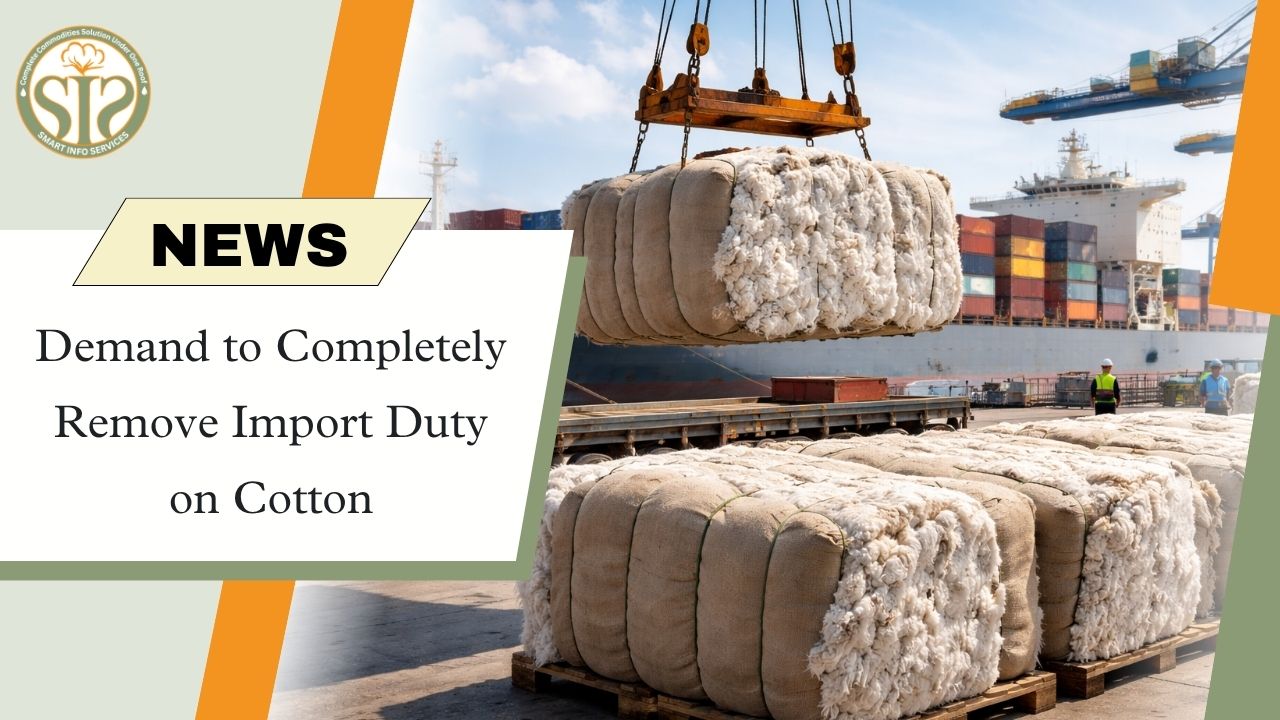
‘Demand to Completely Remove Import Duty on Cotton’
A new study released by the Confederation of Indian Textile Industry (CITI) calls for the complete elimination of the 11% import duty currently levied on cotton.
Titled "Economic Analysis of Cotton Supply, Pricing, and Trade Policy in India," the report states that the import duty is adversely affecting the competitiveness of the country's textile and garment sectors. According to the report, it is crucial for the industry to have easy and reliable access to imported cotton during periods when domestic production is low.
The study, jointly prepared by the International Cotton Advisory Committee (ICAC) and Gherzi, notes that the import duty on cotton was temporarily suspended from August to December 2025 but was subsequently reimposed effective January 1, 2026.
The report points out that since the duty was first implemented in 2021, temporary relief has been granted twice; however, the industry is now demanding its permanent removal. The industry argues that India's key competitor nations—Sri Lanka, Bangladesh, Vietnam, and Pakistan—do not impose such restrictions on cotton imports.
The study also suggests establishing a Strategic Reserve for cotton, modeled after China's approach. According to the report, textile and apparel exports declined by 2.2% in the fiscal year 2025-26, falling to $35.79 billion.
Speaking at a media briefing held in Coimbatore on Thursday, CITI Chairman Ashwin Chandran stated that the Gherzi-ICAC report presents a practical and detailed roadmap for the textile and apparel industry to achieve its target of $350 billion by 2030.
Meanwhile, K. Selvaraju, Secretary General of the Southern India Mills Association (SIMA), noted that the area under cotton cultivation has shrunk by approximately 20% over the past three years, and productivity levels in India remain significantly low. He stated that to achieve the 2030 target, the industry would need to grow at an annual rate of approximately 15%. However, under current circumstances, this appears to be a challenging task.
He also noted that freight and logistics costs have risen due to the ongoing conflict in West Asia. Furthermore, shortages of gas, along with rising prices of oil-based raw materials, dyes, and chemicals, have placed additional pressure on the textile and garment industry.