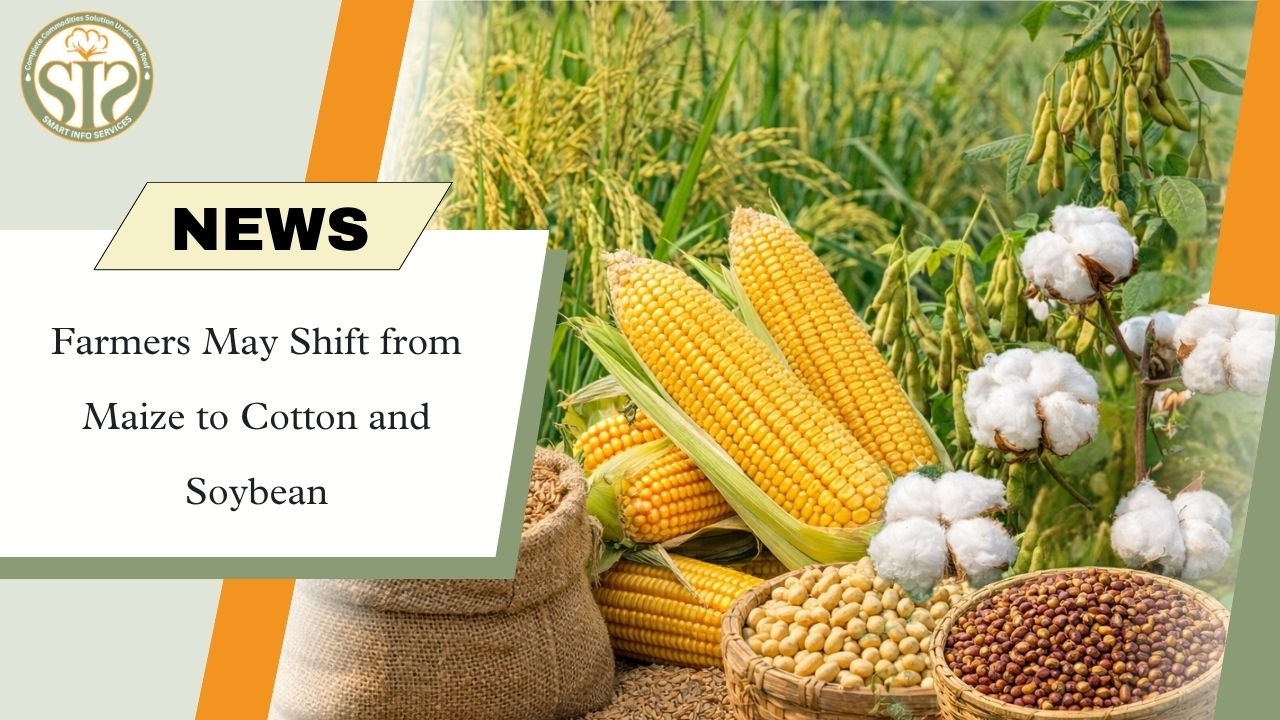
Farmers May Shift from Maize to Cotton and Soybean
By yash chouhan 2026-06-06 11:32:15
Farmers May Shift from Maize to Cotton and Soybean
Amidst the potential El Niño effect and forecasts of a below-normal monsoon, farmers' crop selection strategies for the Kharif season may undergo changes. According to a research report by CRISIL, farmers across various states are likely to select crops based on weather conditions, profitability, and market dynamics.
The report indicates that maize-growing farmers in Rajasthan might shift towards soybean cultivation. Meanwhile, in Madhya Pradesh—the country's largest soybean-producing state—there is a possibility of some acreage currently dedicated to maize and soybean shifting to cotton, potentially increasing the state's total cotton area.
Pushan Sharma, the lead author of the report, notes that while the total area under maize is expected to decline, the pattern of crop switching will vary by state. Farmers will consider factors beyond just rainfall forecasts, such as the relative profitability of crops, procurement support, and prevailing market conditions.
The report highlights that higher temperatures and uneven rainfall during the early stages of the season could lead to increased pest and disease infestations in crops like cotton and soybean, posing a risk to production.
However, water levels in the country's reservoirs remain above normal, which is expected to facilitate timely field preparation and sowing operations in key agricultural regions. Nevertheless, Kharif crop yields will largely depend on the distribution of monsoon rainfall, pest and disease management, and the availability of fertilizers.
According to the report, faced with the prospect of below-normal rainfall, farmers will weigh risks against potential returns when selecting crops; consequently, the acreage for cotton and soybean may increase at the expense of maize in certain regions.