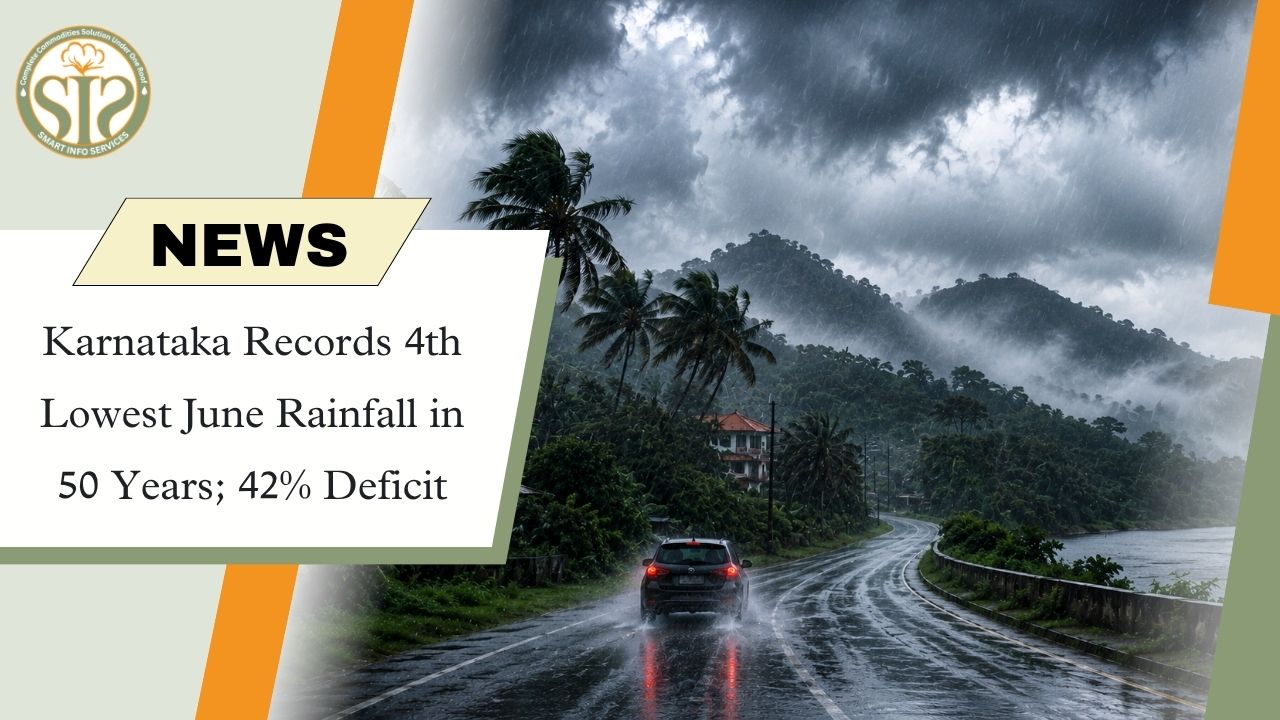
Karnataka Records 4th Lowest June Rainfall in 50 Years; 42% Deficit
Hubballi: June 2026 marked the fourth-driest June for Karnataka in the last five decades. The state recorded only 116 mm of rainfall during the month, a 42% deficit compared to the normal 199 mm. This has raised concerns about the serious impact on Kharif crop sowing, reservoir water levels, and the rural economy.
The lowest rainfall for June in the state was recorded in 2023, with only 87 mm of rain. Between 1976 and 2026, June rainfall was below normal in over 21 years, while above-normal rainfall was recorded in 19 years. The highest rainfall was recorded in 1991, at 294 mm.
The impact of the weak monsoon is also evident in the state's reservoirs. On June 28, 2026, the water level in the Tungabhadra reservoir near Hosapete stood at just 9.47 TMCft, compared to 61.88 TMCft during the same period the previous year. Due to poor rainfall in the catchment area, water inflow into the reservoir remained extremely low throughout the month.
According to data from the Karnataka State Natural Disaster Monitoring Centre, the number of years with below-average June rainfall has increased over the last two decades. Since the year 2000, rainfall patterns in June have become increasingly erratic, clearly demonstrating the impact of climate change on the agricultural sector.
According to agricultural economist Prakash Kammardi, the cultivation of ragi (finger millet) in South Karnataka and jowar (sorghum), soybean, and other Kharif crops in North Karnataka relies heavily on June rainfall. If adequate rain does not arrive on time, farmers often delay or even skip sowing, which adversely affects both production and income. Experts believe that while total monsoon rainfall has been above normal in recent years, there is a possibility that rainfall in July this year could be affected by the impact of El Niño. If this happens, it could place additional strain on agriculture, water resources, and rural livelihoods in the state.