Khandesh Cotton Output Seen Falling; Ginning Units Under Pressure
By yash chouhan 2026-05-28 14:54:59
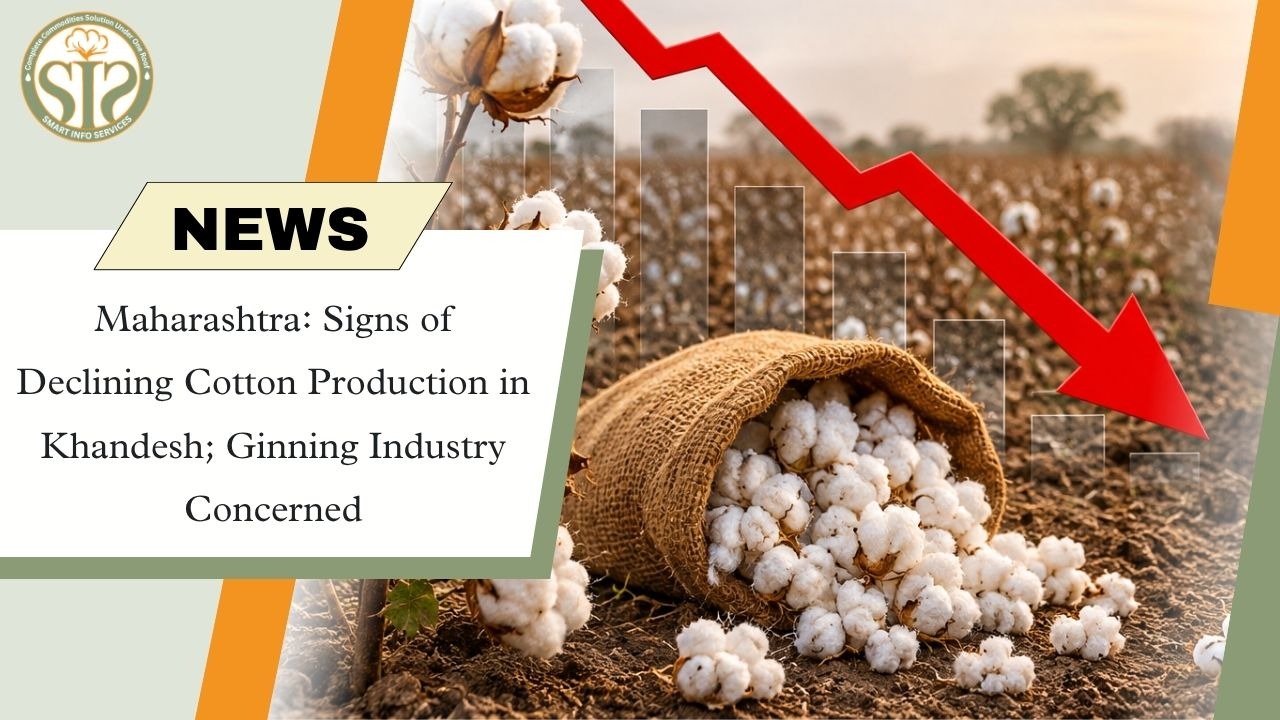
Maharashtra: Signs of Declining Cotton Production in Khandesh; Ginning Industry Concerned
Maharashtra: Indications point to a significant decline in cotton production in the Khandesh region this year—a trend expected to have a direct impact on the cotton processing industry. Given the prevailing circumstances, it is estimated that the region will produce approximately 1.8 million cotton bales (each weighing 170 kg) by the end of September 2026.
Continuous rainfall—both before and after October during this season—has inflicted severe damage upon the cotton crop. Consequently, production has dropped, and ginning and pressing units are unable to procure the expected volume of raw material. According to industry experts, achieving the targeted production goal for processed cotton (lint) may prove challenging under these conditions.
Typically, Khandesh produces between 2.2 to 2.4 million cotton bales annually; however, a consistent decline in production has been observed over the past few years. Productivity has been particularly affected in the Jalgaon district. Key factors cited for this decline include a reduction in the area under cotton cultivation, disease outbreaks, and adverse weather conditions.
Generally, cotton processing units in Khandesh operate at full capacity following the Diwali festival; however, this year, a shortage of raw materials has compelled most ginning and pressing units to operate at a reduced pace.
Currently, the daily arrival of cotton in the region stands at approximately 1,500 quintals. During the previous season, the average daily arrival in November and December was around 18,000 quintals. This year, however, a distinct decline in arrivals was evident right from the first fortnight of the month.
Factory operations were also disrupted for a period due to the Diwali festivities and the elections. Direct procurement from farmers—known as 'farm-gate' purchasing—is also proceeding at a limited scale, as most farmers no longer have any remaining cotton stock.
Following the cotton harvest, farmers have shifted their focus to alternative crops—such as gram (chana), wheat, and maize—depending on the availability of water. In many villages, the cotton picking process was completed by the beginning of January. Picking proceeded rapidly in rain-fed regions during December, but it is now becoming clearly evident that the final yield will fall short of expectations.