Kharif Sowing Gains Momentum, Cotton and Oilseed Acreage Trails Last Year
By jayesh chouhan 2026-07-15 13:12:46
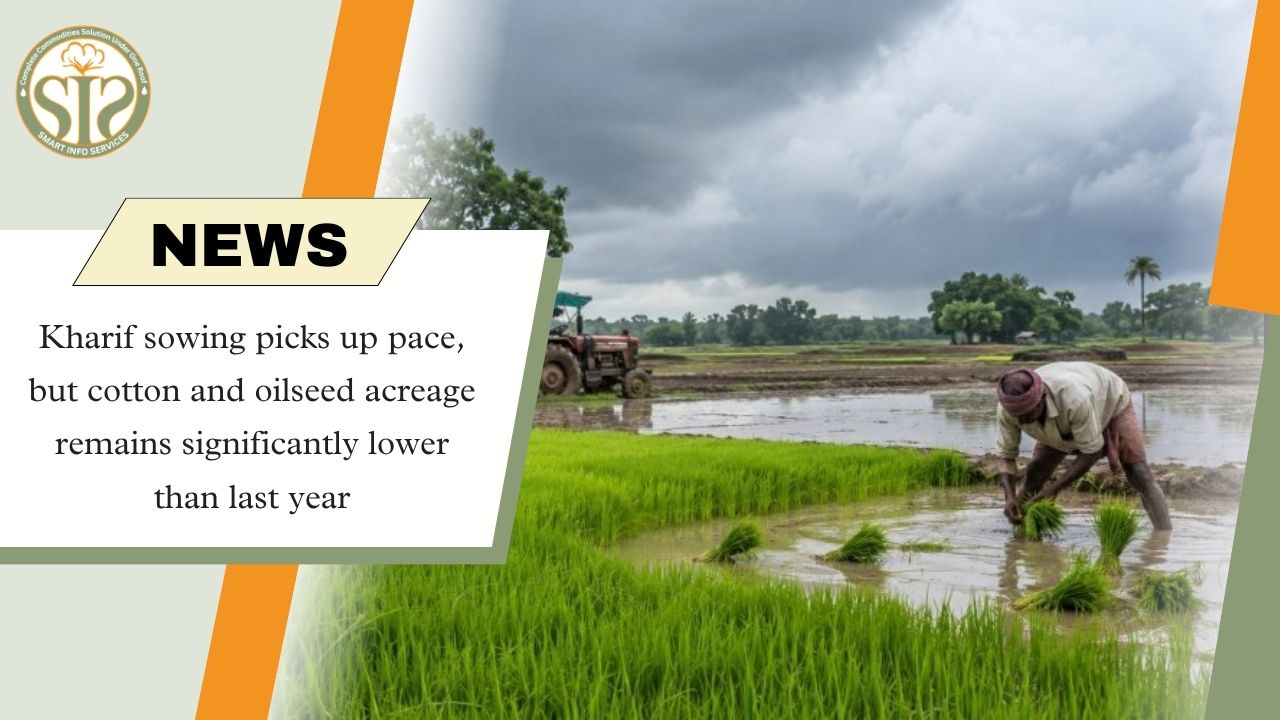
Kharif sowing picks up pace, but cotton and oilseed acreage remains significantly lower than last year
The activation of the southwest monsoon has accelerated Kharif crop sowing across the country; however, the sowing of cotton and oilseeds continues to lag behind last year's figures. According to the latest data released by the Department of Agriculture and Farmers Welfare up to July 10, 2026, while increased rainfall in recent weeks has improved the pace of sowing, the acreage for these two major cash crops has yet to reach last year's levels.
Government data indicates that oilseed sowing has covered 117.83 lakh hectares (11.78 million hectares), compared to 149.18 lakh hectares during the same period last year. This represents a decline of 31.35 lakh hectares, or approximately 21 percent, in total oilseed acreage. Among oilseed crops, soybean accounted for the largest share, with sowing recorded at 90.51 lakh hectares; this is down from 107.72 lakh hectares during the same period last year, marking a reduction of 17.21 lakh hectares. Similarly, groundnut acreage has dropped from 35.45 lakh hectares to 23.40 lakh hectares.
Cotton sowing has been recorded at 79.54 lakh hectares (7.95 million hectares), down from 93.95 lakh hectares during the same period last year—a decrease of 14.41 lakh hectares, or approximately 15.3 percent. Although recent rains have accelerated sowing in major cotton-producing states like Maharashtra, Gujarat, Madhya Pradesh, and Telangana, the total area remains below last year's figures.
According to the India Meteorological Department (IMD), rainfall activity is likely to remain relatively subdued over the next six to seven days across the plains of northwest India, west-central India, and the southern peninsular regions. Consequently, the pace of cotton and oilseed sowing in rain-fed areas could be affected.
On the other hand, the water resource situation has improved. Water storage in the 166 major reservoirs monitored by the government rose to 32.38 percent of their live storage capacity by July 9, up from 26 percent a week earlier. Improved water availability is expected to benefit crops in irrigated areas.
Experts believe that monsoon activity during the second half of July will be crucial for the sowing and potential output of cotton and oilseeds. If rainfall remains normal, the sowing gap could narrow further, whereas a prolonged weak monsoon could put pressure on the production of these two crops.