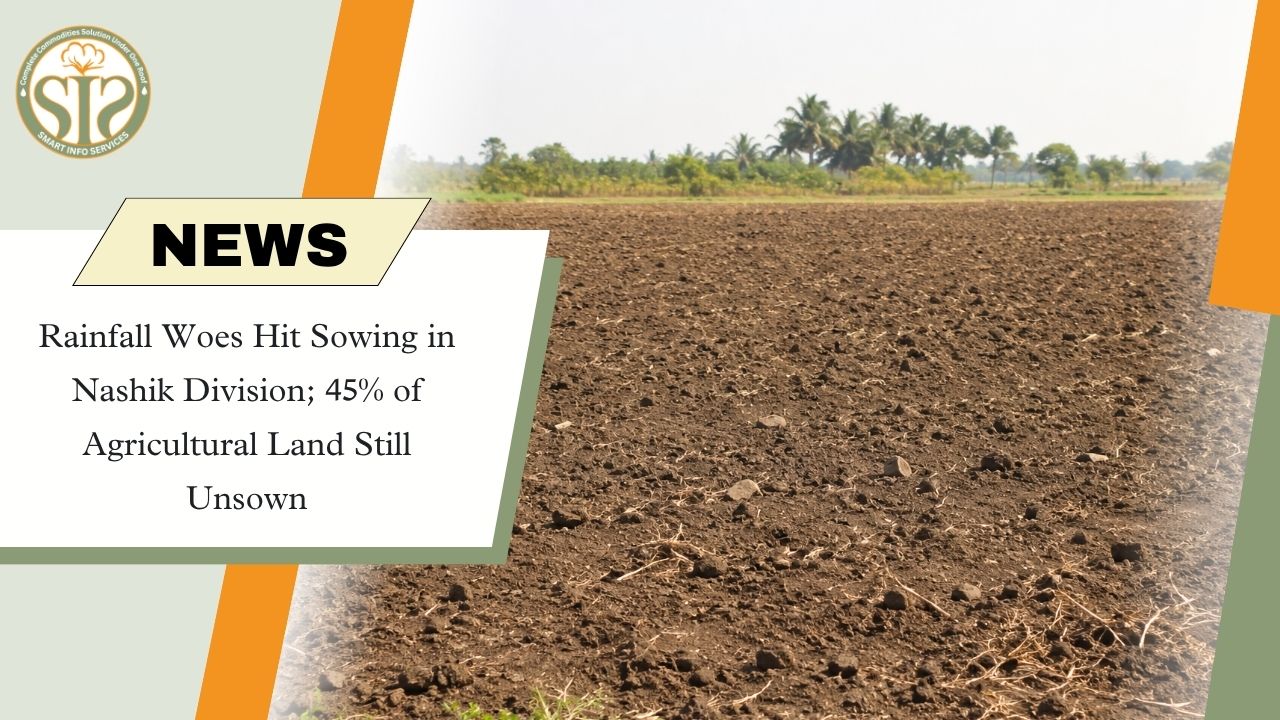
Rainfall Woes Delay Kharif Sowing in Nashik; 45% of Farmland Still Unsown
By jayesh chouhan 2026-07-13 12:34:36
Rainfall Woes Hit Sowing in Nashik Division; 45% of Agricultural Land Still Unsown
Nashik Road: The Kharif season in the Nashik division appears to be affected by a weak and uneven monsoon. While rainfall in some areas last week raised hopes among farmers, the pace of sowing remains sluggish due to the lack of continuous and adequate rain in most regions. Despite about a month and a half having passed since the onset of the monsoon, many farmers are still waiting to sow their crops because the soil lacks sufficient moisture. According to the Agriculture Department, sowing has not yet taken place on approximately 45 percent of the division's total cultivable land.
Rising agricultural costs have further compounded farmers' concerns. Expenses related to seeds, fertilizers, land preparation, and labor have increased significantly compared to the past. Consequently, farmers are reluctant to take the risk of sowing in soil with low moisture levels. They argue that sowing without adequate rainfall could lead to seed failure and the need for re-sowing, effectively doubling their costs. This is why most farmers are waiting for good, consistent rainfall.
Data from the Agriculture Department indicates that the average area for Kharif crops in the Nashik division is 20.33 lakh hectares. In contrast, sowing has been completed on only 11.23 lakh hectares so far—meaning cultivation has commenced on about 55 percent of the land, while the remaining 45 percent remains unsown. The districts of Nashik and Nandurbar are considered the most severely affected.
The department has advised farmers to check weather forecasts before proceeding with sowing. Officials have emphasized that seeds should be sown only when there is adequate soil moisture and that fertilizers should be used in a balanced manner. Should drought-like conditions persist, farmers will be provided with technical guidance and agricultural advice.
Meanwhile, Ankush Nivrutti Nikam, a retired teacher from Nagarsul, has set an example by using modern machinery to reduce farming costs. He has purchased a mechanical weeder for inter-cultivation, which allows the weeding of one acre to be completed using just one liter of petrol. According to him, while using bullocks for the same task costs around ₹1,600 per acre, the cost drops to approximately ₹100 when using the machine. The machine can cover three to four acres daily, significantly reducing labor costs as well.
Nikam has urged farmers to adopt modern machinery in their farming practices. Meanwhile, Prabhakar Jagannath Kudke of the local society has requested the government to provide subsidies for small tractors and inter-cultivation machines—similar to those offered for large tractors—so that more farmers can leverage modern technology to lower their cultivation costs.