Limited Impact of 33% Subsidy on Cotton Seeds in Punjab; Farmers' Interest Continues to Decline
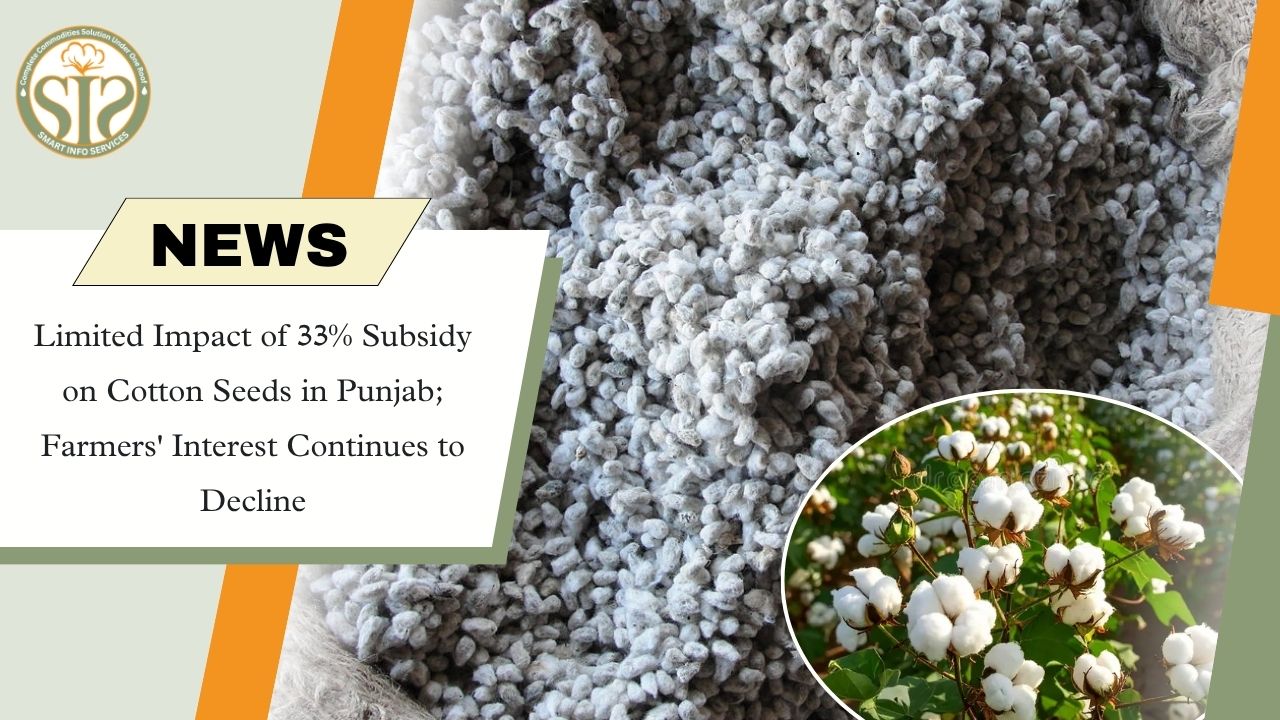
Chandigarh: Despite the Punjab government's scheme offering a 33% subsidy on cotton seeds, farmers in the state remain disillusioned with cotton cultivation. According to the latest data from the Agriculture Department, only 19,000 farmers registered under the subsidy scheme this year, compared to 52,000 last year—marking a decline of approximately 63 percent in registrations.
The government launched the 33% subsidy in 2023 for certified Bt cotton hybrids and indigenous cotton varieties recommended by Punjab Agricultural University (PAU). This assistance is capped at a maximum of five acres per farmer. Despite this, even in the fourth year of the scheme, farmers in the southern Malwa region—once considered the state's primary cotton-producing area—continue to shy away from the crop.
Charanjit Singh, Deputy Director (Cotton) of the Agriculture Department, stated that cotton was sown across approximately 80,000 hectares in the state this year, down from 1.19 lakh hectares last year. He explained that unseasonal rains following the April sowing created a hard soil crust on the fields, hindering seed germination and destroying many plants. Due to the high cost involved in re-sowing, most farmers chose not to replant.
He further noted that the unavailability of timely irrigation water from canals compounded the farmers' difficulties. Water supply was delayed due to maintenance work, while damage to minor canals in the Bathinda, Mansa, and Sri Muktsar Sahib districts disrupted the irrigation system.
State Agriculture Minister Gurmeet Singh Khudian stated that the department could not achieve the expected success in promoting the indigenous cotton variety PBD-88. According to him, this variety is relatively more tolerant to several major pests, can be cultivated at a lower cost, and has the potential for higher yields. Experts believe that next-generation Bollgard-III GM cotton varieties, which are resistant to the pink bollworm, will be required to revitalize cotton cultivation in Punjab. Currently, several institutions, including PAU, are conducting trials, and a final decision will be taken by the central government after evaluating the trial results.