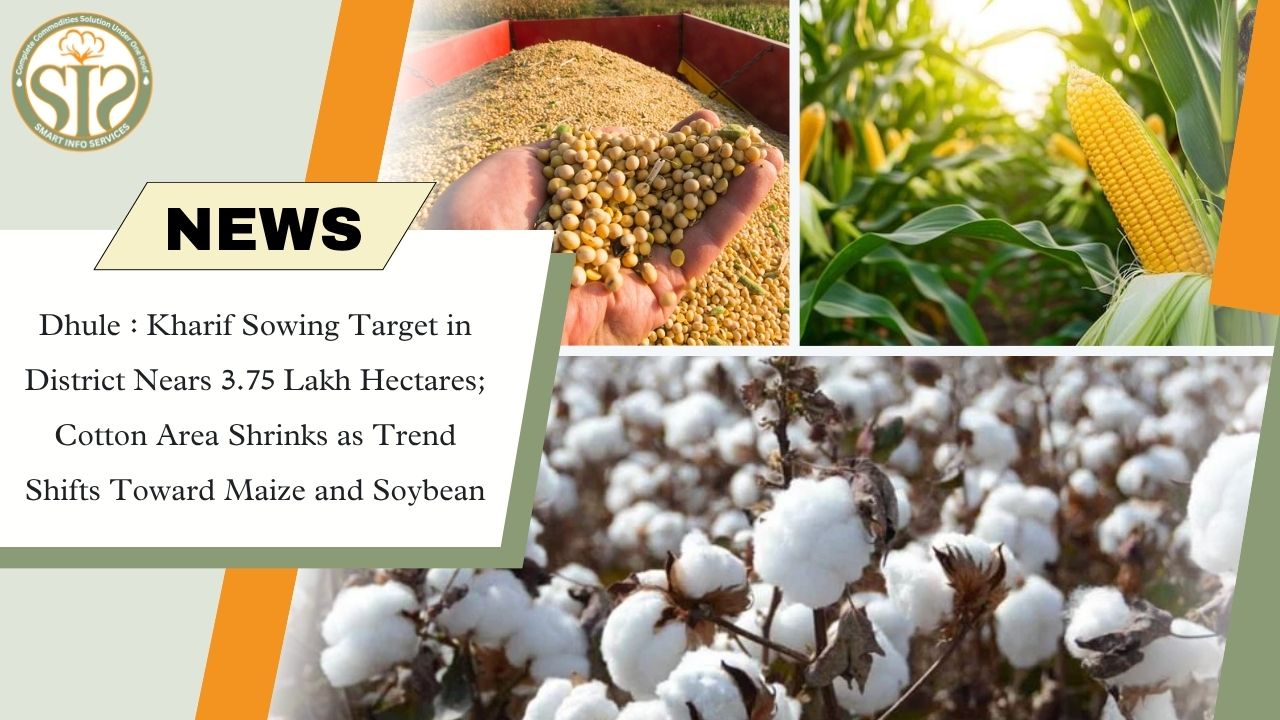
Dhule : Kharif Sowing Target in District Nears 3.75 Lakh Hectares; Cotton Area Shrinks as Trend Shifts Toward Maize and Soybean*
The Agriculture Department has set a total sowing target of 376,669 hectares for the Kharif season in the district this year. This target remains roughly consistent with that of the previous year. The district's total cultivable area stands at 378,432 hectares, the majority of which has been designated for the sowing of Kharif crops.
The crop basket for this Kharif season includes cereals (rice, sorghum, pearl millet, finger millet, and maize), pulses (pigeon pea, green gram, black gram), and oilseeds (groundnut, sesame, sunflower, and soybean), alongside commercial crops such as cotton and sugarcane. Anticipating rainfall ranging from normal to above-normal—as forecast by the Meteorological Department—the Agriculture Department has already initiated preparations to ensure the availability of seeds and fertilizers.
According to agriculture officials, if the rains arrive on schedule, sowing operations are expected to proceed at a rapid pace.
*Decline in Cotton Cultivation Area; Shift Toward Alternative Crops*
Over the past few years, the district has witnessed a consistent decline in the area dedicated to cotton cultivation. Previously, a significant portion of the Kharif land was utilized for cotton farming; however, a reduction in this area has now been recorded.
Key factors cited for the decline in cotton cultivation include pest infestations, rising costs of pesticides, increased labor expenses, and market price volatility. Consequently, farmers are now pivoting toward alternative crops.
*Maize and Soybean Emerge as Preferred Alternatives*
There has been a rapid surge in farmers' interest toward the cultivation of maize and soybean within the district. Farmers perceive these crops as relatively less expensive and less labor-intensive, as they require fewer pesticides and spraying interventions compared to cotton.
For this very reason, the area under maize and soybean cultivation is steadily expanding during the Kharif season, effectively replacing cotton.
read more :- Brazil Cotton Exports Jump Despite Softening Prices