Bt Cotton Acreage Falls by 15,000 Hectares in Hanumangarh Amid Pink Bollworm Threat
By jayesh chouhan 2026-07-06 13:57:31
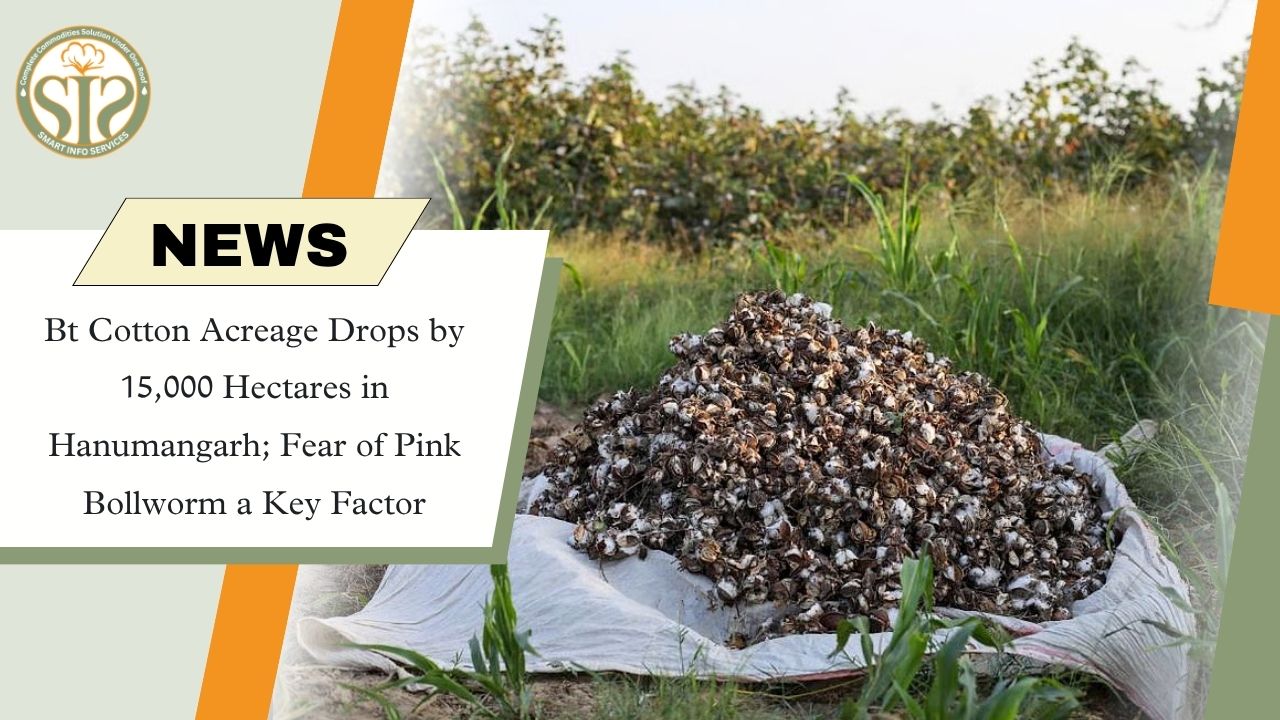
Bt Cotton Acreage Drops by 15,000 Hectares in Hanumangarh; Fear of Pink Bollworm a Key Factor
Bt cotton sowing in Hanumangarh district has decreased by approximately 15,000 hectares this Kharif season compared to the previous year. According to the Agriculture Department, Bt cotton was sown across 132,582 hectares in the district by June 29, whereas the figure stood at 147,585 hectares during the same period last year.
Farmers have reduced the cotton acreage this time due to the escalating infestation of pink bollworm over the past three years and the losses incurred last year. Conversely, the area under crops such as moong (green gram), paddy, guar (cluster bean), and other Kharif crops is likely to increase. Sowing for these crops is currently underway, and final figures will be released soon.
Typically, Bt cotton is cultivated on approximately 150,000 hectares in Hanumangarh annually. Despite the reduction in acreage this season, the Agriculture Department is continuously raising awareness among farmers regarding better crop management and protection against the pink bollworm. Through workshops and advisories, the department had advised farmers against early sowing. Farmers were urged to begin sowing in May so that flowering across most fields would occur simultaneously, thereby disrupting the pink bollworm's life cycle by July. However, some farmers proceeded with sowing before May using tubewell irrigation, creating a risk of pest infestation in those fields.
Agriculture Department's Advice * Regularly inspect fields and keep a watch for early signs of pink bollworm infestation. * Limit the use of urea (nitrogen) alongside irrigation to prevent excessive vegetative growth of the plants. * Monitor the pest population by installing five pheromone traps per hectare. * Regularly inspect flowers and squares (buds); immediately destroy any 'rosette flowers' (deformed flowers) found. * During the boll formation stage, examine 20 green bolls per acre. If white or pink larvae are found in two or more bolls out of twenty, or if 10 percent rosette flowers are observed, immediate control measures should be adopted.
Dr. Sanjeev Bhadu, Assistant Director of Agriculture (Extension), stated that the acreage under Bt cotton is lower this year compared to the previous year, whereas the area under other Kharif crops is likely to increase. He urged farmers to undertake regular monitoring, use pheromone traps, and follow the department's scientific advice to minimize damage caused by the pink bollworm and achieve better yields.