


Why is unapproved HTBt cotton spreading in India?
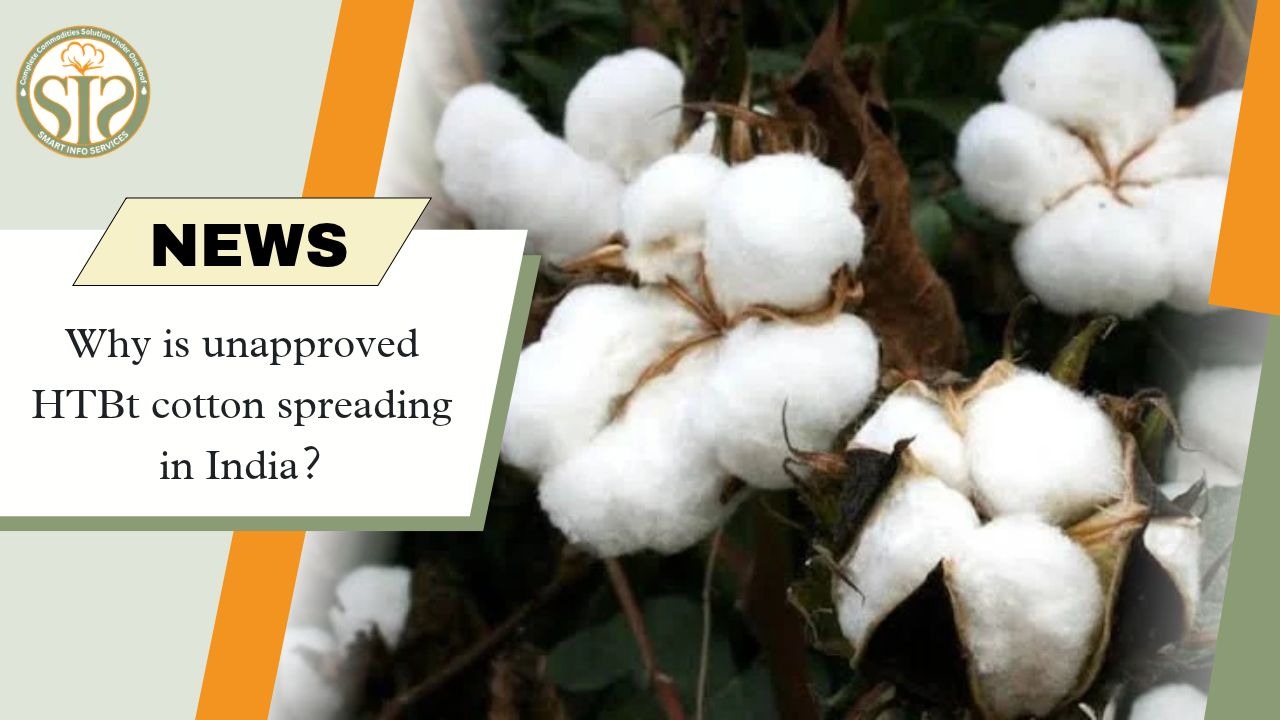
Cultivation of unapproved herbicide-tolerant Bt (HTBt) cotton is increasing rapidly in India. According to a study by South Asia Biotechnology Center (SABC), it is estimated to be cultivated in 24-30% cotton area of the country, i.e. about 65-72 lakh acres in the Kharif season 2025-26. The main reasons for this are the increasing cost of weed control, shortage of labor and decreasing effectiveness of existing Bt cotton against pests.
What is the difference between Bt cotton and HTBt cotton?
Bt cotton was approved for commercial cultivation in India in 2002. It contains proteins obtained from bacteria called Bacillus thuringiensis, which protect the crop from certain pests like bollworms. Its use helped in increasing cotton production in the initial years and reducing the use of pesticides.
HTBt cotton has the additional trait of insect resistance as well as herbicide tolerance. With this, farmers can use herbicides like glyphosate without harming the crop. However, HTBt cotton has not been approved for commercial cultivation in India.
Why are farmers adopting it?
According to the SABC study, hand weeding can cost up to ₹12,000-15,000 per acre, while glyphosate-based weed control has an estimated cost of ₹750-850. However, these figures may change according to the region and farming conditions.
On the other hand, the development of resistance in pink bollworm against the Cry1Ac and Cry2Ab proteins used in the existing Bollgard-II Bt cotton is reducing its effectiveness. This has increased the demand for alternative technologies among farmers.
Reason for decline in cotton production
India's cotton production peaked at about 39.8 million bales in 2013-14, while it declined to 29.1 million bales in 2025-26, preliminary government data showed. The main reasons for this include increasing resistance to pink bollworm, adverse weather conditions, crop diseases and reduction in cotton area.
What are the concerns?
The spread of unapproved HTBt seeds through the informal market raises questions about regulatory oversight and seed quality. There is also the risk of farmers not knowing the true genetic makeup of seeds and having limited options in case of crop failure.
Thus, the increasing adoption of HTBt cotton highlights farmers' need for affordable weed control technology and the limitations of accepted agricultural techniques. The challenge is to provide effective and affordable options to farmers, while ensuring seed quality, environmental impact and bio-security.
Research is going on to remove the resistance. In July 2026, the Sugarcane Breeding Institute of the Indian Council of Agricultural Research announced a partnership with Rasi Seeds to develop a cotton hybrid with a new toxin to combat pink bollworm resistance. The institute said commercial seeds may be available around 2030, depending on further development.
read more :- The rupee opened at 95.16 against the dollar, strengthening by 62 paise.