


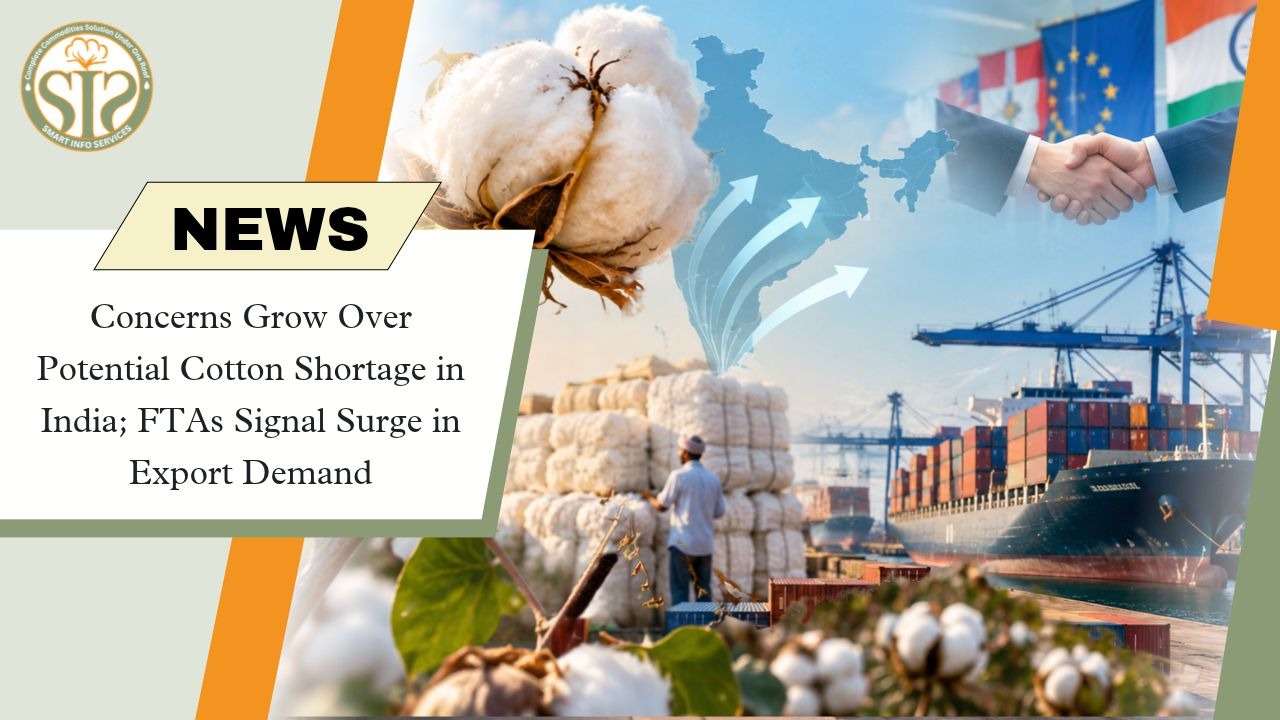
Concerns Grow Over Potential Cotton Shortage in India; FTAs Signal Surge in Export Demand
Pune: There are growing concerns that the cotton shortage in India could intensify. The expansion of textile and apparel exports, facilitated by new Free Trade Agreements (FTAs), is expected to drive up demand for cotton in the domestic market. Simultaneously, the potential impact of El Niño and drought conditions threatens to reduce production, which could widen the gap between supply and demand in the upcoming season.
Industry estimates suggest that India’s cotton production for the 2026-27 cotton year—ending in September 2027—could decline by 3.4% compared to the previous year. Due to adverse weather conditions, there are projections that production might fall below 28 million bales.
In 2025-26, India’s cotton imports reached a record high of an estimated 7.1 million bales, up from 5.74 million bales the previous year. Given that one bale weighs 170 kilograms, this volume of imports is equivalent to approximately 1.207 million tonnes. Meanwhile, domestic cotton prices have reportedly risen by more than 7% over the past month.
The current exemption from the 11% import duty on cotton is set to expire on October 31, 2026. The government had granted this relief on raw cotton imports for the period from June 1 to October 31, 2026. A similar exemption had previously been provided between August 19 and December 31, 2025. Uncertainty regarding a potential extension of this exemption has placed upward pressure on prices in the domestic market.
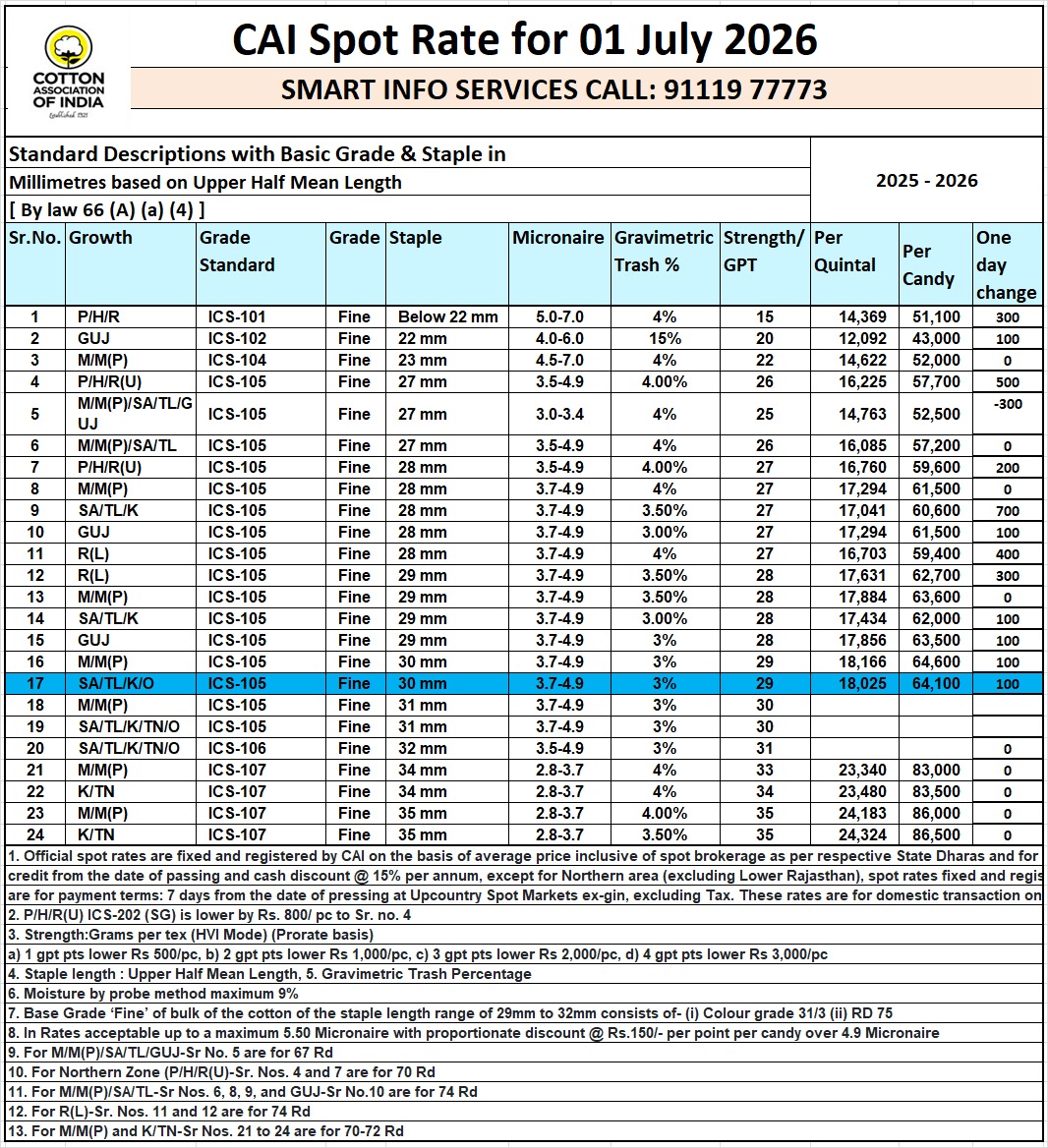
According to spot market data, in the new cotton year that began on October 1, 2026, the price of 29-millimeter cotton from Gujarat has increased by ₹4,500 per candy, reaching ₹68,500 per candy. In a letter to Finance Minister Nirmala Sitharaman, The Southern India Mills' Association (SIMA) stated that the country’s cotton consumption in 2025-26 stood at approximately 34 million bales, with imports reaching around 7 million bales. According to the association, price volatility persists due to uncertainty regarding the availability of raw materials.
K. Selvaraju, Secretary General of SIMA, noted that there are signs of growing export demand from new markets, including the United Kingdom (UK). Cotton demand in the upcoming season could exceed 36 million bales. He expressed concern that production might fall below 28 million bales due to the impact of El Niño and drought conditions. Furthermore, the implementation of a Free Trade Agreement (FTA) with the European Union (EU)—potentially by 2027—could open up additional opportunities for Indian textile and apparel exports.
Pradeep Jain, President of the Khandesh Ginners Association, pointed out that yarn prices have not risen in proportion to the increase in cotton prices, which is negatively affecting the profitability of the ginning industry. Meanwhile, some farmers are holding back their produce in anticipation of higher prices.
Additionally, due to a lack of moisture, many farmers harvested their cotton only once this year before clearing their fields for other crops. This is expected to impact both total cotton yield and the availability of high-quality raw material. If a decline in production coincides with an increase in export demand, ensuring an adequate supply of cotton for the Indian textile industry in the coming season could prove challenging.
read more:-