India Strengthens Global Cotton Position, Ranks Second in Production and Consumption
By jayesh chouhan 2026-07-22 15:02:08
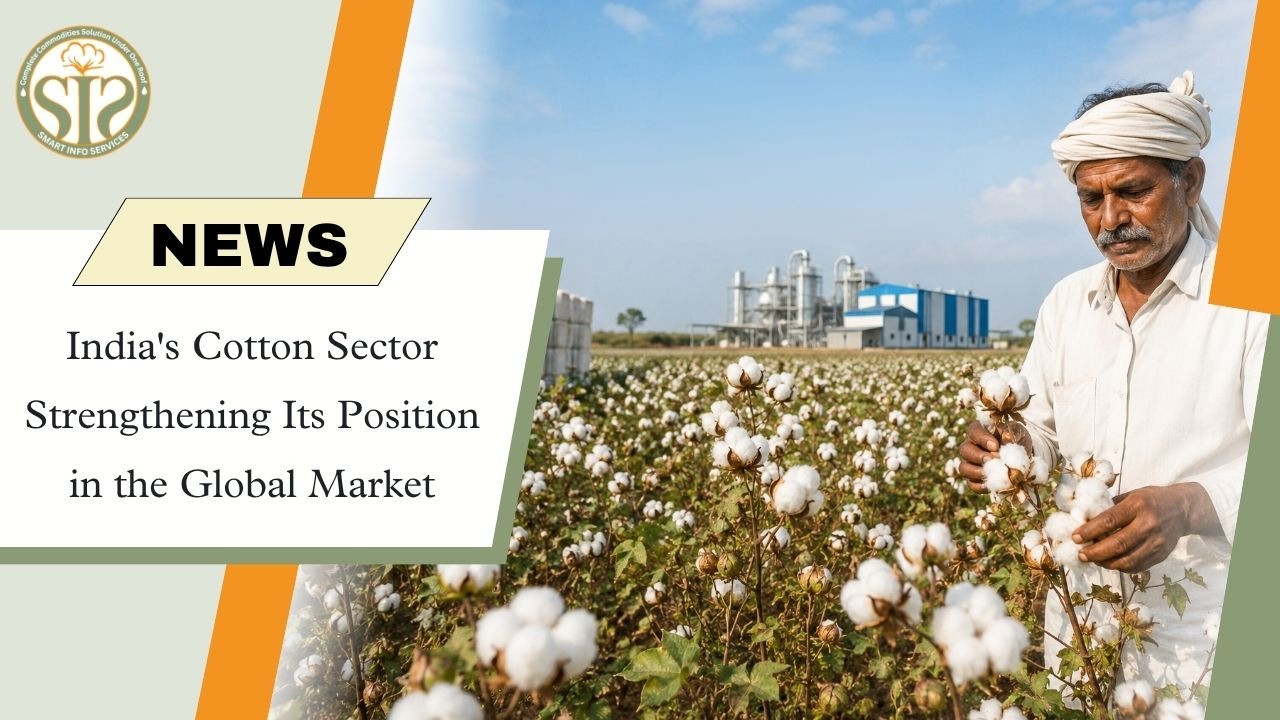
India's Cotton Sector Strengthening Its Position in the Global Market
New Delhi: India is continuously strengthening its position in the global cotton industry. India ranks first in the world in terms of cotton cultivation area, while it is the second-largest country in terms of both cotton production and consumption.
India's cotton production for the year 2025-26 is estimated at 290.91 lakh bales, while domestic consumption is projected to reach 328 lakh bales. India contributes approximately 19% to global fiber production. Meanwhile, in 2024-25, India's share in global cotton exports stood at approximately 3.37% by value, amounting to around US$ 11.49 billion.
India is the only country in the world where all four recognized species of cotton are cultivated. These include *Gossypium arboreum* and *Gossypium herbaceum* (Asian cotton), *Gossypium barbadense* (Egyptian, Sea Island, and Peruvian cotton), and *Gossypium hirsutum* (American or Upland cotton).
Cultivation Spanning Three Agro-Ecological Zones
Cotton is a *Kharif* and semi-xerophytic crop, primarily cultivated in tropical and subtropical regions. Optimal growth requires temperatures between 21–27°C, at least 210 frost-free days, and rainfall ranging from 50–100 cm.
Well-drained black (Regur) soil and alluvial soil are considered the most suitable for cotton cultivation. Cotton cultivation in India spans three agro-ecological zones across nine major states:
Northern Zone: Punjab, Haryana, and Rajasthan Central Zone: Gujarat, Maharashtra, and Madhya Pradesh Southern Zone: Telangana, Andhra Pradesh, and Karnataka Major Challenges Facing the Cotton Sector
Low productivity is a key challenge for India's cotton sector. Factors such as erratic rainfall, drought conditions, and the fact that approximately 67% of the cotton area relies on rain-fed farming impact production capacity.
Additionally, infestations of the pink bollworm and other pests lead to crop losses and increase costs for farmers.
Price volatility in the cotton market, limited market infrastructure, and income-related risks affect farmers. Meanwhile, the limited production of Extra-Long Staple (ELS) cotton and inconsistencies in fiber quality pose challenges to India's export competitiveness.
By enhancing productivity, producing higher-quality cotton, and adopting modern agricultural techniques, India can further strengthen its role in the global cotton supply chain.