India Seeks to Reclaim Its Global Textile Leadership
By jayesh chouhan 2026-07-21 12:40:00
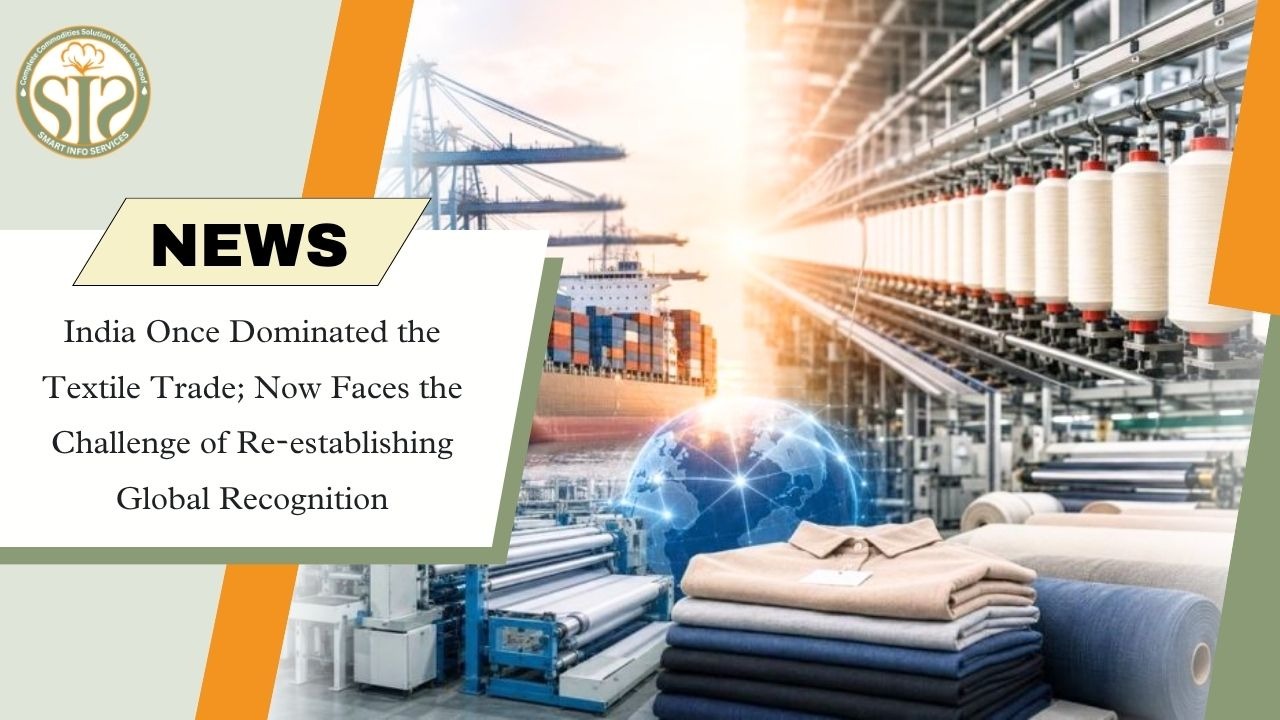
India Once Dominated the Textile Trade; Now Faces the Challenge of Re-establishing Global Recognition
New Delhi: India was once among the world's leading textile trading hubs. Today, the country possesses the entire textile value chain—spanning from cotton production to spinning, weaving, processing, garment manufacturing, and exports. The sector's greatest strength lies in its capacity to generate employment. However, to strengthen its position amidst global competition, India requires robust institutions, modern technology, and a long-term strategy.
Few industries have left as profound an impact on India’s civilization, culture, and economy as the textile industry. Long before the modern concept of global value chains emerged, textile manufacturing had already become an integral part of India's economic, cultural, and commercial fabric.
Excavations at Harappa and Mohenjo-daro have yielded evidence of spindles, needles, and artifacts related to textile production and dyeing. These represent some of the earliest traces of textile-related activities in India. The tradition that flourished during the Indus Valley Civilization continued to evolve over subsequent centuries through trade, innovation, and exquisite craftsmanship.
For nearly two thousand years, Indian textiles enjoyed strong demand in markets across Asia and Europe. During the Mughal era, Bengal emerged as a vital hub for cotton textile production. The fine muslin of Dhaka was renowned for its superior quality and was highly sought after in international markets. Meanwhile, Murshidabad rose as a key center for the trade of silk and other high-quality fabrics.
According to estimates by economist Angus Maddison, India accounted for approximately one-quarter of global economic output in the year 1700. Subsequently, the Industrial Revolution transformed the landscape of global competition. Innovations such as James Hargreaves' Spinning Jenny and other weaving machinery fueled mass production. Competitive advantage was no longer solely dependent on the skills of artisans but came to rely on technology, productivity, and economies of scale. Following this shift, India gradually became a major supplier of raw cotton to the mills of Britain's Lancashire region and a vast market for finished garments.
Today, the challenge before India is not merely to replicate its glorious textile past but to forge a new identity as a modern global textile powerhouse. This will require robust institutions, modern technology, innovation, a skilled workforce, and better coordination across the entire value chain.