



Shifts in Global Trade Create New Opportunities for India’s Textile Exports; Global Brands Look to India for Sourcing
Changes in global trade policies and challenges within supply chains are creating new export opportunities for the Indian textile and apparel industry. According to a report by Dolat Capital, shifts in US tariffs, new Free Trade Agreements (FTAs), and rising production costs in competing nations are leading global brands to prioritize India for their textile sourcing needs.
The report notes that changes in US tariffs and trade agreements have enhanced the international competitiveness of the Indian textile industry. India is now in a more competitive position compared to Bangladesh and other Asian nations, increasing the likelihood that Indian exporters will secure a larger volume of orders from the global market.
The report highlights that under the Comprehensive Economic and Trade Agreement (CETA) between India and the UK—which came into effect on July 15, 2026—Indian apparel and home textile products have gained duty-free market access, a development expected to drive an increase in orders from the UK. Furthermore, a potential Free Trade Agreement (FTA) between India and the European Union (EU), anticipated by early 2027, could eliminate import duties of approximately 12 percent currently levied on Indian goods, thereby strengthening India’s position in the European market.
According to the report, the benefits of these agreements are likely to become more pronounced from the 2028 fiscal year (FY28) onwards. Many Indian textile manufacturers have already secured a strong order book for the third quarter of the 2027 fiscal year (Q3 FY27).
Meanwhile, rising production costs—driven by labor-related issues and wage hike proposals in Bangladesh, as well as high inflation in Turkey—are prompting global brands to explore alternative sourcing destinations, including India, Egypt, and Morocco.
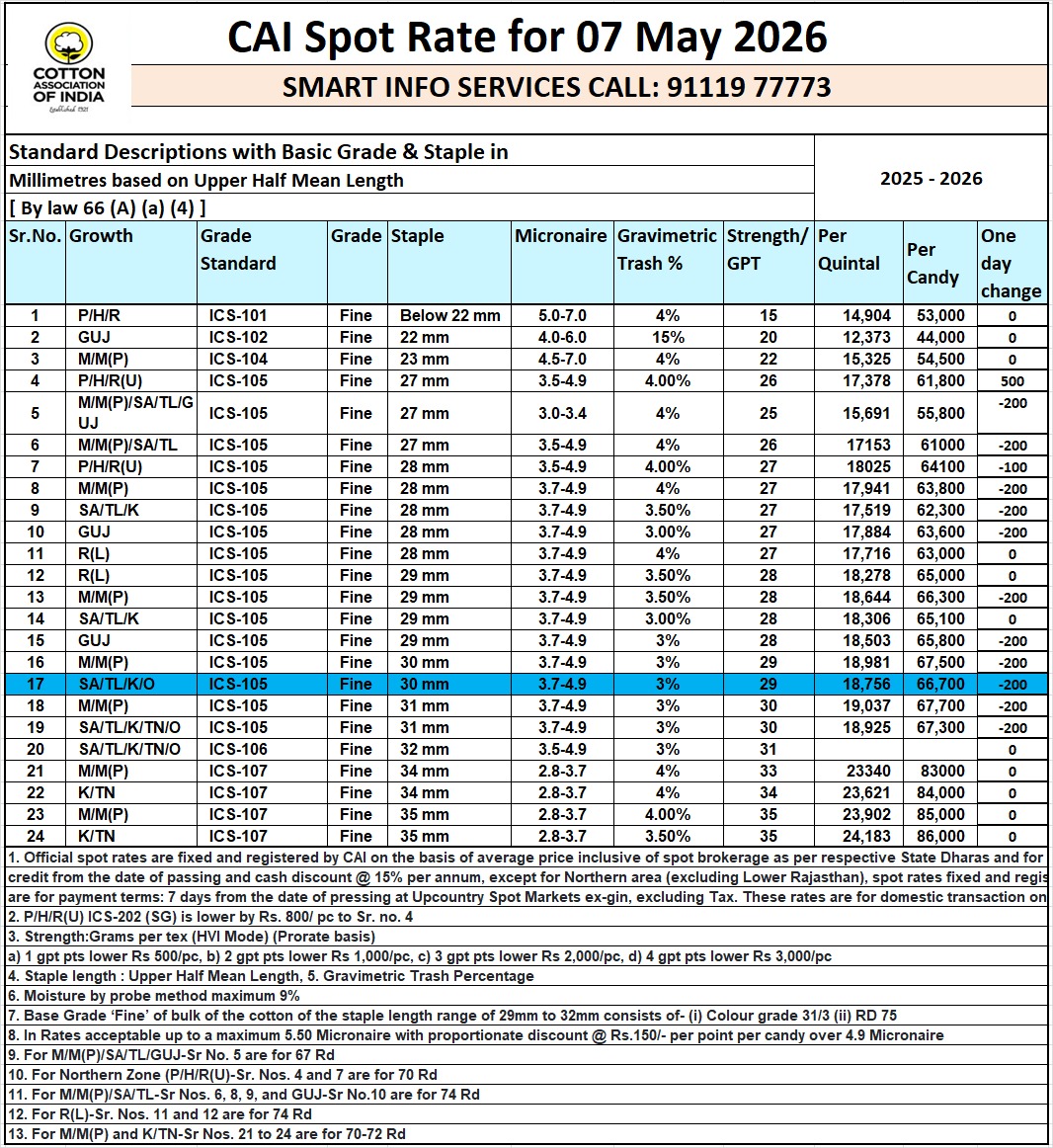
The Indian industry is also benefiting from the evolving landscape in China. According to the report, the cost of domestic cotton in China—hovering around 1 US dollar per pound—combined with restrictions on Xinjiang cotton, has made local yarn production expensive. Consequently, Chinese manufacturers are increasingly sourcing cotton yarn from India. Exports of cotton yarn from India to China are estimated to reach approximately 20 to 25 million kilograms per month.
The report further notes that the expansion of production capacity, vertical integration, and a focus on value-added products will drive growth in the Indian textile industry. However, high raw material costs and the pace at which companies can improve their profit margins will remain critical factors in the near future.
read more :- Maharashtra: Private Traders Buy 50,000 Quintals of Cotton; Prices Reach ₹9,900 Ahead of CCI Procurement