



High Raw Cotton Costs and Improved Demand Bolster Indian Cotton Yarn Market
The Indian cotton yarn market is showing signs of strength, driven by high raw cotton costs and an uptick in demand from the weaving industry. Limited cotton arrivals in North Indian markets and rising production costs for spinning mills are providing support to cotton yarn prices. However, demand varies across different types of yarn.
Impact of Raw Cotton Prices
Strong raw cotton prices are exerting pressure on the production costs of spinning mills. Consequently, mills are attempting to offset these additional costs by raising the selling prices of cotton yarn. Demand for certain key yarn varieties—particularly those used in the weaving industry—is reported to be robust. Meanwhile, for more common or lower-demand yarn varieties, price negotiations remain ongoing.
Cotton Arrivals and Market Demand
With daily cotton arrivals in North Indian markets remaining limited, the availability of raw material has become a critical factor for spinning mills. Simultaneously, increased procurement by weaving units is providing support to the cotton yarn market.
However, export demand remains confined to select markets. Domestic buyers are also prioritizing stock replenishment based on immediate requirements rather than engaging in large-scale advance purchasing.
Focus on New Harvest and Government Procurement
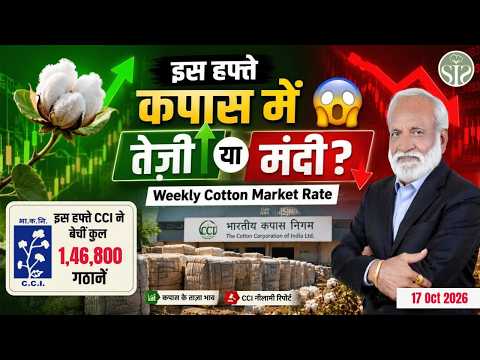
The pace of the new cotton harvest and its subsequent arrival in markets throughout October will likely play a pivotal role in shaping the market's future direction. Furthermore, the status of procurement by the Cotton Corporation of India (CCI) at the Minimum Support Price (MSP) will be a significant factor for the domestic cotton market.
read more :-Adilabad Cotton Trading to Begin October 22; 11 Centers Ready