Promoting High-Density Cotton Cultivation in Amravati Division
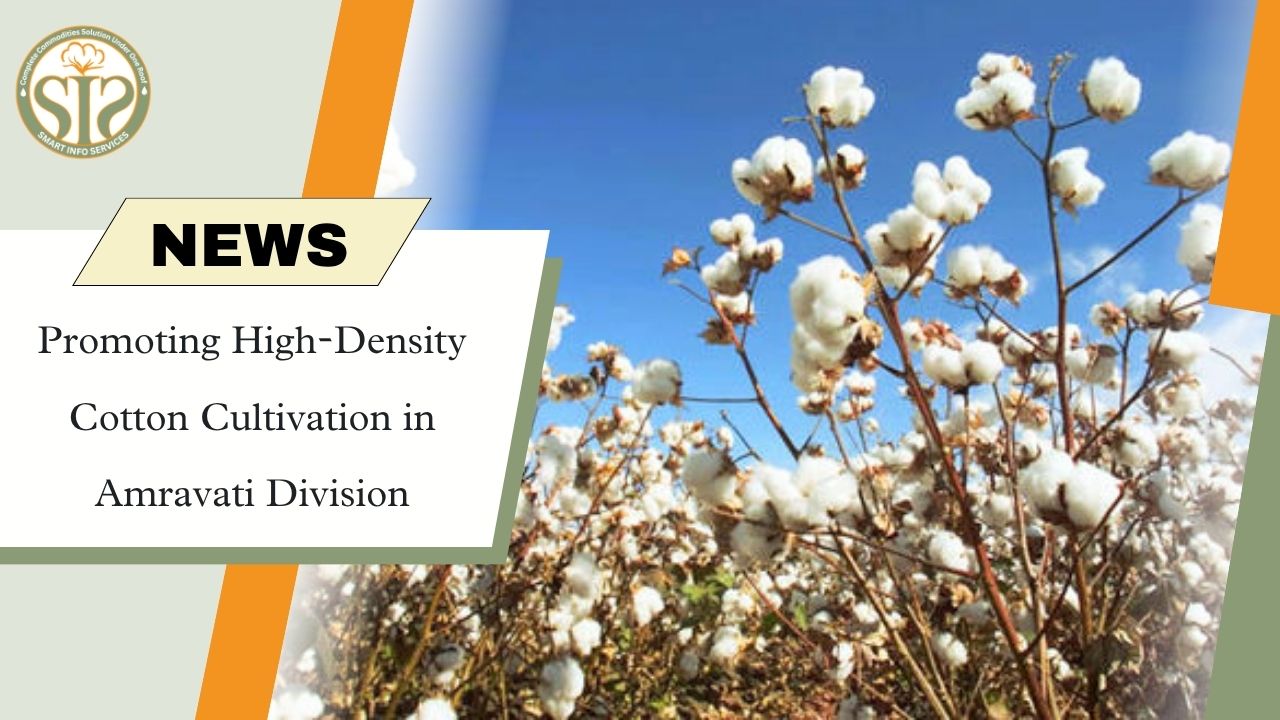
Indications suggest that farmers in the Amravati division are increasingly inclined towards cotton cultivation this year, driven by the favorable market prices received for cotton during the previous Kharif season. With this in mind, high-density cotton cultivation will be promoted across all five districts of the Amravati division—Amravati, Akola, Washim, Buldhana, and Yavatmal—to boost cotton production. Divisional Joint Director of Agriculture, Ganesh Ghorpade, stated that a special campaign would be launched for this purpose, in collaboration with the Central Institute for Cotton Research (CICR), agricultural universities, and Krishi Vigyan Kendras (Agricultural Science Centers).
This information was shared during a Kharif review meeting chaired by Divisional Commissioner (Revenue) Nayana Gunde. District Collectors and agriculture officials from all the concerned districts participated in the meeting online. During the session, emphasis was placed on fostering better coordination between the Revenue and Agriculture departments to ensure the success of the Kharif season.
On average, cotton is cultivated across an area of 10 lakh hectares annually in the Amravati division. The Agriculture Department estimates that, due to the surge in cotton prices witnessed at the end of the previous season, a significant number of farmers may prioritize cotton cultivation over soybeans this year.
To enhance production, intensive farming methods—which yield higher output from a smaller land area—will be promoted. Under this initiative, special attention will be given to the use of improved seeds, balanced fertilizer management, effective pest control, and the adoption of modern agricultural techniques.
The meeting also featured discussions regarding the innovations being implemented in the agricultural sector by the Washim district administration. District Superintending Agriculture Officer Arif Shah presented details of the '9M' model, which encompasses nine key components: Manpower, Motivation, Finance, Marketing, Monitoring, Management, Machinery, Methodology, and Materials. The objective of this model is to promote smart sowing techniques.
The 'Vatsagulam Smart Sowing Competition,' organized last year, had received an encouraging response from the farming community. 32,335 farmers participated in the competition, and smart sowing technology was adopted across an area of over 1.36 lakh acres. The Department of Agriculture expects that this initiative will receive widespread support this year as well.
read more:- CCI Cuts Cotton Prices by ₹2,300, Resumes Sales
Regards
Team Sis
Any query plz call 9111977771
https://wa.me/919111977775