Recent News

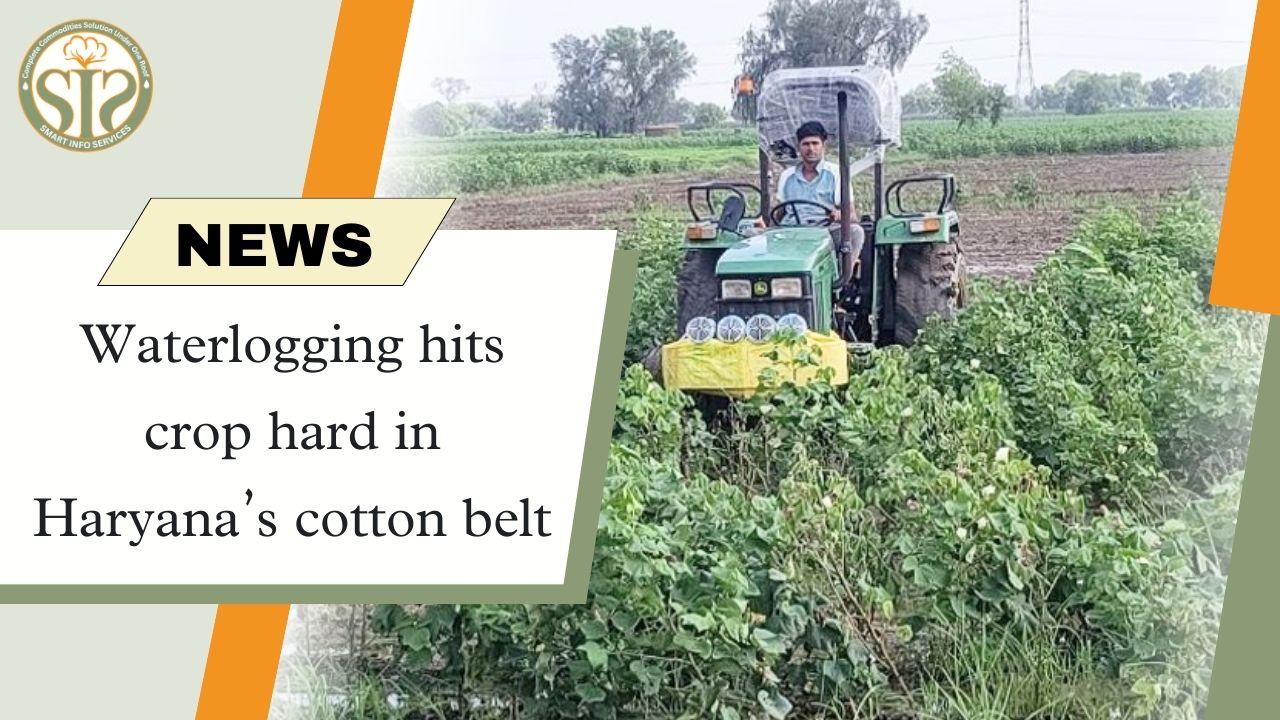
Cotton crop submerged, Haryana farmers worried

Waterlogging hits crop hard in Haryana’s cotton beltThe Hisar-Sirsa-Fatehabad-Bhiwani region is known as the ‘cotton belt’ of the state. However, repeated crop failures in recent years due to pest attacks — including those by whitefly and pink bollworm — have dealt a major blow to farmers, leading to a gradual decline in the cotton-growing area. As a result, the area under paddy cultivation hasThis season saw negligible pest attacks on cotton. Yet, the misfortune of farmers continues.Waterlogging in several parts of these districts has caused the wilting of cotton plants due to prolonged inundation — resulting in crop failure. According to Agriculture Department data, in Hisar alone, about 40,000 acres of cotton has been damaged due to flooding after the rains, up  to August 2.Additional rainfall and overflowing drains have worsened the situation, causing more crop losses. The department’s report states that the Agroha, Adampur, Hisar-1, and Bass blocks have suffered the most damage.In Bhiwani district, 38,000-acre cotton is under threat due to rainwater inundation. Out of the district’s total cotton area of 1,13,265 acres, 5,400 acres has already suffered 75-100 per cent damage, while the rest of the inundated area is also said to have suffered major losses. Agriculture experts say cotton cannot survive more than two days of waterlogging, making it unlikely for the flooded crop to recover.Deputy Director (Agriculture), Hisar, Dr Rajbir Singh said the Irrigation Department was working overtime to drain out standing water from the fields.Cotton farmers facing crop failure could opt for late paddy sowing in their fields, he added.Sirsa district has incurred comparatively lesser damage to the crop, as most damage has been done in Nathusari Chopta region — where 2,600 acres of crop has been damaged.The district has total cotton area of 1,47,000 hectares. In Fatehabad district, which has over 80,000 acres of area under cotton, about 2,500 acres has suffered losses due  to inundation.Vinod Kumar, a farmer from Shakkar Mandori village in Sirsa district, said he had planted cotton on eight of the ten acres of farmland he owns.Unfortunately, due to heavy rain and waterlogging, his entire cotton crop has been destroyed.He said he had spent around Rs 10,000-15,000 per acre on the crop (not counting the labour done by his family).Now, he has attempted to grow paddy on 4 acres; however, water has been standing in his fields for many days, turning them into swamps.As a result, his tractor and rotavator got stuck in the mud while trying to sow paddy.The tractor was pulled out — albeit with great difficulty — but the rotavator is still stuck in the field.“I don’t know what will happen next. I’ve used up all my savings,” he said, urging the government to provide compensation for his losses.read more:- Andhra textile industry expected to face US tariff impact.

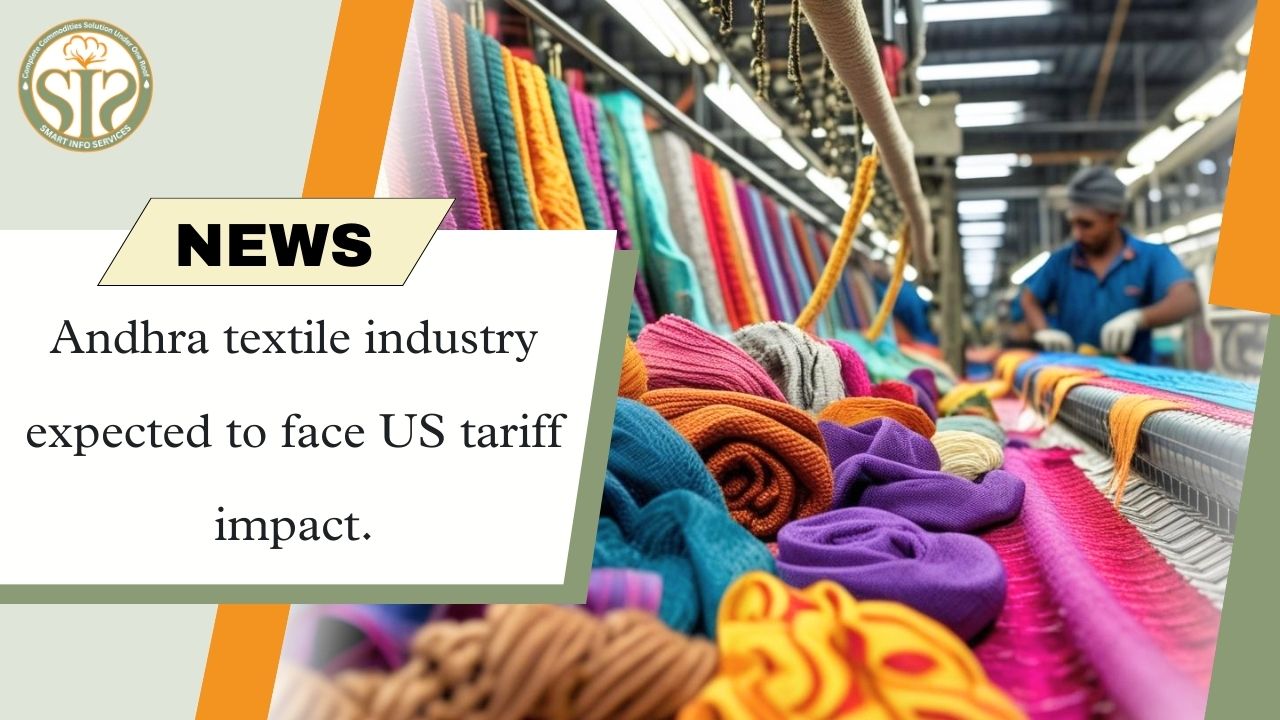
Andhra textile industry expected to face US tariff impact.

US duty impacts Andhra textilesBeginning 27th August, Indian exporters must choose whether to continue exporting to the US in spite of the high tariff or to halt exports and search for other markets abroad. The US administration, led by President Donald Trump, has imposed a 50% tariff on textiles being imported from India. However, it will take time to build other export markets.AP Textiles Mills Association vice president Sadineni Koteswara Rao stated that, after agriculture, the textile industry is the largest source of employment. He noted that the sector is expected to face a significant impact due to the US tariffs and emphasised the need for the Andhra Pradesh Government to step in with support measures. These, he suggested, should include providing captive power and clearing arrears to help keep the industry viable in the state.Andhra Pradesh’s textile sector is reeling under uncertainty, with 30–35 of the state’s 100-plus spinning mills already shutting down. The primary cause is the steep rise in power tariffs which now account for nearly 53% of production costs, pushing many units to the brink of closure.Industry stakeholders are urging the State Government to restore the power tariff policy that was in force between 2015 and 2020. They are also seeking permission to establish captive power plants, particularly in upland districts such as Kurnool and Anantapur in the Rayalaseema region, enabling them to generate their own electricity and channel surplus power to the state grid.In addition, stakeholders are pressing for the release of pending incentives — including power subsidies, bank loan interest subsidies, and capital subsidies — amounting to Rs. 11,000 crore (US $ 1.25 billion). They believe this support is critical to restoring viability to the sector.These concerns were presented to Chief Minister N. Chandrababu Naidu around four months ago, prompting him to instruct the Chief Secretary to form a committee to study the matter. However, the committee has yet to hold discussions with industry representatives.read more:- Rupee falls 05 paise at open to 87.70 against US dollar
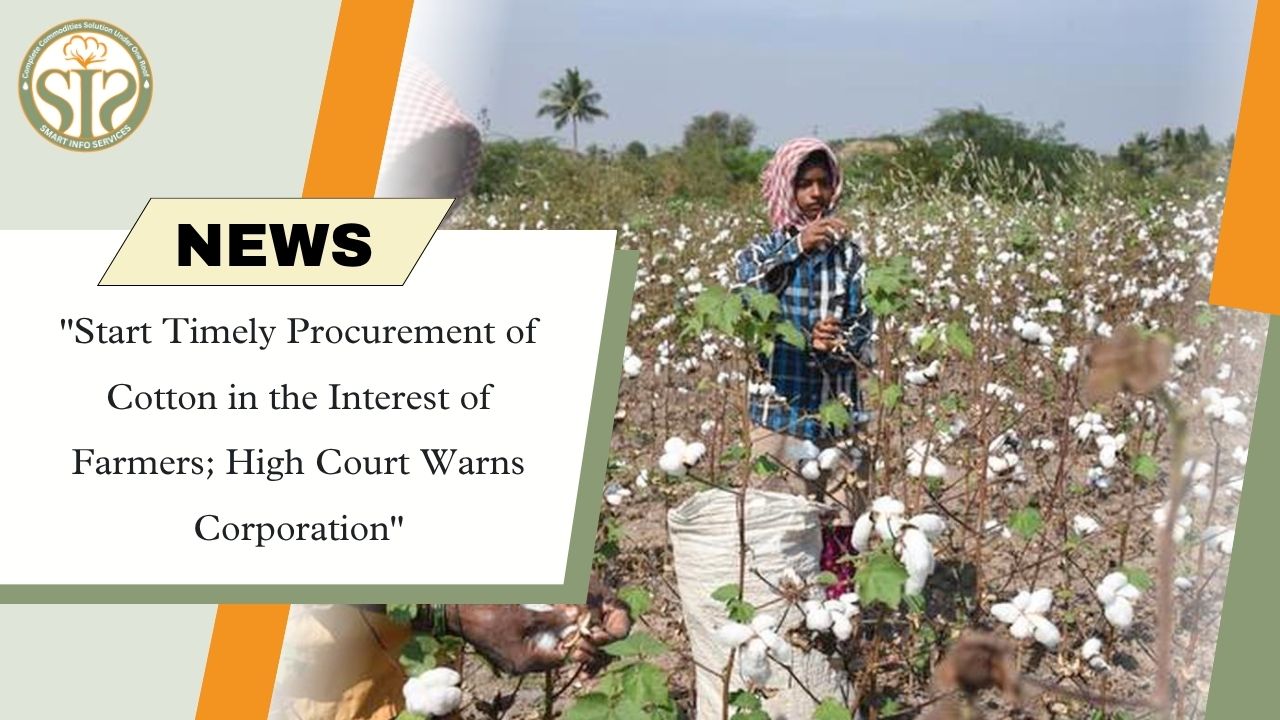
"Start Timely Procurement of Cotton in the Interest of Farmers; High Court Warns Corporation"

Start cotton procurement on time: High Court warnsTo prevent the economic losses farmers face due to delays in cotton procurement, the Nagpur Bench of the Bombay High Court has ordered the Cotton Corporation of India to provide a guarantee letter within two weeks.The court issued clear instructions to open procurement centers on time—regardless of whether farmers bring cotton for sale or not—and emphasized that procurement should begin before Diwali, with pending payments made within seven days.To safeguard the interests of cotton-growing farmers, the Nagpur Bench of the Bombay High Court has issued a stern warning to the Cotton Corporation of India to ensure timely opening of procurement centers.The court noted that delays in procurement benefit private traders while causing losses to farmers.Ordering that cotton procurement centers be opened on time, the court stated that protecting the interests of cotton farmers is the "primary duty" of the Cotton Corporation of India.The court directed that centers must open on schedule, regardless of whether farmers bring cotton to sell.The bench, comprising Justice Anil Kilor and Justice Trishali Joshi, was hearing a Public Interest Litigation (PIL) filed by Shriram Satpute, District Coordinator (Rural) of the Grahak Panchayat.The petition demanded that cotton procurement start before Diwali and that the outstanding amounts be deposited in farmers’ bank accounts within seven days.read more :- CCI Hikes Cotton Prices; Sells 70% of 2024–25 Procurement via E-Bidding.

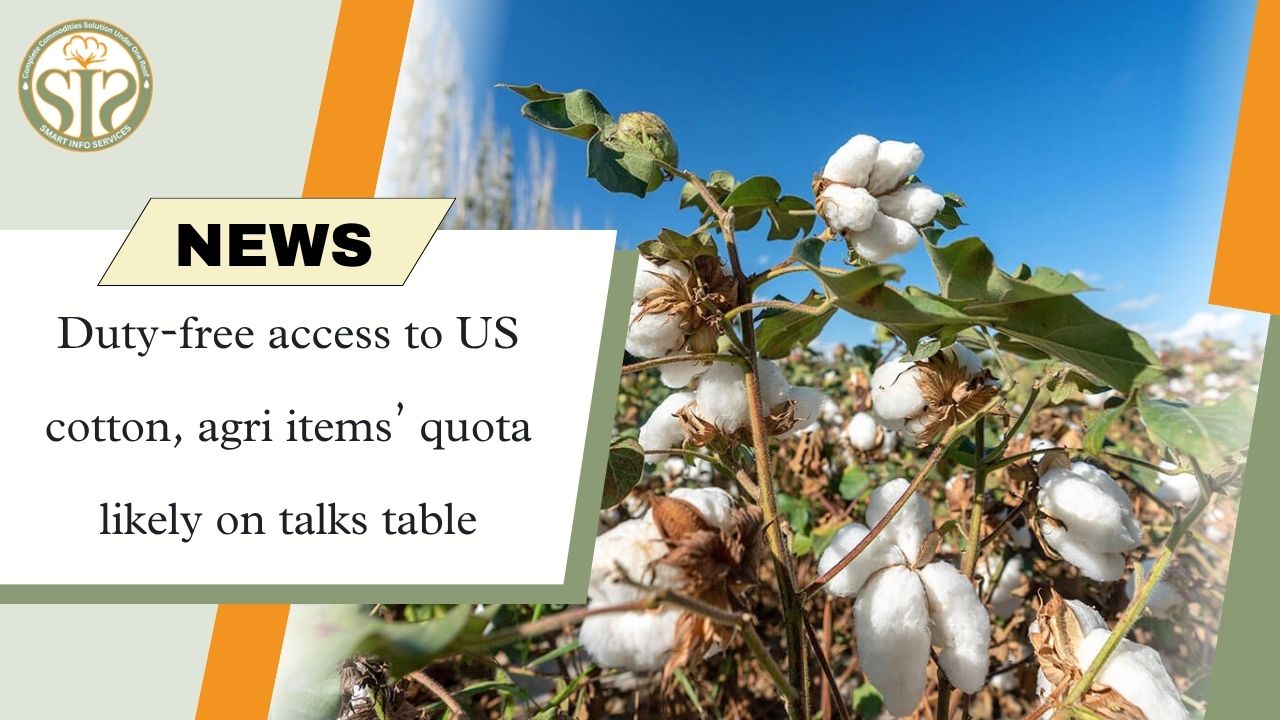
Duty-free access to US cotton, agri items’ quota likely on talks table

Talks possible on duty-free access to American cotton and agricultural quotaWhile some sectors have proposed incentives to accommodate US products, industry sources said the recent escalation in tension between New Delhi and Washington — due to additional tariffs over the Russian oil trade — is turning popular sentiment against a trade deal.Duty-free market access to US cotton, accepting agricultural items under limited quotas — these are among the possible concessions that the industry has suggested ahead of the crucial round of negotiations later this month when the US team is expected to arrive in India, The  has learnt.Earlier this month, Commerce Minister Piyush Goyal had sought suggestions from industry executives on ways to sweeten the trade deal with the US.While some sectors have proposed incentives to accommodate US products, industry sources said the recent escalation in tension between New Delhi and Washington — due to additional tariffs over the Russian oil trade — is turning popular sentiment against a trade deal.Importing duty-free US cotton is one of the areas being suggested to the government, which would also benefit domestic manufacturing amid declining  cotton production in the country. Notably, Bangladesh, which has signed a deal with the US, had also offered a similar concession. The US market accounts for nearly 30 per cent of India’s total apparel exports.A government official said that quotas for American agricultural items have also been considered, but these do not include genetically modified (GM) products. There is significant resistance to GM crops in India, and only one GM crop — Bt cotton — is approved for cultivation. However, no GM food crop is commercially grown in India.Meanwhile, following the steep tariff announced by the US, the industry has sought immediate relief — like expansion of the Remission of Duties and Taxes on Exported Products (RoDTEP) scheme to more sectors, and the Interest Subvention Scheme (ISS) for Micro, Small and Medium Enterprises (MSMEs).An exporter who did not want to be named said that established brands are not cancelling orders, but have begun putting them on hold, pending the outcome of negotiations slated for later this month.“Everybody [US importers] is saying, give us at least three weeks to revert — so, till the US negotiators reach India by August 25, and then maybe some relief could come. Indian exporters can absorb five to seven per cent tariff. Pharma has margins, so the challenge is less there. But in most other areas, margins are low. Other items — say proprietary items like what Apple produces — can withstand the pressure, but footwear and textiles have little margin and the competition is intense,” the exporter said.Another exporter said that higher tariffs could increase exports during the 21-day window. However, if the 50 per cent duty comes into effect, Indian goods will be worse off as compared to China, Bangladesh, Vietnam and most of the other competitors.An executive operating in the gems and jewellery sector said the industry has sought support from the government on the lines of the intervention during Covid, as concerns over imports of rough diamonds still remain and Indian goods may not remain competitive in the US market after 25 per cent tariffs.Meanwhile, India has already stepped up its oil imports from the US, with imports jumping over 270 per cent year-on-year in the first four months of 2025. According to data released by the Directorate General of Commercial Intelligence and Statistics (DGCIS), India imported 6.31 million tonnes of US crude in January–April, a sharp increase from 1.69 million tonnes in the same period last year.read more:- Textile industry worried about US tariffs

Textile industry worried about US tariffs

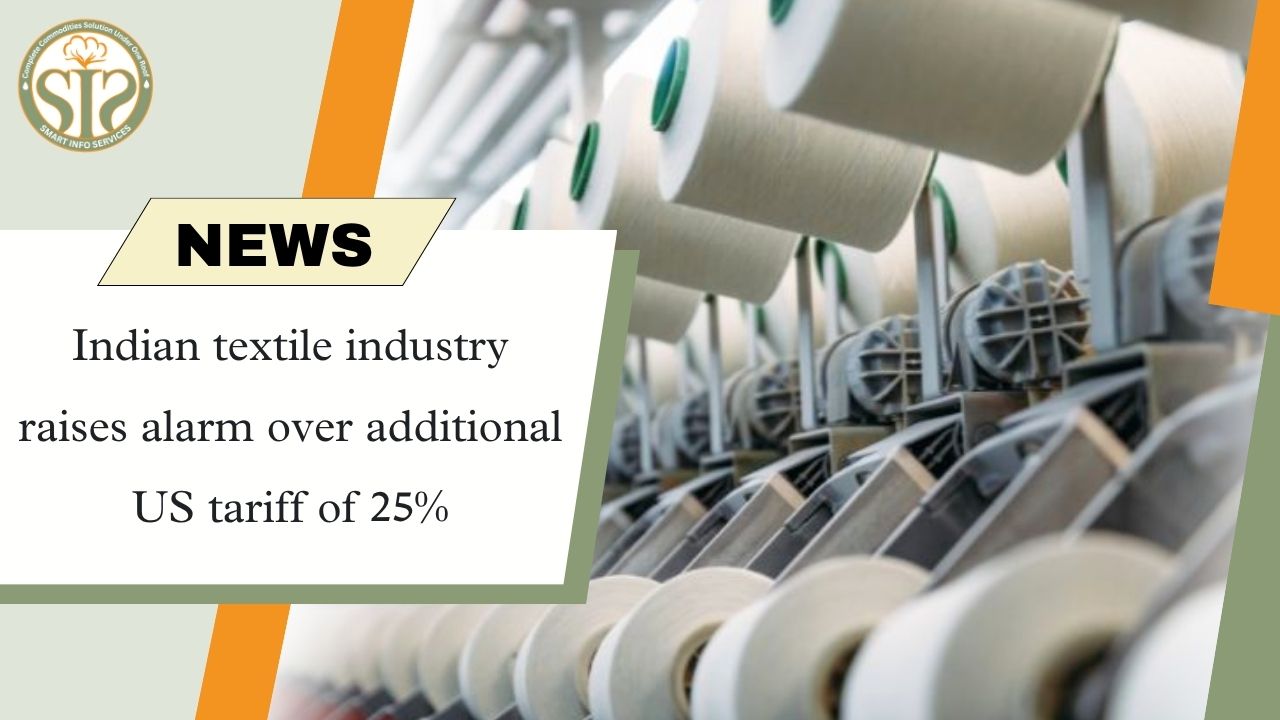
Indian textile industry raises alarm over additional US tariff of 25%The Confederation of Indian Textile Industry (CITI) has expressed serious concern over the potentially damaging effects of the recently announced effective 50% tariff rate imposed by the US on Indian textile and apparel products, which came into effect on 6th August.CITI Chairman Rakesh Mehra stated that the 6th August US tariff announcement has dealt a major blow to Indian exporters, exacerbating an already difficult situation and severely weakening their competitiveness in the US market compared to other nations.He further urged the Government to take swift action to support the textile and apparel industry, especially given its stated commitment to enhancing the sector’s global competitiveness and enabling Indian companies to become leading players internationally.Mehra also expressed CITI’s hope that a bilateral trade agreement (BTA) between India and the US will come to fruition soon. He noted that a well-structured agreement that safeguards India’s sovereign interests while maintaining fairness could prove beneficial for both countries.In a similar vein, Sudhir Sekhri, Chairman of the Apparel Export Promotion Council (AEPC), expressed serious concern over the recently imposed 50% tariff on Indian apparel exports, calling it a major blow to the labour-intensive sector. According to him, the industry is in no position to absorb such a steep tariff hike. He noted that the government is likely aware of the severe implications of this increase, which could spell disaster for micro and medium-sized apparel exporters—particularly those heavily reliant on the US market—unless the Government of India intervenes with direct fiscal assistance.The Clothing Manufacturers Association of India (CMAI) has voiced serious concern over the United States’ decision to raise tariffs on Indian apparel exports from 25% to 50%, describing the move as a significant blow to the sector.Santosh Katariya, President of the association, noted that a 50% tariff would make Indian products 30–35% more expensive than those from competing nations like Bangladesh and Vietnam, severely undermining India’s competitiveness in global markets. According to him, international buyers are unlikely to absorb such a large cost disparity, which could result in a steep decline in export orders.Vice President Ankur Gadia called on the Indian government to adopt a strong and proactive approach in response, urging it to pursue more balanced and equitable trade arrangements with the United States.Chief Mentor Rahul Mehta remarked that while there remains hope that the tariff hike may be part of a broader negotiation strategy, there is an urgent need for both policymakers and industry stakeholders to collaborate on immediate solutions to cushion the impact of what he described as a harsh and damaging policy.Sanjay Jain, MD of TT Ltd., echoed this point of view, saying that the industry is shocked with the imposition of the additional tariff of 25% by the US on such a short notice. All goods entering the US after 21 days would have to pay this tariff. And for the previous tariff, anything which was loaded before 7th August was exempted. With the earlier tariff there was some room for negotiation with buyers but with the addition it becomes 50% and added on top of that is the regular tariff of 15-16% which takes it to 65%. In such a case, neither the Indian supplier can compensate the buyer nor can the buyer bear it. As a result, it is highly likely that new orders will not come in and pending orders will have to be shipped at significant losses.The solution to this could be to give immediate export incentives in cash to negate the effects of such tariffs. The money saved by cheaper oil should be given to the industry instead of the consumer. Another could be to put a retaliatory tariff on Pharma exports to the US.read more:- Appeal to the government to abolish cotton duty

Related News

Youtube Videos

मध्य प्रदेश में कपास फसल भरपूर! 😱 पर मिलें सुस्त? | जनवरी से 11% ड्यूटी लगेगी? 🔥Podcast
मध्य प्रदेश में कपास फसल भरपूर! 😱 पर मिलें सुस्त? | जनवरी स...
CCI के पास 3-4 लाख गांठ कपास बचने का अनुमान! 😱 बाजार पर कितना होगा असर? | 21 Nov 2026
CCI के पास 3-4 लाख गांठ कपास बचने का अनुमान! 😱 बाजार पर कित...
कपास बाजार तेजी की ओर! 😱 | आज की आवक 1.11 लाख गांठ | रुई, कपास, खल, यार्न, CCI नीलामी
कपास बाजार तेजी की ओर! 😱 | आज की आवक 1.11 लाख गांठ | रुई, क...
Application Download
Whatsapp Contact