Recent News

Surendranagar: Cotton cultivation completed in 3.66 lakh hectares out of 5.7 lakh

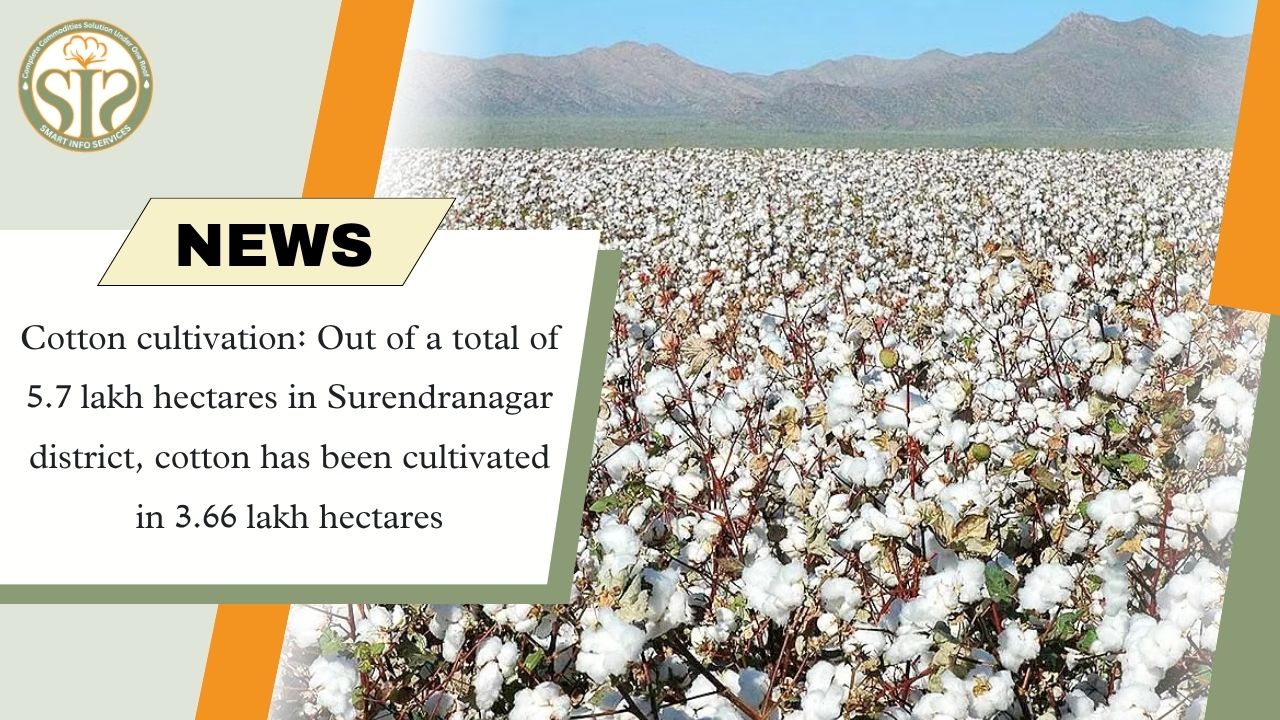
Cotton cultivation: Out of a total of 5.7 lakh hectares in Surendranagar district, cotton has been cultivated in 3.66 lakh hectaresSucking insects in cotton, blight in groundnutThis year, the monsoon season started with a bang in Surendranagar district. Later, the rain gradually decreased. So far, 3825 mm i.e. 64.07 percent of the season's rain has occurred. In the hope of good rains this year, farmers have sowed in a total of 5,07,250 hectares in the district so far.Out of which, cotton has been cultivated in the highest 3,66,919 hectares and groundnut in 39,706 hectares. But due to continuous cloudy and rainy conditions, the crop is getting affected. Meanwhile, the infestation of sucking insects in cotton and scab, blight, leaf spot disease, root rot disease and aphids in groundnut is increasing.Due to this, farmers are afraid of getting sick from the diseases they have already contracted. Therefore, District Agriculture Officer MR Parmar has asked them to take crop disease control measures including use of chemical fertilizers and spraying of medicines for disease control.If epidemic is detected, the effect can be reduced by giving nitrogen-rich fertilizers.If epidemic is detected in the current crop, inter-cropping should be done and weeds should be removed. Along with this, the effect of epidemic can be reduced by giving urea and nitrogen-rich fertilizers to prevent the crop from getting affected. Janakbhai Kalotra, Retired Agriculture OfficerApply neem seed solution on cotton. Uproot and destroy weeds in paddy field. For biological control of leafhoppers and thrips, apply 2 to 3 days old caterpillars of predatory green moth (Chrysopa) at the rate of 10,000 per hectare twice at an interval of 15 days.Use a non-chemical agent like 5% neem seed solution or Azadirachtin.Use yellow sticky traps to survey and control leafhoppers and whiteflies. Spray Verticillium wilt or Beauveria bassiae.read more :- CCI sold 71% of cotton in 2024-25 through e-bidding, prices rIse

CCI sold 71% of cotton in 2024-25 through e-bidding, prices rIse

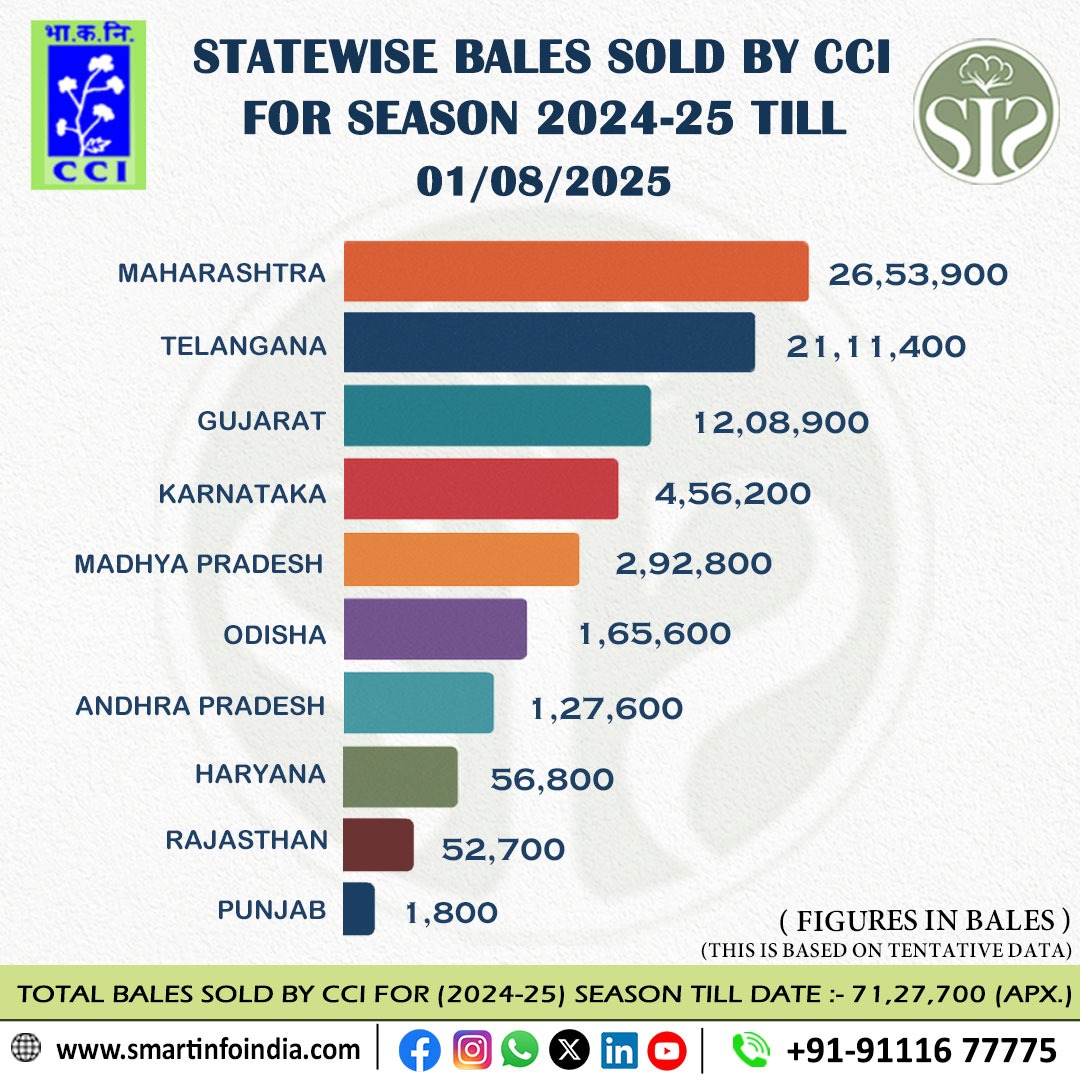
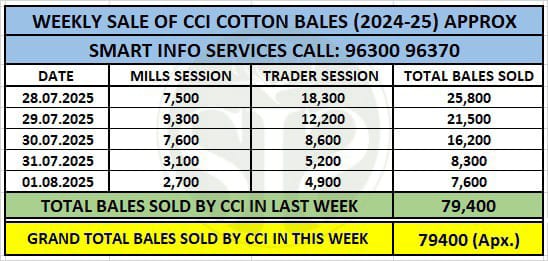
CCI Boosts Cotton Prices, sold 71% of 2024–25 Procurement via E-BiddingThe Cotton Corporation of India (CCI) conducted online bidding for cotton bales throughout the week, with significant trading activity observed across both the Mills and Traders sessions. Over the course of five days, CCI prices are unchanged.As of now, CCI has sold approximately 71,27,700 cotton bales for the 2024–25 season, representing 71.27% of its total procurement for the season.Date wise weekly Sales Summary :28 July 2025:The highest daily sales of the week were recorded on this day, with 25,800 bales sold from the 2024–25 season.Mills session : 7,500 balesTraders session : 18,300 bales29 July 2025:A total of 21,500 bales were sold from the 2024–25 season.Mills session : 9,300 balesTraders session : 12,200 bales30 July 2025:Sales amounted to 16,200 bales, all from the 2024–25 season.Mills session: 7,600 balesTraders session: 8,600 bales31 July 2025:A total of 8,300 bales were sold from the 2024–25 season.Mills session : 3,100 balesTraders session : 5,200 bales01 Aug 2025:The week concluded with sales of 7,600 bales.Mills session: 2,700 balesTraders session: 4,900 balesWeekly Total:CCI achieved total sales of approximately 79,400 bales for the week, underscoring its strong market engagement and the growing efficiency of its digital transaction platform.read more :- Indian Rupee higher 06 Paisa, Ends at 87.52 per Dollar

Leafhopper infestation in Punjab threatens cotton

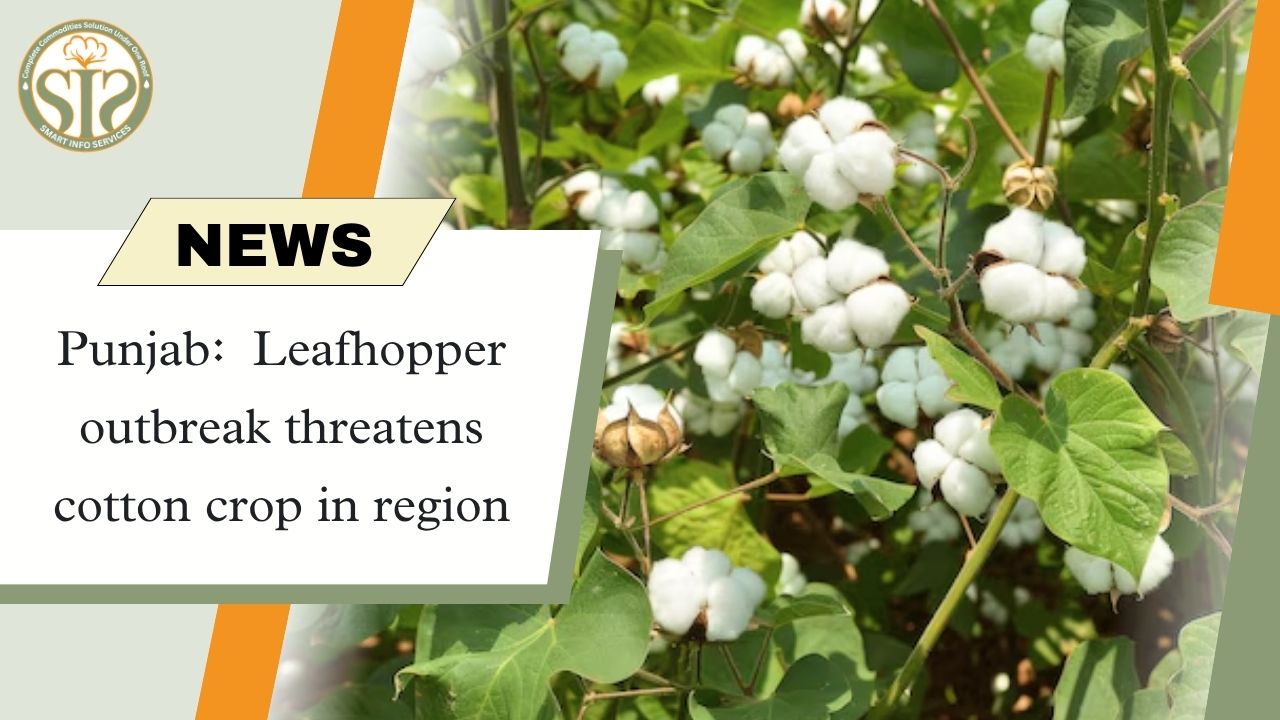
Punjab:  Leafhopper outbreak threatens cotton crop in regionBathinda: The South Asia Biotechnology Centre, a scientific organisation, has revealed an infestation of green leafhoppers (jassid), commonly known as ‘hara tela', on cotton across major cotton-growing districts of Punjab, Haryana, and Rajasthan. The impact is notable in Mansa, Bathinda, and Fazilka in Punjab, Hisar, Fatehabad, and Sirsa in Haryana, and Hanumangarh and Sri Ganganagar in Rajasthan. SABC observed the outbreak during a field survey conducted under Project Bandhan by the Jodhpur-based centre, which has its research and development centre at Sirsa.The field team, led by Dilip Monga, Bhagirath Choudhary, Naresh, Deepak Jakhar, and KS Bhardwaj, reported infestation levels of 12-15 leafhoppers per leaf, significantly above the Economic Threshold Level (ETL). The field survey also reported cotton leaf injuries exceeding ETL based on the damage grading system.For the past three consecutive weeks, green leafhopper (jassid) populations exceeded ETL, triggering yellowing of leaf margins and downward curling, classic symptoms of jassid attack. The outbreak is attributed to a confluence of weather conditions, including above-average rainfall, an increased number of rainy days, persistent humidity, and cloud cover, all of which created ideal conditions for jassid proliferation.Amrasca biguttula biguttula (Ishida), commonly referred to as the Indian cotton jassid or ‘hara tela', is a season-long sucking pest of cotton. Leafhopper adults are very active, pale green in colour, measuring about 3.5mm in length with two distinct black spots on forewings and vertex, readily identified by their characteristic diagonal movement on the leaves, hence referred to as ‘leafhoppers'. The population of leafhoppers occurs throughout the season but attains pest status during July-August. Up to 11 generations per season have been estimated to occur on cotton.Both nymphs and adults of leafhoppers suck the cell sap from the cotton tissue and inject toxins, causing the ‘hopper burn' symptom, characterised by yellowing, browning, and drying of leaves. The affected leaves show crinkling and curling symptoms, and in extreme situations, result in reduced photosynthetic activity, browning, and drying of leaves, which can considerably hamper the productivity of the cotton, leading to yield losses of up to 30% if unmanaged.Leafhopper ≥5 plants showing damage grade II/III/IV, grade II shows minor crinkling, curling, and yellowing in lower leaves, grade III is observed with leaf crinkling, curling, and crinkling across the plant; stunted growth, grade IV with severe bronzing, crinkling, curling, and drying of leaves. If ≥5 plants per 20 sampled show grade II or above damage, immediate action is necessary, said Research Scientist Deepak Jakhar.However, PAU Scientist Paramjit Singh said there is no alarming situation as the leafhopper is only slightly above ETL.The survey team noted that failure to control this green leafhopper infestation promptly could lead to damage to the cotton crop in the coming days. Farmers must remain alert and take immediate action to manage the pest effectively to avoid potential yield losses.SABC has urged cotton farmers to adopt science-backed measures to effectively manage and control the growing menace of green leafhoppers (jassids), such as regular field monitoring, accurate pest identification, and assessing infestation severity.It has been recommended to use neem-based bio-insecticides or other eco-friendly, organic pesticides to manage mild infestations. Spray during early morning or late evening when the wind is calm. Ensure thorough coverage, especially on the underside of leaves, where pests usually hide. Eliminate weeds within the field and along borders, as they serve as alternative hosts for leafhoppers and other pests. read more :- INR Opens Stronger by 02 Paise at 87.58

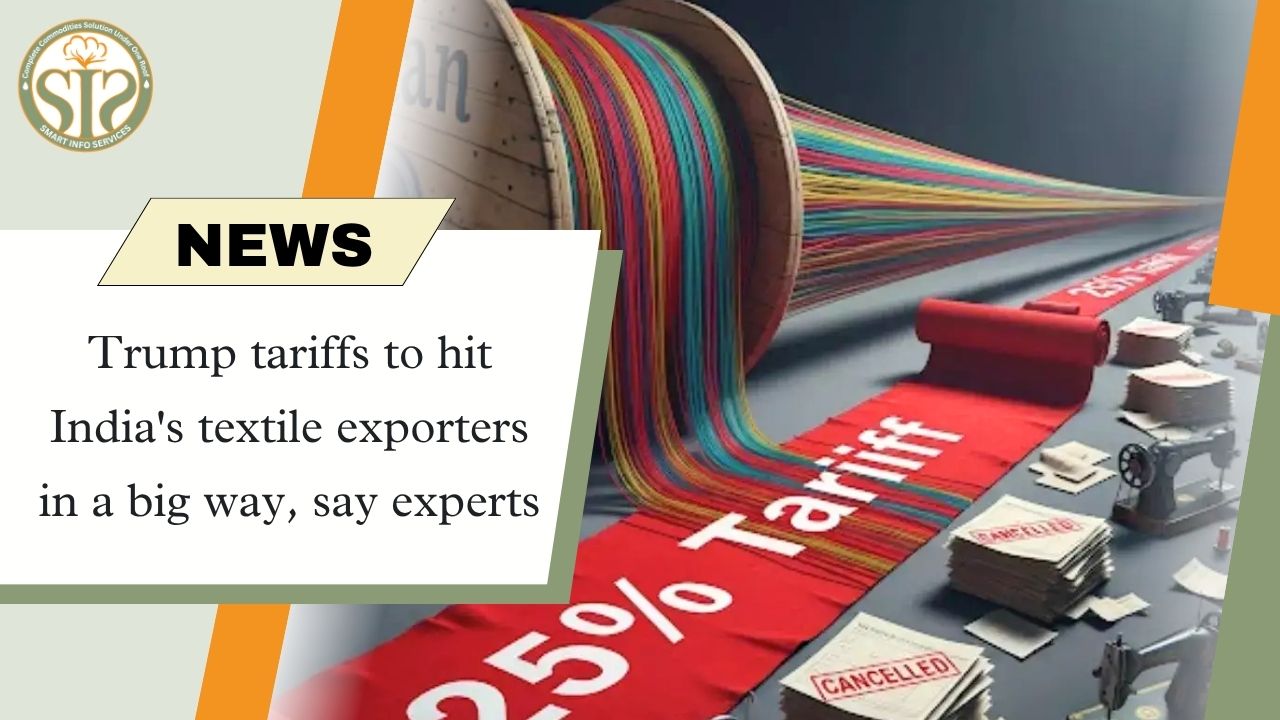
Trump tariffs to hit India's textile exporters in a big way, say experts

Trump's 25% tariff will cause huge losses to Indian textile exportersNew Delhi: US President Donald Trump's announcement regarding the imposition of 25 per cent additional import duty plus penalty on goods imported from India will hit the country's textile exporters in a big way, as competitors, including Vietnam and Indonesia now have a pricing edge by virtue of lower tariffs, experts said on Thursday.The duty will come into effect from August 1. The unspecified penalty was imposed on India for purchasing crude oil and military equipment from Russia.The US is India's largest market for textile and apparel exports.According to trade intelligence firm Cybex Exim Solutions, many Indian exporters may face order cancellations and the pressure to reduce prices, with costs going up and competitive disadvantage from Vietnam and Indonesia."The 25 per cent tariff announced by the US is a big hit for India's textile and garment exporters. Out of the USD 17 billion we export in ready-made garments, USD 5.6 billion goes just to the US. That's a big chunk. With costs going up overnight, many exporters might face order cancellations or pressure to reduce prices. Countries like Vietnam and Indonesia now have a pricing edge because their tariffs are lower," Cybex Exim Solutions stated."While India is still ahead of Bangladesh and Cambodia in terms of quality, this move puts real pressure on our manufacturers, especially smaller ones. It is time we look beyond just the US and start tapping into other markets more aggressively," it added.Speaking to PTI, Secretary General of the Confederation of Indian Textile Industry (CITI) Chandrima Chatterjee said it was "extremely concerned" about the unspecified penalty, as it has caused a lack of clarity for those placing an export order which needs to be serviced in the next couple of months."We will be seriously impacted. While most of us have taken the 25 per cent tariff with a pinch of salt but the penalty is where we are extremely concerned because we still are in a very speculative space there," Chatterjee said.According to her, Vietnam has a lower tariff than India at 20 per cent, whereas Indonesia faces a 19 per cent import tariff from the United States.Indian exporters could look at tapping alternative markets like the UK, EU, UAE, Japan and Korea more aggressively, Chatterjee added.Rajeev Gupta, Joint Managing Director, RSWM Ltd, said a "more pressing concern is the undefined penalty clause linked to India's ties with Russia, which adds a layer of uncertainty"."Indian entrepreneurs and manufacturers are resilient, and we are confident that business momentum will be consistently rising with planned strategies. What remains crucial is clarity on the tariff position against China," Gupta stated.read more :- Rupee strengthened by 11 paise against dollar and closed at 87.60

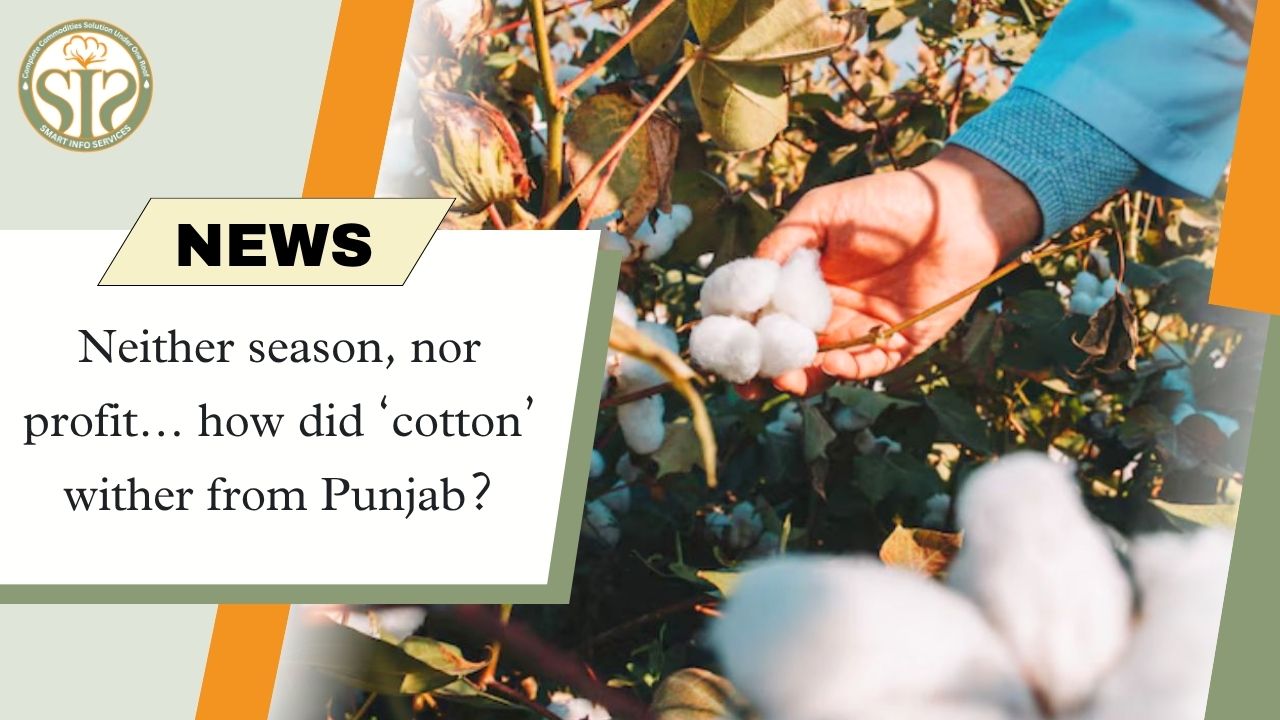
Neither season, nor profit… how did ‘cotton’ wither from Punjab?

Why did Punjab's cotton wither?There are three important belts in Punjab – Malwa, Majha, Doaba. Majha belt is known for cotton belt i.e. cotton cultivation. The reason is that cotton requires less water. Cotton cultivation was also done in large quantity in Malwa belt, but fake seeds, duplicate pesticides in the market have broken the back of the farmers.While the Punjab government is constantly making farmers aware for crop diversification, the farmers of Punjab are getting disillusioned with the cotton crop. Farmers no longer want to cultivate cotton. The result of this is that this year cotton cultivation is decreasing in the state. On the other hand, if we talk about the last 10 years, cotton production has fallen by 25.66 percent. Farmer leader Jangveer Singh says that 10 years ago, farmers of Malwa belt used to grow a lot of cotton, but now the situation has become such that instead of cotton, farmers want to grow crops which require less pesticide and also get the price of the crop at a reasonable price of MSP.There are three important belts in Punjab, Malwa, Majha, Doaba. Majha belt is known as cotton belt i.e. for cotton cultivation. The reason is that cotton requires less water. At the same time, cotton was cultivated in large quantities in Malwa belt, but fake seeds and duplicate pesticides in the market broke the back of the farmers. As a result, years passed and cotton cultivation decreased. The situation has become such that farmers are now cultivating only paddy and wheat.Farmer leader Jangveer Singh said that one problem is that the farmer does not cultivate any other crop other than the crop he goes for. As a result, that crop becomes so much that its price goes down. At present, only white eucalyptus crop is being grown in Majha and Malwa belts of Punjab. Dr. Harsh, an agricultural scientist of Punjab University, said that farmers want cotton crop, but the outbreak of pink caterpillar and white fly has turned farmers away from this farming.How much should be the price of cotton?The second biggest reason has been the uncertainty over the minimum support price (MSP). The crop is available at a low price. According to agricultural scientist Dr. Harsh, the price of cotton should be seven to eight thousand per quintal, but it is not. On the other hand, Malwa belt is now becoming a cancer belt. The biggest reason for this is that the pesticides used for the crops there, go and mix with the ground water. Due to this, the water has become so contaminated that people are getting afflicted with this disease.On the other hand, when Punjab Agriculture Minister Gurmeet Singh Khudian was questioned about farmers getting disillusioned with cotton farming, he said that we are encouraging the farmers, explaining to the farmers that they should cultivate cotton. Farmers will also get a fair price for cotton.118 blocks of Punjab have gone into the red zoneAccording to a report, the groundwater level of Punjab is already falling, which Chief Minister Bhagwant Singh Mann himself keeps mentioning. To improve the water situation, people are being encouraged to grow low-water crops. 118 blocks have gone into the red zone. This report has now increased the concern of the government even more. According to the report, cotton production has come down from 6.09 lakh bales in 2023-24 to 2.52 lakh bales in 2024-25. Similarly, the area has also come down from 2.14 lakh to one lakh hectares.Cotton Corporation of India reportThere has been a decline in the purchase of cotton at MSP in Punjab. According to a report of the Cotton Corporation of India in March, only two thousand bales were purchased at MSP in Punjab in the year 2024-25, whereas 3.56 lakh bales were purchased at MSP in the year 2019-20, 5.36 lakh bales were purchased at MSP in 2020-21, during 2021-22 and 2022-23 the market price of cotton was above MSP. Therefore, there was no purchase at MSP during these two years, but in the year 2023-24 only 38 thousand bales were purchased at MSP. Farmers and experts say that we want the government to give the right price on crops, end the problem of fake seeds, only then the condition of crops in Punjab will be right.read more :- US tariffs put pressure on Indian textile exports
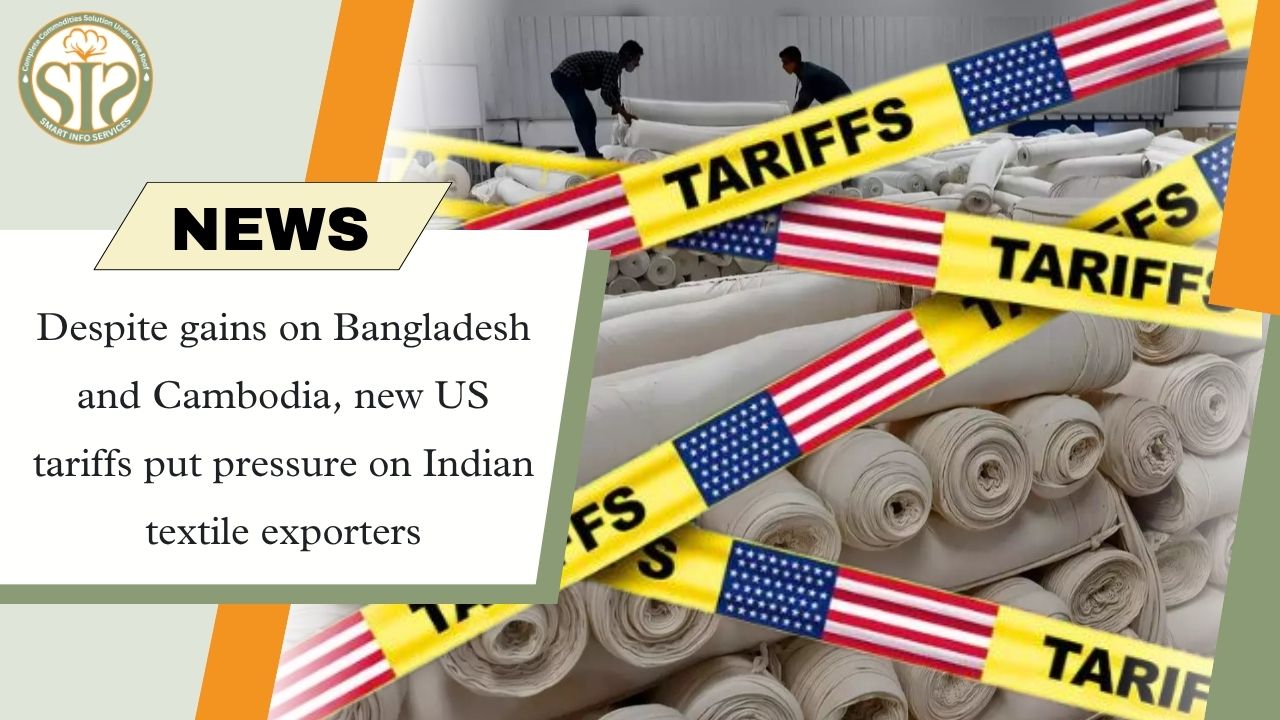
US tariffs put pressure on Indian textile exports

Despite gains on Bangladesh and Cambodia, new US tariffs put pressure on Indian textile exportersThis is a mixed bag for Indian textile and apparel exporters, as these exports to the US will be at an advantage compared to production hubs like Bangladesh and Cambodia, where tariffs are high. At the same time, countries like Indonesia and Vietnam could emerge as new competitors for India in this sector.The US has announced a 25% tariff and additional punitive duty on India from August, while it has already imposed 35% and 36% tariffs on Bangladesh and Cambodia, respectively. However, the US tariff on Indonesia and Vietnam is lower at 19% and 20%, respectively. Till now, the tariff from India to the US was 10%.Rakesh Mehra, president, Confederation of Indian Textile Industry (CITI), said, "The new tariff rate will put the resolve and resilience of India's textile and apparel exporters to a severe test as we will not get any significant benefit of duty differential compared to many other countries, except Bangladesh, with whom we compete for a large share in the US market."The US is India's largest market for textile and apparel exports. During January-May 2025, textile and apparel imports by the US from India were worth $4.59 billion, a growth of over 13% compared to the same period last year. China is the largest exporter to the US, followed by Vietnam, India and Bangladesh.The industry is now hopeful that the tariff issue will be resolved after a bilateral trade deal between India and the US. Sanjay Jain, managing director, TT Industries, said India had targeted a 10-15% growth in its textile exports to the US, which will be impacted due to the new tariffs.read more :- Increase in cotton imports from Brazil, India imports more, exports less

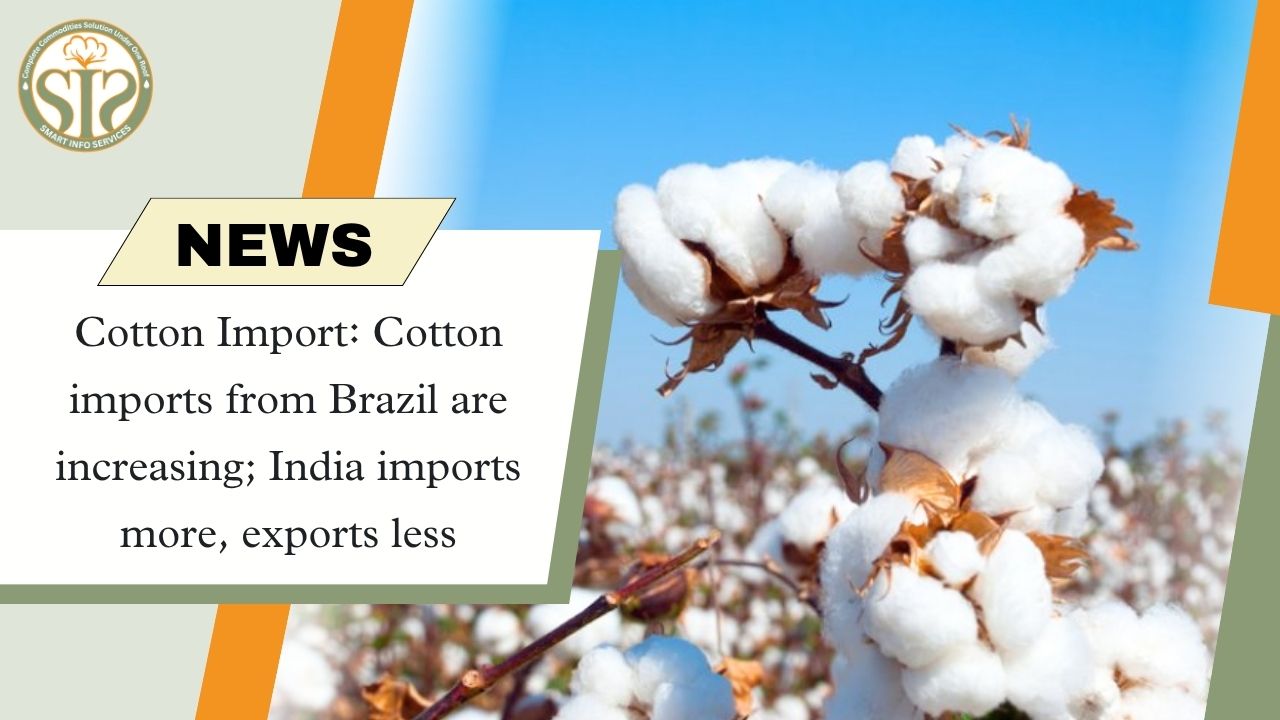
India’s Cotton Imports Jump to 6-Year High, Brazil Emerges Top Supplier

Cotton Import Surge: Brazil Leads as India Imports Rise, Exports Hit Multi-Year LowCotton imports in India are witnessing a sharp rise this season, driven by lower domestic production and cheaper prices in the international market. In the first eight months of the 2024–25 season, the country has imported around 27 lakh bales of cotton—the highest level in the past six years.Interestingly, Brazil has emerged as the top supplier this year, overtaking traditional exporters like the United States and Australia. The continued softness in global cotton prices has encouraged Indian importers to increase purchases, and industry experts believe imports may rise further in the coming months.India, traditionally a major cotton exporter, is now facing a shift in trade dynamics. A decline in domestic production—now at its lowest in several years—combined with steady consumption has forced the country to rely more on imports to meet demand. While domestic demand has supported prices to some extent, global price weakness continues to exert pressure on the market.Between October 2024 and May 2025, India recorded its highest cotton imports in six years. In comparison, imports stood at 15 lakh bales in 2023–24 and 14 lakh bales in 2022–23. The last time imports were significantly higher was in 2018–19, when they reached 35 lakh bales.At the same time, cotton exports have dropped sharply, touching their lowest level in 18 years. So far this season, only 13 lakh bales have been exported, compared to the previous lowest of 23 lakh bales in 2008–09. Exporters remain pessimistic about any major recovery in shipments this year.Country-wise import data shows that Brazil accounted for the highest share, with around 6.5 lakh bales imported so far. This is followed by the United States (5.5 lakh bales), Australia (5 lakh bales), Mali (1.79 lakh bales), and Egypt (83,000 bales). Lower prices in these countries compared to India have been the key factor driving imports.Cotton Imports Trend (in lakh bales):2024–25* — 272023–24 — 152022–23 — 142021–22 — 212020–21 — 112019–20 — 15.5read more :- Maharashtra: 7000 hectares of cotton crop affected by blight due to rain

Related News

Youtube Videos

मध्य प्रदेश में कपास फसल भरपूर! 😱 पर मिलें सुस्त? | जनवरी से 11% ड्यूटी लगेगी? 🔥Podcast
मध्य प्रदेश में कपास फसल भरपूर! 😱 पर मिलें सुस्त? | जनवरी स...
CCI के पास 3-4 लाख गांठ कपास बचने का अनुमान! 😱 बाजार पर कितना होगा असर? | 21 Nov 2026
CCI के पास 3-4 लाख गांठ कपास बचने का अनुमान! 😱 बाजार पर कित...
कपास बाजार तेजी की ओर! 😱 | आज की आवक 1.11 लाख गांठ | रुई, कपास, खल, यार्न, CCI नीलामी
कपास बाजार तेजी की ओर! 😱 | आज की आवक 1.11 लाख गांठ | रुई, क...
Application Download
Whatsapp Contact