Recent News

Industrial production up by 1.9% in EU in March: Eurostat

EU Industrial Growth Hits 1.9% in MarchIn March 2025, compared with February 2025, seasonally adjusted industrial production increased by 1.9 per cent in the EU and 2.6 per cent in the euro area, according to first estimates from Eurostat, the statistical office of the European Union. In February 2025, industrial production grew by 1.1 per cent in both the euro area and the EU.In the euro area, industrial production showed mixed results in March 2025 compared with February 2025. Production increased by 0.6 per cent for intermediate goods, 3.2 per cent for capital goods, 3.1 per cent for durable consumer goods, and 2.3 per cent for non-durable consumer goods. However, production of energy declined by 0.5 per cent, marking the only category with a decrease during the period.In the EU, industrial production in March 2025 compared with February 2025 showed overall growth across most categories. Production rose by 0.2 per cent for intermediate goods, 3.0 per cent for capital goods, 2.8 per cent for durable consumer goods, and 1.3 per cent for non-durable consumer goods. The only decline was seen in energy production, which dropped by 1.7 per cent during the same period, according to the report.The highest monthly increases were recorded in Ireland (+14.6 per cent), Malta (+4.4 per cent) and Finland (+3.5 per cent). The largest decreases were observed in Luxembourg (-6.3 per cent), Denmark and Greece (both -4.6 per cent) and Portugal (-4.0 per cent).On an annual basis, industrial production in both the euro area and the EU showed notable growth in March 2025 compared with March 2024, particularly in consumer goods. In the euro area, production increased by 15.7 per cent for non-durable consumer goods, 2.2 per cent for energy, 1.1 per cent for durable consumer goods, and 1.0 per cent for capital goods, while intermediate goods saw a slight decline of 0.2 per cent. Similarly, in the EU, production rose by 12.2 per cent for non-durable consumer goods, 1.3 per cent for durable consumer goods, 1.0 per cent for capital goods, and 0.8 per cent for energy, with intermediate goods also decreasing by 0.2 per cent.The highest annual increases were recorded in Ireland (+50.2 per cent), Malta (+10.1 per cent) and Lithuania (+7.8 per cent). The largest decreases were observed in Bulgaria (-8.3 per cent), Romania (-7.8 per cent) and Denmark (-5.7 per cent).read more:- Rupee Falls 7 Paise to 85.47 vs Dollar

port curbs on bangladesh imports may create Rs 1,000 crore biz for textiles

Import Curbs May Boost ₹1,000 Cr Textile Biz in BangladeshIndia's ban on imports from Bangladesh through the land ports could generate an additional business of more than ₹1,000 crore for the domestic textile industry, said industry experts. However, certain branded garments may see some supply issues in the winter season, which could raise prices of items like T-shirts and denims 2-3%.The director general of foreign trade (DGFT) in a notification on Saturday banned imports of garments and several other products from Bangladesh through land routes, but allowed them to be shipped in via Kolkata and Nhava Sheva ports.The local industry had been demanding restrictions on imports, concerned about a double-digit growth in textile imports from Bangladesh due to zero import duty.The move is also expected to curb the back-door import of Chinese fabric, which otherwise attracts 20% import duty.The trade and industry unanimously think that Bangladesh will lose more than India due to change in the import policy."India is not going to lose much... It will be difficult for Bangladesh to import by sea route through containers over the land route, which took a couple of days," said Bimal Bengani, chairman (eastern region) at Federation of Indian Export Organisations (FIEO).Boost Local Manufacturing: The ban on land route imports from Bangladesh may boost local manufacturing, industry insiders said."We were importing garments worth ₹6,000 crore annually from Bangladesh. We can now expect imports worth ₹1,000-2,000 crore to be replaced with Indian manufacturing," said Sanjay K Jain, chairman of National Textile Committee, Indian Chamber of Commerce (ICC).Indian companies have been importing woven and knitted apparel from Bangladesh due to the zero-duty advantage."With this move (ban on imports via land routes), the reduction in imports will help strengthen domestic production and support local manufacturers," said Prabhu Dhamodharan, convenor of Indian Texpreneurs Federation, which represents the entire value chain of the textile industry.According to industry estimates, India meets between 1-2% of its apparel consumption through imports, while Bangladesh accounts for about 35% of total garment imports in the country."This move would also reduce the backdoor entry of Chinese fabrics into India (without duty) that were getting converted in Bangladesh and being sent to India duty free," Jain said.Supply Disruption: All the leading Indian brands as well as the global brands present in India source between 20% and 60% garments from Bangladesh, according to industry estimates.The supply chains of these brands and many MSME units are expected to be disturbed in the short term."Buyers will be impacted as temporarily their supply chain will be disrupted and would have higher cost and lead time," Jain said.read more :- Maharastra : Cotton to dominate Kharif sowing in Wardha district

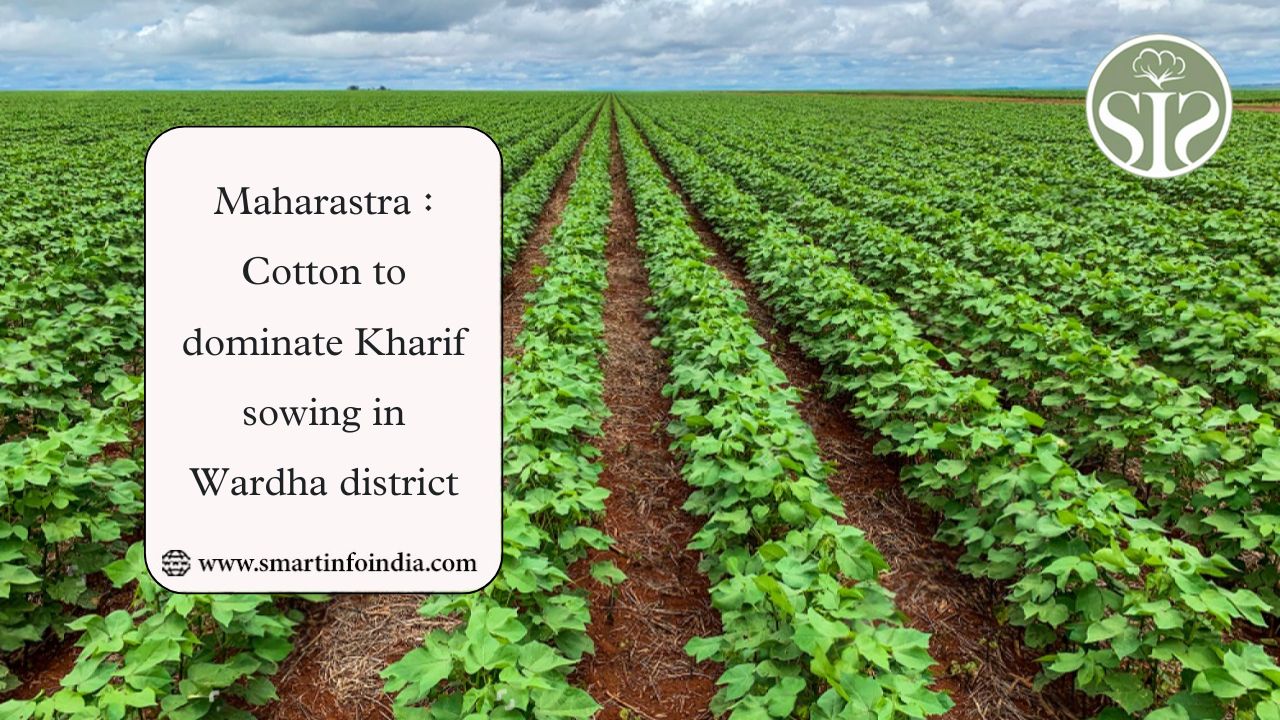
Maharastra : Cotton to dominate Kharif sowing in Wardha district

Cotton to Dominate Wardha’s Kharif SeasonNagpur : Cotton will be the leading crop in Wardha district this Kharif season, with over 2.24 lakh hectares planned for its sowing out of the total 4.30 lakh hectares earmarked for cultivation.According to district agricultural officials, cotton will account for more than half of the total sowing area. It is followed by soybean on 1.38 lakh hectares, tur (pigeon pea) on 60,670 hectares, jowar (sorghum) on 5,000 hectares, and other crops on around 1,684 hectares.To support this large-scale cultivation, the district will require approximately 11.24 lakh seed packets of cotton (5,343 quintals), making it the single largest demand among all crops. The demand for Soybean seeds stands at 62,388 quintals, tur at 2,548 quintals, and jowar at 400 quintals.Guardian minister Pankaj Bhoyar has urged officials to ensure the timely availability of seeds as per the projected demand. "Make sure the district has enough seeds stocked up — especially for cotton and soybean," he emphasised during a recent review meeting.The overwhelming preference for cotton reflects the crop's commercial value and historical importance in the region. Agriculture experts attribute this trend to favourable climatic conditions, market demand, and the availability of improved seed varieties.District superintendent agriculture officer Shankar Totawar provided these figures during a detailed presentation of the Kharif season plan, highlighting that seed stock planning and distribution is already under way.read more :- Rupee Rises 7 Paise to 85.44/USD

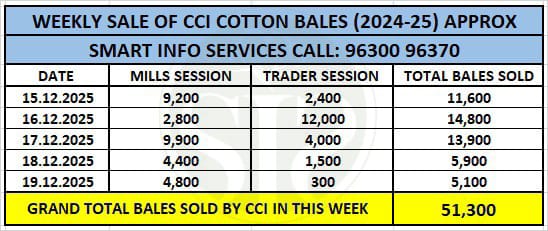
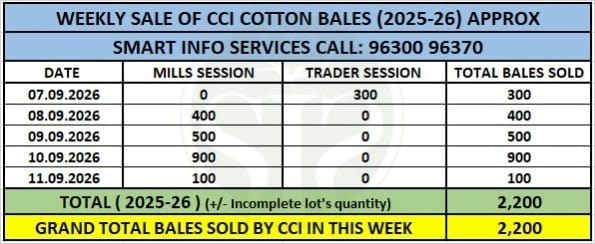
Weekly Summary Report : Cotton Bales Sold by Cotton Corporation of India (CCI).

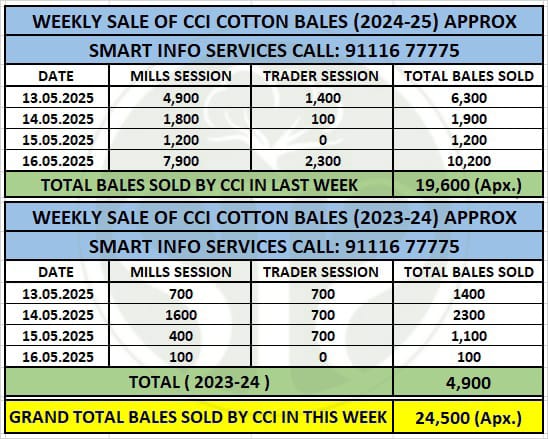
CCI Weekly Cotton Bale Sales ReportCotton Corporation of India (CCI) conducted online bidding for cotton bales throughout the week, with the summary of daily sales being as follows:13 May 2025: Daily sales were recorded at 6,300 bales (2024-25) and 1,400 bales (2023-24), comprising 4,900 bales (2024-25) and 700 bales (2023-24) in the Mills session and 1,400 bales (2024-25) and 700 bales (2023-24) in the Traders session.May 14, 2025: Total 4,200 bales recorded, including 1,900 bales (2024-25) and 2,300 bales (2023-24), including 1,800 bales (2024-25) and 1,600 bales (2023-24) in Mills session and 100 bales (2024-25) and 700 bales (2023-24) in Traders session.15 May 2025: Total 1,200 bales (2024-25) and 1,100 bales (2023-24) were recorded, including 1,200 bales (2024-25) and 400 bales (2023-24) in Mills session and 700 bales (2023-24) in Traders session.16 May 2025: Highest sales of the week were 10,200 bales (2024-25) and 100 bales (2023-24), including 7,900 bales (2024-25) and 100 bales (2023-24) in Mills session and 2,300 bales (2024-25) in Traders session.Weekly Total: During the week, CCI sold 24,500 (approx.) cotton bales, successfully using its online bidding platform to streamline transactions and support trading.SiS is committed to updating you in real time on all textile related news.read more :-US Cotton Cultivation: Cotton cultivation in the US will decline by 14 percent

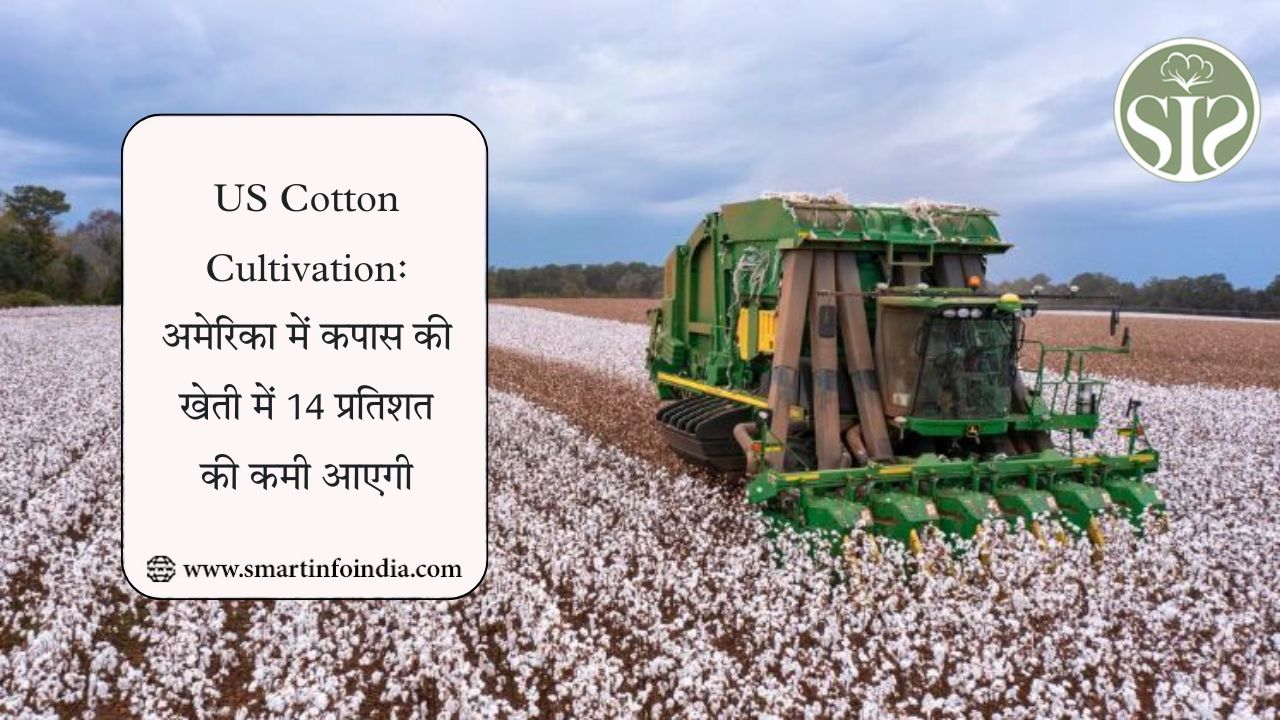
US Cotton Cultivation: Cotton cultivation in the US will decline by 14 percent

US Cotton Cultivation to Drop 14%Cotton cultivation in the US is expected to decline by 14 percent this year. Cultivation of extra long staple cotton is also likely to decline by 24 percent. The United States Department of Agriculture (USDA) has also forecast that global cotton production will remain low due to the possibility of reduced production in countries like China, India, Australia and Turkey.The US cotton season starts before the Indian season. Therefore, developments in the US cotton market have an impact on cotton prices in India. Sowing of cotton as well as soybean, maize and wheat has accelerated in the US.Rains were delayed in important cotton producing areas of the US. The southern and southeastern states of the United States did not receive enough rain. Therefore, cotton sowing was delayed. But now sowing has picked up pace. About 30 percent of cotton sowing has been completed. About 33 percent of planting was done during this period last year.Cotton cultivation will decreaseThis year, cotton sowing in the United States is likely to decrease. Last year, American farmers got low prices for cotton. Soybean prices were also low. But they got good profits from corn. Therefore, this year cotton and soybean cultivation is expected to decrease and corn cultivation is expected to increase.This year, cotton sowing by American farmers is likely to decrease by 14 percent. This year, cotton is estimated to be cultivated on about 9.7 million acres of land. There is a possibility of a decrease of about 24 percent in the cultivation of extra long fiber cotton.Impact on global cotton productionThe US Department of Agriculture has estimated a decline in global cotton production in the new season. Cotton production is expected to decline in countries like India, China, Australia and Turkey. Global cotton production is estimated to reach 1,508 million bales. 1,549 lakh bales have been produced in the current season.Soybean will decrease, corn will increaseSoybean cultivation in the United States also reached 54 percent. Soybean planting in the United States is expected to fall by 4 percent this year. Corn planting is 65 percent complete. Corn cultivation is expected to increase by 5 percent this year. The US Department of Agriculture estimates that sorghum cultivation will increase by 4 percent and peanut cultivation by 8 percent.read more :-Maharashtra: Farmers turn to illegal herbicide-tolerant cotton seeds again

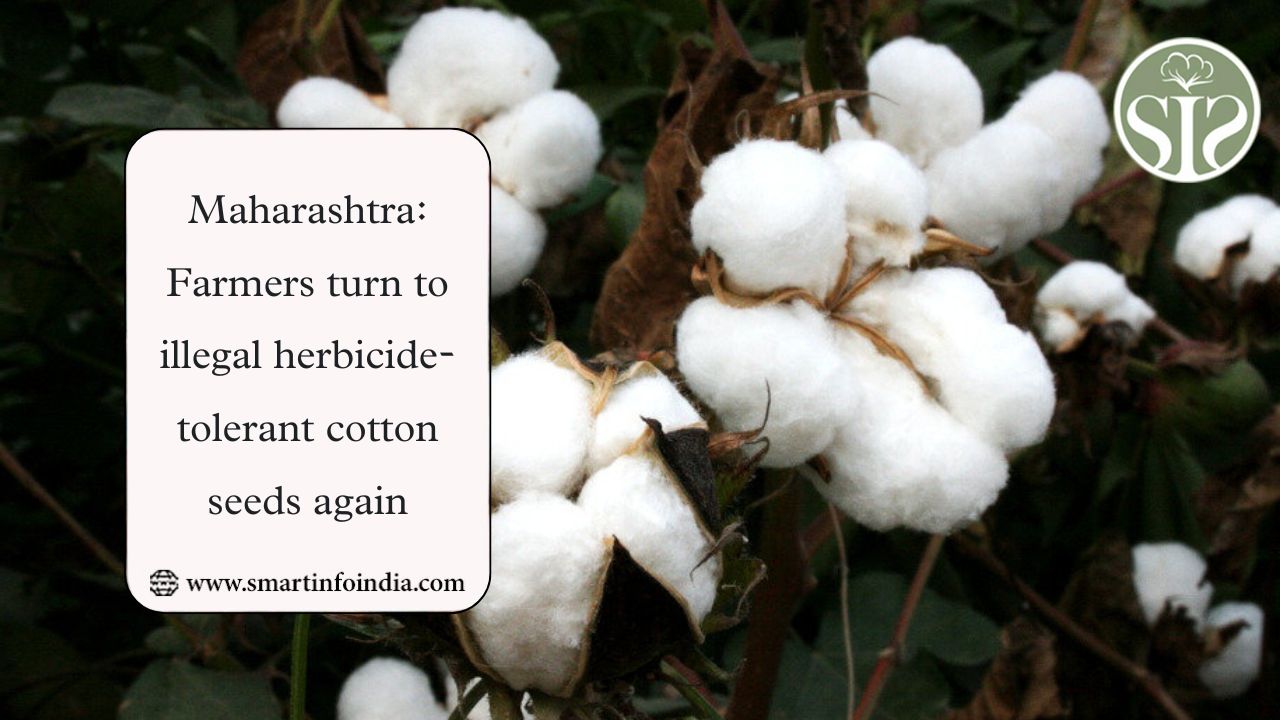
Maharashtra: Farmers turn to illegal herbicide-tolerant cotton seeds again

Maharashtra Farmers Reuse Illegal HT Cotton SeedsNagpur : As the sowing season nears, illegal herbicide-tolerant (HT) cotton seeds are once again available in the market. HT seeds, which are genetically designed to be resistant to glyphosate-based herbicides, have not been permitted for commercial use by the Centre. This is because Mahyco-Monsanto, the company that introduced the technology, abandoned trials more than a decade ago. Since trials were not complete, permission was not granted by the environment ministry.However, illegal multiplication of seeds continued and supplies began to pour into Vidarbha and other cotton-producing regions of the country. Farmers who spoke on the condition of anonymity said they are keen to buy seeds that are easily available in the market. This is because it significantly reduces the cost incurred due to manual weeding. They can simply get rid of the weeds by spraying glyphosate-based herbicides.Farmers said that earlier many farmers had bought fake seeds in the name of HT cotton. However, grey market operators have also started improving its quality. The seeds are smuggled mainly from Gujarat and Telangana. A farmers' organization called Shetkari Sangathan has been raising the demand to legalize the cultivation of HT cotton. The activists of the organization have protested from time to time by openly sowing HT seeds and have challenged the government to take action against them.read more :-Donald Trump said US will set tariff rates for other countries in a few weeks

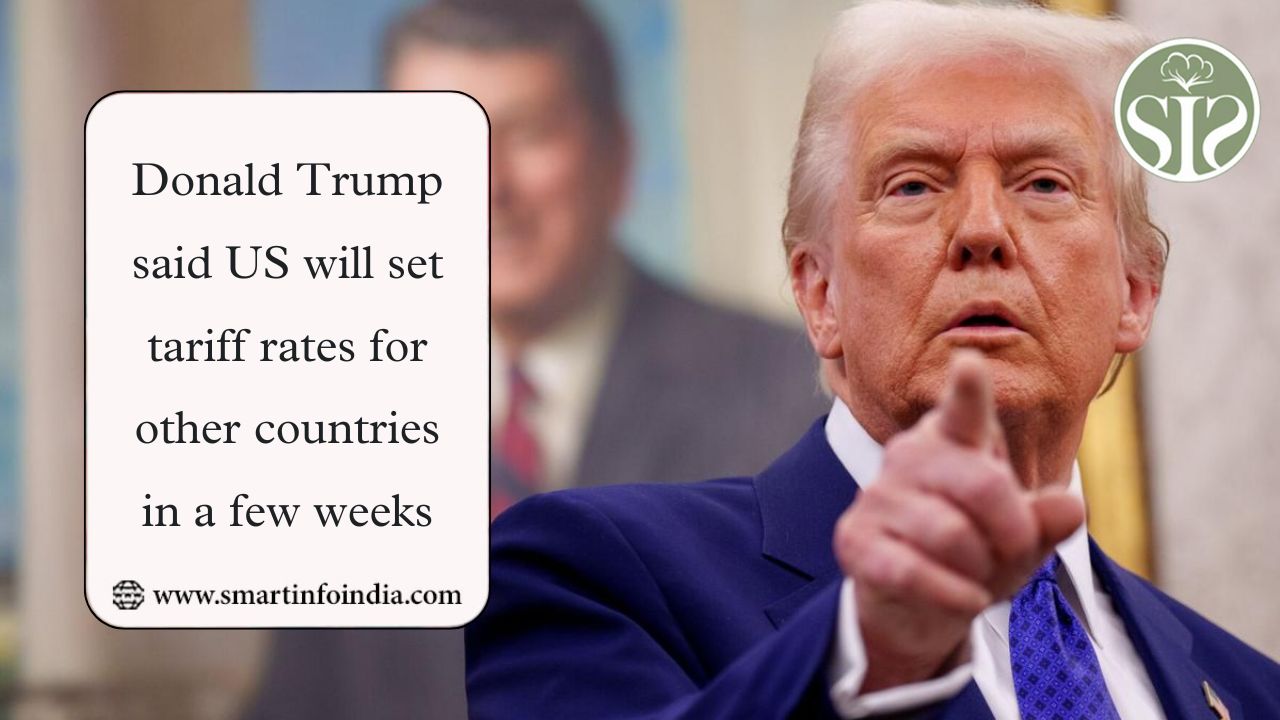
Donald Trump said US will set tariff rates for other countries in a few weeks

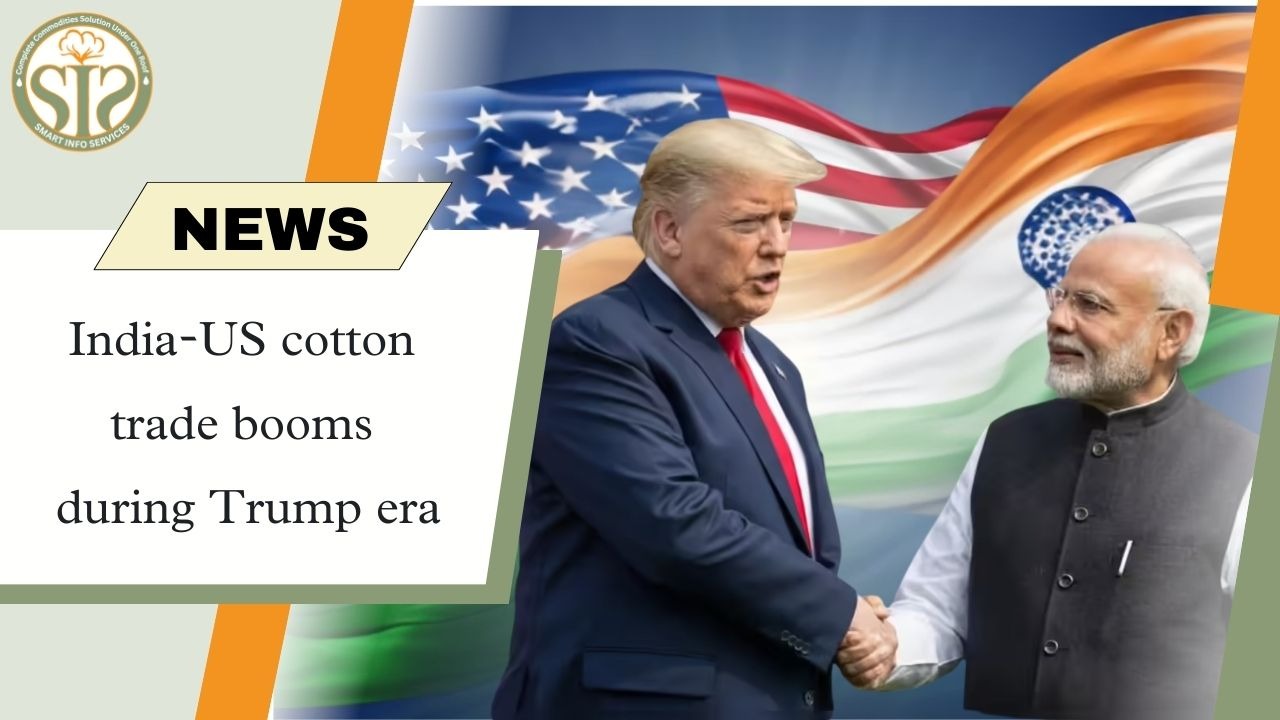
Trump: U.S. to Set New Tariff Rates SoonPresident Donald Trump said he would set tariff rates for US trading partners in the next two to three weeks, saying his administration did not have the ability to make deals with all of its trading partners.Trump said on Friday that Treasury Secretary Scott Bessant and Commerce Secretary Howard Lutnick would "send out letters to people telling them" what they would pay to do business in the United States."I think we're going to be very fair. But the number of people who want to meet with us is not going to be possible," the president said during a meeting with trade executives in the United Arab Emirates.The US president insisted there were "150 countries that want to make a deal." He did not say how many or which countries would receive the letters.The White House and Commerce Department did not immediately respond to requests for comment overnight in the US.Trump announced higher tariffs on dozens of trading partners on April 2, but later put them on hold for 90 days to give foreign governments time to negotiate as investors panicked. Yet in recent weeks the president has moved away from the idea that he would negotiate back and forth with every partner.While the Trump administration is prioritizing trade talks with more than a dozen countries, a lack of manpower and capacity makes it impossible to negotiate concurrently with all the countries caught up in the president's so-called reciprocal tariff plan.Tariffs are imposed at the border by U.S. Customs and Border Protection, but the extra costs are often partially or entirely passed on to American consumers.Earlier this month, Trump said he would set the level of tariffs for several countries wanting to avoid higher duties.Negotiations are still ongoing with several economies, including Japan, South Korea, India and the European Union. Trump recently agreed to a trade framework with the UK and reciprocal temporary tariff cuts with China to buy more time for negotiations.The US president said on Thursday that New Delhi had proposed to reduce tariffs on American goods, an offer that the Indian government did not confirm."We have four or five other deals coming immediately," Trump said on May 9, promoting his UK blueprint. "We have many more deals coming. Eventually, we're just signing the rest of the deals."read more :-India’s Apparel Exports See Strong Growth In April, Led By US Demand

Related News

Youtube Videos

साप्ताहिक कपास रिपोर्ट 😱 तेज़ी या मंदी? Weekly Cotton Market 26 Sep 2026
साप्ताहिक कपास रिपोर्ट 😱 तेज़ी या मंदी? Weekly Cotton Marke...
ऐसा रहा आज कपास बाज़ार 😱 महाराष्ट्र कपास बुवाई जानकारी | Cotton Market Rate Today 24 Sep 2026
ऐसा रहा आज कपास बाज़ार 😱 महाराष्ट्र कपास बुवाई जानकारी | Co...
रुई बाज़ार में गिरावट का रुख 😱 Cotton Market Rate Today | 23 Sep 2026
रुई बाज़ार में गिरावट का रुख 😱 Cotton Market Rate Today | 2...
Application Download
Whatsapp Contact