Filter

Recent News

CCI purchased 9 lakh bales.

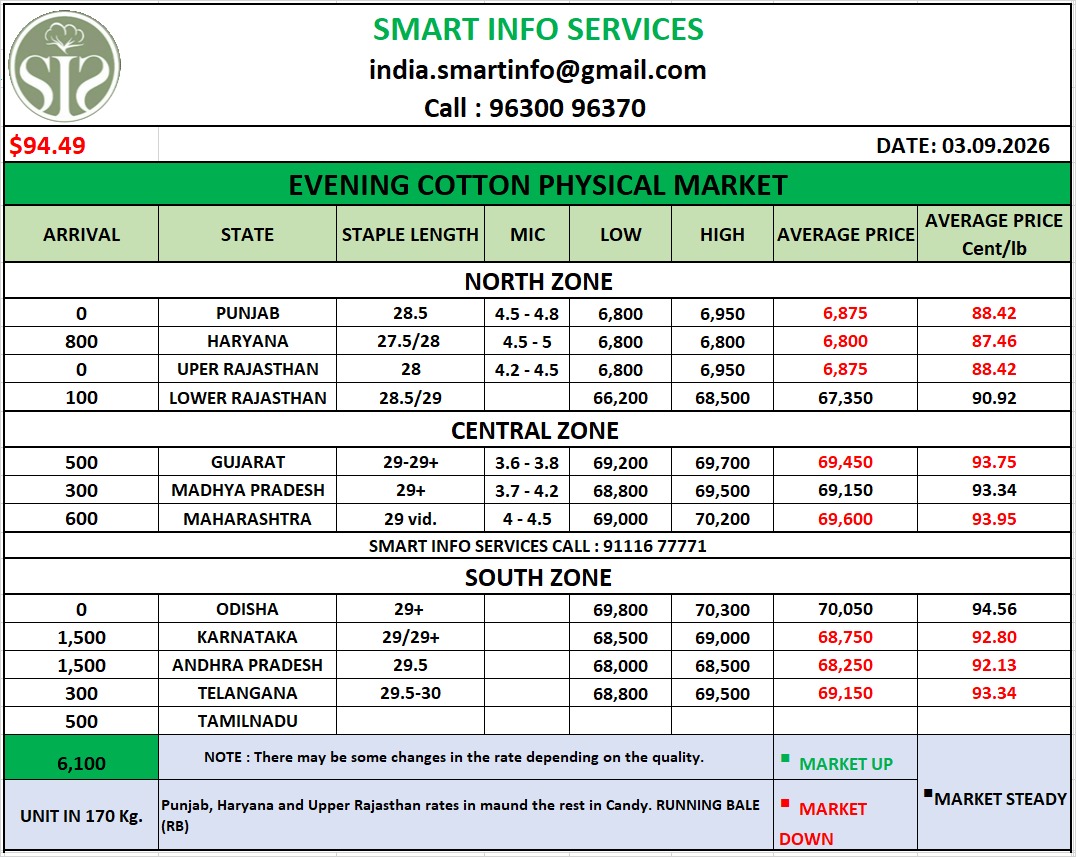
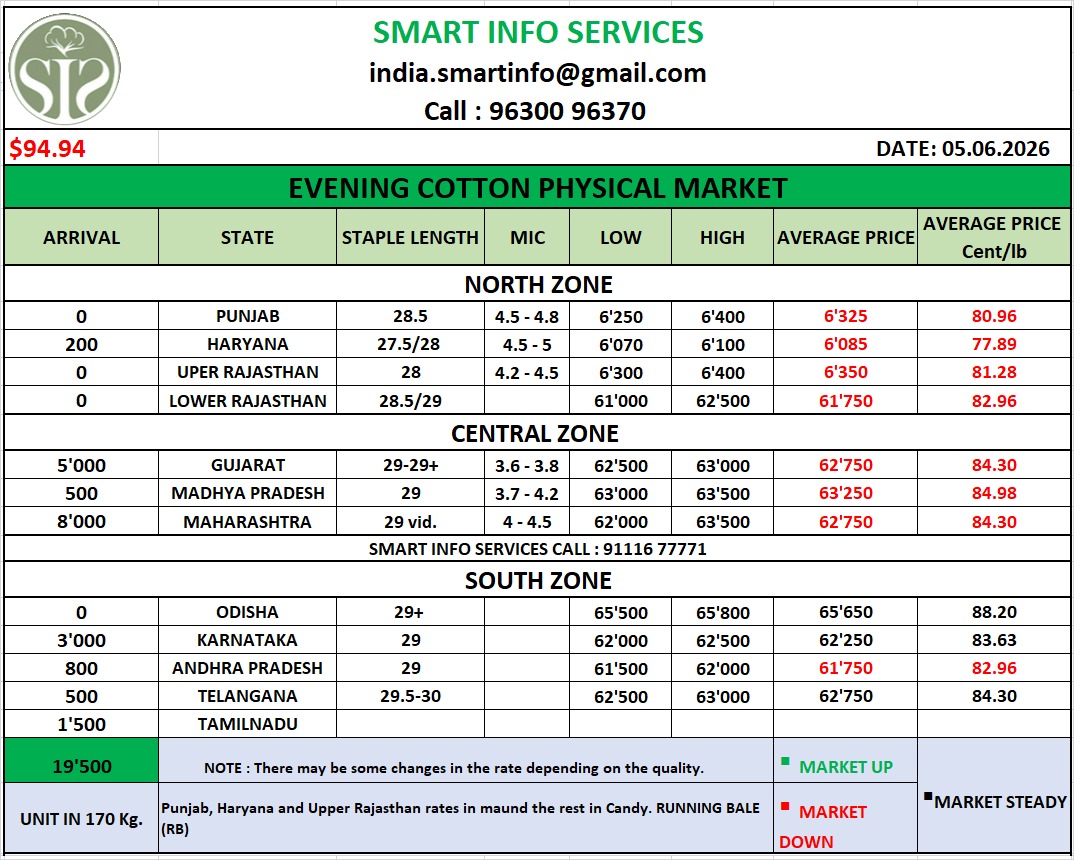
CCI purchased 9 lakh bales.According to the Cotton Association of India (CAI), cotton production for the 2023-24 (October-September) season is estimated at 296 lakh bales - the lowest in 15 years.Amid low demand, pink bollworm infestation has made cotton less attractive in the Indian market. Moreover, farmers have been left to knock the doors of the Cotton Corporation of India (CCI). So far, the nodal agency has procured around 9 lakh bales (at MSP) worth around ₹3,600 crore this season.The government has fixed the MSP for medium staple cotton at ₹6,620 per quintal and for long staple cotton at ₹7,020 per quintal."We have procured around 9 lakh bales across India. Now, our share in procurement is 30-40% of daily arrivals," said Lalit Kumar Gupta, chairman and managing director of CCI.He said the pace of procurement across India has reached 2 lakh bales per day. “Maximum procurement takes place in Telangana and Andhra Pradesh where prices are low.” The lowest market price of cotton in Telangana is around ₹5,500 per quintal and in Andhra Pradesh it is around ₹4,200. Meanwhile, infection is not a matter of concern in these states.Due to pink bollworm infection, farmers in states like Punjab, Haryana and Rajasthan are finding it difficult to sell their cotton to CCI. Gupta said, while other states are providing good quality cotton, cotton coming from Punjab, Haryana and Rajasthan is largely affected."In Punjab, Fazilka and Muktsar are two districts where quality is an issue. Both these districts are affected by pink bollworm. Therefore, most of the cotton coming to CCI is either infected or damaged cotton. We cannot compromise on quality." "We need to purchase carefully. We buy only cotton that meets the quality standards," Gupta said.CCI has purchased cotton worth ₹120 crore in Punjab. The agency is purchasing around 1,500-2,000 bales daily from the area. Gupta said farmers generally expect to procure cotton from CCI, even if the quality is not up to standards. "We are holding a coordination committee meeting with various officials. We are coordinating with the government to address various concerns."Meanwhile, another region where cotton prices have declined is Maharashtra. “CCI has set up centers here and farmers are slowly coming to the centres.”

Major events in the international cotton market in 2023

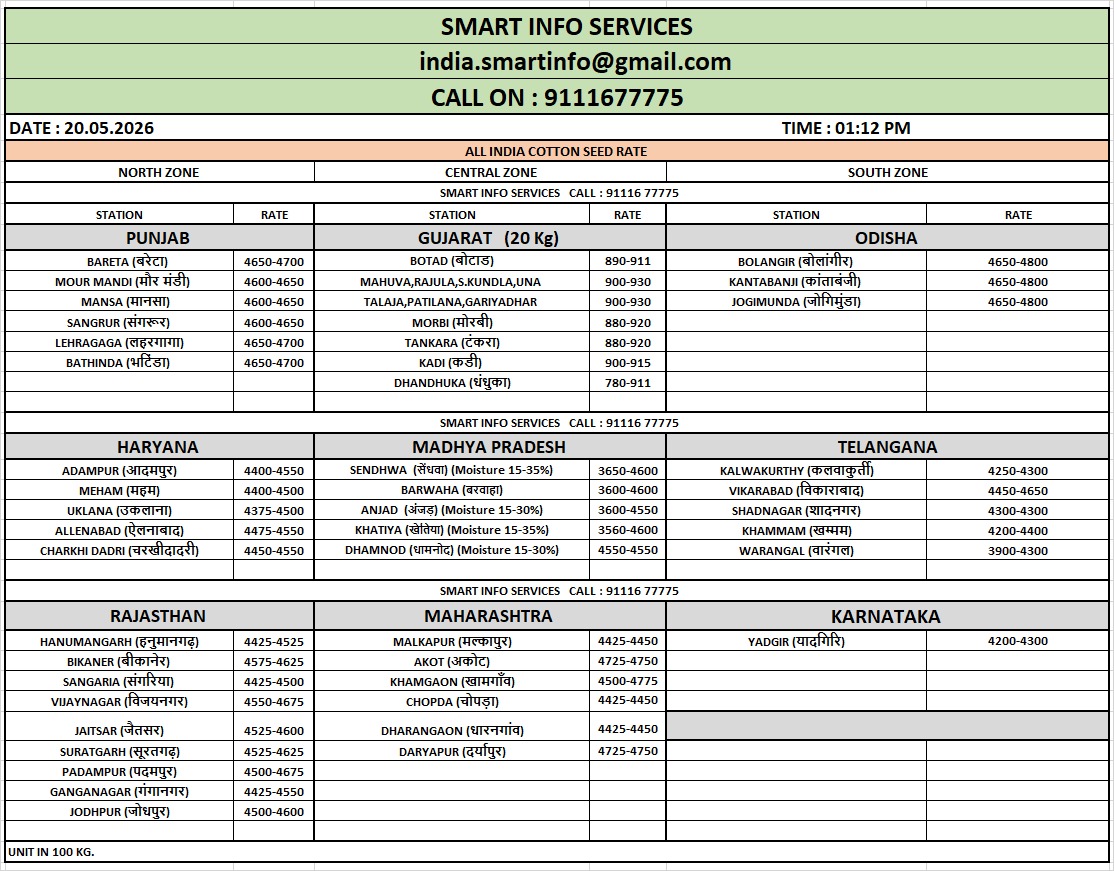
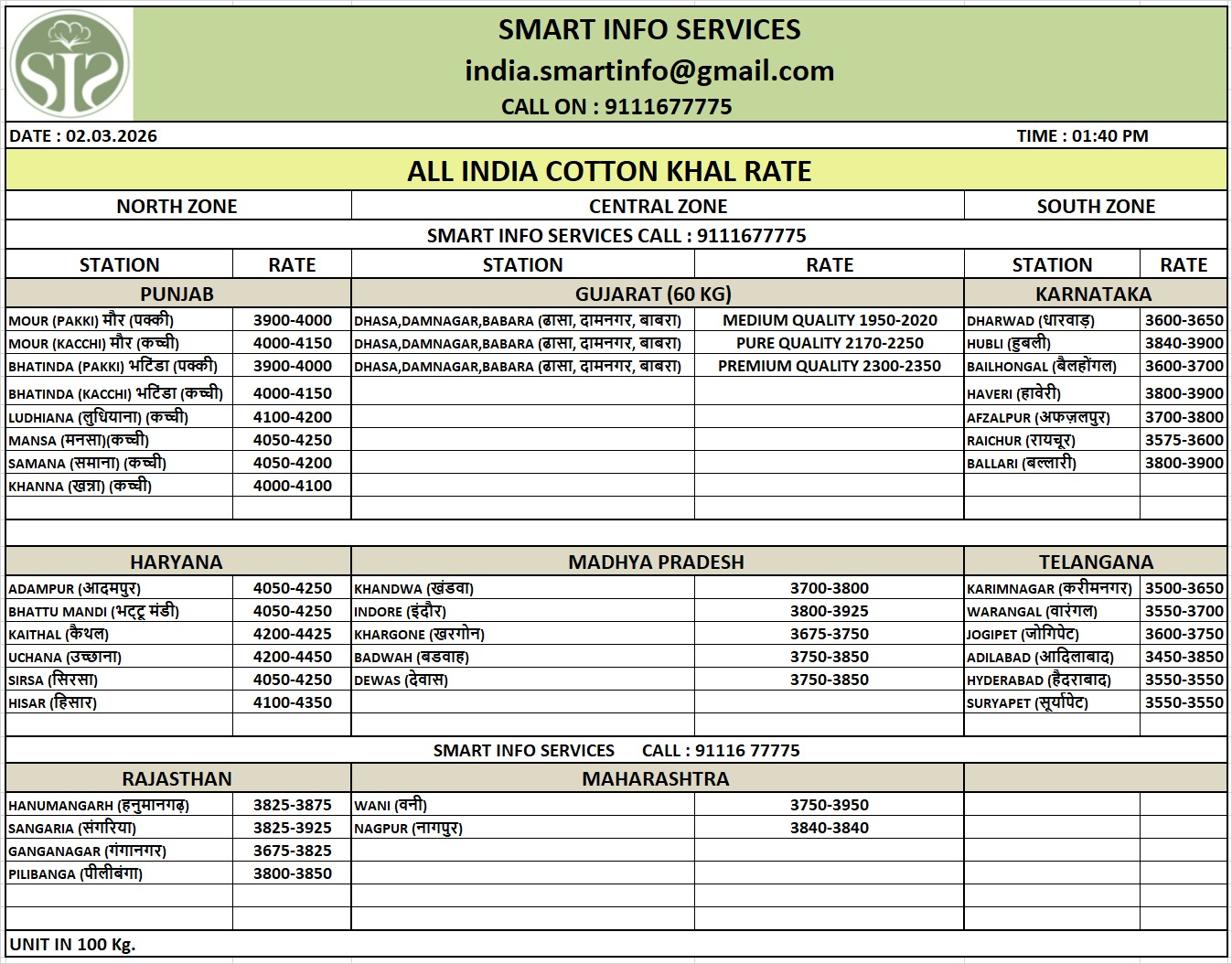
Major events in the international cotton market in 2023International cotton prices showed a volatile trend in 2023. The supply side was supported by speculation about production cuts in the first half of the year, but after the market absorbed this bullish factor, support became limited. On the consumption side, the weak trend continued as the stocking process of textile and apparel products in various countries has not yet ended, and expectations for the peak season were reduced. There were few new orders and the global consumption recovery process was slow. Global cotton prices were under downward pressure as the new crop for the 2023/24 season gradually hit the market. Presently the arrival of cotton is at its peak, more than 2 lakh bales are arriving every day. The price of cotton and cottonseed is at its lowest level of Rs 2200, the main reason for which is said to be the reduction in oil content by pink bollworm due to which only 50 percent oil is coming out of the cottonseed.January :2022/23 global cotton production forecast shifted from production growth to production decline, with the Cotton Association of India broadly adjusting its Indian cotton production forecast downwards in its January report.February :Pakistan's foreign exchange reserves decreased, huge fall in Pakistani rupeeExport sales of American cotton increased significantly.marchThe USDA projected higher cotton inventories in the 2022/23 season in its March report.Banking system issues caused cotton prices to decline.Brazilian cotton prices declined due to increasing export pressure.aprilUS cotton export sales entered the oversold phase and cuts increased.MayIndian cotton arrivals increased against the weather.US cotton abandonment was expected to decline by half from the previous year.juneProgress on new cotton planting in America was slowjulyStrong expectations for good cotton production in Brazil and Australia.CONAB estimates that Brazilian cotton inventory accumulation pressure has increased.China announced allocating an additional 750kt sliding-scale duty quota.augustSoil moisture in Texas, USA deteriorated and the good-to-excellent ratio of American cotton was reduced.USDA cuts US cotton production by a massive 550kt.SeptemberThe rainfall gap in India widened and expectations regarding production shifted from production growth to production cuts.Brazilian agricultural products rushed to market, causing shortages in shipments and making cotton difficult to ship.Supply increased markedly as Pakistani cotton entered the market earlier.octoberUS cotton export sales increased due to purchases from ChinanovemberIndian cotton prices reached MSP and CCI started purchasing seed cotton.Delayed rains forced growers in Brazil to plant cotton instead of soybeans.DecemberUSDA forecasts global cotton consumption to decline.Source: CCF
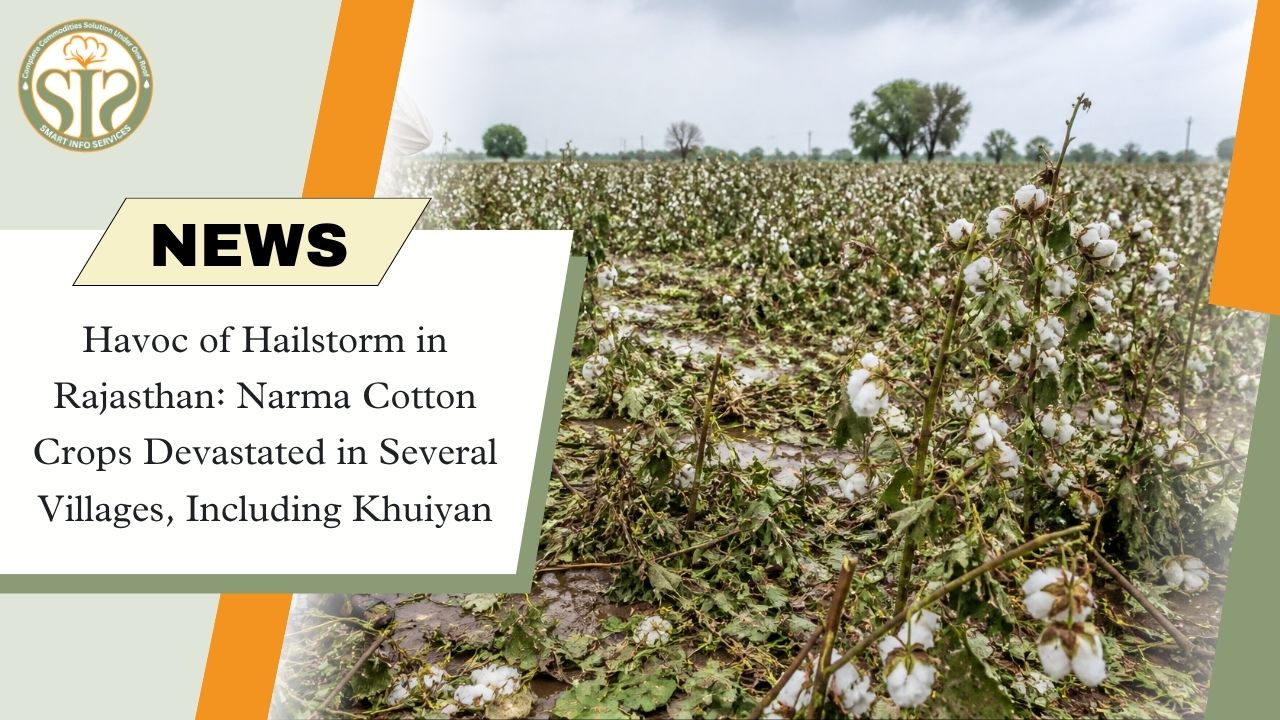
Collaborative government-private approach needed to increase awareness of PBW pest & solutions available to prevent crop damage in cotton

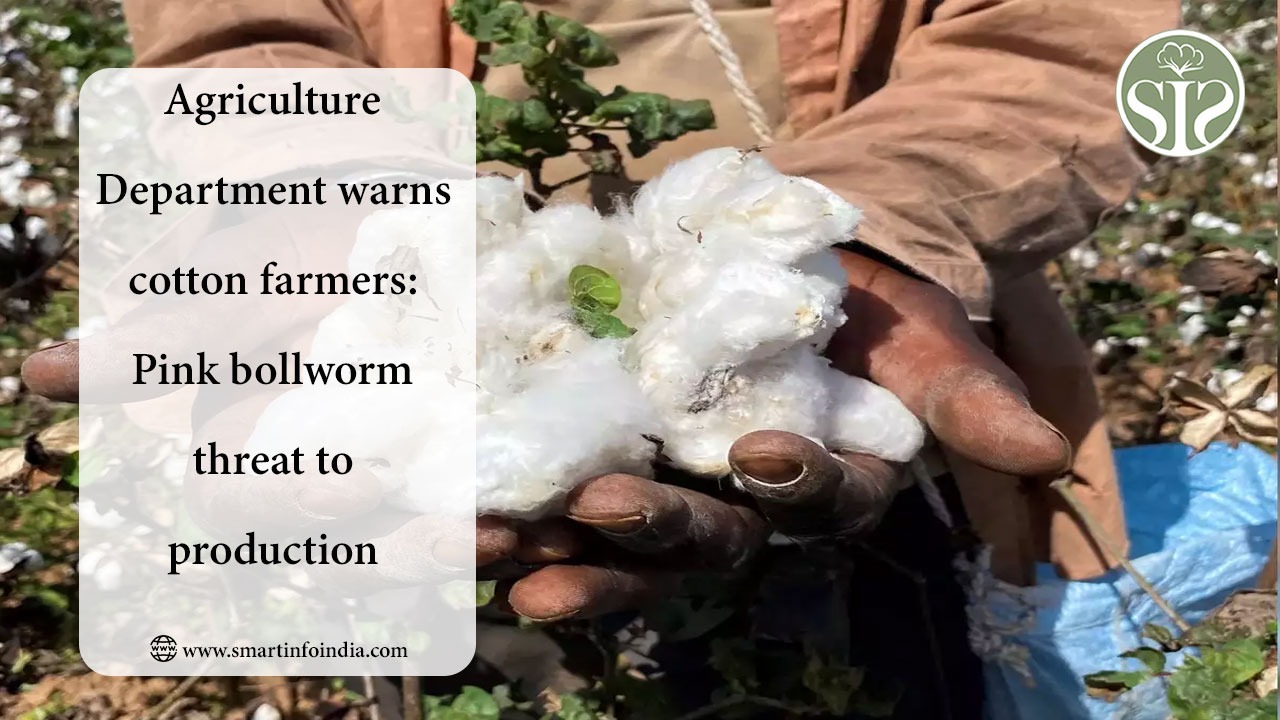
Collaborative government-private approach needed to increase awareness of PBW pest & solutions available to prevent crop damage in cottonStressing that timely intervention is key to prevent crop damage in case of pink bollworm (PBW) pest as seen in cotton crop in northern India, an industry expert has suggested a collaborative government-private approach to increase the awareness as solution is available if the pest is detected in time.“Solutions are available. What is lacking is the awareness about the PBW among the farmers,” NK Rajavelu, CEO of Godrej Agrovet’s crop protection division, told businessline.Explaining further, he said farmers normally come to know about PBW impact only when they start seeing the boll bursting around the harvesting time. But the point is in PBW, the adult moth lays the egg during the flowering time itself inside the flower. So, the eggs once they hatch in the flower, the flower closes and becomes a boll. So, they start getting into larvae everything inside and when the boll burst then the PBW impact is seen. So, the awareness of this has to be communicated to the farmers at the time of flowering stage itself, Rajavelu said.Asked who should take the responsibility of educating the farmers, he said both private companies and the government agencies. “The extension arm of the government, for instance KVKs should have programmes especially for the cotton areas, how to really monitor the PBW attack from the beginning. Because it’s very difficult to identify the eggs inside the flower,” he said.Further, he mentioned that there are some monitoring mechanisms like the moth activities available which farmers can observe. “If the moth activity is there then you start spraying the chemicals or put pheromones around the cotton areas even before the pest attacks becomes serious,” he said.Output hitThough it is not that PBW appears every year, still it is imperative to help the farmers to understand that there are solutions available right from chemicals to pheromones, Rajavelu said. “If these are not used at the proper time, at the flowering time, then nobody can help. So that awareness programme has to be enhanced in terms of how to educate the farmers,” he said.Cotton crop in many parts of the northern region got damaged in 2023 due to deficient rain and pink bollworm pest to the extent of 65 per cent in Haryana and Punjab and 80-90 per cent in Rajasthan. The Agriculture Ministry has estimated cotton production this year to be lower by 6 per cent at 31.66 million bales (of 170 kg each) from 33.66 million bales in 2022.He is also hopeful that technologies like internet of things (IOT) and drone definitely will help in the longer run, but “today I do not think we have that type of technology. Probably there is an opportunity for companies like us and even government to work on that to help the farmers.”
Copyright© 2023 | Smart Info Service
Application Download