Recent News

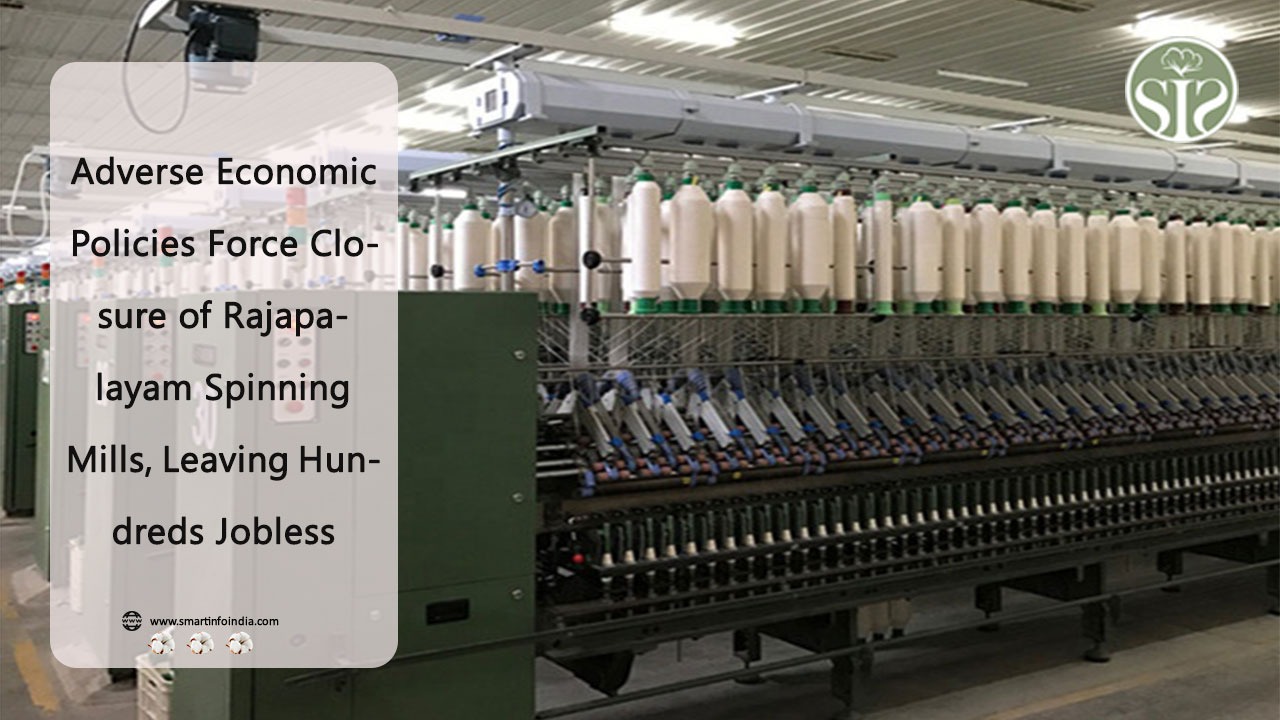
Adverse Economic Policies Force Closure of Rajapalayam Spinning Mills, Leaving Hundreds Jobless

Unfavorable Economic Policies Cause Rajapalayam Spinning Mills to Close, Creating Hundreds of Jobs LossesA string of unfavorable economic policies enforced by the Central government has led to the closure of several spinning mills in and around Rajapalayam, leaving hundreds unemployed, according to B. Mariappan, a functionary of the Communist Party of India (Marxist).Mariappan attributes the closures to various factors, including volatile cotton prices, the influx of cheap imported garments, and the failure of the Cotton Corporation of India (CCI) to stabilize cotton prices. He criticizes the CCI for selling cotton to corporates, resulting in hoarding and price hikes, thus defeating the purpose of the organization.The textile industry in the Rajapalayam region, which comprises 110 spinning mills and employs approximately one lakh workers directly and indirectly, has been severely impacted by these policies. High volatility in cotton prices, compounded by the imposition of GST exclusively on cotton, has further hampered the industry's competitiveness.Mariappan points out the irony of allowing imports of cheaper garments while domestic textile producers struggle. He suggests that imposing anti-dumping duties and reducing tariffs on electricity could alleviate some of the industry's burdens.G. Ganesan, district president of the Spinning Mills Workers Union affiliated with CITU, highlights the reduced operational days of some mills due to decreased demand, noting that many are barely operating to avoid loan defaults.Mariappan advocates for policy changes, including zero input tax on cotton and lower interest rates on bank loans, to support struggling mills. He laments the economic fallout, with many former mill workers now seeking employment in the construction and agricultural sectors, while those who borrowed from self-help groups face challenges in repaying loans on time.Read More :> CRISIL Forecasts Improved Operating Margins for Cotton Yarn Spinners

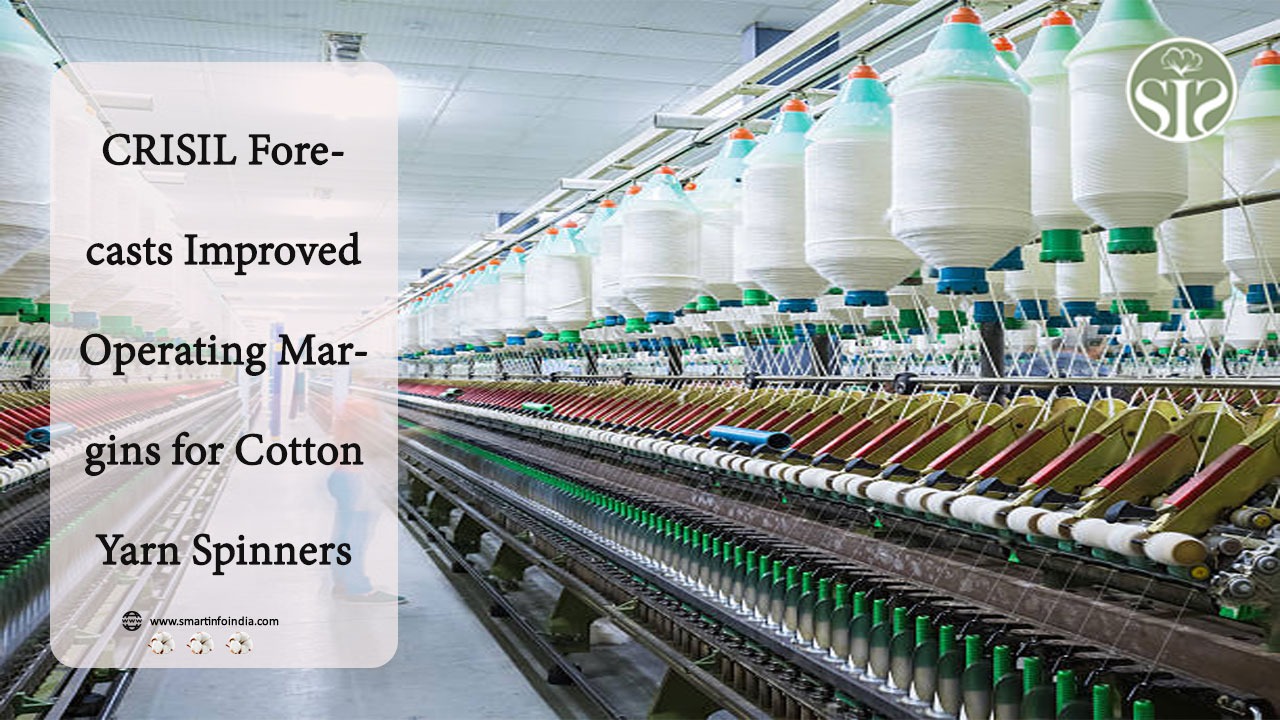
CRISIL Forecasts Improved Operating Margins for Cotton Yarn Spinners

Better Operating Margins for Cotton Yarn Spinners are Predicted by CRISILCRISIL Ratings anticipates a significant uplift for the cotton yarn spinning industry this fiscal year, with operating margins poised to improve by 150-200 basis points (bps) following last fiscal's decade-low margins of 8.5-9 percent. The forecast, outlined in a recent report, attributes the improvement to stabilized cotton prices and enhanced cotton yarn spreads.The report cites stable cotton prices, bolstered by improved availability during the current cotton season, as a key factor supporting margin recovery. Additionally, it predicts a 4-6 percent increase in revenue driven by moderate growth in downstream demand alongside stable yarn prices. Last fiscal saw a decline in revenue due to a substantial reduction in yarn prices.CRISIL's analysis, encompassing 95 cotton yarn spinners responsible for 35-40 percent of industry revenue, indicates an overall enhancement in credit profiles due to better operating performance and restrained capital expenditure on deleveraged balance sheets.Gautam Shahi, Director at CRISIL Ratings Ltd., emphasizes the positive impact of improved domestic cotton availability on yarn spreads, expecting a recovery to Rs 90-92 per kg this fiscal from approximately Rs 87 per kg last fiscal. He anticipates a recovery in operating margins to 10.5-11 percent, buoyed by benign cotton prices and sustained domestic demand.While yarn prices are projected to remain steady, domestic sales volume, constituting 70-75 percent of industry revenue, is set to grow by 4-6 percent driven by demand from key segments like readymade garments and home textiles. Conversely, exports are expected to grow modestly at 3-4 percent due to sluggish global economic conditions, following an 80-85 percent surge last fiscal.CRISIL underscores the industry's improving capacity utilization levels, reaching 80-85 percent, with further improvement anticipated this fiscal. Moderate capex plans are forecasted for cotton yarn spinners, contributing to improved interest coverage ratios and gearing ratios.CRISIL identifies downstream demand slowdowns and fluctuations in domestic cotton prices compared to international prices as key monitorables for the industry's performance in the near term.Read More :> Cotton Prices Governed by Global Market, Not Domestic Policy: CM Shinde

Cotton Prices Governed by Global Market, Not Domestic Policy: CM Shinde

Global Market, Not Domestic Policy, Determines Cotton Prices: CM ShindeThe Chief Minister, Eknath Shinde, emphasized that cotton prices are determined by the international market, dismissing any claims that farmers are being disadvantaged due to local policies. He specifically addressed criticism from Uddhav Thackeray, leader of the Shiv Sena, labeling him as an "egoistic king" who is out of touch with reality.Shinde highlighted that during the previous government's tenure led by Thackeray, farmers received good prices for cotton due to demand in the international market. However, he noted that the current price of cotton is significantly lower, attributing it to fluctuations in the NASDAQ market in the US.Regarding orange crops, Shinde mentioned challenges in exporting to Bangladesh due to increased import duties. However, he assured that the government is committed to providing relief to farmers once the model code of conduct is lifted.Shinde also touted the government's efforts to assist farmers during unseasonal rains, mentioning modifications to the norms set by the National Disaster Response Force (NDRF) to maximize benefits for farmers.In terms of infrastructure development, Shinde claimed that stalled projects, including railway projects, have been restarted under their administration. He also credited the central government for providing Vande Bharat trains to the state.Turning his attention back to Uddhav Thackeray, Shinde criticized him for his perceived lack of direct engagement with the public and reliance on social media platforms like Facebook Live. He echoed sentiments expressed by Prime Minister Narendra Modi, suggesting that the Shiv Sena under Thackeray's leadership is not true to its principles.Read More :> India Set to Experience Above-Average Monsoon Rains in 2024: IMD


Challenges in Punjab's Kharif Crop

Problems with the Kharif Crop in PunjabThe challenges faced by Punjab in diversifying its kharif crops, particularly in shifting farmers towards cotton cultivation, are quite apparent. The decline in cotton acreage over the years due to various factors like pest attacks, lack of irrigation facilities, and adverse weather conditions poses a significant hurdle for agricultural authorities.The target set by the agriculture department to cover 2 lakh hectares under cotton for the 2024-25 kharif cycle reflects their determination to revive cotton cultivation in the region. However, the downward trend in cotton acreage in recent years, as indicated by the data, showcases the magnitude of the challenge.Efforts to encourage farmers to adopt maize cultivation as an alternative to cotton indicate a proactive approach by the authorities to address the issue. Measures such as subsidies on seeds and banning the cultivation of certain crops in cotton-growing areas demonstrate the government's commitment to supporting farmers and mitigating risks associated with cotton farming.The shelving of the subsidy proposal on Specialised Pheromone and Lure Application Technology (SPLAT) due to cost concerns is a setback, as it could have been instrumental in combating pink bollworm infestation and rebuilding confidence among cotton growers. However, the assurance of encouraging farmers to use SPLAT and PBKnot despite the subsidy setback reflects a continued effort to find solutions and support cotton cultivation.Overall, while Punjab faces significant challenges in diversifying its kharif crops, the concerted efforts of the agriculture department and the government indicate a commitment to addressing these challenges and revitalizing cotton cultivation in the region.Read More :>Multinational Traders in India Offload Cotton Stocks Amid Global Price Decline and Weakening Demand


Related News

Youtube Videos

Cotton Breaking ЁЯФе рдХреЙрдЯрди, рд╕реАрдб, рдЦрд▓ рддреАрдиреЛрдВ рдХрд╛ рднрд╛рд╡ | рдЬрд╛рдирд┐рдП рдЖрдЬ рдХрд╛ рдХрдкрд╛рд╕ рдмрд╛рдЬрд╝рд╛рд░ | 1 October 2026
Cotton Breaking ЁЯФе рдХреЙрдЯрди, рд╕реАрдб, рдЦрд▓ рддреАрдиреЛрдВ рдХрд╛ рднрд╛рд╡ | рдЬрд╛рдирд┐рдП рдЖрдЬ рдХрд╛...
рд░реБрдИ рдмрд╛рдЬрд╝рд╛рд░ рдореЗрдВ рдЧрд┐рд░рд╛рд╡рдЯ рдХрд╛ рд░реБрдЦ ЁЯШ▒ рдЬрд╛рдирд┐рдП рдХрдкрд╛рд╕ рднрд╛рд╡ ЁЯФеCotton Market Rate Today 30 Sep 2026
рд░реБрдИ рдмрд╛рдЬрд╝рд╛рд░ рдореЗрдВ рдЧрд┐рд░рд╛рд╡рдЯ рдХрд╛ рд░реБрдЦ ЁЯШ▒ рдЬрд╛рдирд┐рдП рдХрдкрд╛рд╕ рднрд╛рд╡ ЁЯФеCotton Mark...
ЁЯФе 1200+ рджрд┐рдЧреНрдЧрдЬ рдПрдХ рдордВрдЪ рдкрд░! рдирд╛рдЧрдкреБрд░ рдореЗрдВ рд╕рдЬрд╛ Cotton Industry рдХрд╛ рдорд╣рд╛рдХреБрдВрдн | India Cotton Summit 2026
ЁЯФе 1200+ рджрд┐рдЧреНрдЧрдЬ рдПрдХ рдордВрдЪ рдкрд░! рдирд╛рдЧрдкреБрд░ рдореЗрдВ рд╕рдЬрд╛ Cotton Industry рдХрд╛...
Application Download
Whatsapp Contact