Filter

Recent News

India's cost advantage challenges Bangladesh's textile and apparel dominance

India's cost advantage challenges Bangladesh's textile and apparel dominanceRecently, Bangladesh's textile and apparel industry is facing a major challenge as India enjoys high cost advantage, posing a potential threat to capture a large share of the global market. Abdullah Mohammad Talha, MD, Noman Terry Towel Mills Limited, has expressed apprehension about the future competitiveness of Bangladesh, given the various factors in favor of India.India benefits from one important factor—the deepening relationship between India and the West. This combination has put Bangladesh in a challenging position, limiting its ability to achieve strong competition and break free from the middle-income trap. Unlike Bangladesh, India has diversified its assets and resources, enabling a multi-pronged approach to economic development.India has an advantage because of its cheap labor force compared to Bangladesh, where labor costs have risen slowly. Currently, Bangladesh's salary structure is comparable to that of India, with garment assistants earning around US$150 per month and operators receiving up to US$180 per month.The cost of electricity contributes significantly to India's cost advantage over Bangladesh, as India receives power from the grid at about 7 cents per kWh, while Bangladesh faces a higher cost of about 12.7 cents per kWh.Abdullah Mohammad Talha urges concrete policies and proactive measures like combating corruption in Bangladesh to maintain the growth and strength of the textile industry. Without action, Bangladesh could lose its dominant position in the global market in the face of India's growing momentum.

"Estimation of possible shortfall in cotton sowing"

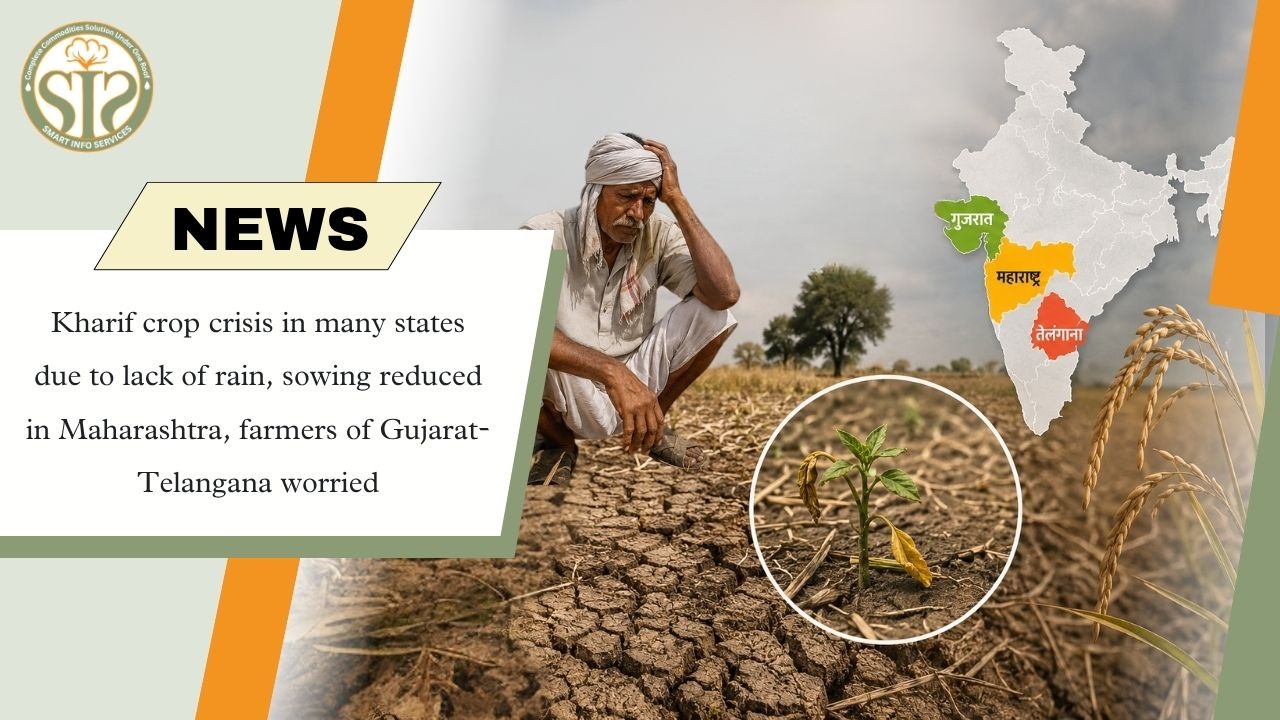
"Estimation of possible shortfall in cotton sowing"In the country, cotton cultivation in North India is stable this year. But in other places in the country it seems that cultivation will reduce. In the last season, cotton was cultivated in 129 lakh hectares in the country. It is also estimated that this year this farming can be done up to 126.50 lakh hectares.Last year or in 2022-23, cotton was cultivated in 42 lakh hectares in Maharashtra.By the end of July 18 last year, cotton crop was planted in 38 lakh 78 thousand hectares in the state. Till July 18 this year, cotton has been sown in 38 lakh 33 thousand hectares in the state.It is being seen that after a slight reduction in this, farming will be limited to 40 lakh hectares. Tree plantation figures keep coming. But the era of farming is over in Maharashtra and other areas. Sowing of dryland cotton has been done in the state till July 15.In Telangana also, till the middle of July, planting has been done. 95% of cotton area in Telangana, Maharashtra, Karnataka is dry land. Irrigation is available only in five percent of the area. Late rains in Maharashtra have affected agriculture.Most of the cotton cultivation in the state is done in Jalgaon district. This year, cotton cultivation was expected in five and a half lakh hectares in the district. But till July 15, this cultivation has been done in four lakh 45 thousand hectares. There are also indications that this year the planting will be less.In North India, in Punjab, Haryana, Rajasthan, cultivation of cotton in maximum area has been completed in April itself. There has not been much decline in agriculture. There 95 percent area under cotton is under irrigation. There the cotton crop has become three months old.It can be redeemed in the next few days. But the rains in the eastern part of there have affected the weather. About 55 per cent of the area under cotton in Gujarat and 50 per cent in Madhya Pradesh are under irrigation.In the country, cotton cultivation in North India is stable this year. But in other places in the country it seems that cultivation will reduce. In the last season, cotton was cultivated in 129 lakh hectares in the country. It is also estimated that this year this farming can be done up to 126.50 lakh hectares.In this, the cotton crop in North India has been hit by excessive rains. 40 to 45 percent damage to cotton crop in Punjab, Haryana. Last year or in 2022-23, cotton was cultivated in 42 lakh hectares in Maharashtra.By the end of July 18 last year, cotton crop was planted in 38 lakh 78 thousand hectares in the state. Till July 18 this year, cotton has been sown in 38 lakh 33 thousand hectares in the state.It is being seen that after a slight reduction in this, farming will be limited to 40 lakh hectares. Tree plantation figures keep coming. But the era of farming is over in Maharashtra and other areas. Sowing of dryland cotton has been done in the state till July 15.In Telangana also, till the middle of July, planting has been done. 95% of cotton area in Telangana, Maharashtra, Karnataka is dry land. Irrigation is available only in five percent of the area. Late rains in Maharashtra have affected agriculture.Most of the cotton cultivation in the state is done in Jalgaon district. This year, cotton cultivation was expected in five and a half lakh hectares in the district. But till July 15, this cultivation has been done in four lakh 45 thousand hectares. There are also indications that this year the planting will be less.In North India, in Punjab, Haryana, Rajasthan, cultivation of cotton in maximum area has been completed in April itself. There has not been much decline in agriculture. There 95 percent area under cotton is under irrigation. There the cotton crop has become three months old.It can be redeemed in the next few days. But the rains in the eastern part of there have affected the weather. About 55 per cent of the area under cotton in Gujarat and 50 per cent in Madhya Pradesh are under irrigation.
Pakistan: Weekly Cotton Review: Rate hiked by Rs 600 per head

Pakistan: Weekly Cotton Review: Rate hiked by Rs 600 per headKARACHI: Dollar strength, limited supply of cotton, rally in international cotton affected domestic cotton prices. The All Pakistan Textile Mills Association (APTMA) in a letter to the Prime Minister said that the problems of the textile sector remain unresolved and economic recovery is not possible without resumption of exports.Khurram Mukhtar, patron chief of the Pakistan Textile Exporters Association, said the government should announce special rates for electricity and gas for the export-oriented industry. A team of Aptma experts is actively working to rehabilitate the cotton. Cotton production expected to cross one crore bales.The overall trend in the domestic cotton market was positive after the volatility in cotton prices during the last week. Weavers are interested in buying cotton, while ginners are also interested in selling cotton.Due to the increase of dollar and the boom in the international cotton market, the price of cotton increased by about 600 to 800 rupees per head. The recent rains may affect the quality of cotton.On the other hand, the government's campaign is also going on to buy Futi at Rs.8500 per 40 kg, although in some areas of Punjab, the price of 40 kg is being told as Rs.8500 to Rs.8600.APTMA sources said that in a letter sent to Prime Minister Shehbaz Sharif, APTMA claimed that the country's exports could increase by $10 billion after resolving issues in the textile sector. There is a serious crisis in the textile sector due to the international recession and a sharp fall in the rate of cotton yarn.The Pakistan Cotton Ginners Association has for the first time released the cotton production figures in the country till July 15. Till this period, the production of cotton in the country has reached eight lakh fifty eight thousand bales, which is said to be encouraging. In view of this, experts believe that if the weather conditions are favourable, the production of cotton is expected to be around one crore bales.The rate of cotton in Sindh is between Rs 17,700 to Rs 17,800 per head. The rate of foot is 7700 to 8000 rupees per 40 kg.The rate of cotton in Punjab is Rs 18,200 to Rs 18,500 per head, while the rate of foot is Rs 7,500 to Rs 8,600 per 40 kg. Cotton rates in Balochistan range from Rs 17,700 to Rs 17,800 per head and cotton between Rs 7,600 to Rs 8,000 per 40 kg.The rates of khal, cottonseed and oil also increased.The spot rate committee of the Karachi Cotton Association increased the spot rate by Rs 7,00 per head and closed it at Rs 17,700 per head.Naseem Usman, president of the Karachi Cotton Brokers Forum, said that the overall increase in international cotton prices continued. The futures trading rate of New York cotton increased to 84.48 percent. The trend of increase in the rate of cotton was seen in India.According to the USDA's weekly production and sales report, 67,100 bales were sold for the year 2022-23. Pakistan bought 3800 bales and ranked fourth.86,100 bales were sold in the year 2023-24.China topped the list by purchasing 49,200 bales. Pakistan bought 17,900 bales and stood second. Vietnam bought 8,400 bales and ranked third.According to APTMA, the consistent year-on-year decline in monthly exports throughout the financial year is a matter of concern. 50% of the existing production capacity is currently non-functional.Sheikh Khurram Mukhtar, patron chief of the Pakistan Textile Exporters Association, has said that special rates for electricity and gas should be maintained for the export sector to compete with other countries. Our demand is justified as we are not asking for concessions, but for electricity and gas at tariff rates without adding additional cost.He further said that the government will have to move forward with a concrete plan to deal with the significant reduction in industrial and economic growth. Referring to the past, he said that the textile export volume in the textile sector increased by 55% to $19.5 billion from 2020 to 2022 due to government protection.Meanwhile, APTMA's team of cotton experts is actively engaged in providing crop advisory services to the cotton growers in the core divisions of Multan, Bahawalpur and Rahim Yar Khan. The main objective is to increase the yield per acre and help the farmers to get better quality of cotton through expert guidance and recommendations.The APTMA field team also provides valuable crop advisory services to cotton growers to effectively address deficiencies, focusing on crop-wise and soil-wise nutrient recommendations.To deal with the potential threats on cotton crops, the field team conducts regular pest scouting in major cotton growing areas of Punjab. By identifying pests and monitoring their populations, the team can quickly respond to any pest outbreak while minimizing potential damage. On-site recommendations are provided based on specific pest problems, providing farmers with effective and sustainable pest management solutions.The APTMA field team also advises growers on essential selection and storage practices to ensure that the quality of the cotton is maintained. proper selection techniques to minimizeFiber damage is demonstrated, and storage guidelines are shared to prevent damage and contamination during storage.

Pakistan: Strong trend in cotton market update

Pakistan: Strong trend in cotton market.The Spot Rate Committee of the Karachi Cotton Association (KCA) on Friday increased the spot rate by Rs 200 per maund and closed it at Rs 17,700 per maund.The local cotton market remained firm and the trading volume remained low.Cotton Analyst Naseem Usman told Business Recorder that the rate of new crop of cotton in Sindh is in between Rs 17,700 to Rs 17,800 per maund. The rate of Phutti in Sindh is in between Rs 7,700 to Rs 8,600 per 40 kg.The rate of cotton in Punjab is in between Rs 18,200 to Rs 18,500 per maund and the rate of Phutti is in between Rs 7,800 to Rs 8,600 per 40 kg. The rate of cotton in Balochistan is Rs 17,600 to Rs 18,000 per maund while the rate of Phutti is in between Rs 7,700 to Rs 8,000 per 40 kg.Around 400 bales of Maqsooda Rind, 200 bales of Nuabad, 200 bales of Jhol is Rs 17,600 per maund, 400 bales of Dolat Pur were sold at Rs 18,000 per maund, 4800 bales of Tando Adam were sold at Rs 17,450 to Rs 17,800 per maund, 200 bales of Kotri were sold at Rs 17,600 per maund, 1600 bales of Mir Pur Khas were sold at Rs 17,600 to Rs 17,700 per maund, 3200 bales of Sanghar were sold at Rs 17,500 to Rs 17,600 per maund, 2200 bales of Shahdad Pur were sold in between Rs 17,500 to Rs 17,700 per maund, 1200 bales of Khanewal were sold at Rs 18,300 to Rs 18,500 per maund, 600 bales of Lodhran were sold at Rs 18,200 to Rs 18,400 per maund, 400 bales of Chichawatni were sold at Rs 18,200 per maund, 400 bales of Vehari were sold at Rs 18,200 per maund, 200 bales of Gojra, 200 bales of Hasil Pur, 200 bales of Rahim Yar Khan were sold at Rs 18,000 per maund and 1,000 bales of Ali Pur were sold at Rs 17,900 per maund.The Spot Rate Committee of the Karachi Cotton Association increased the spot rate by Rs 200 per maund and closed it at Rs 17,700 per maund. Polyester Fiber was available at Rs 345 per kg.

Rain deficit adds to cotton farmers’ worry in Odisha

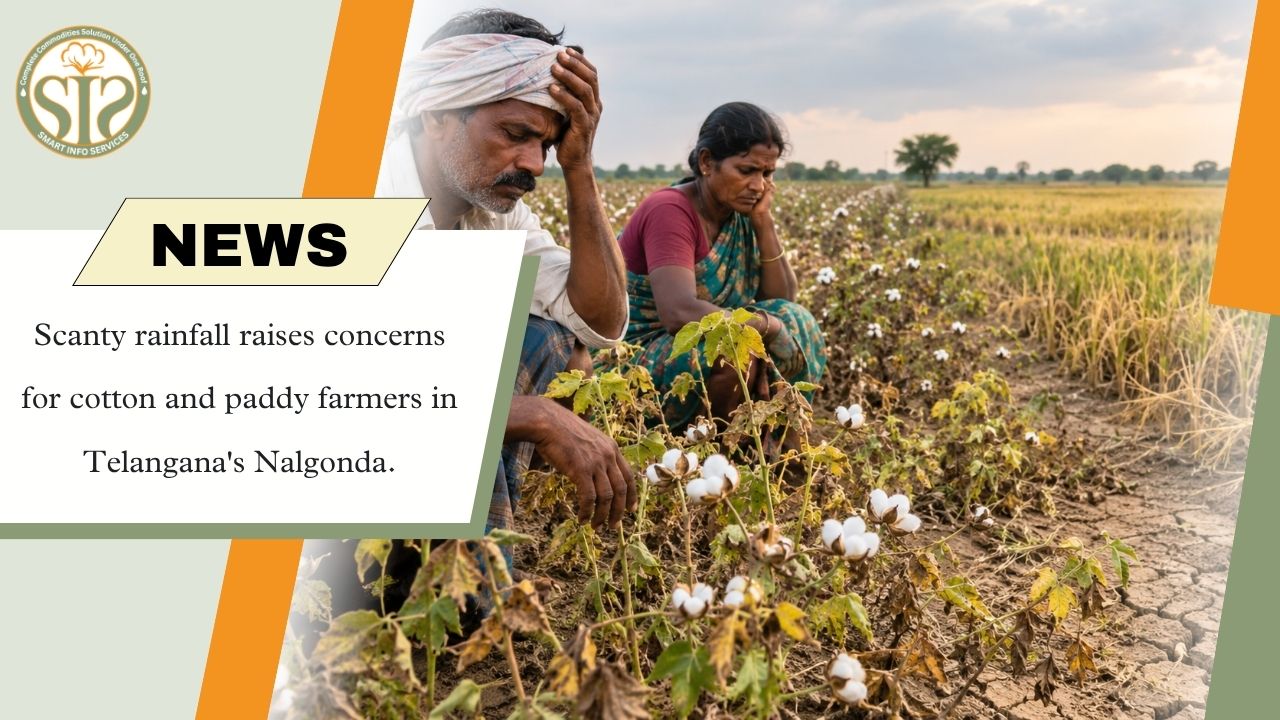
Rain deficit adds to cotton farmers’ worry in OdishaThe officer in charge of Cotton Scheme, Suvendu Kar said farmers in the black cotton soil areas have incurred extra expenses in gap fillingDelay and erratic monsoon rain contributing to the long dry phase besides the large coverage of paddy has affected cotton cultivation in the district. Kalahandi is the largest producer of cotton in the state. But deficit rainfall of 66.54% in June and 82.60% till July has left the farmers worried. It was only after July 8, the district witnessed rain.Last year, cotton was grown on 70,780 hectares with a production of 8,50,000 quintals of seed cotton. For the current kharif season,  a  target to cover cotton in 73,550 ha was fixed.However, the major black cotton growing areas in Bhawanipatna, Kesinga and Golamunda blocks cover 25,400 ha, 17,000 ha and 16,000 ha respectively totalling 58,400 ha. The rest of the areas that grow cotton include Narla, M.Rampur and Lanjigarh blocks having red,  red and black and sandy loom soils.Usually, in the major cotton growing pockets in Bhawanipatna, Kesinga and M.Rampur blocks, the water retaining capacity of black cotton soil always benefited the crop. But due to the long dry phase in most of the areas, the farmers are distressed as they had to incur extra expenditure for gap filling. In Narla, M. Rampur and Lanjigarh, so far only 50 per cent area have been covered and now farmers are taking up sowing in many areas.The officer in charge of the Cotton Scheme, Suvendu Kar said farmers in the black cotton soil areas have incurred extra expenses in gap filling. But  this season, the plant condition so far seems okay.“Cotton plants in these areas are now in the vegetative stage with five to seven leaves. In other areas, farmers will pick up and the target is likely to be achieved,” Kar said.Inter-cropping in cotton fields has been given a thrust, the officer said, adding, in eight lines of cotton, there will be two rows of arhar which have been targeted to cover 30,000 ha.“Arhar plantation has been cultivated in about 20,000 ha so far. This would protect the cotton from pests and give substantial additional income to farmers,” he said.Coverage areaCurrent kharif season target for cotton 73,550 haBhawanipatna block  25,400 haKesinga block 17,000 haGolamunda block 16,000 haNarla, M.Rampur and Lanjigarh to cover rest of the targetLast year, cotton coverage 70,780 hectare

Spot rate higher amid brisk activity

Spot rate higher amid brisk activityThe Spot Rate Committee of the Karachi Cotton Association (KCA) on Thursday increased the spot rate by Rs 200 per maund and closed it at Rs 17,500 per maund.The local cotton market remained bullish and the trading volume remained satisfactory. Cotton Analyst Naseem Usman told Business Recorder that the rate of new crop of cotton in Sindh is in between Rs 17,500 to Rs 17,800 per maund.The rate of Phutti in Sindh is in between Rs 7,500 to Rs 8,200 per 40 kg. The rate of cotton in Punjab is in between Rs 17,800 to Rs 18,000 per maund and the rate of Phutti is in between Rs 7,600 to Rs 8,600 per 40 kg. The rate of cotton in Balochistan is Rs 17,600 to Rs 17,700 per maund while the rate of Phutti is in between Rs 7,600 to Rs 7,900 per 40 kg.Around, 200 bales of Rani Pur were sold at Rs 17,700 per maund, 800 bales of Jhole, 800 bales of Moro were sold in between Rs 17,400 to Rs 17,700 per maund, 800 bales of Nawab Shah were sold at Rs 17,400 to Rs 17,600 per maund, 800 bales of Maqsooda Rind were sold at Rs 17,600 to Rs 17,700 per maund, 800 bales of Khair Pur were sold at Rs 17,500 to Rs 17,700 per maund, 800 bales of Sanghar were sold in between Rs 17,300 to Rs 17,500 per maund, 800 bales of Shahdad Pur were sold at Rs 17,400 to Rs 17,550 per maund, 1600 bales of Tando Adam were sold at Rs 17,400 to Rs 17,600 per maund, 600 bales of Mir Pur Khas were sold at Rs 17,475 per maund, 600 bales of Lodhran, 800 bales of Khanewal were sold in between Rs 17,900 to Rs 18,000 per maund, 400 bales of Hasil Pur, 800 bales of Vehari were sold at Rs 17,800 to Rs 18,000 per maund, 400 bales of Chichawatni were sold at Rs 17,900 per maund, 400 bales of Chowk Matila were sold at Rs 18,000 per maund, 600 bales of Ahmed Pur East, 400 bales of Burewala were sold at Rs 17,900 per maund, 400 bales of Peer Mahal were sold at Rs 17,800 to Rs 17,900 per maund, 200 bales of Khair Pur Tamiwali were sold at Rs 17,900 per maund, 1400 bales of Layyah were sold at Rs 17,800 to Rs 17,900 per maund, 1000 bales of Rajan Pur, 800 bales of Fazil Pur were sold at Rs 17,800 per maund, 800 bales of Tounsa Shareef were sold at Rs 17,900 per maund, 200 bales of Faqeer Wali were sold at Rs 17,900 per maund, 200 bales of Jhang were sold at Rs 17,800 per maund and 200 bales of Mian Channu were sold at Rs 17,950 per maund.The Spot Rate Committee of the Karachi Cotton Association increased the spot rate by Rs 200 per maund and closed it at Rs 17,500 per maund. Polyester Fiber was available at Rs 345 per kg.

Copyright© 2023 | Smart Info Service
Application Download