Filter

Recent News

India likely to receive below normal rainfall in 2023 due to El Nino

India likely to receive below normal rainfall in 2023 due to El NinoPrivate weather forecasting agency Skymet on Monday said that India is likely to get "below normal" monsoon rains in 2023 with an increasing likelihood of El Nino, which usually brings dry weather in Asia. Jatin Singh, Managing Director, Skymet, said in a statement: "The probability of El Nino is increasing and it is becoming a dominant feature during the monsoon. The return of El Nino can predict a weak monsoon." Retaining its earlier outlook of sub-monsoon, Skymet said monsoon rainfall over India is expected to be 94% of the long period average.About half of India's agricultural land, which has no irrigation cover, depends on annual June–September rains to grow crops such as rice, maize, sugarcane, cotton and soybeans. Skymet expects the northern and central parts of the country to be at risk of rain deficiency. New Delhi defines average, or normal, rainfall as between 96% and 104% of the 50-year average of 88 centimeters (35 in) for the four-month season starting in June. The state-run India Meteorological Department is expected to announce its annual monsoon forecast soon.The weather forecaster said Punjab, Haryana, Rajasthan and Uttar Pradesh, known as the agricultural bowl of northern India, are likely to receive below normal rainfall during the second half of the season. Meanwhile, unseasonal rains and hailstorms have damaged ripening, winter-sown crops like wheat in India's fertile northern, central and western plains, hurting thousands of farmers and raising the risk of further food price inflation Is.👇🏻👇🏻👇🏻👇🏻https://smartinfoindia.com/hi/news-details-hindi/Bangladesh-Textile-Mills-Association-ban-import-cotton-yarn-demands-temporary

Bangladesh Textile Mills Association demands temporary ban on import of cotton yarn

Bangladesh Textile Mills Association demands temporary ban on import of cotton yarnThe Bangladesh Textile Mills Association (BTMA) has urged a temporary halt to imports of cotton yarn used in the country's readymade garment industry to retain foreign exchange and boost apparel value addition amid a dollar crunch.In a letter to the Bangladesh Bank governor on 3 April, BTMA president Mohammad Ali Khokon outlined the proposal, which he argues will reduce their competitiveness in global markets. BTMA claims that around 510 local spinning mills, with a production capacity of 3600 million kg of cotton yarn, can meet 70% of the demand of the export-oriented apparel industry. He also mentioned that "if locally produced cotton yarn is sourced or used, the value addition would be up to 60% as against 30% value addition for imported ones."Bangladesh 100% EnabledKhokon urged the central bank governor to take measures to prevent back-to-back letters of credit (LC) for cotton yarn imports, adding that Bangladesh is 100% capable of producing cotton yarn. According to BTMA, Bangladesh is expected to import 0.543 million tonnes of cotton yarn in 2022, up from 0.297 million tonnes in 2019. which sources most of its yarn and fabric domestically, has expressed reservations about any restrictions on imports.BKMEA protestedBangladesh Knitwear Manufacturers and Exporters Association (BKMEA), working president Mohd Hatem opposed the BTMA's plea saying there should be no ban as local spinners cannot meet the entire demand of the export sector for yarn and fabric. As a result, he said, apparel exporters have to import yarn and fabric, while buyers sometimes nominate essential raw materials from abroad, especially China. "We usually import spun or combed cotton yarn from local spinning mills, even though the difference in prices is 30 to 50 cents per kilogram," said Mohammad Hatem.need to maintain competitionIf the gap is bridged, exporters source locally to meet immediate shipment deadlines, it takes a week to get raw material from local sources while imports take 30-45 days, he said. It seems "We import the rest which is normal and cannot be restricted in a free market economy and to maintain competition," he said.here comes the differenceThe government in January this year allowed the country's apparel exporters to import yarn from India in partial shipments through Benapole, Bhomra, Sonamsjid and Banglabandha land ports amid protests from BTMA. RMG exporters could earlier import yarn through Benapole land port under bonded warehouse facility but they were not allowed to make part shipments.Understand like this-In the last financial year, Bangladesh received US$ 42.61 billion from RMG exports, of which US$ 23.21 billion and US$ 19.39 billion came from knitwear and woven goods, respectively. According to BTMA, textile mills meet 80% and 35%-40% of the knitwear and woven sectors' yarn and fabric demand. Data from the central bank showed that value addition in the sector declined to 54.38% in the last fiscal from 64.32% in fiscal 2019, mainly due to higher imports of raw materials.👇🏻👇🏻👇🏻👇🏻https://smartinfoindia.com/hi/news-details-hindi/Due-cotton-market-demand-farmers-international-market-increased-market-prices

Market price of cotton: Due to increase in demand of cotton in the international market, the price increased, farmers are happy

Market price of cotton: Due to increase in demand of cotton in the international market, the price increased, farmers are happy With the price of cotton rising up to Rs 1,000 per quintal in the past few days, farmers have started bringing cotton in large quantities to the market for sale.Maharashtra: There is a good news for the farmers. The price of cotton has increased from Rs 700 to Rs 1000 per quintal. Most of the farmers in Dhule district were keeping their cotton at home. For the last four months, the price of cotton has not gone above Rs.8,000. Farmers expected cotton prices to go up to Rs 10,000 per quintal. But the farmers were disappointed because the prices did not increase. But now for the last few days the demand for cotton has increased in the international market and prices are getting good. Due to the increase in the price of cotton in the international market, the domestic cotton market has also increased.With the price of cotton rising up to Rs 1,000 per quintal in the past few days, farmers have started bringing cotton in large quantities to the market for sale. At present, the price of cotton is above eight thousand quintals. Farmers are hopeful that these rates will increase further. Because farmers have kept cotton around for so long. There is a modest expectation of farmers that they should get good remuneration.In Dhule district, the temperature has reached 40 degree Celsius. Along with this, despite being the month of Ramzan, the farmers have also expressed displeasure over not getting good price for watermelon. Watermelon producing farmers are in trouble as the price of watermelon is not above Rs.7 per kg. The same watermelon customers have to buy at the rate of Rs 15 to 25 per kg. There is a difference of two to three times in the per kg price between the farmers and the consumers.👇🏻👇🏻👇🏻👇🏻https://smartinfoindia.com/hi/news-details-hindi/Market-cotton-pakistan-review-weekly-trading-international-growing-naseemusman

Pink bollworm management a big challenge: Cotton experts

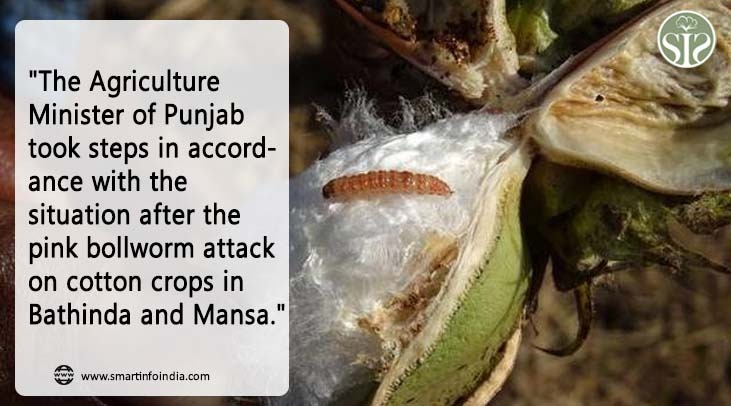
Pink bollworm management a big challenge: Cotton expertsTwo day Annual Group Meeting 2022-23 on Cotton inaugurated at PAUThere is a need to accelerate the process of development of cotton varieties, especially in cotton hybridization program focusing on Bt genes, larger boll size, resistance to diseases and mechanical harvesting. This was stated by Dr. TR Sharma, Deputy Director General, Crop Science, Punjab Agricultural University (PAU).The Indian Council of Agricultural Research (ICAR) inaugurated the two-day Annual Group Meeting 2022-23 of the All India Coordinated Research Project on Cotton (AICRP) at Punjab Agricultural University (PAU). Agriculture experts from PAU along with representatives from various State Agricultural Universities and ICAR Institutes participated in the inaugural session.Describing the universities as an important medium for releasing technology to the farmers, the ICAR expert stressed on increasing the income of the farmers through cotton lint or edible oilseeds. Dr Sharma said, “Since its introduction in 2002, Bt cotton has been playing a very important role and efforts need to be made to popularize Bt cotton varieties/hybrids and develop technologies for cotton improvement. Needed." Pointing out the issue of low cotton production and productivity, Dr. Sharma assured to release some varieties for High Density Planting System (HDPS).Former chairman of the Agricultural Scientists Recruitment Board, Dr. CD Mayi, who worked in PAU 50 years ago, stressed the need for private companies to be associated with universities for the development of Bt cotton hybrids. Calling for addressing the problem of waterlogging in cotton cultivation, he said, "In North India cotton is suffering due to excess water, while in South India it is suffering due to less water." Impressing the development of HDPS hybrids of cotton, Dr. Mayi reiterated the need for integration of public-private partnership in this direction.Director, ICAR-Central Institute for Research on Cotton Technology, Mumbai, Dr. S.K. Shukla also expressed concern over the difficulties faced during cotton harvesting and called upon the breeders to come up with HDPS hybrids as a solution. Dr. Shukla also discussed in detail the quality of cotton fiber and the parameters being adopted by the spinning industry.Informing about the provision of 33 per cent seed subsidy to the cotton growers of Punjab in the current crop season, he said that the intervention of Bt cotton is a big success. Although the whitefly wreaked havoc on cotton growers in 2015, the pest was successfully controlled through the collective efforts of researchers, extension workers and administrators.👇🏻👇🏻👇🏻👇🏻https://smartinfoindia.com/hi/news-details-hindi/Domestic-cotton-production-pakistan-decade%20low-textile-production-export-clothing

Domestic cotton production in Pakistan at four-decade low

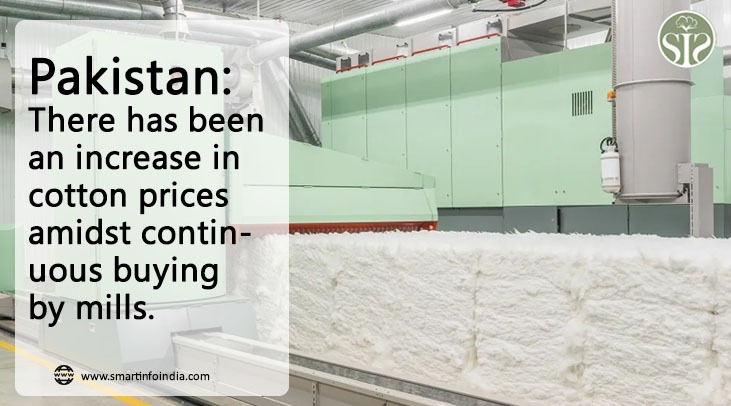
Domestic cotton production in Pakistan at four-decade low Cotton crop is down a whopping 34 per cent this year from 7.44 million bales last year, mainly due to devastating summer floods in Sindh and southern Punjab, where this industrial crop is mostly grown. Production in Pakistan has come down to a four-decade low of 4.9 million bales in 2023. According to Pakistan-based Dawn, this has added to the country's deep economic crisis.Cotton production in Pakistan's Sindh has decreased by 46 per cent, with Punjab recording a decline of 32 per cent, forcing the textile industry to import large quantities. According to Dawn, several factors are responsible for the poor cotton harvest year after year, ranging from pests and diseases, erratic weather patterns and water scarcity to poor seed quality, low yield per acre and large reduction in area under cultivation Is.Textiles and clothing exports have suffered significantly over the past decade, with average annual production coming in at almost half of what the textile industry actually needs. Besides, the import of cotton, which is a major driver of the economy, is adding to our balance of payments problem.Textile exports fell by nearly a third during the first eight months of the current fiscal due to a slump in global demand and local fiber shortages. The industry has invested billions of dollars in technology replacement by spinners, its future competitiveness largely dependent on the increased availability of domestic cotton. After touching a high of 11.1 million bales in 2004-05, the economy is facing several challenges due to a steady decline in production over the past few decades.👇🏻👇🏻👇🏻👇🏻https://smartinfoindia.com/hi/news-details-hindi/Rises-pakistan-spot-rate-cotton-maund-karachi-cotton-association-committee-increased


Cluster idea for cotton and food sector in Khargone

Cluster idea for cotton and food sector in KhargoneThe District Industries and Trade Center (DITC) has identified about 14 hectares in Khargone to develop a cluster for small and medium-sized industries. DITC is considering to develop industrial area in Khargone district for food and cotton sector. Khargone district already has six Government Industrial Areas including Nimrani, Khargone, Bikangaon and Barwah.Kailash Agarwal, president of the Madhya Pradesh Association of Cotton Processors and Traders, said, “This is the cotton belt of the state and is home to hundreds of ginners and cotton-related industries. Local industries are looking for areas that have basic amenities and help from the government to expand operations so that they can compete with other states.Atmaram Soni, general manager of Khargone DITC, said, “We have seen the land and have started the process of transfer. We are in talks with some industrialists and associations to set up factories in Khargone district for manufacturing food related items. “Upon completing the official formalities, we are planning to develop small plots for bakeries, toast and other food items manufacturers in the cluster. Another cluster planned on the new land would be for cotton ginning units,” said Soni.The Ministry of Micro, Small and Medium Enterprises is also developing a food park at Sanawad in about 9 hectares, the cluster is expected to have about 70 industrial plots for SMEs. The estimated cost of development of food cluster at Sanawad is around Rs 10 crore. Industry associations and local industries have urged the MSME department to develop industrial land for micro and small scale industries.

Telangana emerges as the third largest cotton producer in India

Telangana emerges as the third largest cotton producer in IndiaTelangana state government's measures to boost cotton production have yielded positive results as the state has emerged as the top cotton producer in South India and third largest in the country after Gujarat and Maharashtra. In 2020-21, Telangana produced 57.97 lakh bales of cotton, and in 2021-22, it produced 48.78 lakh bales of cotton.Apart from production, Telangana was also the second leading state in terms of labor rate paid to cotton workers. Telangana pays Rs 98.36 per hour, while Kerala pays Rs 117.88 per hour. In contrast, states like Gujarat and Karnataka pay Rs 35.16 and Rs 49.35, respectively.Responding to a question by BRS MP Manne Srinivasa Reddy, Union Minister of State for Textiles Darshana Zardosh said in the Lok Sabha on Wednesday that India is a pure cotton exporting country, where production is more than consumption. Keeping in view the interests of the entire cotton value chain including cotton farmers, the Central Government has put cotton exports under Open General License (OGL).The Union Minister said that the Ministry of Agriculture through ICAR-CICR, Nagpur has developed a master plan titled 'Targeted technologies for agro-ecological zones-Large scale demonstration of best practices for increasing cotton productivity' and for 41.87 crore has been sanctioned. The project aims to target technologies such as High Density Planting System (HDPS), close spacing and production techniques for ELS cotton approved by the Department of Agriculture and Farmers Welfare (DoA&FW).The Central Government has also issued a Quality Control Order (QCO) on February 28, 2023 for mandatory certification of cotton bales to increase the supply of good quality cotton.

Copyright© 2023 | Smart Info Service
Application Download