STAY UPDATED WITH COTTON UPDATES ON WHATSAPP AT AS LOW AS 6/- PER DAY
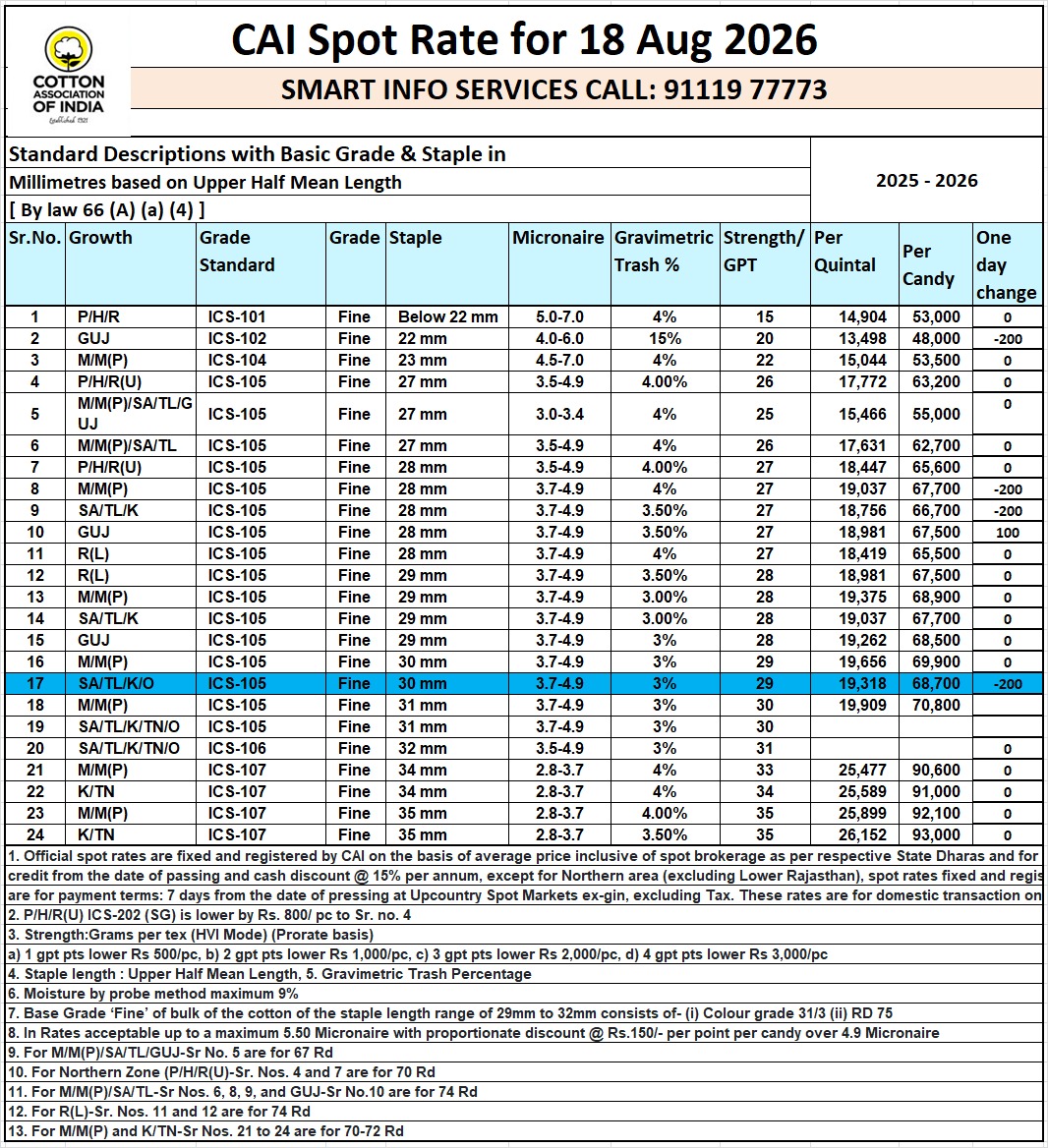
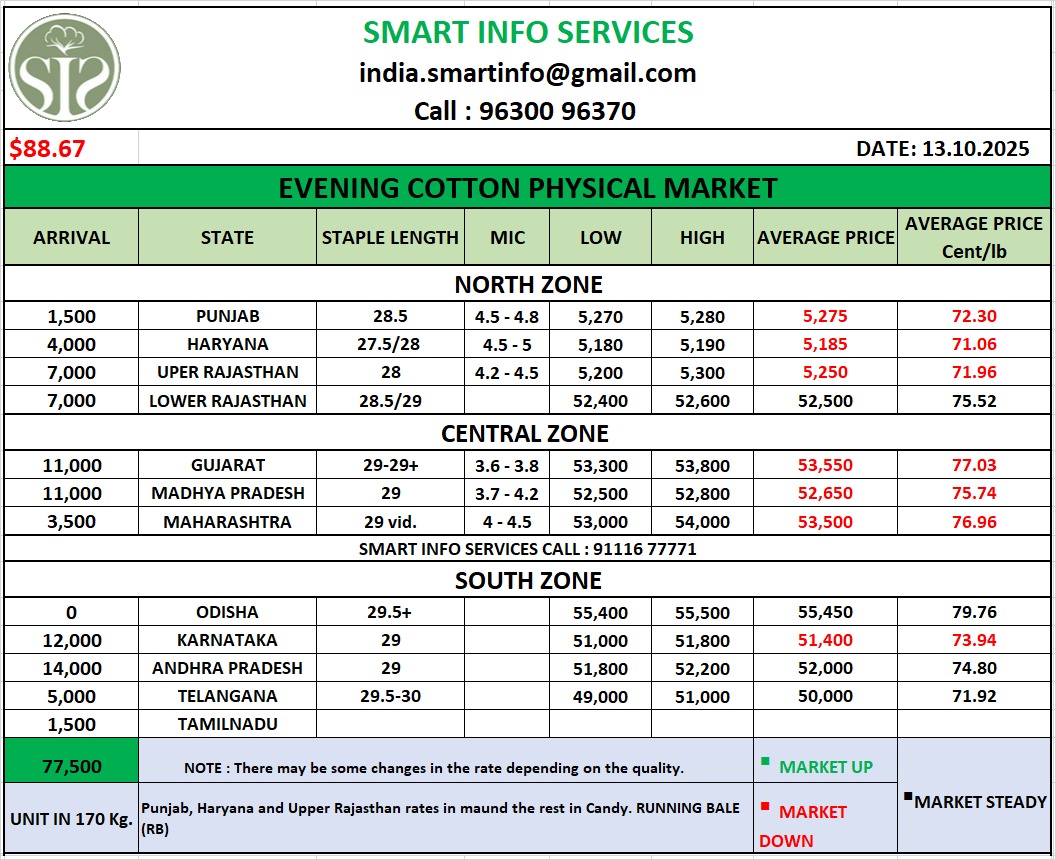
Start Your 7 Days Free Trial TodayCotton Market Sees Mixed Quarter Amid Tariffs, Conflict, CCI and Monsoon ProgressNew York/India – The global cotton market exhibited mixed trends through the second quarter of 2025, influenced by geopolitical tensions, tariff concerns, and seasonal agricultural developments.In the U.S., NY May Futures plunged sharply in early April after tariff announcements rattled market confidence. However, a gradual recovery followed, with the contract ultimately expiring in the 66–67 cents per pound range. NY July Futures, representing the final month of the old crop, remained subdued, confined within a narrow band of 65–69 cents throughout the quarter. Ongoing conflict and weak global demand kept pressure on prices, limiting volatility.Meanwhile, in India, the cotton physical market displayed early resilience in April. However, persistent offloading by the Cotton Corporation of India (CCI) capped prices between ₹53,800 and ₹54,200 through May and June. A shift in sentiment occurred in late June as tensions in the Middle East eased, particularly with the resolution of the Iran-Israel conflict. The improved outlook spurred robust CCI sales, with 21 lakh bales sold over six auctions in a short span, igniting a rally in the domestic market.Agricultural developments also brought optimism. The monsoon arrived early on May 25, and timely rainfall supported a prompt start to kharif sowing. By the end of June, Gujarat had covered 13.99 lakh hectares under cotton, contributing to an all-India total of 50.214 lakh hectares.Market participants remain cautiously optimistic as easing geopolitical tensions and favorable monsoon conditions offer potential support for the upcoming crop season, though global demand and tariff dynamics will continue to be key factors in price direction.read more :- Ministry of Textiles approves PM Mitra Park
Textiles Ministry approves Rs 1,894-crore PM MITRA Park project in Tamil NaduIn what can be termed as a significant step towards making Tamil Nadu a national textile region, Union Textiles Minister Giriraj Singh on Tuesday announced the Centre's approval for a Rs 1,894-crore (US$220 million) development scheme for the Pradhan Mantri Mega Integrated Textile Region and Apparel (PM MITRA) Park in Virudhunagar district.Spread over 1,052 acres, the new park will be a next-generation textile cluster with emphasis on technical textiles and integrated manufacturing. It is one of the Centre's premium PM MITRA schemes designed to transform India's textile industry through setting up of world-class infrastructure, efficient regulatory mechanism and sector-specific investment incentives.The approval for the Tamil Nadu project comes after prolonged discussions between the state government headed by Chief Minister M.K. Stalin and the Union Textiles Ministry. State Industry Minister T.R.B. Raja welcomed this approval for the future of Tamil Nadu's textile industry and called it a "result of relentless follow-up and collaborative engagement".The project, targeted to be completed by September 2026, will help attract private investment of Rs 10,000 crore (US$1.16 billion) and create around 100,000 new jobs. Raja also said Tamil Nadu is already India's leading textile exporter - this project will take them to new heights.The key infrastructure to be developed at the site includes a 15 million litres per day (MLD) zero liquid discharge common effluent treatment plant, a 5 MLD sewage treatment plant, housing for 10,000 workers and 1.3 million sq ft of plug-and-play and built-to-suit industrial warehousing.Tamil Nadu joins six other states - Telangana, Karnataka, Maharashtra, Gujarat, Madhya Pradesh and Uttar Pradesh - to host PM MITRA Parks as part of the central government's nationwide programme to revolutionise India's textile production ecosystem.read more :- INR Drops 12 Paise, Closes at 85.71 per Dollar
The Indian rupee on wednesday lower 12 paise to close at 85.71 per dollar, while it opened at 85.59 in the morning.At close, the Sensex was down 287.60 points or 0.34 percent at 83,409.69, and the Nifty was down 88.40 points or 0.35 percent at 25,453.40. About 1716 shares advanced, 2125 shares declined, and 167 shares unchanged.read more :- FTA will give a boost to India's textile sector
India's FTAs with UK, US, EU will open up new opportunities for textiles sector: MargheritaMinister of State for Textiles Pabitra Margherita on Tuesday said that free trade agreements (FTAs) with the US, UK and the European Union (EU) will open up new opportunities for the textiles sector in India.She also said that the country's textile exports have crossed USD 34 billion and the target is to reach USD 100 billion by 2030."On the trade front, the India-UK Free Trade Agreement and our ongoing negotiations with the EU and the US will open up new avenues for growth."These are high-value, quality-conscious markets and we are committed to equipping Indian exporters with the right strategy, standards and compliance to capitalise on these opportunities," he said.Inaugurating the 73rd edition of the India International Apparel Fair (IIGF) at Yashobhoomi, Margherita said the textile and apparel industry contributes 2.3 per cent to India's GDP, 13 per cent to industrial output and 12 per cent to exports."In 2023-24 alone, we exported textile products worth USD 34.4 billion, with apparel accounting for 42 per cent. "Our target now is to take textile exports past the USD 100 billion mark by 2030 and every MSME, every entrepreneur and every exporter has a role to play in achieving this," the Apparel Export Promotion Council (AEPC) quoted the minister as saying in a statement.The AEPC is organising the three-day fair, which is being attended by over 360 exhibitors from across the country and buyers from 80 countries.Margherita also said that it is Asia's largest apparel fair, showcasing not just fabrics and fashion, but also creativity and craftsmanship.This year buyers are coming from various countries and regions, including North America, Latin America, Europe, Asia, Oceania, Africa and Eurasia.The minister said with over 80 per cent of India's textile sector being driven by MSMEs, it is important to focus on increasing productivity, ensuring stable supply of raw materials and reducing import dependency to remain competitive."With the right policy initiatives, innovation and global partnerships, this could be the decade in which India emerges not just as a volume player but also as a value-added powerhouse in global apparel exports," he said.India's apparel exports are expected to reach US$40 billion by 2030. The cumulative growth of 12.8 per cent in apparel exports in the first two months of 2025-26 is a testimony to this progress."This is despite global challenges such as the war in the Middle East, the war between Russia and Ukraine, global logistics challenge, tariff uncertainty by the US and slowdown in many global markets," Sekhri said.read more :- CICR's genetic initiative to increase cotton production
Maharastra : CICR developing genome editing technique for higher cotton yieldNagpur : The Central Institute of Cotton Research (CICR) is now working on a technique to tweak the DNA of cotton plants to ensure higher yield. This method, called genome editing, is among the latest techniques adopted for agricultural research in the country.Genome editing is different from the more complex genetic engineering technology, which involves introducing an additional gene. Cotton farmers are currently using Bt cotton, a genetically engineered variety with an additional gene that provides resistance to the bollworm pest.Speaking to TOI on the sidelines of a seminar on climate-resilient farming, CICR director VN Waghmare said that genetic editing involves changes in DNA sequencing. The aim is to develop compact cotton plants with higher boll formation. It may take another two or three years to achieve the results, he said.Former director of CICR, CD Mayee, said that the Indian Council of Agriculture Research (ICAR) is also encouraging the use of genome editing. Recently, new varieties of paddy were released, which can help in developing varieties suitable for dry conditions.Regarding the reports on rampant use of illegal herbicide-tolerant (HT) seeds in the region, Waghmare said it may not be a prudent idea. This is because farmers here adopt the practice of inter-cropping, where no single crop is grown on a stretch. This means that even if farmers use HT seeds, they won't be able to use weed killers due to the presence of other plants.Waghmare noted that areas in predominantly paddy belts have also started growing cotton. For example, the trend has begun in Gadchiroli too. Farmers are adopting it because of the rugged nature of the crop.read more :- Rupee open Falls 6 Paise to 85.59/USD
Rupee opens 6 paise down at 85.59 against the dollar as tariff worries resurface The rupee opened 6 paise down on July 2 at 85.59 against the US dollar, tracking declines in other Asian currencies and markets over fresh US tariff worries as the 90-day pause nears end Whereas in the previous trading session it was at 85.53.read more :- Saurashtra Leads with 30 Lakh Hectares Sown
Out of 34 lakh hectares in Gujarat, 30 lakh hectares have been sown in Saurashtra alone.88% of peanuts and 60% of cotton were sown in Saurashtra due to favorable rains in June.Gujarat is the leader in peanut and cotton cultivation in the entire country and most of the cultivation in Gujarat is done in Saurashtra. This year, due to good weather and favorable rains in the month of June, farmers have sown more than 88% peanuts and more than 60% cotton in the first fortnight of monsoon.Till today i.e. 30 June, a total of twenty crops have been sown in 33,91,478 hectares in the entire state, out of which 88% i.e. 29,69,900 hectares have been sown in only 11 districts of Saurashtra.Farmers in Saurashtra have sown 15,44,695 (about 15.45 lakh) hectares this year, as against 8,99,807 (about nine lakh) hectares till the end of June last year.In Saurashtra alone, peanut seeds have been sown in 14.56 lakh hectares. A good crop is expected on this due to the recent rains.Similarly, cotton has been sown in a total of 14 lakh hectares in the state this year as against 12.73 lakh hectares last year, out of which 12.08 lakh hectares have been sown in Saurashtra. In soybean, sowing has been done on more than 1.20 lakh hectares of land this year as against 42 thousand last year, out of which 1.10 lakh hectares have been in Saurashtra. Thus, farmers of Saurashtra have done sowing earlier than last year when the weather was favorable. Apart from groundnut, cotton, soybean, this year the cultivation of millet, maize, moong, tur, urad, pulses, vegetables, fodder etc. has also increased more than last year till 30 June 2024.6.40 lakh hectares more groundnut cultivation than last year, soybean also three times more than last year, enthusiasm in tur, millet, maize too.read more :- Rupee Gains 08 Paisa, Closes at 85.53 Against Dollar
The Indian rupee on tuesday higher 08 paise to close at 85.53 per dollar, while it opened at 85.61 in the morning.At close, the Sensex was up 90.83 points or 0.11 percent at 83,697.29, and the Nifty was up 24.75 points or 0.10 percent at 25,541.80. About 1971 shares advanced, 1889 shares declined, and 150 shares unchanged.read more :- Cotton Sowing Lags Despite Strong Kharif Progress
Cotton Sowing Declines Despite Strong Kharif Progress: Coverage Falls Below Last Year’s LevelsWhile overall Kharif sowing has surged across the country, cotton acreage has shown a notable decline this season. According to the Union Agriculture Ministry’s latest data as of June 27, cotton has been sown over 54.66 lakh hectares, a decrease of over 5 lakh hectares compared to the 59.97 lakh hectares recorded during the same period last year.This dip in cotton cultivation comes in contrast to the broader trend in Kharif crops, where rice, pulses, oilseeds, and coarse cereals have all registered significant growth in sown area, driven by the early and widespread arrival of the southwest monsoon.Experts suggest that the fall in cotton sowing may be attributed to delayed rainfall in some key cotton-growing regions, as well as market uncertainties and price volatility that may have prompted farmers to shift to other crops like soybean or pulses, which are currently offering more favorable returns.The decline raises concerns for the cotton textile and export industries, which heavily rely on domestic cotton production. If the trend continues, it may impact cotton availability and pricing in the coming months.Despite this, officials remain optimistic that improved rainfall in July could help narrow the gap in cotton coverage, especially in parts of Maharashtra, Gujarat, and Telangana, where sowing activity is still ongoing.The government is closely monitoring the situation and may consider support measures if cotton acreage continues to lag significantly behind.read more :- Rupee Rises 14 Paise to 85.61 Against Dollar
Indian rupee opens 14 paise higher at 85.61 against US dollarThe local currency opened at 85.61 against the US dollar, as compared to 85.75 during the previous trading session.read more :- CCI Hits Record: 6.11 Lakh Bales Sold in a Day
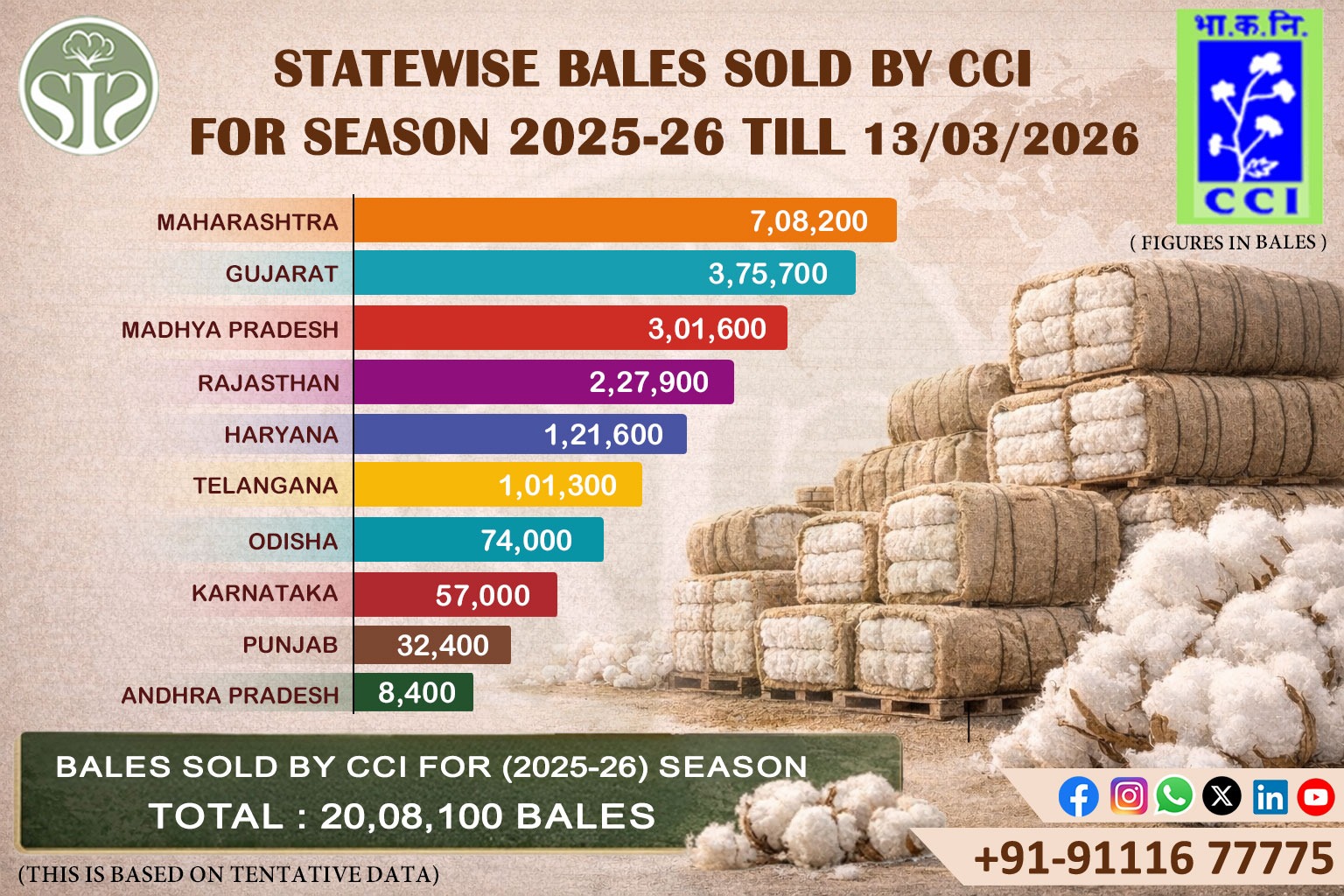
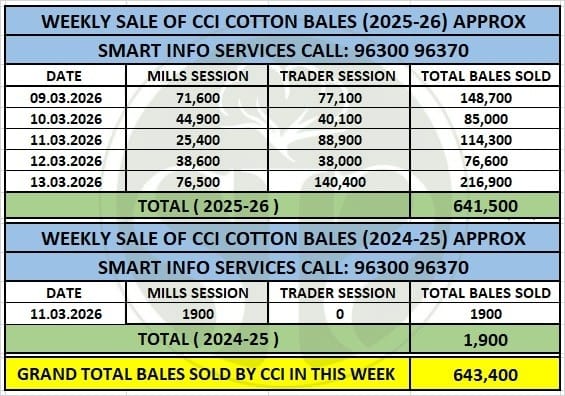
CCI Breaks Record, Sells 6.11 Lakh Bales in a Single Day Despite Price HikeThe Cotton Corporation of India (CCI) has achieved a historic milestone by selling 6,11,000 bales of cotton in a single day on Monday, June 30, setting a new all-time record. This remarkable feat comes despite a price increase of ₹200 per candy on the 2024-25 season stock.This new record surpasses CCI's previous high of 4,45,100 bales, which was set just last week, highlighting an unprecedented demand surge and robust market response even in the face of higher prices.Breakdown of Sales:Mill Session : 2,05,900 balesTrader Session : 4,05,100 balesThe increased participation from both mills and traders underlines growing confidence in the market and CCI's pricing strategy.So far in the 2024-25 season, CCI has sold a total of 53,55,400 bales, which accounts for 53.55% of its total procurement from this season’s crop. The sales performance reflects strong market fundamentals and CCI's effective marketing and distribution efforts.This milestone is seen as a major boost for the Indian cotton sector, reinforcing CCI’s pivotal role in balancing market demand while safeguarding the interests of cotton growers.read more :- Textile Ministry looking at new schemes for the sector


Textile Ministry Plans New Schemes to Boost SectorThe Union Minister of State for Textiles Pabitra Margherita said that the Ministry is committed to development of the entire textile value chain, from handlooms to technical textilesThe Union Textiles Ministry is looking at new schemes for the sector apart from considering the Production Linked Scheme - II (PLI - II).The Union Minister of State for Textiles Pabitra Margherita told the media in Coimbatore on Monday (June 30, 2025) that the Ministry is committed to development of the entire textile value chain, from handlooms to technical textiles. The textile stakeholders are asking for PLI- II. While the government is considering it, there will be other schemes too, he said.Regarding the demands of the industry to relax the Quality Control Orders (QCOs), he said the government is taking inputs from the industry on trade-related issues.read more :- Maharashtra Kharif Sowing Crosses 5 Lakh Hectares
Parbhani: Kharif sowing: Kharif sowing in 5 lakh 11 thousand hectaresParbhani : In the Kharif 2025 season, till Friday (27th), sowing has been done in 2 lakh 89 thousand 5 hectares (55.74 percent) in Parbhani district and 2 lakh 22 thousand 599 hectares (54.24 percent) in Hingoli district. Inter-cropping work is going on in the crops which are in the development stage. However, sowing has been delayed in areas with less rainfall.Out of 5 lakh 18 thousand 468 hectares in Parbhani district, 2 lakh 89 thousand 5 hectares have been wrongly sown. Out of 1 lakh 91 thousand 954 hectares, 1 lakh 24 thousand 446 hectares (64.83 percent) of cotton has been wrongly sown. Soybean sowing has come down from 2 lakh 54 thousand 54 hectares to 1 lakh 43 thousand 855 hectares (56.62 percent) and from 42 thousand 602 hectares to 16 thousand 478 hectares (38.68 percent).Out of 17,600, 2,707 hectares (15.38 percent) of moong, 6,413 hectares (913 hectares) of urad, 291 hectares (7.56 percent) of jowar and 25 hectares (5 percent) of bajra have been sown. In Hingoli district, 2,22,599 hectares (54.24 percent) of sowing has been done.Out of this, cotton has been sown in 23,530 hectares. Soybean has been sown in 1,67,861 hectares, turi in 23,750 hectares, moong in 3,090 hectares, urad in 2,162 hectares and jowar in 1,801 hectares. Many villages in the mandals of these two districts have not received enough rain so far for sowing. In many areas, the seeds have not been able to germinate due to lack of sufficient moisture. Therefore, farmers will have to sow twice. Crops that grow due to lack of moisture in the soil need rain. The rain that occurred last week has given life to the crops. In the areas where sowing has been done, farmers are waiting for heavy rain.read more :- India Sees 9% Above-Average Rainfall in June
India records 9% above – average rainfall in June, says weather bureauIndia received 9% more rainfall than the long-period average for June, as the monsoon covered the entire country ahead of its normal schedule, weather department data showed on Monday.The monsoon is the lifeblood of India's nearly $4 trillion economy, delivering almost 70% of the rainfall needed to water farms and replenishing aquifers and reservoirs.Nearly half of India's farmland is not irrigated and depends on the annual June-September rains for crop growth.The central, north-western parts of the country received above average rainfall in June, while north-eastern regions saw below average rainfall, data compiled by the India Meteorological Department (IMD) showed.India's annual monsoon rains covered the entire country on Sunday, nine days earlier than is typical, the weather department said, bringing forward planting of summer-sown crops.read more :- Rupee falls 27 paise to close at 85.75
The Indian rupee on monday lower 27 paise to close at 85.75 per dollar, while it opened at 85.48 in the morning. The BSE Sensex shed 452.44 points or 0.54 per cent to settle at 83,606.46 levels, after trading in the range of 84,099.53 - 83,482.13.read more :- "Indian Cotton Crisis Demands Policy Action"
Plagued By Challenges, Indian Cotton Cries For Policy AttentionPolicymakers and industry representatives must be equally concerned over the lack of growthin the country’s cotton economy. In recent years, our domestic cotton crop has been grappling with several challenges, including land constraints, water shortage and climate change.Acreage for cotton crops has stagnated at around 125-130 lakh hectares, and yields have actually declined from the peak of 500 kilograms per hectare to the present, around 425 kg/ha.Cotton output has turned uncertain in terms of quantity and quality. Production has steadily fallen from 360 lakh bales in 2019-20 to 294 lakh bales in 2024-25. Our raw cotton export has been on a declining trend for the last three years. In 2024-25, India has moved from being a net exporter to a net importer of cotton.At the same time, the demand for the natural fibre has been rising, boosted by the addition of a new processing capacity (spindles).The view that the supply and demand fundamentals of cotton are tightening steadily is unmistakable. Import volumes are gathering pace. This raises a serious question. Can India produce enough cotton in the future to remain self-reliant?The answer is not easy, but surely not out of reach. We must abandon the ‘business-as-usual’ approach and adopt a holistic policy for the cotton sector. The cotton economy is a composite economy. It is labour-intensive and export-intensive.Cotton is not just fibre but much more—including the seed and its by-products like oil and meal. Indeed, cotton represents 5Fs—fibre, food, feed, fuel and fertiliser.Its composite nature warrants an ecosystem approach. It involves designing an optimal pathway that balances the economic interests of all stakeholders and, at the same time, advances sustainability principles and practices.As the planted area is stagnating and possibly nearing a saturation point, the only way to boost cotton production is through vertical growth, that is, by raising yields. To achieve this, intervention at multiple levels is necessary.As someone closely tracking agriculture for decades, this author proposes the following four big-ticket ideas: technological intervention, boosting genetic research, replicating high-yield area experience in other areas, and promoting contract farming by large user units.The emphasis should be on research. It is important to remember, “Yesterday’s research is today’s science, and today’s science is tomorrow’s technology.”Technology: Bt cottonseed is facing a technology fatigue. Pink bollworm has probably acquired resistance, as evidenced by the incidence of pest attacks. We need a conducive policy environment to support tech seeds. Sucking pests are taking a toll. New generation seeds (with stacked genes) are available. Indian seed companies should be encouraged to adopt new tech seeds. Tech seeds by themselves will not raise yields, but they will surely help prevent or reduce yield losses. The crop saved is the crop produced. In cotton promotion, ‘stewardship’ is missing. Industry bodies should work with agricultural universities and Krishi Vigyan Kendras (KVKs) to educate growers about farming practices like high-density planting.Genetic research: Cotton needs to fight climate change. The answer is climate-smart agriculture, including climate-resilient inputs and scientific agronomy. For the purpose, a conducive long-term policy to encourage firms to spend on R&D is the only alternative. Currently, many private seed firms have reduced their research expenditure because of non-supportive policy or an uncertain policy environment. Seed research is a long-term play. Reduction in the R&D spend is not good for the country and must be reversed.Replication: While the all-India cotton yield averages around 450 kg/ha, several districts enjoy yields twice the national average. There is something for stakeholders to learn from the experience of high-yield areas—input management, agronomy and so on. Replicating the experience and practices of high-yield areas in low-yield areas will pay dividends.Contract farming: To reduce dependence on cotton imports and generate a genuine export surplus, large user industries have a moral duty to produce the raw material they need. Contract farming is the way forward. Farmer Producer Organisations, or FPOs, can be good partners for contract farming. It will be a win-win for growers and industrial users. Scientific, well-tested and transparent methodologies to price the output in advance are available.Strengthening the cotton ecosystem demands ‘political will’ and active participation of the user industry in its own self-interest.read more :- Cost Push Drives Illegal HTBt Cotton in Maharashtra
| title | Created At | Action |
|---|---|---|
| Tariff and monsoon changed the course of cotton | 03-07-2025 01:27:33 | view |
| Ministry of Textiles approves PM Mitra Park | 02-07-2025 23:32:20 | view |
| INR Drops 12 Paise, Closes at 85.71 per Dollar | 02-07-2025 22:45:41 | view |
| FTA will give a boost to India's textile sector | 02-07-2025 18:45:44 | view |
| CICR's genetic initiative to increase cotton production | 02-07-2025 18:13:36 | view |
| Rupee open Falls 6 Paise to 85.59/USD | 02-07-2025 17:22:47 | view |
| Saurashtra Leads with 30 Lakh Hectares Sown | 01-07-2025 23:51:00 | view |
| Rupee Gains 08 Paisa, Closes at 85.53 Against Dollar | 01-07-2025 22:45:07 | view |
| Cotton Sowing Lags Despite Strong Kharif Progress | 01-07-2025 18:06:20 | view |
| Rupee Rises 14 Paise to 85.61 Against Dollar | 01-07-2025 17:23:13 | view |
| CCI Hits Record: 6.11 Lakh Bales Sold in a Day | 01-07-2025 01:00:14 | view |
| Textile Ministry looking at new schemes for the sector | 01-07-2025 00:30:49 | view |
| Parbhani Kharif Sowing Crosses 5 Lakh Hectares | 01-07-2025 00:05:32 | view |
| India Sees 9% Above-Average Rainfall in June | 30-06-2025 23:37:59 | view |
| Rupee falls 27 paise to close at 85.75 | 30-06-2025 22:51:09 | view |
| "Indian Cotton Crisis Demands Policy Action" | 30-06-2025 18:46:45 | view |