Maharashtra Targets Higher Cotton Productivity in Three Marathwada Districts for Kharif 2026
By jayesh chouhan 2026-07-13 11:34:17
Maharashtra: Target set to boost cotton productivity for Kharif 2026 in three Marathwada districts
The Agriculture Department has proposed a target average cotton productivity of 3.69 quintals per hectare for the Kharif 2026 season across the Chhatrapati Sambhajinagar, Jalna, and Beed districts of Maharashtra's Marathwada region. The department estimates that yields of major Kharif crops can be improved this year through modern agricultural techniques and better crop management. Under this plan, the average productivity for soybean is also projected at 16.06 quintals per hectare.
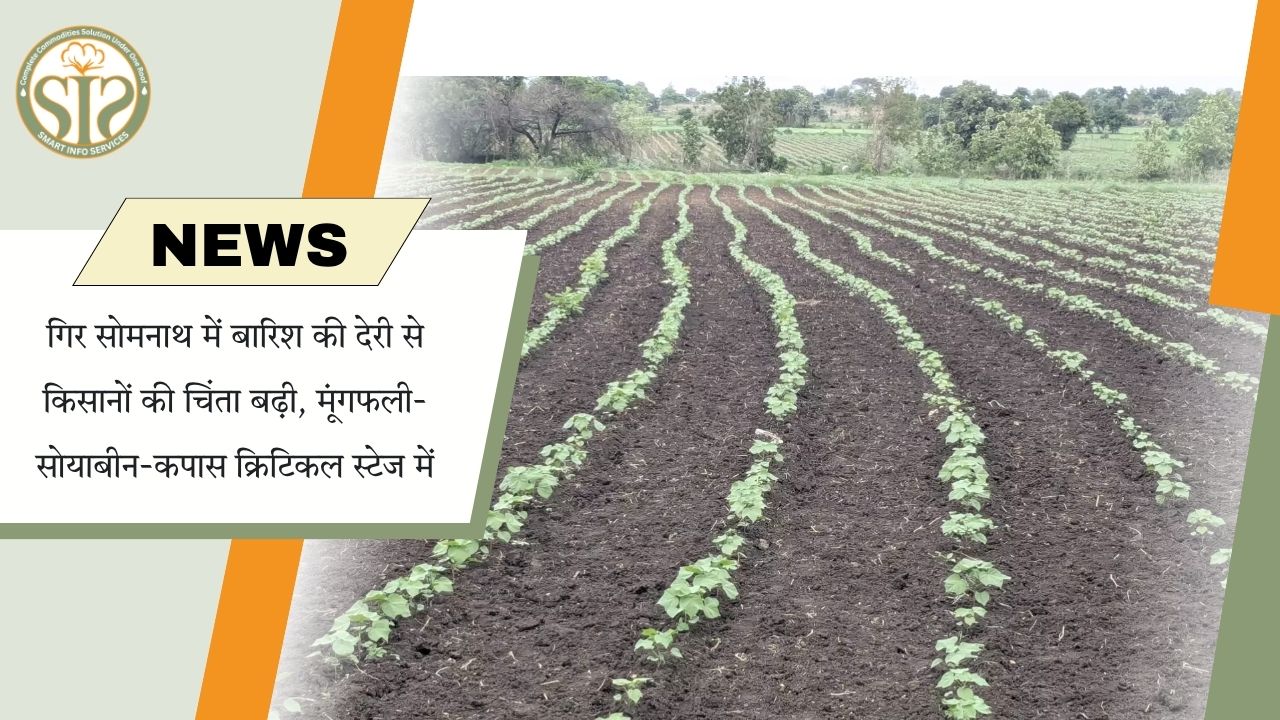
According to the Agriculture Department, a sowing target of 21.35 lakh hectares has been set for the Kharif season across these three districts. However, due to a sluggish start to the monsoon, sowing had been completed on only 11.64 lakh hectares by July 7. In contrast, sowing had covered 18.40 lakh hectares by the same period last year. The proposed area includes 6.17 lakh hectares in Chhatrapati Sambhajinagar, 6.46 lakh hectares in Jalna, and 7.92 lakh hectares in Beed.
During the previous Kharif season (2025), the average cotton productivity was recorded at 3.33 quintals per hectare. Meanwhile, productivity stood at 14.42 quintals for soybean, 25.11 quintals for maize, 11.51 quintals for *Arhar* (pigeon pea), and 8.66 quintals for *Urad* (black gram) per hectare. The Agriculture Department expects production to increase this year through the use of improved seeds, balanced fertilizer application, and scientific farming practices.
The Chhatrapati Sambhajinagar agricultural division comprises three districts, 28 *talukas*, and 3,751 villages. The division has a total geographical area of 28.48 lakh hectares, with 23.76 lakh hectares of cultivable land. Approximately 21.77 lakh farmers in the region are engaged in agricultural activities.
However, the weather remains the biggest challenge of the season. In view of the delayed monsoon, below-normal rainfall in several regions, and the potential impact of El Niño, the Agriculture Department is emphasizing the timely provision of seeds, fertilizers, and scientific advice to farmers. The department believes that an improvement in the productivity of Kharif crops is possible this year if weather conditions remain favorable.