Punjab Cotton Acreage Hits Record Low as Whitefly and Pink Bollworm Threat Grows
By jayesh chouhan 2026-07-13 11:46:32
Cotton Acreage in Punjab Hits Record Low; Threat from Whitefly and Pink Bollworm Rises
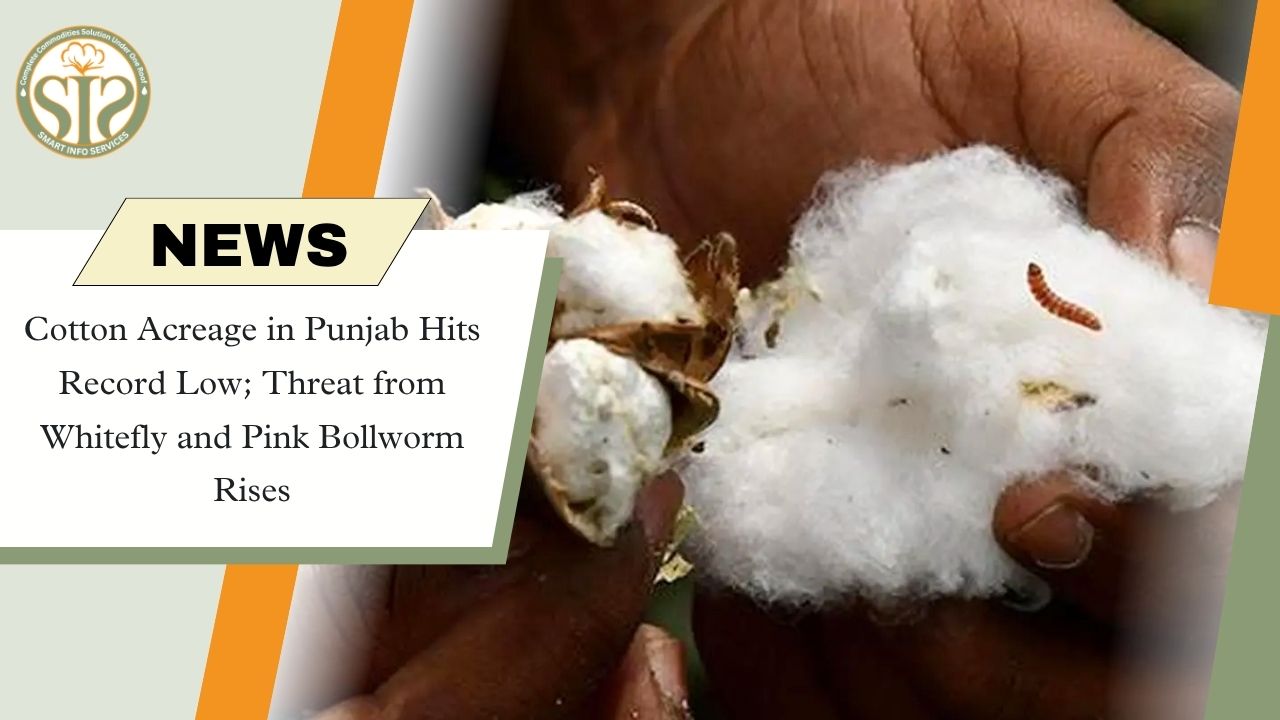
Farmers in Punjab's cotton-growing districts are concerned following early signs of whitefly and pink bollworm infestations. Agricultural experts state that while the current pest incidence remains below the Economic Threshold Level (ETL), regular monitoring of fields over the next 15–20 days is essential.
This situation arises at a time when the state's cotton acreage has shrunk to approximately 80,000 hectares—considered the lowest ever recorded for the southern Malwa region. A lack of rainfall in July, coupled with persistent heat and high humidity, has created favorable conditions for pest proliferation.
Teams from the State Agriculture Department, Punjab Agricultural University (PAU), and Krishi Vigyan Kendras (KVKs) are conducting continuous surveys across the districts of southwest Punjab to assess the situation. Scientists are monitoring pest populations in the fields and advising farmers on preventive and management measures.
Cases of both whitefly and pink bollworm have been reported in Fazilka district, which accounts for nearly half (approximately 40,000 hectares) of Punjab's total cotton area this season. Chief Agriculture Officer Kulwant Singh stated that distinct whitefly infestations have been observed in some fields, while pink bollworm presence has also been detected in certain areas; however, the situation remains under control.
In Muktsar district, farmers have been advised to use neem-based organic pesticides to control whiteflies during the early stages of infestation. Meanwhile, in Bathinda, the Agriculture Department has intensified monitoring and identified the villages of Jodhpur Romana and Yatri as whitefly hotspots. The presence of pink bollworm has also been recorded in some pheromone traps.
Vijay Kumar, Principal Entomologist at PAU, stated that while the crop has not suffered any serious damage so far, the pest population could increase over the next two weeks if the current weather conditions persist. He expressed hope that rainfall might reduce the whitefly population. Experts have urged farmers to regularly monitor their fields, avoid the indiscriminate use of chemical pesticides, and consult agricultural officials before undertaking any spraying.