Recent News

“Farmers worried due to falling cotton prices”

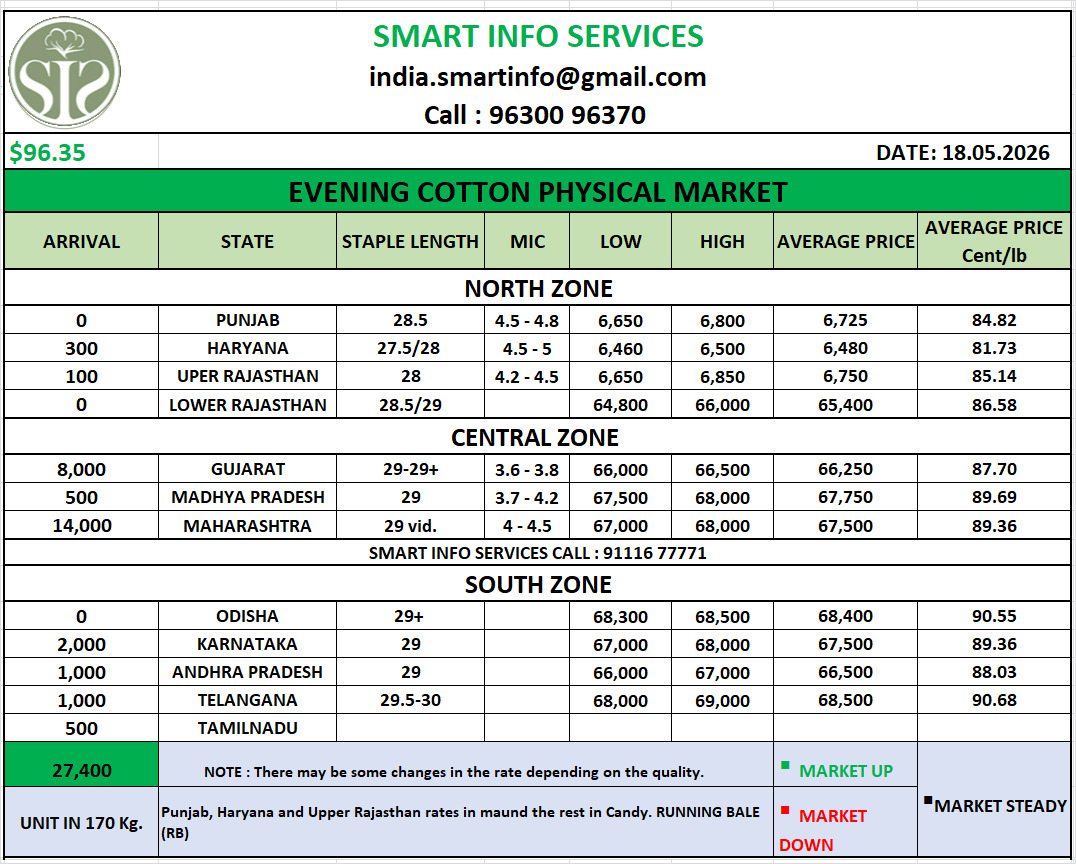
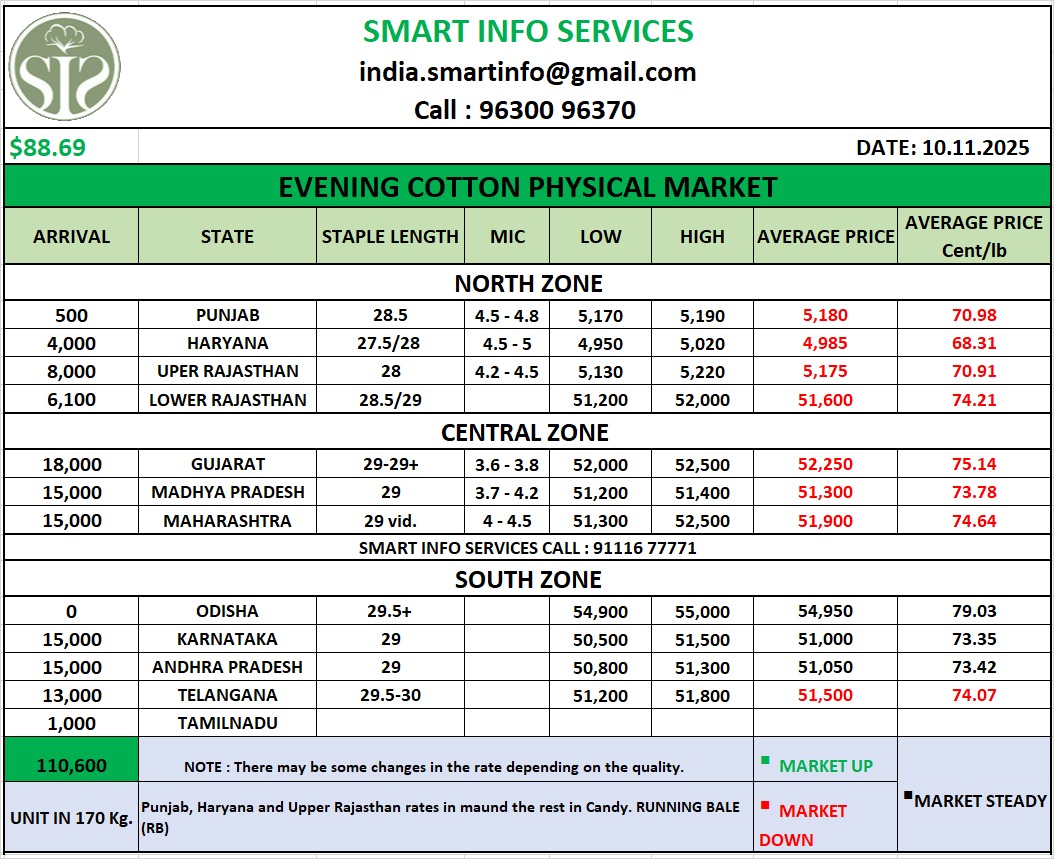
Gujarat farmer distress: Where cotton clouds hang heavy*Overview of Cotton Farming Crisis in Gujarat*The recent economic and environmental challenges faced by cotton farmers in Gujarat, India, have resulted in severe distress, leading to instances of farmer suicides. This summary explores the contributing factors to this crisis, the impact of government policies, and the responses from various stakeholders.*Economic and Environmental Challenges*Price Declines: Farmers faced low cotton prices, around ₹1,200-1,300 per mann (20 kg), which was a significant decline from previous years. Weather Issues: Non-seasonal and excessive rains in October damaged crops, further exacerbating the farmers' financial struggles.*Government Response*Relief Package: Chief Minister announced a relief and assistance package worth approximately ₹10,000 crore, with plans to procure various crops at support prices.Import Duty Waivers: The Union government waived customs duties on raw cotton imports, aiming to stabilize textile costs but adversely affecting domestic cotton prices.*Impact of Import Policies*Increased Imports: India nearly doubled its cotton imports compared to the previous year, leading to a further decline in domestic prices. Industry vs. Farmers: While the textile industry benefits from cheaper imported cotton, Indian farmers receive lower prices for their produce.*Agricultural and Market Dynamics*Production and Acreage: The provisional cotton acreage for 2024-25 is 114.47 lakh ha, a decrease from 2023-24, with yields expected to remain constant. Market Access Issues: Farmers face logistical barriers, such as the absence of local market yards, forcing them to sell produce in distant districts.*Farmer Protests*Suicides and Protests: Six farmers, primarily cotton growers, have died by suicide in recent months, prompting protests against the government's policies and lack of adequate price support.Challenges in Cotton ProductionInput Costs: Rising costs of seeds and pesticides, coupled with stagnant cotton prices, have discouraged farmers from cultivating cotton.Shift to Alternative Crops: Many farmers are shifting to peanuts, pulses, or traditional cotton varieties like kala kapas to reduce input costs.*Industry Perspectives*Quality and Yield Issues: Low-quality seeds and reduced yields are major challenges. Farmers are advocating for new seed approvals to enhance productivity.Impact on Ginning Mills: The duty-free import policy benefits spinning mills but poses a threat to ginning mills, causing many to shut down.*Conclusion*The cotton farming crisis in Gujarat is multifaceted, involving economic, environmental, and systemic challenges. While government measures aim to stabilize the industry, they often fall short of addressing the root causes of farmer distress. For sustainable solutions, there is a need for comprehensive policy interventions that balance industry growth with farmer welfare.read more :-   The rupee fall 05 paise to open at 90.14/USD. 

Soybeans worth Rs 83 lakh purchased at guaranteed price in Satara

Soybean Procurement: Satara District Purchases Soybeans Worth ₹83 Lakh at Guaranteed PriceTwo soybean procurement centers in Satara district, Koregaon and Masur (Tal. Karhad), have been opened at a base price of ₹5,328 per quintal, and by the end of December 5th, they had procured 1,1561 quintals of soybeans worth ₹83,17,000. The remaining four approved centers have not yet been operational.This year, soybeans were sown on 86,000 hectares in the district. Immediately after harvesting, most farmers began selling large quantities of soybeans at rates ranging from ₹4.50 to ₹4,700.Procurement centers should have been operational at that time at the base price; however, registration for the Satara, Phaltan, Wai, Koregaon, Karhad, and Masur centers in the district began on October 15th, with labor charges. However, the actual opening of these centers only began in the first week of November. Therefore, these centers have not received much response except in Koregaon and Masur.A total of 1,101 quintals of lentils and 460 quintals of masoor have been purchased at the Koregaon center, and a total of 1,561 quintals of lentils have been purchased at a rate of ₹5,328 per quintal. Seventeen farmers have registered at the Satara center in the district, 142 at the Phaltan center, and 61 at the Wai center; but the centers have not yet been operational.Low Response from FarmersSince soybean is the main crop during the Kharif season, production is highest. Due to rains during harvest time and a lack of procurement centers, there has been a low response from soybean farmers. Although farmers are receiving low prices due to the conditions at the center and transportation problems, traders have sold their soybean.Due to the lack of improvement in prices over the past three years, the storage capacity for soybeans has also decreased. To benefit farmers, the government is demanding that soybean centers be established before the harvest and at one in every four to five villages, rather than at the taluka level. read more :- Cotton procurement process slows in Nanded, buying slows down

Cotton procurement process slows in Nanded, buying slows down

Maharashtra: Cotton Procurement: Cotton procurement in Nanded is progressing at a very slow pace.Nanded: The procurement process at various cotton procurement centers in Nanded district has still not picked up pace. As of December 1, a total of 28,847 quintals of cotton had been procured from 1,933 farmers in the district. A total of 14,619 farmers had registered to sell cotton in the district, of which 5,051 entries have been approved by the market committee, and the number of pending entries is 8,107. The highest quantity of cotton, 11,908 quintals, was procured at the New Bharat Cotton Naigaon Center.Cotton procurement in the district is being done according to the central government's minimum guaranteed price. The price for medium-yarn cotton is ₹7,710 per quintal, while the price for long-yarn cotton is ₹8,110 per quintal. Procurement is taking place at nine locations in the district, namely Kinwat, Ardhapur, Bhokar, Naigaon, and Hadgaon talukas.4650.05 quintals of cotton was purchased from 282 farmers at Salasar Ginning Center in Kaldagaon, Ardhapur taluka. 1559 farmers have registered at this center. 2391 quintals were purchased at Nataraj and Balaji Ginning Center, Tasga (Tal. Hadgaon). A total of 1658 farmers have registered at Nataraj and Balaji Ginning Centers. 2923 quintals of cotton was purchased from 218 farmers at Venkatesh Cotton, Bhokar.3161 farmers have registered at this center. 11,908 quintals of cotton was purchased at New Bharat Cotton, Naigaon. The highest number of 5023 farmers have registered at this center. Of these, cotton from 777 registered farmers was purchased.Three centers, Manjeet Cotton, L.B. Cotton and Mahavir Ginning purchased 5,194 quintals of cotton. Cotton was purchased from 366 farmers. Vijay Cotton, Kinwat, had 1,585 registered farmers. Of these, 1,370 quintals of cotton was purchased from 74 farmers.read more :-“Earning 80,000 rupees by cultivating cotton on barren land”

“Earning 80,000 rupees by cultivating cotton on barren land”

Haryana: Earning 80,000 Rupees per acre by growing cotton on barren landWhile farmers in the region rely solely on paddy crops and abandon land they consider barren and infertile, Haryana farmers are earning thousands of rupees per acre by cultivating cotton on that very land.Farmer Naveen Hooda, who leased 120 acres of fallow land in village Ravan, 10 kilometers away, has been cultivating cotton for the past 5-6 years, earning over 75,000 to 80,000 Rupees per acre. The farmer explained that he has been cultivating cotton on this land, which lacks irrigation facilities, relying solely on rain for the past few years.Furthermore, in villages like Pattharchuwa, farmers from Haryana like Ramhet, Jagbir, and Kuldeep are also cultivating cotton on similar land. They explained that a plot of 50 to 100 acres is not available in Haryana, so they come to Chhattisgarh to cultivate cotton. He said that farmers in Chhattisgarh and the region could also do this if they wanted to, but perhaps they aren't interested. When this was discussed with Ramprasad Yadav, Dars Sahu, Jeevan Sahu, and Krishna of Tildabandha, they said that they used to grow pulses and oilseeds on the land where they grow paddy, but are unable to do so due to the monkey menace.They don't have much knowledge about growing crops like sugarcane and cotton. Gradually, as awareness grows, the production of these crops will certainly increase, leading to increased profits. The farmers explained that this crop, which takes six to eight months to mature, costs approximately ₹25,000 per acre for seeds, plowing the land, applying fertilizers and pesticides, and harvesting the cotton. Furthermore, there are additional costs for land lease and crop transportation. He told that the production of cotton per acre is about 18 quintals, which after being harvested by local labourers coming from Punjab at the rate of ₹8 per kg, is taken to places like Berla in Chhattisgarh and Nagpur in Maharashtra and sold at the rate of about ₹7000 to ₹8000 per quintal.read more :- Rupee open Falls 08 Paise to 90.06 /USD

"India-Russia Economic Cooperation Strengthened by 2030 Roadmap"

India-Russia Economic Cooperation Strengthens with 2030 RoadmapIndia and Russia have unveiled a comprehensive plan to expand their economic cooperation, announcing a comprehensive program for economic cooperation until 2030 during President Vladimir Putin's state visit to New Delhi on December 4-5, 2025.Indian Prime Minister Narendra Modi and President Putin reiterated that their eight-decade-old partnership—built on trust, mutual respect, and strategic convergence—remains a pillar of stability amid global geopolitical uncertainty.PM Modi stated that the new roadmap will make mutual trade "more diversified, balanced, and sustainable," and will open up avenues for co-production, co-innovation, and deeper industrial cooperation. Central to this objective are ongoing negotiations on a free trade agreement between India and the Eurasian Economic Union, the completion of which is expected to open up new export opportunities.A key highlight was the adoption of the "Program 2030," which prioritizes balanced trade, simplified payment systems, the removal of tariff and non-tariff barriers, and greater logistics efficiency. Both sides are working to strengthen settlements in national currencies and explore interoperability between payment systems and digital currency platforms. The two countries reaffirmed the revised bilateral trade target of $100 billion by 2030 in a joint statement.Energy security—which has long been the backbone of the partnership—was given renewed emphasis. The two countries pledged to expand cooperation in oil, gas, petrochemicals, underground coal gasification, LNG and LPG infrastructure, and nuclear energy. Russia and India agreed to fast-track the delivery schedule of equipment and fuel for the Kudankulam Nuclear Power Plant and to continue negotiations on a second nuclear site in India.Connectivity emerged as a top priority, with new momentum being provided for the International North-South Transport Corridor (INSTC), the Chennai-Vladivostok Maritime Corridor, and the Northern Sea Route. An MoU on training Indian sailors for polar operations is expected to strengthen cooperation in the Arctic and create new employment opportunities.Deep engagement in the Russian Far East and the Arctic was reaffirmed, supported by a separate cooperation program for 2024–2029. Sectors such as agriculture, energy, manpower, mining, diamonds, pharmaceuticals, and maritime transport will be focus areas.Leaders also emphasized the growing importance of minerals essential for clean energy and high-tech manufacturing. Both sides pledged stronger cooperation in exploration, processing, and recycling technologies, along with plans for joint ventures in fertilizers and long-term supply arrangements.People-focused initiatives were a major part of the discussions. India recently opened new consulates in Yekaterinburg and Kazan, while Russia will soon benefit from free 30-day e-tourist visas and a group visa scheme. New agreements on skilled manpower mobility, joint vocational training, and enhanced academic exchanges aim to build deeper societal ties.Modi and Putin reiterated their long-standing cooperation on counter-terrorism, condemned recent attacks in India and Russia, and called for a zero-tolerance policy on extremism. They also reaffirmed their close coordination on key multilateral platforms such as the UN, G20, BRICS, and SCO, with Russia reiterating its support for India's bid for permanent membership of the UN Security Council.From civil nuclear technology and space cooperation – including working together on rocket engines and human spaceflight – to enhancing defense co-development and co-production under Make in India, the summit demonstrated the multi-dimensional depth of the India-Russia partnership.Putin thanked Modi for his warm hospitality and invited him to visit Russia for the next annual summit in 2026, marking another step in the continued development of the relationship he described as “special and privileged.”read more :-  "Farmers appeal to PM on cotton procurement ban"

"Farmers appeal to PM on cotton procurement ban"

Maharashtra: Farmers' organization seeks PM's intervention to lift CCI's ban on cotton procurementNagpur : The Council for Protection of Farmers' Rights-Kisan Bharti has urged Prime Minister Narendra Modi to intervene to direct the Cotton Corporation of India (CCI) to withdraw its restrictive cotton procurement rules that impact the state's farmers.In his appeal to the PM, CPFR-Kisan Bharti President Barrister Vinod Tiwari said that the CCI's recent move – limiting cotton procurement to just 7 quintals/acre, almost half the previous limit of 13 quintals/acre – has exacerbated the hardships faced by millions of cotton farmers in Maharashtra and neighboring Telangana.Tiwari said, "This absurd reduction in the limit, made after the yield survey this Kharif season, has forced farmers to sell nearly 80 percent of their produce to private traders at very low prices. This has exacerbated the already severe hardship on the farms." Given the reduction, farmers have no option but to sell their cotton stock at around ₹6,500/quintal or less, which is about 25% less than the MSP of ₹8,110/quintal.The worst affected are farmers who produce more than 5 quintals/acre, who, due to restrictions, cannot sell their entire produce to CCI and, therefore, sell it to any private buyer at a much lower rate and well below the MSP.He said, “The crisis is being exacerbated by CCI's stringent moisture requirements of 8-12%, which are difficult to maintain. Given fog, intermittent rains, and the drop in winter temperatures, cotton naturally has a high moisture level. Despite drying in the open for several days, farmers report moisture levels of 20% or more, and their stock is simply rejected at CCI procurement centers.” Citing an example, CPFR-Kisan Bharti stated that in Yavatmal district alone, 236,752 farmers cultivated cotton on 825,932 acres, yielding approximately 3.3 million quintals.However, of this huge quantity, the CCI purchased barely 7,921 quintals, and private traders purchased approximately 115,000 quintals at low prices—exposing the gap between government promises and ground reality.Farmers lamented that the CCI's onerous rules are pushing them directly into the clutches of private traders, who bargain hard to obtain cotton stocks at low prices.CPFR-Kisan Bharti stated that barely a few of the 27 procurement centers announced by the CCI are operational, leading to long queues, increased transportation costs, and logistical problems for already distressed farmers.Tiwari said, “Our demand is to increase procurement to at least 12 quintals/acre, reduce the moisture limit to 22% due to natural calamities, and open more procurement centers to speed up the process.”Since the CCI is the nodal agency for MSP procurement, it is expected to protect the interests of farmers, not punish them for things beyond its control. Therefore, the PM should immediately direct the CCI to provide necessary assistance to farmers before taking any drastic action, he said.read more :-   “CCI keeps prices stable, sells 92% of cotton in e-auction”
Related News

Youtube Videos

ऐसा रहा आज कपास बाज़ार 😱 महाराष्ट्र कपास बुवाई जानकारी | Cotton Market Rate Today 24 Sep 2026
ऐसा रहा आज कपास बाज़ार 😱 महाराष्ट्र कपास बुवाई जानकारी | Co...
रुई बाज़ार में गिरावट का रुख 😱 Cotton Market Rate Today | 23 Sep 2026
रुई बाज़ार में गिरावट का रुख 😱 Cotton Market Rate Today | 2...
आज के कपास के भाव 😱 गुजरात कपास बुवाई अपडेट 🔥Cotton Rate Today 22 Sep 2026
आज के कपास के भाव 😱 गुजरात कपास बुवाई अपडेट 🔥Cotton Rate T...
Application Download
Whatsapp Contact