Recent News

Cotton prices improved in Rajkot market yard.

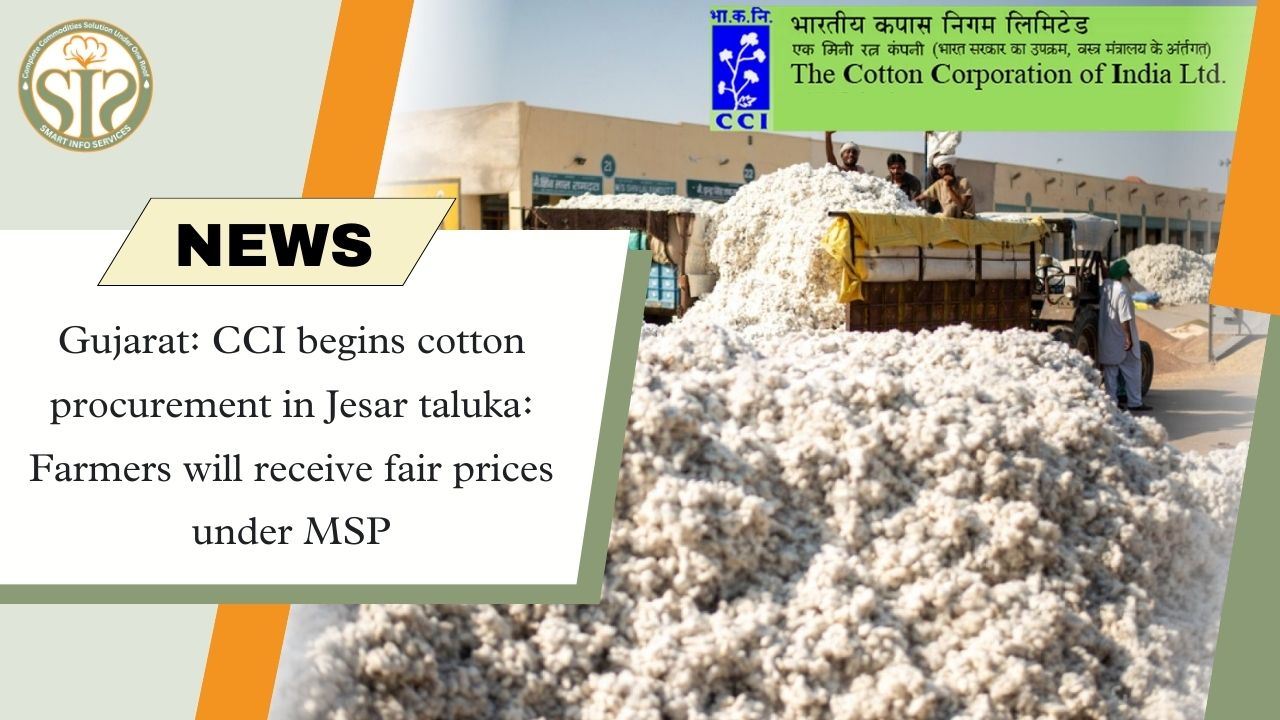
*Gujarat: Cotton procurement begins at the Samalaya Sub-Market Yard.**Vadodara:* With the support of the Savli Market Committee, the MLA initiated the procurement of cotton at the Samalaya Sub-Market Yard. In collaboration with the Savli Krishiwadi Produce Market Committee, cotton procurement began at the Samalaya Sub-Market Yard. This important program was officially launched.Cotton procurement begins at the Samalaya Sub-Market Yard in collaboration with the Savli Market Committee. The MLA initiated the procurement. In collaboration with the Savli Krishiwadi Produce Market Committee, cotton procurement began at the Samalaya Sub-Market Yard. This important program was inaugurated by local MLA Ketanbhai Inamdare. Keeping farmers' interests in mind, the Market Committee has created various facilities to ensure fair valuation and fair prices for their crops.In his speech, MLA Ketanbhai Inamdare stated that the state government and market committees are committed to empowering farmers. Cotton is purchased in a timely and transparent manner, there is no discrimination in size and price and a special system has been created to ensure that the payment is easily deposited into the farmer's account. An atmosphere of happiness and satisfaction was seen among the farmers who brought cotton to Samalaya Yard. Market Committee officials said that there is a possibility of higher income from cotton this season. Farmers are being provided facilities including transparent verification of weight and measurement. Easy arrangements have been made for tractor-trolleys. Market Committee Chairman Rajubhai Patel, Director, employees and a large number of people were present in the program. Farmers were present.read more :-  The rupee fell 22 paise to open at 90.41.

Rupee breaches 90 mark as tariffs and outflows weigh heavily

Rupee slips below 90 amid tariff pressure and capital outflowsMumbai: The Indian rupee on Wednesday slipped below the key psychological mark of 90 against the US dollar, extending its downward trend of the past eight months. Persistent dollar outflows linked to trade and investments, along with companies rushing to hedge against further depreciation, have weighed heavily on the currency.The rupee has emerged as one of Asia’s weaker performers this year, declining करीब 5% against the dollar. Steep US tariffs—reportedly up to 50% on certain Indian goods—have dented exports to its largest market, reducing the appeal of Indian equities for foreign investors.Notably, the currency has depreciated from 85 to 90 in less than a year—much faster than its earlier move from 80 to 85—highlighting the growing pressure.Foreign portfolio outflows have been significant, with investors pulling out nearly $17 billion from Indian equities so far this year. Alongside this, foreign direct investment (FDI) has also weakened. Although gross inflows touched $6.6 billion in September, large exits from IPO investments by private equity and venture capital firms have led to net outflows.The Reserve Bank of India (RBI) noted that net FDI turned negative for the second consecutive month in September, mainly due to increased outward investments and repatriation.India’s trade deficit also widened sharply, driven by higher gold imports and elevated US tariffs, adding further strain on the rupee. Additionally, inflows from external borrowings and NRI deposits have slowed.Market participants say every phase of rupee depreciation—including the breach of the 90 mark—has triggered fresh dollar demand from importers, while exporters have held back dollar sales. This imbalance has left the currency vulnerable amid insufficient capital inflows.Experts suggest that a gradual weakening of the rupee can act as a natural stabilizer for the economy under higher tariff conditions.Ongoing uncertainty around India-US trade talks has further disrupted forex markets, increasing hedging activity by importers while exporters remain cautious, forcing the RBI to manage volatility.Despite intermittent interventions by the central bank, sustained dollar demand and capital outflows continue to exert pressure. RBI’s efforts are reflected in declining forex reserves and a rise in forward dollar positions, which recently touched a five-month high of $63.4 billion.

60% of cotton was sold below the support price in Punjab markets.

Punjab : 60% cotton brought to Punjab mandis sold below support price: DataBathinda : Nearly 61% of the cotton that arrived in Punjab's grain markets this year was bought below the minimum support price (MSP), with some stocks being sold for as low as Rs 3,000 per quintal, according to data shared by the Punjab State Agricultural Marketing Board.The MSP for cotton's medium stape is Rs 7,710 per quintal and long staple is Rs 8,110 per quintal. The cotton that is usually grown in Punjab has an MSP of Rs 8,010 per quintal.Cotton purchase season starts on Oct 1 every year. This year, cotton arrivals also fell sharply in the state, from 5.4 lakh quintals last year to 2.3 lakh quintals this time around.Of these 2.3 lakh qunitals, 35,348 quintals of cotton was bought by the Cotton Corporation of India (CCI) and 1.95 lakh quintals by private traders. In all, 1.4 lakh quintals of cotton was purchased below MSP. The crop fetched a maximum price of Rs 7,860 per quintal and a minimum as low as Rs 3,000 per quintal.Cotton was grown on 1.19 lakh hectares of land in Punjab this year, but the crop was damaged due to floods in some areas. Last year, cotton was grown on 99,700 hectares.India Habit Index 2025 | Expert Opinions on Daily HabitsHowever, after the massive whitefly attack on the crop in 2015, cotton growing started losing its sheen in Punjab and reduced to as low as close to only 1 lakh hectares.CCI introduced an app from the 2025-26 season for transparency, naming it the Kapas Kisan app, making it mandatory for cotton purchases. Many farmers initially struggled to register on the Aadhar-based registration app, due to which CCI stayed away from making purchases in the initial part of the season. Farmers are required to upload valid land records and details of cotton-sowing areas certified by revenue or agriculture authorities. Farmers could go for self-registration on their mobiles.CCI informed all the Agricultural Produce Market Committees (APMCs) about the new digital registration process. Officials from CCI, not wanting to be named, stated that the corporation is making purchases with moisture content within limits from those farmers who registered through the Kapas Kisan app, and the records were verified by the state govt officials.read more :- Rupee opens 09 paise down at 89.96

Great news for Telangana farmers

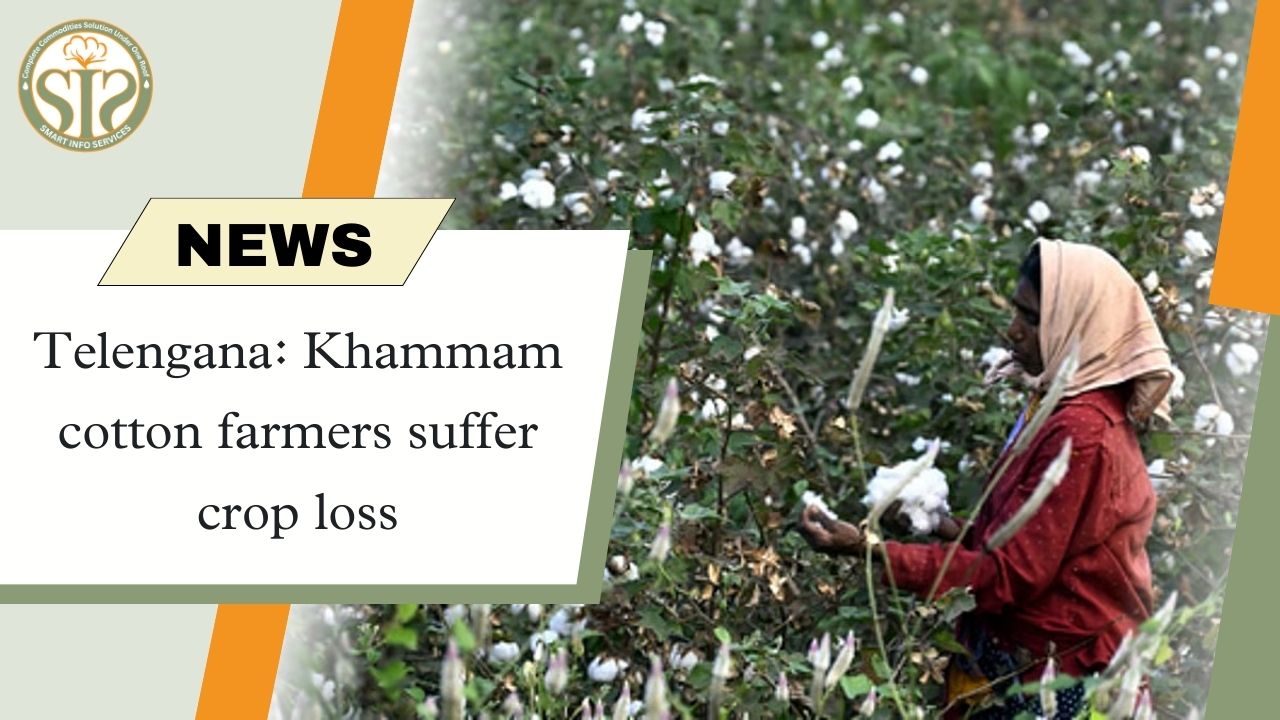
Good news for Telangana farmers... the green light has been given.The cotton procurement deadlock in Telangana has been resolved. With the Cotton Corporation of India (CCI) relaxing regulations, procurement resumed at the state's 330 ginning mills on Monday. The initiative of Minister Tummala Nageswara Rao has resolved this issue and provided farmers with the opportunity to receive the support price.Good news for Telangana's cotton farmers. The impasse regarding cotton procurement at ginning mills in the state has been completely resolved. Due to new regulations implemented by the Cotton Chamber of India (CCI), farmers and ginning mill owners were facing significant difficulties due to the lack of procurement permits. The Ginning Millers Association had previously staged a strike over this issue. Agriculture Minister Tummala Nageswara Rao has taken special initiative on behalf of the state government to resolve this issue. He held discussions with the Chairman and Managing Director of the CCI, as well as with Union Ministers.As a result of these discussions, a positive response was received from the CCI. Consequently, cotton procurement resumed on Monday at all 330 CCI-notified ginning mills across the state. Ravinder Reddy, President of the Ginning Millers Association, expressed his satisfaction that Minister Tummala's initiative in resolving this issue has greatly benefited farmers and mill owners. He specifically thanked Minister Tummala for his initiative to resume procurement. Ravinder Reddy explained that this decision will not only boost cotton procurement but also provide farmers with a support price.The resumption of procurement has cleared the way for farmers to sell their cotton. So far, the CCI has procured 4.03 lakh tons of cotton in the state. This volume is expected to increase further with the current resumption of procurement. The resumption of ginning mills will increase demand for cotton and create an opportunity for price stabilization in the market. The resolution of this impasse has brought a sigh of relief to cotton farmers. They hope to receive a fair support price for their crop and expedite the procurement process. They say this decision will help ensure a smooth, uninterrupted cotton procurement process in the state.read more :- Bangladesh: Farmers hope for profits from growing cotton cultivation in Jashore

Bangladesh: Farmers hope for profits from growing cotton cultivation in Jashore

Bangladesh : Rising cotton farming in Jashore fuels farmers’ hopes for higher returnsBangladesh continues to rely heavily on imported cotton to meet domestic demand, as local production remains far below the required level. To address this gap, the government has introduced a range of initiatives to expand cotton cultivation nationwide.Farmers in the region are expecting a bumper harvest this season, supported by favourable weather conditions and low pest infestation. Many growers reported that cotton remains a highly profitable crop, often generating three to four times the production cost.Through the Cotton Development Board (CDB), farmers have been provided with incentives such as seeds, fertilisers, and pesticides to enhance production.These measures, coupled with conducive weather, have contributed to a notable expansion of cotton farming in the region. However, farmers emphasised the need to revise the government-fixed price to ensure better profitability and encourage further expansion.According to official data, cotton was cultivated on 19,200 hectares in the Jashore zone during the 2024–25 fiscal year.This year, the cultivation area increased to 20,000 hectares across Jashore, Kushtia, Jhenaidah, and Chuadanga districts. In Jashore alone, 13,000 farmers cultivated cotton on 390 hectares. A total of 2,600 farmers in the zone received government incentives.Saiful Islam, a cotton farmer from Raghunathnagar in Jhikargacha upazila, said it costs Tk14,000–18,000 to cultivate one bigha. “After expenses, we are able to make Tk30,000–40,000 profit per bigha. That is why we continue growing cotton,” he said.Aminur Rahman, another farmer from the area, said he cultivated cotton on 22 decimals this year. “From the government incentive package, I received DAP, potash, urea, seeds, and pesticides. This support was very helpful. With favourable weather and fewer pests, yields have been excellent,” he said.Shahidul Islam, who inherited the practice from his father, said cotton cultivation takes about eight months to complete. “The government has fixed the price at Tk4,000 per maund. But considering the long cultivation period, the price should be increased to better benefit farmers,” he said, adding that buyers usually purchase cotton directly from the fields, saving farmers the cost and inconvenience of transporting the crop to markets.Jashore’s Chief Cotton Development Officer, Mizanur Rahman, said 2,600 farmers in the zone received incentives this year. “Interest in cotton cultivation has grown significantly. We expect higher yields compared to previous years. There are currently 13,000 cotton farmers in the zone, and our target is to increase this to 15,000,” he said.He noted that the CDB and the Department of Agricultural Extension (DAE) are jointly promoting hybrid varieties and modern seedling technologies to expand cultivation nationwide. “The majority of the country’s cotton is produced in the Jashore region. Since cotton is an internationally traded commodity, domestic prices are aligned with global markets. There is no scope for syndication,” he added.Mosharraf Hossain, Deputy Director of the Department of Agricultural Extension in Jashore, said cotton has gained popularity due to its high profitability. “Government incentives have greatly benefited farmers. The quality of cotton produced in this region is excellent,” he said.CDB Executive Director Rezaul Amin said cotton cultivation now spans 20,000 hectares across the Jashore–Kushtia–Jhenaidah–Chuadanga belt. “A significant portion of the national incentive budget is allocated to this zone. We are providing training, mechanisation support, and high-quality seeds. This season, Tk17 crore in incentives was distributed nationwide, most of which went to farmers in this region,” he said.Public Service Commission member Prof ASM Golam Hafiz expressed concern that cotton is not included in the agricultural loan policy. “Cotton is a vital cash crop for our economy. The readymade garment sector contributes 83–85% of export earnings, yet we import almost all the cotton required. Domestic production accounts for only about 2% of demand,” he said, urging the government to introduce a dedicated loan facility for cotton farmers.read more :- Rupee open Falls 15 Paise to 89.70/USD

Related News

Youtube Videos

ऐसा रहा आज कपास बाज़ार 😱 महाराष्ट्र कपास बुवाई जानकारी | Cotton Market Rate Today 24 Sep 2026
ऐसा रहा आज कपास बाज़ार 😱 महाराष्ट्र कपास बुवाई जानकारी | Co...
रुई बाज़ार में गिरावट का रुख 😱 Cotton Market Rate Today | 23 Sep 2026
रुई बाज़ार में गिरावट का रुख 😱 Cotton Market Rate Today | 2...
आज के कपास के भाव 😱 गुजरात कपास बुवाई अपडेट 🔥Cotton Rate Today 22 Sep 2026
आज के कपास के भाव 😱 गुजरात कपास बुवाई अपडेट 🔥Cotton Rate T...
Application Download
Whatsapp Contact