STAY UPDATED WITH COTTON UPDATES ON WHATSAPP AT AS LOW AS 6/- PER DAY
Start Your 7 Days Free Trial TodayThe Indian rupee higher 71 paise to close at 90.37 per dollar on Wednesday, compared to 91.08 in the morning.At close, the Sensex was down 120.21 points or 0.14 percent at 84,559.65, and the Nifty was down 41.55 points or 0.16 percent at 25,818.55. About 1326 shares advanced, 2498 shares declined, and 144 shares unchanged.read more :- India's textile exports are strong in over 100 countries.
India's Textile Exports Grew by 4.6% in the Last Four Financial Years, Exports Increased to Over 100 CountriesIndia's exports of textiles and apparel, including handicrafts, have registered an annual growth of 4.6 percent over the last four financial years, rising from USD 31.58 billion in 2020-21 to USD 37.75 billion in 2024-25. This growth has been recorded across more than 100 countries, Parliament was informed.Union Textiles Minister Giriraj Singh told the Rajya Sabha that despite shifts in global supply chains since the pandemic, India's export performance has remained robust. This growth is attributed to strong demand for ready-made garments, cotton and man-made fiber textiles, carpets, and handicrafts.The Minister stated that the government has adopted a multi-pronged strategy to enhance global competitiveness across the entire textile value chain, including high-value segments, while modernizing domestic infrastructure.As part of this effort, seven PM MITRA parks have been sanctioned with significant investments to create integrated textile infrastructure. The Production Linked Incentive (PLI) scheme for textiles has also been expanded to attract substantial investments in man-made fiber apparel, fabrics, and technical textiles.Support for research and development, innovation, and market development has been strengthened through the National Technical Textiles Mission. Skilling and technology upgradation are being promoted through schemes like SAMARTH and Silk Samagra-2.An Export Promotion Mission has been launched to improve trade finance, market access, branding, and compliance for exporters, supported by 100 percent credit guarantee for MSMEs.To support traditional artisans, the Ministry is implementing programs that provide raw material assistance, upgraded equipment, solar lighting, marketing support, concessional loans, and social security. Under the Handloom Promotion Assistance Scheme, thousands of weavers have received upgraded looms and accessories. The inclusion of artisans on the India Handmade e-commerce portal and government marketplaces has also expanded market access and direct sales opportunities.read more :- Launch of BT cotton: BT seeds of straight varieties launched.
BT Cotton Launch: Launch of BT Seeds of Straight Cotton VarietiesChief Minister Devendra Fadnavis launched BT seeds of three straight varieties of cotton developed by Vasantrao Naik Marathwada Agricultural University (VNMKV) at the inauguration ceremony of 'Joint Agresco' on Thursday (29). VNMKV is the first agricultural university in the state to have converted straight varieties of cotton into BT varieties and made them available to farmers.Agriculture Minister Manikrao Kokate, Minister of State Ashish Jaiswal, Guardian Minister Meghna Sakore-Bordikar, MP Sanjay Jadhav, Vice-Chancellor Dr. Indra Mani, Research Director Dr. Khizar Beg, and others were present on the occasion. NH 1901 BT, NH 1902 BT, and NH 1904 BT are three American straight varieties of cotton that have been converted into BT varieties by the VNMKV Cotton Research Center in Nanded.The seeds of these varieties have been made available to farmers for sale this year. These varieties are straight and tolerant to sucking pests, bacterial blight, leaf spot disease, etc. Consistent yields of these varieties have been observed in dryland farming at various centers in Central India.This variety of cotton has a ginning percentage of 35 to 37 percent, and its fiber length, strength, and fineness are good. Cultivation of this variety is recommended in the states of Maharashtra, Gujarat, and Madhya Pradesh in Central India.Outstanding Agricultural Researcher AwardChief Minister Devendra Fadnavis honored scientists from the state's four agricultural universities who have performed outstandingly in research work at 'Joint Agresco' with the 'Outstanding Agricultural Researcher Award 2025'.Dr. Madan Pendke from VNMKV, Dr. Sunil Kadam from Mahatma Phule Agricultural University, Dr. Santosh Gahukar from PDKV, and Dr. Vijay Dalvi from Balasaheb Sawant Konkan Agricultural University were honored.Read more :- Maharashtra: Rising cotton prices are a key focus for farmers.
Maharashtra: Farmers Focus on Rising Cotton PricesDongaon: Farmers in Jafrabad taluka are anxiously waiting for cotton prices to rise. While the government has started purchasing cotton through the Cotton Corporation of India (CCI) in other talukas, the guaranteed price center in Jafrabad taluka is yet to open. As a result, farmers are forced to sell their cotton at a loss.Guaranteed price centers are supposed to purchase cotton from farmers. However, the government has imposed a new condition on these purchases, causing significant hardship for farmers. They are demanding that this condition be removed and that ten quintals per acre be purchased from farmers with 40 R land. Meanwhile, private ginning factories are buying cotton for up to Rs. 7,200, further impacting farmers' finances.This year, the Kharif season crops, including cotton, soybeans, mung beans, urad beans, groundnuts, and other vegetables, have been severely damaged due to heavy rains. This has led to a significant reduction in the yield of major crops like cotton and soybeans. Since private traders and ginning factories are offering lower prices than the guaranteed price centers, farmers are demanding that cotton be purchased and sold at a rate of Rs. 11,000 to Rs. 12,000 per quintal.New cotton has been arriving for the past two and a half to three months. However, the government is not offering fair prices, leading to farmers repeatedly falling into debt due to the lack of a proper market for cotton and soybeans at the open price centers.Shaikh Kaleem, Farmer, DongaonThe government should remove the new condition at the guaranteed price centers and reinstate the old one. Cotton should be purchased and sold at Rs. 10,000 to Rs. 12,000 per quintal. The significant disparity in cotton prices is causing difficulties for the government. The government should purchase cotton at Rs. 10,000 to Rs. 12,000 per quintal at both the guaranteed price centers and private ginning factories.read more :- BGMEA: Bangladesh needs a rapid shift towards non-cotton products.
Bangladesh must accelerate shift to non-cotton products: BGMEABangladesh’s garment sector must urgently accelerate product and market diversification to ensure long-term sustainability and maintain its global competitiveness, according to senior industry leaders.Speaking at a conference hosted by Hyosung at the BGMEA Complex in Dhaka, Inamul Khan-Bablu, Senior Vice President of the Bangladesh Garment Manufacturers and Exporters Association (BGMEA), said the industry needed to place far greater emphasis on diversified apparel production using synthetic fibres and other non-cotton materials.He pointed out that while nearly 75% of global textile and apparel products are made from non-cotton materials, Bangladesh’s export basket remains heavily skewed towards cotton-based garments, with only 27% comprising non-cotton products. He said this disparity underscored a significant and largely untapped opportunity for the country’s apparel industry.Khan-Bablu noted that global fashion and textile markets are increasingly shifting towards synthetic, blended and functional fabrics, driven by changing consumer preferences and performance requirements. However, Bangladesh continues to depend predominantly on cotton-based manufacturing, creating what he described as a structural imbalance that must be addressed to protect and expand the country’s share in global markets.Despite the challenges, he said there were encouraging signs of progress. The share of non-cotton products in Bangladesh’s apparel exports is gradually increasing, reflecting positive momentum within the industry and signalling stronger prospects for future growth.The session was also attended by BGMEA Director Joarder Mohammad Hosne Komor Alam, alongside industry stakeholders and representatives from the textile and apparel sector.read more :- Rupee fell 05 paise to open at 91.08/USD
Against the dollar, the rupee fell by 05 paise to open at 91.08The Indian rupee opened at 91.08 against the dollar on Wednesday, while it closed at 91.03 on Tuesday.Read more :-The rupee fell by 24 paise to close at 91.03 per dollar
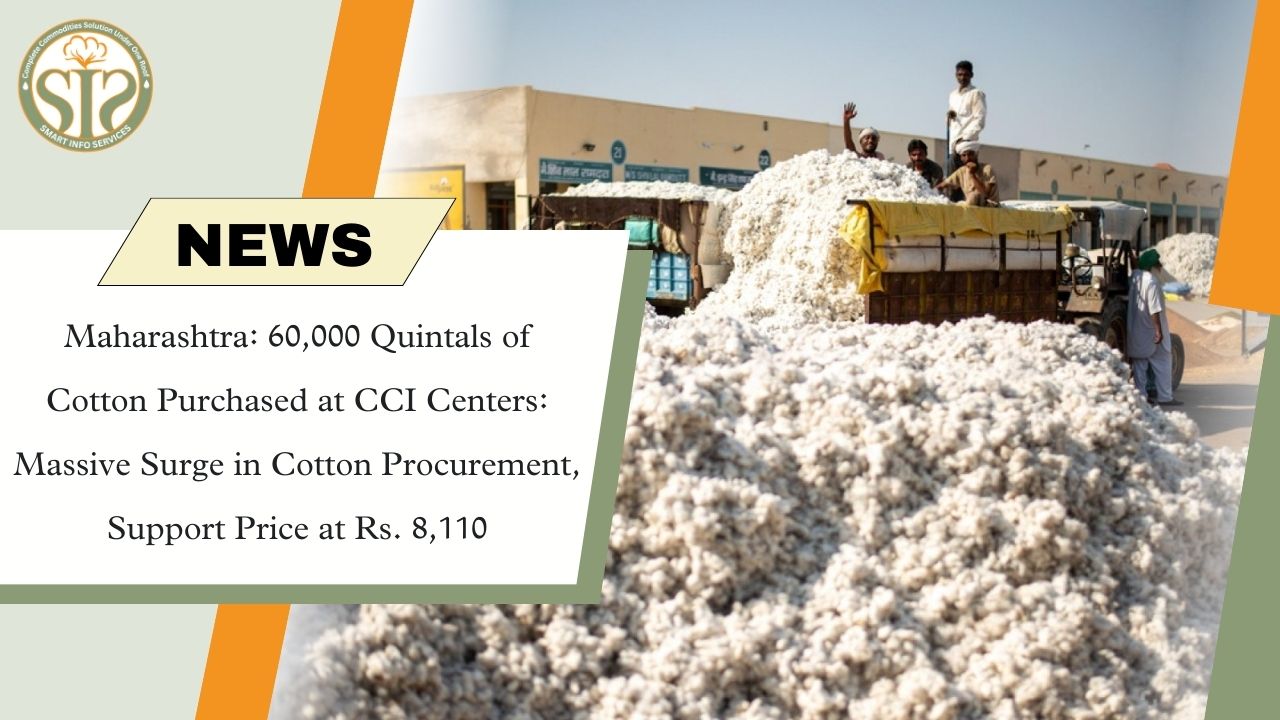
The Indian rupee closed down 24 paise at 91.03 per dollar on Tuesday, while it had opened at 90.79 in the morning.At the close, the Sensex was down 533.50 points, or 0.63 percent, at 84,679.86 and the Nifty was down 167.20 points, or 0.64 percent, at 25,860.10. About 1573 shares rose, 2412 shares fell, and 154 shares closed unchanged.Read More:- Maharashtra: 60,000 Quintals of Cotton Purchased at CCI Centers: Massive Surge in Cotton Procurement, Support Price at Rs. 8,110
Maharashtra: 60,000 Quintals Cotton Procured at CCIThis year, cotton procurement is receiving a tremendous response in Pimpalgaon Renukai, Bhokardan taluka. Last month, 60,000 quintals of cotton were purchased from six CCI centers. Farmers faced difficulties due to unseasonal rains, erratic weather, and low prices offered by traders. Therefore, farmers have opted for government procurement centers. For the convenience of farmers, the Marketing Federation has started six ginning centers in the taluka. Cotton is being purchased at one center in Rajur, one in Kedarkheda, and four centers in Bhokardan city.Due to the increasing response from farmers, there is heavy traffic at the centers every day. Farmers are bringing cotton in tractors, tempos, bullock carts, and other vehicles. The minimum support price declared by the government is Rs. 8,110 per quintal. However, the actual price is determined based on the quality of the cotton. Therefore, good quality cotton fetches higher prices, while poor quality cotton receives lower prices. The price is determined based on quality inspection, moisture measurement, and sample testing. Therefore, farmers are focusing on clean and dry cotton.This year, cotton production has decreased due to unseasonal rains. Cotton crops were damaged in many areas. Production has decreased, costs have increased, and prices offered by traders have fallen. In some areas, traders are offering very high prices, increasing the risk of farmers losing money. Farmers have turned to government procurement centers for guaranteed prices. The centers are becoming crowded, leading to delays in the weighing process. Transportation costs are also increasing. Nevertheless, farmers are focusing on government centers. Farmers say that the prices offered by the government are stable and higher than those offered by traders.In the last few years, farmers have faced difficulties due to drought, irregular rainfall, pests, and fluctuations in market prices. At such a time, government procurement is a source of relief for farmers. Farmers in Bhokardan taluka who have harvested more than 60,000 kilograms of cotton should bring good quality cotton for sale. They should also register on the cotton farmer app, and after receiving approval, book a slot and bring their cotton for sale. If farmers face any difficulties, they should contact the market committee.Read more :- The Future of Cotton Prices in Doubt; Read the Details
Cotton Prices Face Uncertain FutureDomestic cotton prices have come under pressure this year after the central government temporarily removed the 11 percent import duty on cotton. Although this exemption is valid until December 31, concerns are growing among cotton farmers as the textile industry lobby is demanding an extension. (Cotton Market)Cotton Market: Domestic cotton prices have come under pressure this year after the central government temporarily removed the 11 percent import duty on cotton. Although this exemption is valid until December 31, concerns are growing among cotton farmers as the textile industry lobby is demanding an extension.Domestic cotton prices have come under pressure this year after the central government temporarily removed the 11 percent import duty on cotton. Although this exemption is currently valid until December 31, there is a growing demand from the textile industry lobby in South India to extend the deadline for the removal of the import duty. (Cotton Market)However, experts are predicting that if this exemption continues, cotton farmers will face a serious crisis. (Cotton Market)The textile industry argues that the import duty on cotton should be removed permanently so that micro, small, and medium-sized textile industries can get raw materials at cheaper rates and the gap between domestic and international market prices can be reduced. The Southern India Mills Association has directly questioned the central government, asking why there are restrictions on imports when production is insufficient to meet demand.CAI also demands removal of import dutyThe Cotton Association of India (CAI) has also demanded the complete removal of the import duty on cotton. The CAI has already claimed that low productivity and high Minimum Support Price (MSP) make domestic cotton expensive, making Indian cotton uncompetitive in the global market.Pressure on prices in the open marketThe combined effect of all these factors is visible in the open and private markets, and cotton prices have currently stabilized at around Rs 7,000 per quintal. Since this rate is approximately Rs 1,000 per quintal lower than the Minimum Support Price (MSP), farmers are approaching the Cotton Corporation of India (CCI) for purchases.It is reported that more than 41 lakh cotton farmers across the country and over seven lakh in Maharashtra have registered through the 'Cotton Kisan' app.Import at Zero Percent TariffThe central government initially removed the 11 percent import duty on cotton from August 19 to September 30, 2025. Later, this period was extended to December 31, 2025. As a result, cotton is currently being imported into the country at zero percent import duty (tariff). According to experts, this decision has negatively impacted domestic cotton prices. Reasons cited by the Textile Industry*The following reasons are being cited by the textile industry lobby:* Domestic cotton prices are higher compared to the international market.* Due to a decline in domestic production, sufficient cotton is not available.* The removal of import duty has made raw material cheaper.* A record 50 lakh bales are expected to be imported in the 2025-26 season.Uncertainty regarding Policy Meanwhile, there are indications that the central government's next decision will depend on the policy regarding cotton in the trade deal with the US. Accordingly, it will become clear whether cotton prices will rise or face further pressure.Overall, the central government faces the major challenge of balancing the demands of the textile industry with the interests of the farmers, and cotton-growing farmers are closely watching the decision that will be made after December 31.Read More :- The rupee opened 6 paise lower at 90.79/USD.
The rupee opened 6 paise lower at 90.79 per dollar.The Indian rupee opened at 90.79 per dollar on Tuesday, compared to its previous close of 90.73.Read More :- Removing import duty on cotton could be confidence-booster.
Removing Cotton Import Duty Could Boost ConfidenceIndia's apex textile industry organisation, the Confederation of Indian Textile Industry (CITI), has said that at a time when the ongoing uncertainty surrounding the US tariff issue remains a major concern for India's textile and apparel sector, the removal of the import duty on cotton can act as a huge confidence-booster by ensuring a crucial raw material like cotton is available at internationally competitive prices.CITI has stressed that the government should remove the 11 per cent import duty on all varieties of cotton to increase the global competitiveness of the country's textile and apparel sector. On August 28, the government had extended the import duty exemption on cotton to December 31, from the earlier announced September 30, 2025CITI Chairman Shri Ashwin Chandran said, "The removal of import duty on cotton of all varieties will reduce the divergence between domestic and global prices and help restore the competitiveness of India's spinning and textile industries." He said the need for such a measure has also arisen in the backdrop of indications that cotton production may decline this year, and fibre quality is expected to deteriorate due to unseasonal rainfall increasing supply-side concerns."Such a step would also ensure that the minimum support price (MSP) and other farmer-support mechanisms can function as intended without creating significant downstream price distortions," the CITI Chairman added. During the current cotton season, the MSP of 'Kapas' has increased by nearly 8 per cent.Incidentally, CITI, along with other industry bodies, has raised the issue of the removal of import duty on cotton at the stakeholder meeting held under the aegis of the Committee on Cotton Production and Consumption for the cotton season 2025-26 on December 8, 2025During the last 10 cotton seasons, the average import of cotton in India has been about 2 million bales, which is around 6 per cent of the average production. Most imports cater to the specific requirements of specialised cotton or are linked to back-to-back arrangements by the industry with brands.One of the biggest generators of jobs and livelihoods, the textile and apparel sector, is currently facing a huge headwind in the form of the 50 per cent US tariff, effective August 27, 2025. The US is the single-largest market for India's textile and apparel exports, contributing almost 28 per cent to the overall revenue of the country's textile and apparel exports India's textile and apparel exports to the US were valued at nearly $11 billion in the financial year 2024-25.The impact of the 50 per cent US tariff has already been seen in India's export data for October 2025. The sharp drop in Indian textile and apparel exports in October 2025 is largely attributable to the high US tariff. Textile exports in October 2025 fell 12.92 per cent compared to October 2024 Apparel exports declined 12.88 per cent during the same periodThe challenge for India's textile and apparel sector has been further enhanced by Mexico's recent decision to impose a 50 per cent tariff on Indian goods. India does not have an FTA with Mexico.read more :- Indian Rupee closes 18 paise lower at 90.73 against the dollar
The Indian rupee closed 18 paise lower at 90.73 against the US dollar on Monday, after opening at 90.55.At the close of the market, the Sensex was down 54.30 points or 0.06 percent at 85,213.36, and the Nifty was down 19.65 points or 0.08 percent at 26,027.30. Approximately 2067 shares advanced, 1864 declined, and 139 remained unchanged.read more :- Farmers should register soon to sell cotton at MSP, deadline approaching
Opportunity to sell cotton at MSP, registration deadline is approaching.Learn where and how to register and what rate you will get For farmers who wish to sell their cotton at the Minimum Support Price (MSP), the registration process has become crucial. The Cotton Corporation of India (CCI) has set December 31st as the last date for registration for cotton procurement. As a result, farmers across the country, including Maharashtra, are rapidly registering through the cotton farmer app. So far, seven lakh farmers from Maharashtra alone and approximately 41 lakh farmers nationwide have registered. Therefore, if you also want to sell your cotton at MSP, register immediately.Removal of import duty leads to price drop, MSP is farmers' only hope After tariff tensions with the US, the Indian government removed the cotton import duty. Following this, cotton prices in the domestic market fell. In this situation, farmers are relying on the CCI to sell their produce at MSP. This year, the MSP for long-staple grade cotton has been fixed at Rs. 8,110 per quintal. The import tariff has also been removed until December 31st, leading to continued price fluctuations in the open market.41 lakh registrations nationwide, yet the debate continues Across the country, including Maharashtra, 41 lakh farmers have registered for MSP sales. However, farmer leaders say that the actual number of cotton-growing farmers in the Vidarbha region alone is much higher. However, CCI officials say that farmers are rapidly adopting the registration process since the app-based system was introduced. An official stated that approximately 50,000 farmers are registering every day, which shows the increasing interest of farmers in MSP.Increased CCI procurement and improvement in open market rates Since the CCI increased its procurement, a slight improvement in rates has also been observed in the private market. Initially, cotton was selling at around Rs. 6,800 per quintal, but now the rates have increased to around Rs. 7,400 in many markets. Although private traders often pay farmers lower prices by misrepresenting the grade of cotton, the availability of the MSP option is now enabling farmers to get better prices for their produce. CCI has so far procured approximately 5 lakh bales in Maharashtra and around 27 lakh bales across the country.Lower Yields Boost Price Expectations Roshan Kothari, an APMC director from the Wani region of Yavatmal district, said that due to lower yields this year, cotton prices will be beneficial for growers. According to him, if the rates reach Rs 8,000 per quintal, farmers will earn a good profit.How to Register on the Cotton Farmer App The CCI’s “Kapas Farmers” app has become mandatory for selling cotton at MSP. Below is a step-by-step process for registering on this app in simple language:First, download the app: Go to the Google Play Store or App Store on your smartphone. Search for “Kapas Farmers” and download the official app from the Cotton Corporation of India (CCI). Start registration: Open the app and select the “Farmer Registration” or “Register Now” option.Fill in personal information:Enter your Aadhaar-linked mobile number, and fill in details such as name, father/guardian's name, date of birth, gender, address, district, state, and pincode.Provide land and crop information: This includes land ownership (owned/leased), farm survey number/7/12 extract, and information related to cotton cultivation.Submit and complete verification: After online registration, your details will be physically verified by the local APMC or agriculture department. This is a mandatory step to ensure MSP eligibility.Book a slot: After verification, farmers can book a date and time (slot) to bring their cotton to the nearest CCI procurement center through the app.Keep these points in mind while registering for cotton:Registration is mandatory for selling cotton at MSP.December 31, 2025, is the last date, so complete the process in time.Physical verification is necessary after registration. No farmer can avail of the Minimum Support Price (MSP) benefit without registering on the app.Tractor Junction always keeps you updated. We publish agricultural news about new tractor models and their applications in farming. We also publish monthly sales reports of leading tractor companies like VST Tractors, Mahindra Tractors, etc., which provide detailed information on wholesale and retail tractor sales. Contact us if you would like to subscribe to our monthly service.If you are interested in buying or selling new or used tractors or agricultural equipment and want to reach a wider audience of buyers and sellers to get the best possible price for your item, share your listing with Tractor Junction.read more :- The rupee opened 13 paise lower at 90.55/USD
The rupee opened 13 paise lower at 90.55 against the dollar.The Indian rupee opened at 90.06 against the dollar on Monday, compared to its previous close of 90.42.Read More :- State-wise CCI cotton sales details (2024–25)
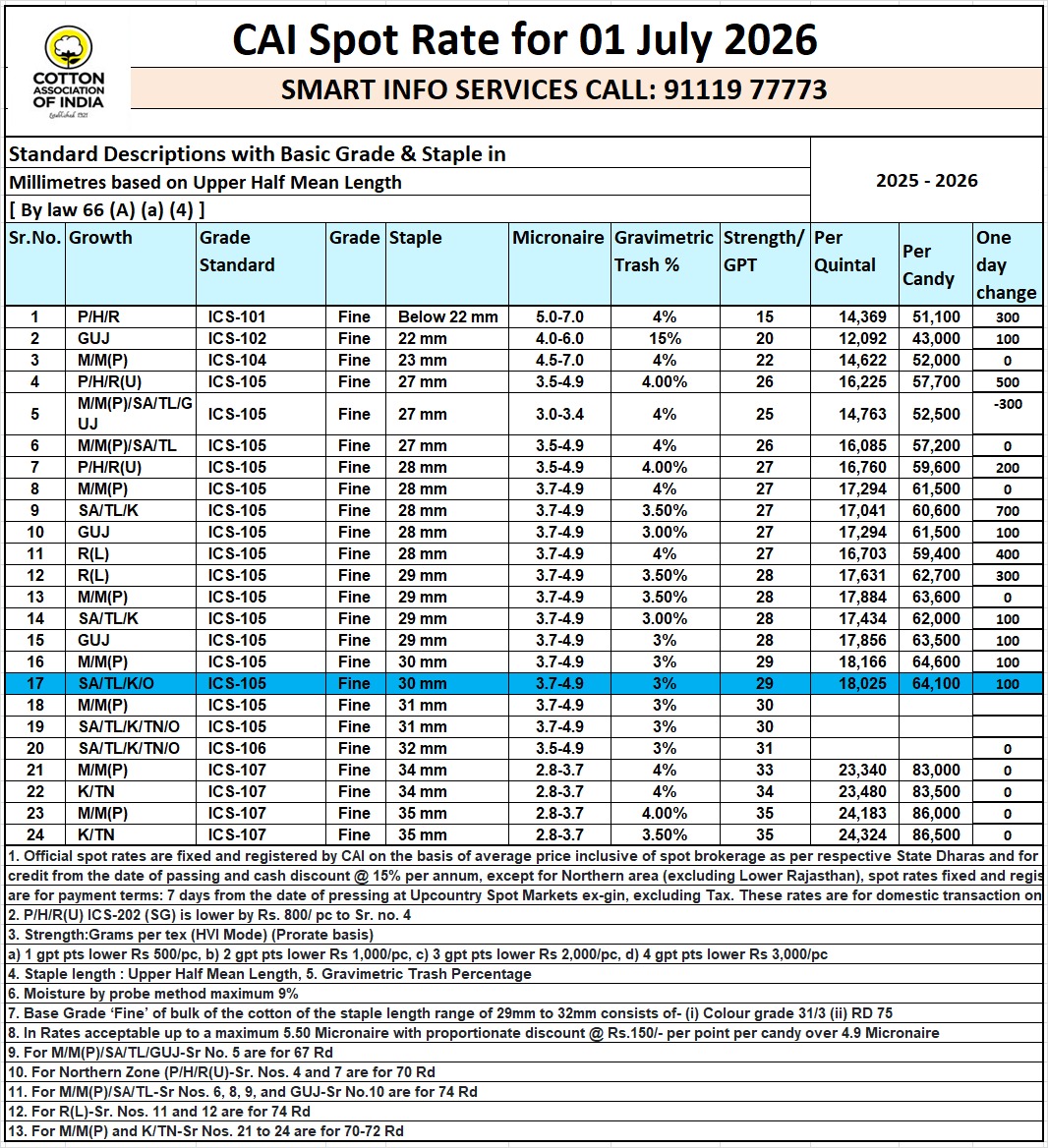
State-wise CCI Cotton Sales Details – 2024-25 SeasonThe Cotton Corporation of India (CCI) increased its prices by Rs. 100/- per candy this week and sold approximately 92,76,400 bales for the season 2024-25. This represents around 92.76% of the total cotton procured so far this season.A state-wise breakdown of sales indicates strong activity from Maharashtra, Telangana, and Gujarat, which together account for over 85.10% of the total sales to date.This data underscores CCI’s proactive efforts in stabilizing the cotton market and ensuring steady supply across key cotton-producing states.
CCI Raises Cotton Prices; Weekly E-Auction Sales Touch 50,100 BalesThe Cotton Corporation of India (CCI) increased its cotton prices by ₹100 per candy this week, CCI has now sold 92.76% of the cotton procured during the 2024–25 season through e-auctions.During the week from 8 December to 12 December 2025, CCI conducted regular online auctions for mills and traders across various centers. These auctions resulted in total weekly sales of approximately 50,100 bales, reflecting steady demand from both segments.Day-Wise Sales Report8 December 2025The week began on a strong note with the highest sales recorded at 20,100 bales. Of these, 9,100 bales were purchased by mills, while 11,000 bales were bought by traders.9 December 2025Sales dropped sharply to 4,700 bales, comprising 4,000 bales purchased by mills and 700 bales by traders.10 December 2025Midweek auctions saw improved buying, with total sales rising to 10,600 bales. Mills accounted for 7,900 bales, while traders purchased 2,700 bales.11 December 2025CCI sold 10,400 bales on this day, with mills lifting 8,500 bales and traders 1,900 bales.12 December 2025The week concluded on a modest note with 4,300 bales sold. Of this, mills purchased 3,900 bales, whereas traders bought 400 bales.With these weekly sales, CCI’s total cotton sales for the ongoing season have reached approx 92,76,400 bales, representing 92.76% of its total procurement under the 2024–25 season.read more :- "India exploring global market for textiles: Pabitraji"
Minister of State for Textiles, Pabitraji: India is identifying global destinations to expand the textile sectorNew Delhi: The Ministry of Textiles has formulated a comprehensive 40-country market diversification strategy, identifying high-potential global destinations, and is carrying out structured outreach to enhance India's global presence through Export Promotion Councils (EPCs), industry delegations, and Indian missions abroad, Minister of State for Textiles, Pabitra Margherita, said in a written reply in the Rajya Sabha on Friday.The Ministry of Textiles has approved various schemes and programs to encourage and promote the textile industry, such as the PM Mega Integrated Textile Regions and Apparel (PM MITRA) Parks scheme for world-class industrial infrastructure; the Production Linked Incentive (PLI) scheme for MMF apparel, MMF fabrics, and technical textiles to promote large-scale manufacturing and enhance competitiveness; National Technical Textiles Mission for research, innovation, market development, and skill development.Other schemes include SAMARTH – a scheme for capacity building in the textile sector; Silk Samagra-2 for sericulture development; Modified Technology Upgradation Fund Scheme (ATUFS) for modernization; National Handloom Development Programme, National Handicrafts Development Programme, and Comprehensive Handicrafts Cluster Development Scheme for end-to-end support to artisans, weavers, and handicraft clusters, the Minister of State said in his written reply.The government provides various incentives and benefits to enhance the competitiveness of the textile industry in the international and domestic market.The Minister said that the Ministry, in collaboration with EPCs, has organized India Tex in 2024 and 2025 – a mega global textile event to strengthen international engagement, bring together exhibitors and trade visitors from various countries, and showcase the scale, innovation, and global competitiveness of India's textile ecosystem.The government is implementing the Remission of State and Central Taxes and Levies (RoSCTL) scheme for apparel, garments, and made-ups based on the principles of WTO-compliant zero-rated exports.The minister said in a written reply, "Textile products not covered under the RoSCTL scheme are being supported under the Remission of Duties and Taxes on Exported Products (RoDTEP) scheme, along with other non-textile sectors. Under RoSCTL, more than 15,000 exporters have benefited from rebates on embedded taxes during FY 2024-25." India has signed 15 free trade agreements (FTAs), including the India-UK Comprehensive Economic and Trade Agreement (CETA). He said that these FTAs aim to reduce tariff and non-tariff barriers, simplify procedures, and address structural issues to make Indian exporters more competitive in partner markets.The government has approved the Export Promotion Mission (EPM), which is based on a collaborative framework involving the Department of Commerce, the Ministry of MSME, the Ministry of Finance, and other key stakeholders, including financial institutions, export promotion councils, commodity boards, industry associations, and state governments.He informed Parliament that the government has exempted import duty on cotton until December 31, 2025, to reduce input material costs for the textile industry, ensure adequate supply, and improve export competitiveness and enhance overall industry efficiency.He also said that the government has rationalized GST rates across the textile value chain to address structural anomalies, reduce costs, increase demand, boost exports, and maintain employment.In another written reply, the Minister informed the House that India's exports of textiles and clothing (including handicrafts) in 2024-25 were US$ 37,755.0 million, showing a growth of 5.2 per cent over the previous year (2023-24).Further, the Minister said that India's exports of textiles and clothing, including handicrafts, during April-October 2025 were US$ 20,401.95 million, showing a marginal decline of 1.8 per cent over the same period last year (US$ 20,728.05 million), yet indicating overall stability in export performance despite global tariff-related and other external challenges. (ANI)read more :- Rupee Ends Flat at 90.42/USD
The Indian rupee closed stable at 90.42 per dollar on Friday, while it had opened at 90.42 in the morning. Closing Bell: Sensex closes 449 pts higher at 85,267, Nifty ends above 26,000; Tata Steel, Eternal gain most read more :- Rupee opens 06 paise down at 90.42
Rupee opens 06 paise lower at 90.42/USD Indian rupee opened near record low at 90.42 per dollar on Friday versus previous close of 90.36.read more :- Rupee fell 38 paise to close at 90.36 per dollar
The Indian rupee lower 38 paise to close at 90.36 per dollar on Thursday, compared to its opening price of 89.98 in the morning.At close, the Sensex was up 426.86 points or 0.51 percent at 84,818.13, and the Nifty was up 140.55 points or 0.55 percent at 25,898.55. About 2345 shares advanced, 1664 shares declined, and 138 shares unchanged.read more :- Cotton arrivals in the northern belt increased by 49.66%.
| title | Created At | Action |
|---|---|---|
| Rupee higher 71 paise to close at 90.37 per dollar | 17-12-2025 22:40:47 | view |
| India's textile exports are strong in over 100 countries. | 17-12-2025 20:28:42 | view |
| Launch of BT cotton: BT seeds of straight varieties launched. | 17-12-2025 20:04:10 | view |
| Maharashtra: Rising cotton prices are a key focus for farmers. | 17-12-2025 19:30:13 | view |
| BGMEA: Bangladesh needs a rapid shift towards non-cotton products. | 17-12-2025 17:58:14 | view |
| Rupee fell 05 paise to open at 91.08/USD | 17-12-2025 16:23:24 | view |
| The rupee fell by 24 paise to close at 91.03 per dollar | 16-12-2025 22:43:17 | view |
| Maharashtra: 60,000 Quintals of Cotton Purchased at CCI Centers: Massive Surge in Cotton Procurement, Support Price at Rs. 8,110 | 16-12-2025 19:15:42 | view |
| The Future of Cotton Prices in Doubt; Read the Details | 16-12-2025 18:43:57 | view |
| The rupee opened 6 paise lower at 90.79/USD. | 16-12-2025 16:45:58 | view |
| Removing import duty on cotton could be confidence-booster. | 15-12-2025 23:12:20 | view |
| Indian Rupee closes 18 paise lower at 90.73 against the dollar | 15-12-2025 22:49:27 | view |
| Farmers should register soon to sell cotton at MSP, deadline approaching | 15-12-2025 19:35:04 | view |
| The rupee opened 13 paise lower at 90.55/USD | 15-12-2025 19:07:44 | view |
| State-wise CCI cotton sales details (2024–25) | 13-12-2025 21:46:28 | view |
| CCI hikes cotton prices; e-auction sale of 50,100 bales | 13-12-2025 00:31:18 | view |
| "India exploring global market for textiles: Pabitraji" | 12-12-2025 23:32:38 | view |
| Rupee Ends Flat at 90.42/USD | 12-12-2025 23:02:13 | view |
| Rupee opens 06 paise down at 90.42 | 12-12-2025 17:34:29 | view |
| Rupee fell 38 paise to close at 90.36 per dollar | 11-12-2025 22:46:16 | view |