Recent News

Sucker Pest Management in Cotton: Post Sowing Steps

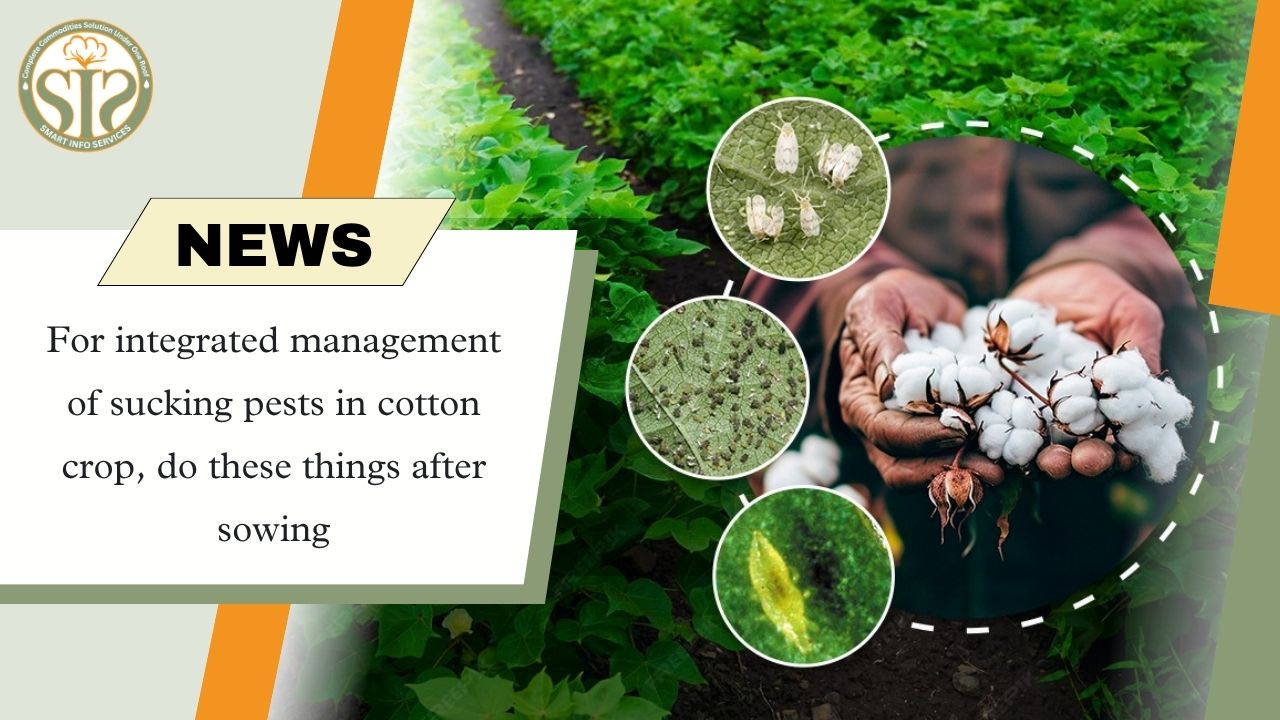
For integrated management of sucking pests in cotton crop, do these things after sowingAfter extensive rainfall in Gujarat, most of the farmers have enthusiastically sowed Kharif crops. To keep the crops grown after sowing safe from diseases and pests, various efforts of crop maintenance are being made by the farmers. The state government has also always been with the farmers to prevent crop damage due to diseases and pests. Continuing the same, the Agriculture Director Office-Gandhinagar has issued guidelines suggesting important steps for integrated management of sucking pests after sowing of cotton.For management of sucking pests after sowing of cotton, do these things:* Weed and hoe the weeds in the paddy field, especially plants and grasses like Gadar, Kanksi, Wild Bhindi, Congress Grass and Wild Jasood.* For biological control of mealybugs and leafhoppers, release 2 to 3 days old caterpillars of predatory green moth (Chrysopa) twice at an interval of 15 days at the rate of 10,000 per hectare.* Use 5% solution of neem seeds or non-chemical agent like Azadirachtin 1500, 3000 or 10,000 ppm at the rate of 5 litres, 2.5 litres and 750 ml per hectare respectively.* Use yellow sticky traps to survey and control mealybugs and white flies.* For control of red sucking pests and red mites, collect and destroy half-opened or fully opened larvae by dipping them in kerosene water or shake the plant and walk briskly in a circular motion holding a rope at both ends to make the larvae fall.* For control of sucking pests in natural farming, spray 200 liters of Nimastra (without dilution) per acre. Non-chemical insecticides like Brahmastra, Dashparni extract should be sprayed in 200 liters of water in the amount of 6 to 8 liters per acre.* For biological control of sucking pests, at the beginning of the crop, when the atmosphere is moist, spray microbial controllers like Verticillium laciniae or Beauveria bassiae 50 grams in 10 liters of water.* For control of white fly infestation, as soon as the infestation is visible, spray 50 ml of Azadiractin 1500 ppm in 10 liters of water.* Destroy the damage caused by the T mosquito by breaking it and take care that there is no shade inside the field. On detection of pest, spray 50 ml Azadirachtin 1500 ppm or 40 gm Beauveria bassiana powder in 10 litres of water.* If the infestation of local pests is high in the cotton crop, use chemical pesticides recommended by the agricultural university related to your area as per requirement and recommendation.* While using pesticides, follow the recommended dosage and disease/pest/crop as per the label given on the pesticide under integrated pest management.read more :- Disillusionment with cotton: Production drops in Punjab, a setback to diversification

Disillusionment with cotton: Production drops in Punjab, a setback to diversification

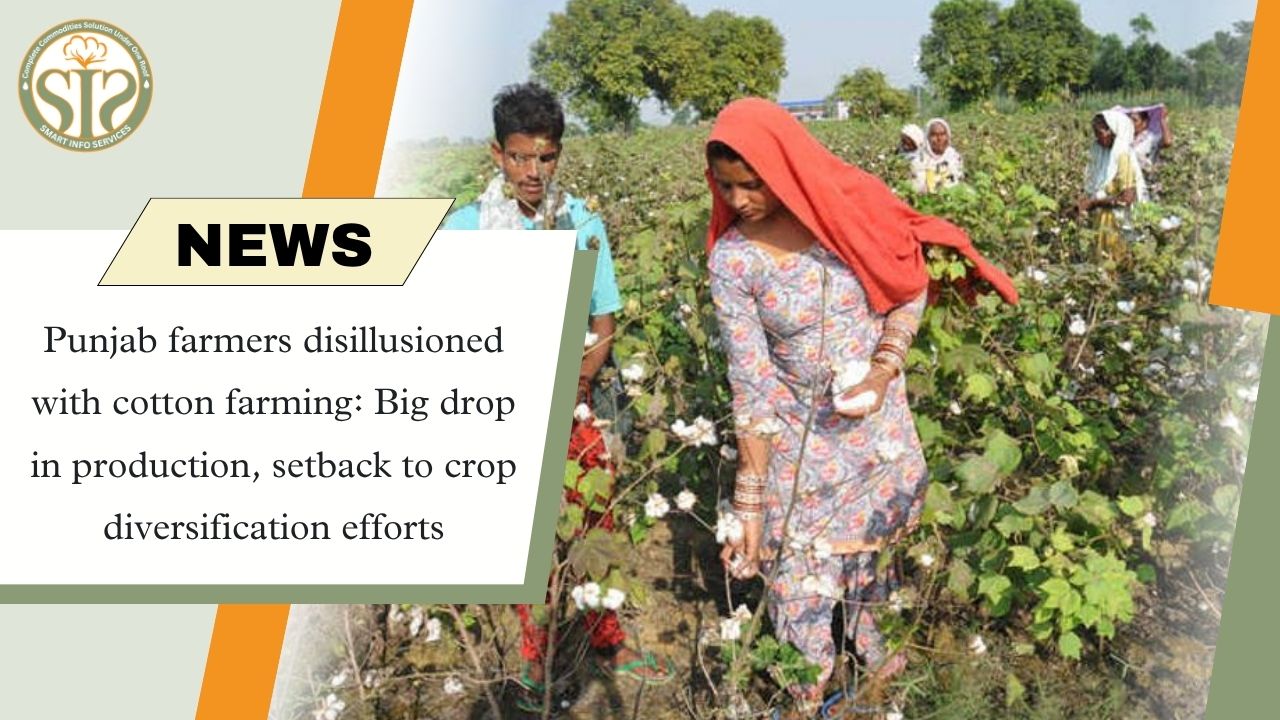
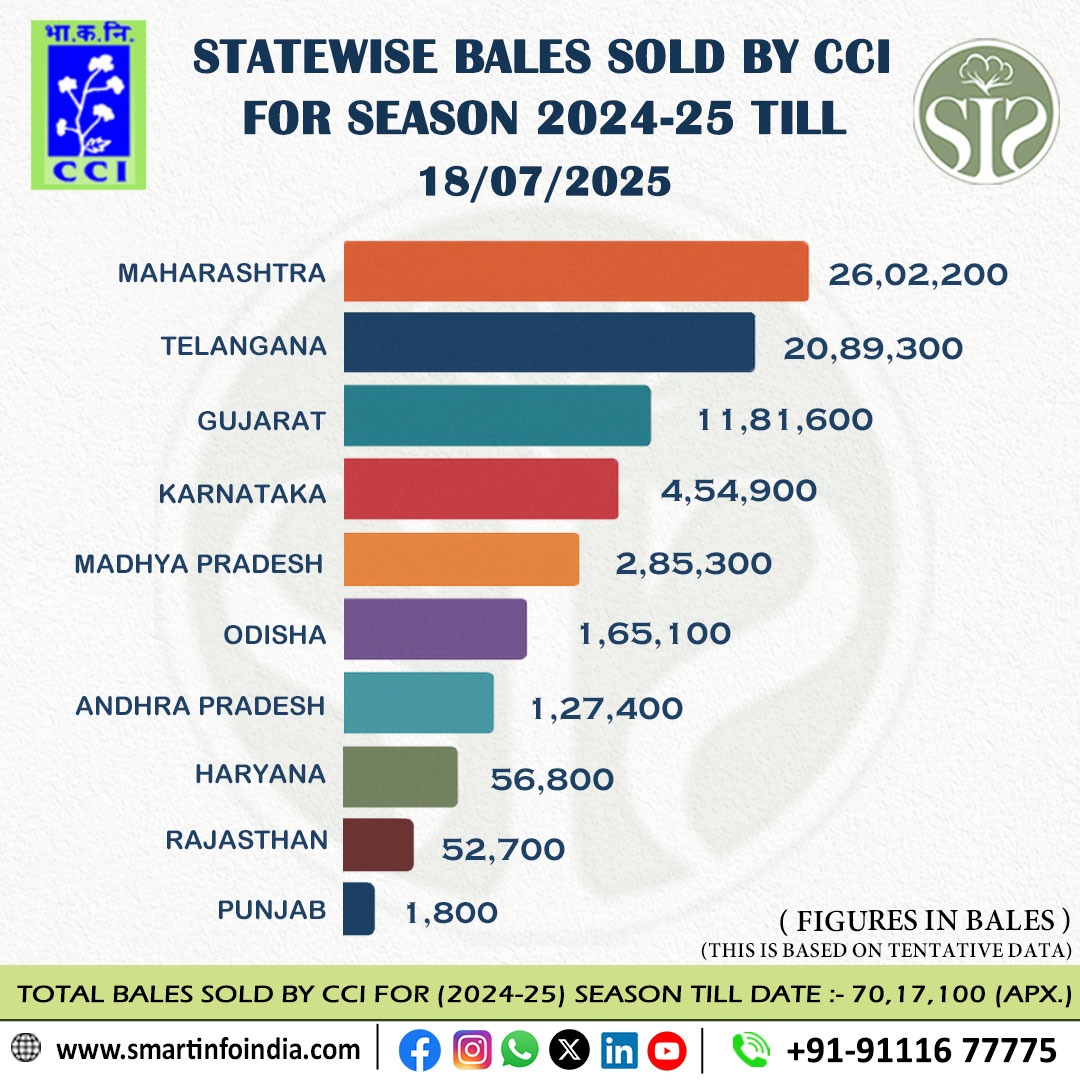
Punjab farmers disillusioned with cotton farming: Big drop in production, setback to crop diversification effortsMalwa region is known for cotton production, but now the farmers here are turning to paddy and wheat crops. Uncertainty over Minimum Support Price (MSP) and the outbreak of pink bollworm and white fly are considered to be the main reasons for farmers leaving cotton farming.Punjab farmers are getting disillusioned with cotton farming. As a result of this, a decline of 63.48 percent has been recorded in cotton production in the state this year. The government's crop diversification efforts have suffered a setback due to a major decrease in cotton production within a year.Punjab farmers disillusioned with cotton farming: Big drop in production, setback to crop diversification effortsPunjab farmers are getting disillusioned with cotton farming. As a result of this, a decline of 63.48 percent has been recorded in cotton production in the state this year. The government's crop diversification efforts have suffered a setback due to a major decline in cotton production within a year.Uncertainty over Minimum Support Price (MSP) and the outbreak of pink bollworm and white fly are believed to be the main reasons for farmers abandoning cotton cultivation. The latest report of the Cotton Association of India has revealed a decrease in cotton production.Malwa region is known for cotton production, but now the farmers here are turning to paddy and wheat crops. The groundwater level of the state is already falling. 118 blocks have gone into the red zone and this report has now increased the concern of the government even more. According to the report, cotton production has come down from 6.09 lakh bales in 2023-24 to 2.52 lakh bales in 2024-25. Similarly, the area has also come down from 2.14 lakh to 1 lakh hectare.Situation slightly better in Haryana and RajasthanCotton production in Haryana and Rajasthan has also fallen as compared to last year, but still the situation is slightly better there. In 2024-25, Haryana cultivated cotton in 5.78 lakh hectares and produced 11.96 lakh bales, while Rajasthan cultivated it in 6.27 lakh hectares and produced 17.79 lakh bales.Decline in purchase of cotton at MSP alsoA decline has been recorded in the purchase of cotton at MSP in Punjab. According to a report of Cotton Corporation of India in March, only 2 thousand bales were purchased at MSP in Punjab in the year 2024-25, whereas in the year 2019-20 this figure was 3.56 lakh bales. Similarly, in 2020-21, MSP purchase of 5.36 lakh bales was done. The market price of cotton was above MSP during 2021-22 and 2022-23, so there was no purchase at MSP during these two years. In the year 2023-24, only 38 thousand bales were purchased at MSP.read more :- INR drop 03 Paise, Closes at 86.29 per Dollar

Natural coloured cotton: Challenges of shortage of funds and low yield

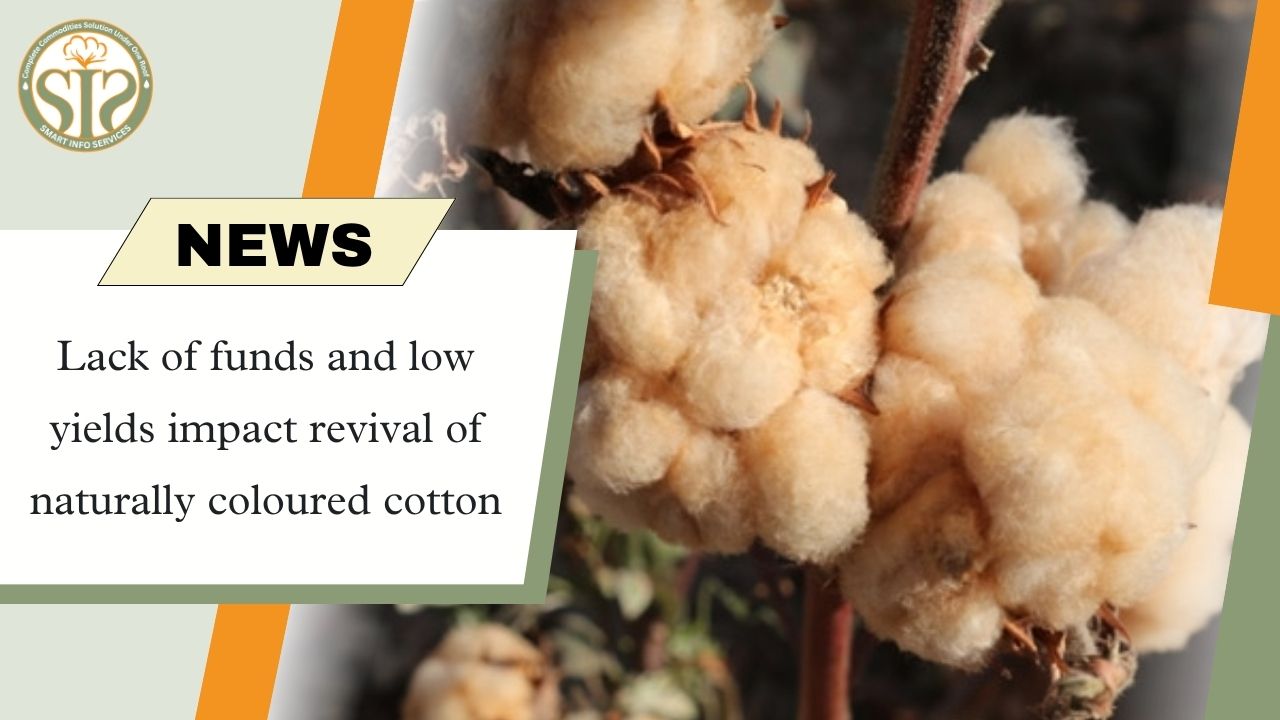
Lack of funds and low yields impact revival of naturally coloured cottonIndia's naturally coloured cotton, which was once commercially successful, is struggling to regain its popularity despite growing demand for sustainable textiles. Despite high pricing and environmental benefits, low yields are deterring farmers from adopting it. Government support, improved seed systems and market linkages are critical to realising its export potential and transforming India's textile sustainability paradigm.India's naturally coloured cotton, which was commercially flourishing in the 1940s, is struggling to make a comeback despite growing global demand for sustainable textiles and decades of government research efforts.This special crop is currently grown on only 200 acres in Karnataka, Maharashtra, Tamil Nadu and Andhra Pradesh, fetching a price of Rs 240 per kg, 50 per cent higher than regular cotton at Rs 160 per kg. However, farmers are hesitant to expand cultivation due to significantly low yields."The productivity of light brown cotton is very low, at 1.5-2 quintals per acre, while the productivity of normal cotton is 6-7 quintals per acre. This discourages farmers from expanding the acreage of this crop," Ashok Kumar, principal scientist at ICAR-Central Institute for Research on Cotton Technology (CIRCOT), told PTI.The annual production from these limited acres is a mere 330 quintals, underlining the challenge faced by this special crop, which can potentially transform India's textile sustainability paradigm.ICAR-CIRCOT is currently focusing on light brown cotton.Coloured cotton has ancient roots in Indian agriculture, with cultivation dating back to 2500 BC. Before Independence, red, khaki and brown varieties of Cocanada 1 and 2 were grown commercially in Rayalaseema in Andhra Pradesh, exported to Japan. Traditional varieties were also cultivated in Assam and the Kumta region of Karnataka.However, the emphasis on high-yielding white cotton varieties during the Green Revolution marginalised coloured cotton. The inherent limitations of this crop – low boll, low weight, low fibre, short fibre length and colour variations – made it economically unviable for large-scale cultivation.Indian agricultural institutions have developed improved varieties, including DDCC-1, DDB-12, DMB-225 and DGC-78 developed by the University of Agricultural Sciences, Dharwad. The Central Institute for Cotton Research, Nagpur developed Vaidehi-95, which is considered the most prominent among the 4-5 varieties available.Between 2015-19, ICAR-CIRCOT processed 17 quintals of cotton in demonstration batches, producing 9,000 metres of cloth, over 2,000 jackets and 3,000 handkerchiefs, proving it commercially viable.Its environmental benefits are significant. Traditional cotton dyeing requires about 150 litres of water per metre of fabric, while naturally coloured cotton eliminates this requirement, which can reduce toxic waste disposal costs by up to 50 per cent."Naturally coloured cotton has immense export potential. More government support is needed to increase production and value addition," said Kumar.Despite high pricing and environmental benefits, expansion faces hurdles such as lack of seed systems, susceptibility to pests and the need for high pesticides commonly used in cotton cultivation."Nobody is able to develop varieties due to low production and lack of market. Even textile mills are not willing to buy cotton in small quantities," said Kumar.The global market is seeing potential with growing demand for eco-conscious brands, especially in Europe, the US and Japan. Australia and China are investing heavily in research using conventional breeding and genetic engineering.read more :- Gujarat: Textile industry fears threat from cotton MSP hike

MSP Hike on Cotton Raises Cost Concerns for Gujarat Textile Sector

Gujarat Textile Industry Raises Concerns Over Cotton MSP HikeAhmedabad: The recent increase in the minimum support price (MSP) for kapas (raw cotton) by the central government has raised concerns within Gujarat’s textile industry. While the move aims to support farmers, industry stakeholders fear that rising raw material costs could impact India’s competitiveness in global markets.The revised MSP has been increased across all categories—medium staple cotton to ₹7,560 per quintal, medium-long staple to ₹7,860, long staple to ₹8,110, and extra-long staple to ₹9,310 per quintal.Industry leaders believe that improving cotton productivity would be a more sustainable solution for enhancing farmers’ incomes without burdening manufacturers. They point out that although India accounts for about 37% of global cotton acreage, its share in production is only around 23%, indicating significant scope for yield improvement.Textile manufacturers have also reiterated their demand for the removal of import duties on cotton. They argue that Indian cotton is currently among the most expensive globally, which is affecting export competitiveness, especially at a time when global buyers are looking at India as an alternative sourcing destination.Market experts note that the revised MSP structure could encourage farmers to bring better-quality cotton to the market, particularly with pricing linked to quality parameters like moisture content. Increased sowing activity and higher arrivals may help farmers realise improved returns.However, concerns remain that persistently high cotton prices could put additional pressure on spinning mills and yarn manufacturers, who are already facing weak demand and shrinking profit margins.Industry stakeholders have urged the government to strike a balance between farmer support and industry sustainability by focusing on productivity improvements, reducing import duties, and easing logistics costs.read more :- Rupee open Declines 11 Paise to 86.26 per Dollar
"Punjab Rains Aid Cotton, Pink Bollworm Risk Looms"

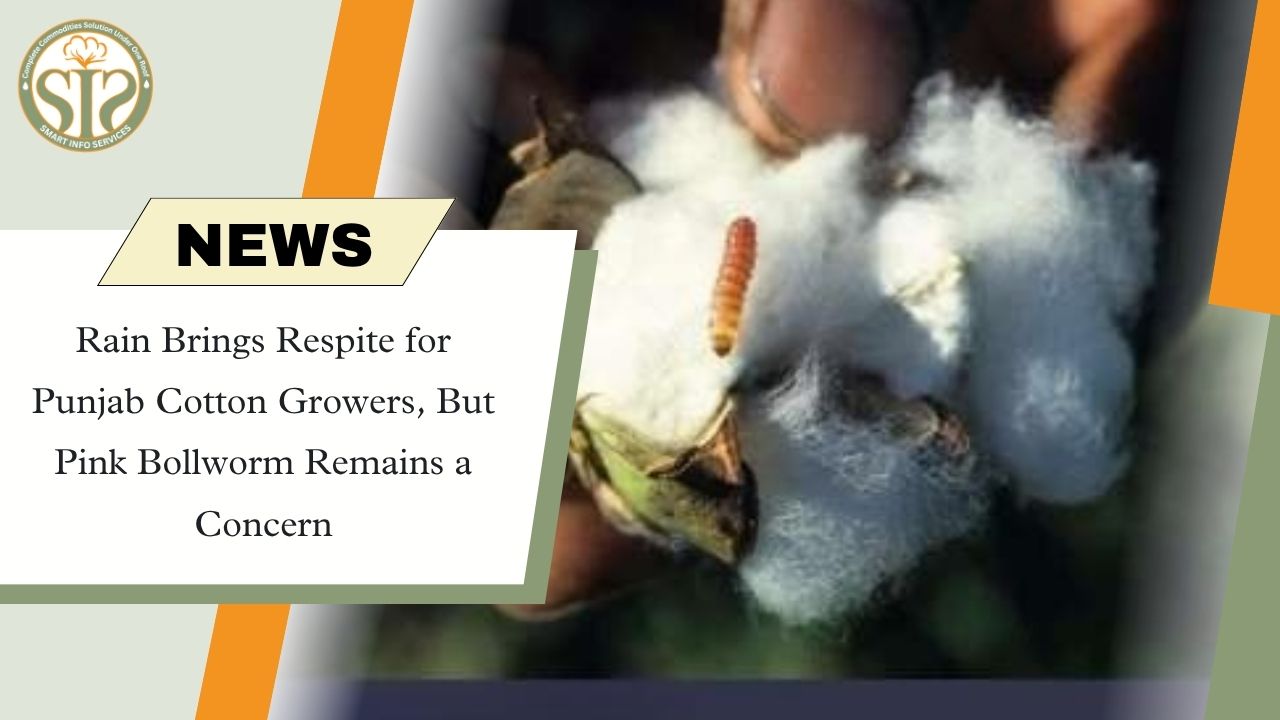
Rain Boosts Punjab Cotton Crop, Pink Bollworm Threat PersistsRecent rainfall across southwest Punjab has brought significant relief to cotton farmers after a prolonged dry spell, improving crop conditions and raising hopes for a strong kharif season. The showers have revitalized cotton fields and helped reduce the threat of whitefly infestations, a major concern in the region.According to experts from Punjab Agricultural University (PAU) and Krishi Vigyan Kendras (KVKs), the rain has effectively controlled whitefly populations by washing away adult insects. PAU’s principal entomologist Dr. Vijay Kumar stated that current field surveys show whitefly infestation is under control.However, experts have cautioned that the pink bollworm continues to pose a serious risk. This pest, known for damaging cotton crops—including Bt cotton—has previously caused major economic losses in Punjab.The recent increase in humidity due to rainfall has created favorable conditions for pink bollworm development. Early signs of infestation have already been reported in some early-sown fields, and experts warn that its population may rise over the next two to three weeks. Farmers have been advised to remain vigilant and strictly follow pest management practices.State agriculture officials reported that cotton has been sown over approximately 1.2 lakh hectares this season, compared to 96,000 hectares last year, indicating renewed farmer interest. Fazilka district alone accounts for nearly half of the cultivated area.Chief Agriculture Officer Rajinder Kumar noted that the crop is currently in good condition due to favorable weather and proper nutrient management. He expressed optimism for a strong harvest, as no major pest outbreaks have been observed so far.read more:- Paramilt virus threat to cotton crop

Paramilt virus threat on cotton crop

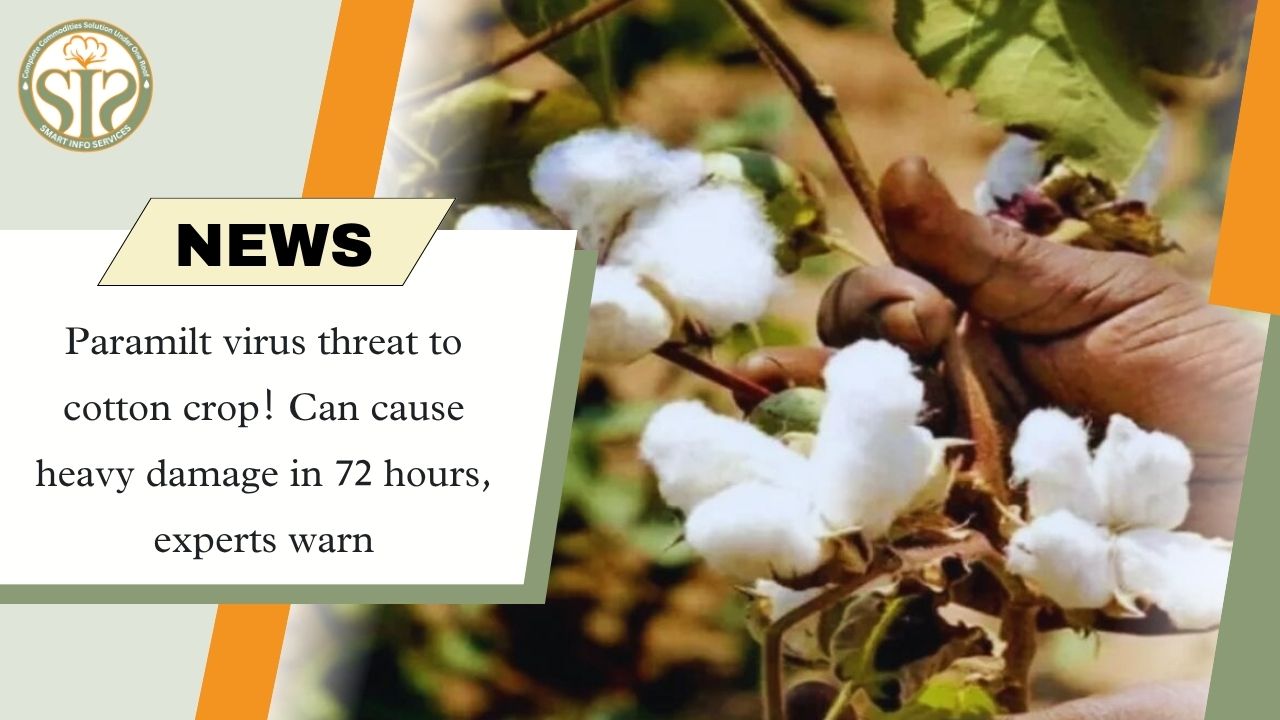
Paramilt virus threat to cotton crop! Can cause heavy damage in 72 hours, experts warnKhargone (Madhya Pradesh): Khargone, the leading district in the country in terms of cotton production, is facing a new challenge these days. Due to intermittent rains and then sudden strong sunlight, the cotton crop is under threat of a problem called Paramilt virus. Agricultural scientists say that this disease with virus-like symptoms makes the cotton plants wilt very quickly and if not treated on time, it can destroy the entire crop within 72 hours.What is Paramilt virus?According to Dr. Rajeev Singh, a senior scientist posted at Krishi Vigyan Kendra Khargone, Paramilt virus is not actually a traditional virus, but it is a physiological disorder. This problem arises when the plants do not get enough water and nutrition, especially when the weather changes suddenly - like continuous rain followed by strong sunlight or long drought and then sudden rain.In this situation, many plants in the fields are seen wilting together, which can cause huge losses to the farmers.What are the symptoms?* The symptoms of paramilt are as follows:* Sudden wilting of leaves* Upper branches bending or drying up* The color of the plants turns yellow or brown* Some plants fall on the ground, as if they have been cutTimely treatment is very important: Golden opportunity of 72 hoursDr. Singh advises that if there are signs of these symptoms, it is mandatory to start treatment within 72 hours.For treatment:* Dissolve 10 mg cobalt chlorite + 20 grams urea in one liter of water and irrigate the roots of the plants.* This treatment reactivates the functioning of the roots of the plants, so that the plants can absorb water and nutrition.If cobalt chlorite is not available, use alternativesIf cobalt chlorite is not available in the market:* Mix 1 gram of carbendazim + 20 grams of urea in one liter of water and apply it on the rootsOR* Mix 2.5 grams of copper oxychloride + 20 grams of urea in one liter of water and spray it on the crop* Note: Treatment or spraying must be done within 72 hours to get effective results.read more:-  MP invites Inditex to invest in textiles

MP invites Inditex to invest in textiles

Madhya Pradesh briefs Inditex on textile investment opportunitiesOn the second day of his Spain visit, Chief Minister Dr Mohan Yadav interacted with senior officials of the company at Inditex's headquarters in Galicia. He positioned Madhya Pradesh as a 'green, cost-competitive and accessible production hub' and invited Inditex to invest in the state's growing textile ecosystem.During the meeting, Dr Yadav emphasised Madhya Pradesh's strong credentials, including being one of India's top cotton producers with an annual production of around 18 lakh bales (3 lakh metric tonnes) and being home to over 15 textile clusters in cities such as Indore, Mandsaur, Burhanpur, Ujjain and Neemuch.He termed the upcoming PM Mitra Textile Park in Dhar district as a golden opportunity for Inditex to set up a sustainable and integrated apparel manufacturing unit. Developed under the flagship scheme of the Government of India, the park aims to attract global players through advanced infrastructure and green manufacturing capabilities.Dr Yadav also proposed collaboration in organic cotton production, especially in the Nimar and Malwa regions, which are known for their GOTS-certified farmer groups. According to a release issued by the Public Relations Department of Madhya Pradesh, he suggested developing a 'farmer-to-textile' value chain in line with Inditex's Sustainable Development Goals.Finally, he invited Inditex to act as the supply chain leader at PM MITRA Park and to partner in launching an organic cotton tracing platform and a vendor development program focused on ESG-certified MSMEs.Dr. Yadav said, "We are ready to support this partnership at every level.read more:- Andhra Pradesh: Experts worried over decline in cotton cultivation

Andhra Pradesh: Experts worried over decline in cotton cultivation

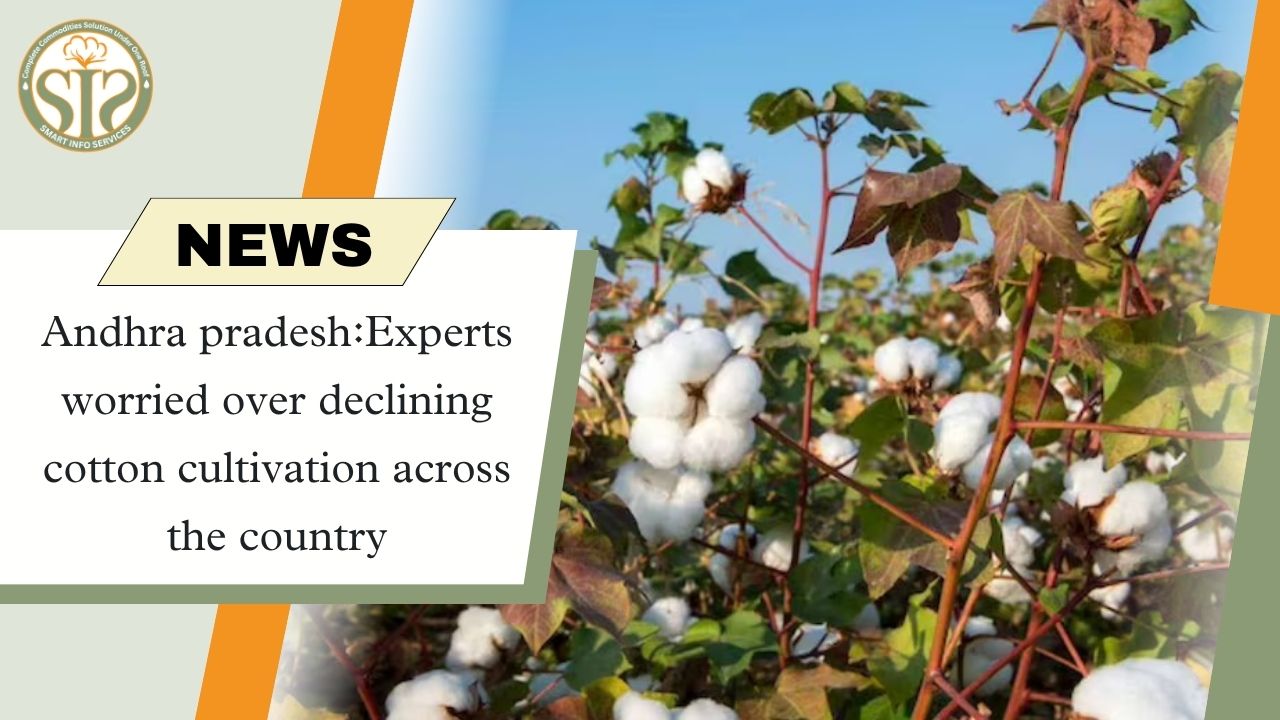
Andhra pradesh:Experts worried over declining cotton cultivation across the countryVijayawada : Experts in cotton solvent and extractors industry are worried about declining cotton cultivation across the country in the past few years. According to the cotton industry report, the cotton crop area has declined by 9.8% in 2024-2025, down to 114.47 lakh hectares. This is expected to result in a dip in production to 307 lakh bales from 325 lakh bales the previous year. Since cottonseed comprises nearly two-thirds of the cotton weight, the production decline has a direct impact on oil and feed production, feel the industry captains.Taking the situation on a serious note, the Solvent Extractors' Association of India (SEA) & All India Cottonseed Crushers' Association (AICOSCA) have decided to explore ways to maximize the potential of cottonseed oil and its by-products to enhance India's edible oil security, livestock feed inustry, and rural economy.According to Sanjeev Asthana, president, SEA, "India produces 12 lakh tonnes of cottonseed oil annually, making it the third-largest edible oil after soybean and rapeseed. It is widely used in Gujarat for cooking due to its superior frying properties, its adoption in other regions remains limited and is mainly consumed by institutional buyers like restaurants and food processors. "We wanted to improve the awareness and encourage adoption of cotton seed oil for domestic consumption for multiple benefits," said Asthana.AICOSCA chairman Sandeep Bajoria said that cottonseed offers a wide range of valuable applications. "Cottonseed oil is one of the most popular cooking oils in kitchens. It is used as a yardstick for measuring the flavour as well as odour qualities in other edible oils. It is also one of the main ingredients in most oriental dishes. Cottonseed meal is an excellent feed meal ingredient," said Bajoria. He said that industry has started focusing on propagating the use and value of cottonseed oil, advancing processing technologies, and promoting cottonseed meal's role in dairy nutrition.SEA executive director Dr. B V Mehta highlighted that the current production of cottonseed oil is about 11.5 to 12 lakh tonnes per annum. However, he observed that its potential is about 18 lakh tonnes, which can be harnessed if the cottonseed is processed by modern scientific methods. This will also help to meet our growing requirement of edible oil and reduce the dependence on import of edible oils.Director of Sri Dhanalakshmi Cotton and Rice Mills Pvt. Ltd (Guntur), P Veera Narayan, said that they will focus on revitalizing cottonseed oil processing and usage in the country at national conclave to be held in Vijayawada on Aug 2, 3. He said that Andhra Pradesh is one of the largest producers of cotton seed and it is appropriate that they host the conference in Vijayawada. More than 300 delegates, including scientists, industry leaders, and traders, are expected to participate in this national platform, fostering collaboration and sustainable growth in the sector.read more:- CCI to sell 70% of cotton through e-bidding in 2024-25

Related News

Youtube Videos

मध्य प्रदेश में कपास फसल भरपूर! 😱 पर मिलें सुस्त? | जनवरी से 11% ड्यूटी लगेगी? 🔥Podcast
मध्य प्रदेश में कपास फसल भरपूर! 😱 पर मिलें सुस्त? | जनवरी स...
CCI के पास 3-4 लाख गांठ कपास बचने का अनुमान! 😱 बाजार पर कितना होगा असर? | 21 Nov 2026
CCI के पास 3-4 लाख गांठ कपास बचने का अनुमान! 😱 बाजार पर कित...
कपास बाजार तेजी की ओर! 😱 | आज की आवक 1.11 लाख गांठ | रुई, कपास, खल, यार्न, CCI नीलामी
कपास बाजार तेजी की ओर! 😱 | आज की आवक 1.11 लाख गांठ | रुई, क...
Application Download
Whatsapp Contact