Recent News

Uzbekistan and Poland Explore Textile Sector Cooperation

Poland and Uzbekistan Examine Cooperation in the Textile SectorUzbekistan recently engaged in discussions with Poland to enhance textile exports to the country and explore the integration of modern Polish technologies into Uzbek industries.A delegation from Uzbekistan, comprising representatives from the Ministry of Investments, Industry, and Trade along with textile company officials, visited Poland to strengthen economic ties between the two nations.During their visit, the delegation toured the GD Poland International wholesale trade complex near Warsaw, where they met with Felix Wang, the complex's president, and Janusz Piechocinski, president of the Poland-Asia Chamber of Commerce. Both parties agreed to open a store for Uzbek textiles and footwear within the complex, offering special discounts and rental benefits to the Uzbek side.The delegation also visited the Union of Polish Weavers and several major companies, including yarn manufacturer Legs, Przedsiebiorstwa Produkcyjno Handlowo Uslugowego (PPHU), and Jola Styl, as reported by Uzbek media.In a joint business forum, discussions centered on the potential relocation of Bangladesh’s Rusinagency and Ukraine’s Arlen Textile Group to Uzbekistan, along with the implementation of innovative technologies to modernize Uzbekistan’s light industry.Uzbek textile enterprises such as Uztex Group, Aisha Home Textile, Korajon Textile, and Parvoz Humo Ravnaq Trans signed agreements with Poland-based companies Rusinagency, Arlen Textile Group, Legs, PPHU, Jola Styl, SWP, Ptak, and Colorinvest for the supply of yarn, gauze, knitwear, underwear, and home textiles to Poland.read more :- Textile and Chemical Exports to Bangladesh Resume After Brief Halt

Textile and Chemical Exports to Bangladesh Resume After Brief Halt

After a brief pause, Bangladesh resumes exporting chemicals and textiles.Ahmedabad: With the political situation in Bangladesh stabilizing, exports of textiles and chemicals from Gujarat are beginning to return to normal, industry experts report. Fresh orders for cotton yarns and dye chemicals have started flowing in from Bangladesh, a key export market for Gujarat’s textile and chemical industries.According to industry sources, while payment issues have improved over the past week, exporters remain cautious in their business dealings.For India’s spinning sector, Bangladesh is the largest export market, accounting for 428 million kg of cotton yarn in 2023-24, which made up 35% of India’s total yarn exports.In the dyes sector, Gujarat exports over 3,500 tonnes of reactive dyes to Bangladesh each month. Given that garment manufacturing is a critical component of Bangladesh’s economy, the country cannot afford to lose these imports.Bharat Chhajer, former chairman of the Powerloom Development and Export Promotion Council (PDEXCIL), noted, “The textile industry in Bangladesh has resumed operations, and the situation is becoming stable. Exports had been halted due to the violence in Bangladesh, with cotton yarn containers held up at various Indian ports.”Exporters are closely monitoring the situation in Bangladesh and taking necessary precautions to ensure safe business transactions.Jayesh Patel, senior vice-president of the Spinners’ Association Gujarat (SAG), commented, “Exports to Bangladesh have resumed, and inquiries are picking up, but the overall costs are still not aligning with manufacturing costs.”The textile and chemical industries in Gujarat had been facing challenges since the Covid-19 pandemic. Although both sectors have seen a revival in the current financial year, the political unrest in Bangladesh had raised concerns.Manish Kiri, managing director of a chemical company, explained, “Gujarat’s dyestuff manufacturers supply 3,500 to 4,000 tonnes of dyes, primarily reactive dyes, to Bangladesh every month, representing nearly 15% of the state’s dye exports.”Approximately 150 businesses in Ahmedabad are involved in exporting reactive dyes to Bangladesh.“We’ve observed that the business environment is stabilizing sooner than anticipated. Payment situations have improved, and new inquiries and orders are beginning to come in,” Kiri added.read more :- Farmers in Punjab disillusioned with cotton, interest increased towards paddy cultivation, area reduced by three times

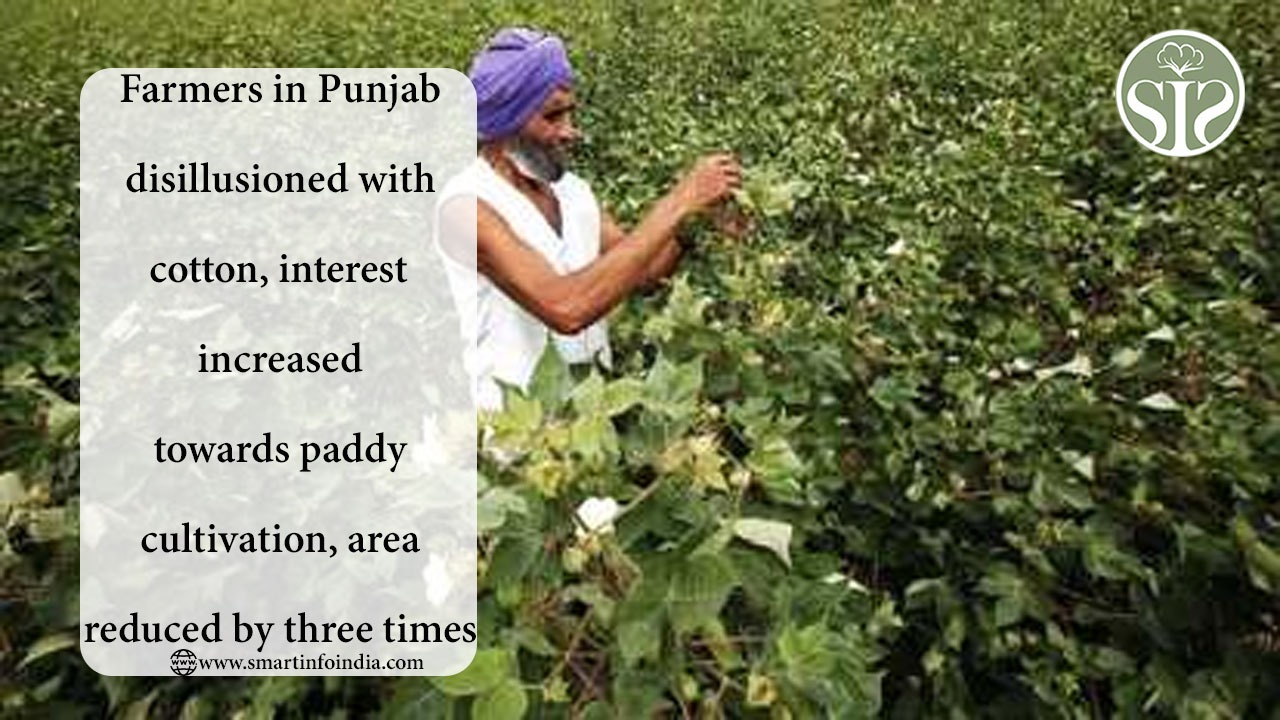
Farmers in Punjab disillusioned with cotton, interest increased towards paddy cultivation, area reduced by three times

Punjabi farmers lost faith in cotton, became more interested in paddy farming, and saw a threefold decrease in areaIn the current season, the area of cotton crop, which gives the highest income to the farmers, has come down to only 94,000 hectares in Punjab. In 2019, this area was 3.35 lakh hectares. In the last three to four years, farmers got bumper yield of cotton, and in 2022, the price of cotton went above Rs 10,000 per quintal. But this time the reason for the huge decline in the area of cotton was pests like bollworm and whitefly. In 2023, due to the outbreak of pink caterpillar, farmers could not even get half the production, and for many farmers it became difficult to even recover the cost.Increased interest in paddy cultivationThe reduction in cotton acreage has raised concerns among agriculture department officials that if appropriate steps are not taken in this direction, farmers may completely abandon cotton cultivation in the coming times and get attracted towards paddy. Paddy cultivation requires more water, which can lead to increased exploitation of groundwater level, which can create a serious crisis for the environment.Farmers destroying cotton cropIn many villages of Mansa, Bathinda and Fazilka districts, farmers have destroyed cotton crop and started sowing PR 126 paddy variety, which gets ripe in 110 days. An official of the state agriculture department said that the cost of pesticides to farmers to deal with pests like bollworm and whitefly increases, making cotton cultivation economically unviable. Although the income in cotton crop is high, paddy cultivation gives a fixed income.Need for better seedsPAU Vice Chancellor Dr SS Gosal said that to increase cotton acreage and ensure good harvest for farmers, they need better seeds. This is necessary to keep farmers away from paddy cultivation in cotton growing areas of south and west Punjab. According to KP Singh, Principal Special Principal Secretary, Agriculture Department, the Union Ministry of Agriculture and Farmers Welfare has been apprised of the situation, and the Punjab government is creating awareness among farmers to focus on low water consuming farming.Read more :- Minister S. Savitha Says Andhra Pradesh Government to Introduce Enhanced Textile Policy Soon

Andhra Pradesh to roll out new textile policy to boost industry growth

Andhra Pradesh to soon launch enhanced textile policy: Minister SavithaAmaravati: The Andhra Pradesh government is set to introduce a new and enhanced textile policy aimed at strengthening the state’s textiles, apparel, and garment manufacturing sectors, according to Minister for Backward Classes Welfare and Handlooms & Textiles, S. Savitha.Speaking to investors via videoconference from the Secretariat on Monday, the Minister said the government is focused on developing essential infrastructure, offering industry incentives, and ensuring faster clearances to attract investments in the sector.She noted that the earlier ‘Textile Policy 2018–23’, introduced by the TDP government, was later discontinued by the YSR Congress Party government, which created challenges for existing industries and led some investors to shift focus to other states. The upcoming policy, she said, will be a strengthened and updated version of the earlier framework, aligned with current industry requirements.Highlighting the state’s strong position in the textile sector, Ms. Savitha said Andhra Pradesh ranks second in silk production nationally, while also holding sixth and seventh positions in cotton and jute production respectively. The state currently has nine textile and apparel parks, including three in the public sector, along with 146 mega textile industries and 15 technical textile units.She further encouraged investors to explore opportunities in agro-textiles, geo-textiles, and automotive textiles, stressing the state’s potential to emerge as a key manufacturing hub.Ms. Savitha assured full government support for companies establishing operations in Andhra Pradesh, emphasizing a business-friendly environment and policy-driven growth. Principal Secretary (Handlooms & Textiles) K. Sunitha, Joint Director Srikanth Prabhakar, and other senior officials were also present at the meeting.

15% Surplus Rain in First Half of August; Monsoon at 105% of Long Period Average

15% More Rainfall in August's First Half; Monsoon at 105% of Long-Term AverageLa Niña Likely to Develop by Month-End, Says IMDIndia experienced 153 mm of rainfall in the first half of August (August 1-15), which is 15% above the normal 133.3 mm for this period. This increase has pushed the overall seasonal rainfall to 105% of the long period average (LPA) for the monsoon season spanning June 1 to August 15.Earlier in the season, June recorded an 11% rainfall deficit, while July saw a 9% surplus. Between June 1 and August 15, the country received a total of 606.8 mm of rain, which is 4.8% above the LPA of 579.1 mm.The India Meteorological Department (IMD) had previously forecasted that August rainfall across most parts of the country would be "normal" (94 to 106% of LPA). However, below-normal rainfall was predicted for several regions, including southern parts of central India, the northern peninsular region, parts of northeast India, and some areas in northwest and south peninsular India.Regional Rainfall PatternsThe latest data reveals that the east and northeast regions, including West Bengal, Bihar, Jharkhand, and the northeastern states, received 198.6 mm of rainfall during the first half of August, which is 21.4% above the LPA of 163.6 mm.In the northwest region, which includes Punjab, Haryana, Rajasthan, Uttar Pradesh, Uttarakhand, Himachal Pradesh, and Jammu & Kashmir, rainfall totaled 154.6 mm—44.8% above the normal 106.8 mm for the same period.Central India, encompassing Gujarat, Maharashtra, Madhya Pradesh, Chhattisgarh, Odisha, and Goa, reported 160.9 mm of rainfall, just 1.5% below the LPA of 163.4 mm. Meanwhile, the southern peninsula, including Kerala, Tamil Nadu, Karnataka, Andhra Pradesh, and Telangana, received 99.7 mm of rainfall, which is 0.9% above the normal 98.8 mm.*Reduction in Deficient Rainfall Areas*The number of meteorological subdivisions with deficient rainfall has decreased from 9 to 6 over the past 15 days. As of August 15, these 6 subdivisions, representing 17% of India’s geographical area, have reported deficient rainfall. In comparison, 9 subdivisions, covering 25% of the area, were deficient as of July 31. Regions like Bihar, Punjab, Himachal Pradesh, Jammu & Kashmir, and parts of the northeastern states have experienced deficient rainfall so far.*Active Monsoon Conditions and Weather Events*The IMD reported active monsoon conditions across most parts of northwest and central India during the week ending August 15. Notable weather events included exceptionally heavy rainfall in Karauli (38 cm) in east Rajasthan on August 11, extremely heavy rainfall in east Rajasthan on August 11-12, and very heavy rainfall in Himachal Pradesh from August 9-11, Punjab on August 11 and 14, and Haryana from August 9-12.This weather activity was largely due to a persistent cyclonic circulation over northeast Rajasthan, coupled with moisture-laden southerly and south-westerly winds from the Arabian Sea moving into northwest India.*ENSO-Neutral Conditions and La Niña Outlook*The IMD noted that neutral El Niño-Southern Oscillation (ENSO) conditions currently prevail in the equatorial Pacific region, with La Niña expected to develop towards the end of August, according to forecasts from the Monsoon Mission Climate Forecasting System (MMCFS).The Madden-Julian Oscillation (MJO), another global weather pattern influencing monsoon rainfall, is currently in phase 1 with an amplitude greater than 1. The MJO is expected to enhance convection starting around August 20-21 over the equatorial Indian Ocean and adjoining Arabian Sea and Bay of Bengal.*Agricultural Advisory*Farmers in Uttar Pradesh, Rajasthan, Madhya Pradesh, Chhattisgarh, West Bengal, Odisha, Jharkhand, Bihar, Punjab, Haryana, Tamil Nadu, Kerala, Karnataka, and the Rayalaseema region have been advised to drain excess water from their field crops and horticultural crops.Overall, the IMD forecasts that rainfall is likely to be above normal over the plains of northwest and central India and near normal over the western Himalayan region until August 22.read more :- India Lost 33.9 Million Hectares of Crops Due to Excess Rains, WEF Report Reveals

India Lost 33.9 Million Hectares of Crops Due to Excess Rains, WEF Report Reveals

According to a WEF report, India lost 33.9 million hectares of crops as a result of excessive rainsExtreme climate events have significantly impacted India’s agriculture sector, according to a new report by the World Economic Forum (WEF). The report highlights that between 2015 and 2021, India experienced crop losses amounting to 33.9 million hectares due to excessive rainfall and an additional 35 million hectares due to drought conditions.Agriculture, which constitutes 15% of India's GDP and employs approximately 40% of the population, faces severe risks from these extreme climate events. The WEF report, titled “Income Protection and Early Warning Systems: How India is Building Climate Resilience,” outlines the pressing challenges posed by climate change, including heat waves, floods, and earthquakes.Economic Impact and Insurance GapThe report reveals that in 2021 alone, Indian sectors, including agriculture, suffered economic losses totaling $159 billion due to lost working hours from extreme climate impacts. It projects that by 2030, India could see a 5.8% decline in working hours, equating to 34 million full-time jobs, due to heat stress.Despite these challenges, there is a significant insurance coverage gap that hinders many from protecting their livelihoods against extreme weather events and climate change, the WEF notes.Government Initiatives and InnovationsSandeep Katiyar, Co-Founder & CFO of Finhaat, emphasizes the urgent need to enhance resilience among farmers. He notes that small and marginal farmers, who hold less than one hectare of land, make up 86% of those engaged in agriculture.The Indian government is making strides in this area with policy interventions such as the Pradhan Mantri Fasal Bima Yojana (PMFBY) and the Restructured Weather-based Crop Insurance Scheme (RWBCIS), which provide insurance for both crops and weather-related risks.Focus on Vulnerable PopulationsThe WEF report points out that extreme weather disproportionately affects low-income Indians, exacerbating the insurance coverage gap. However, innovative weather-based insurance products tailored to specific geographies and sectors are being developed to address these challenges.The report highlights the potential of the Sandbox for Agricultural and Rural Security, Technology, and Insurance (SARATHI) initiative to enhance farmer resilience against climate volatility. Additionally, the introduction of the Women’s Climate Shock Insurance and Livelihoods initiative (WCS) aims to provide income replacement for female outdoor workers during extreme heat waves.Global Replication and Future ChallengesThe WEF suggests that successful initiatives in India could serve as models for vulnerable communities globally. It also warns that if climate-induced migration reaches 45 million people by 2050, it could lead to significant economic repercussions, including reduced tax revenues.Katiyar underscores the importance of comprehensive risk management, including warehousing and targeted insurance products, to mitigate risks and strengthen the agricultural sector’s resilience.READ MORE :-  Cotton prices Surge as Acreage Declines in Punjab, Haryana, and Rajasthan

Related News

Youtube Videos

रुई बाज़ार में गिरावट का रुख 😱 जानिए कपास भाव 🔥Cotton Market Rate Today 30 Sep 2026
रुई बाज़ार में गिरावट का रुख 😱 जानिए कपास भाव 🔥Cotton Mark...
🔥 1200+ दिग्गज एक मंच पर! नागपुर में सजा Cotton Industry का महाकुंभ | India Cotton Summit 2026
🔥 1200+ दिग्गज एक मंच पर! नागपुर में सजा Cotton Industry का...
आज देशभर में रुई के भाव क्या रहे? 😱 Cotton Market Rate Today 🔥 29 Sep 2026
आज देशभर में रुई के भाव क्या रहे? 😱 Cotton Market Rate Toda...
Application Download
Whatsapp Contact