Recent News

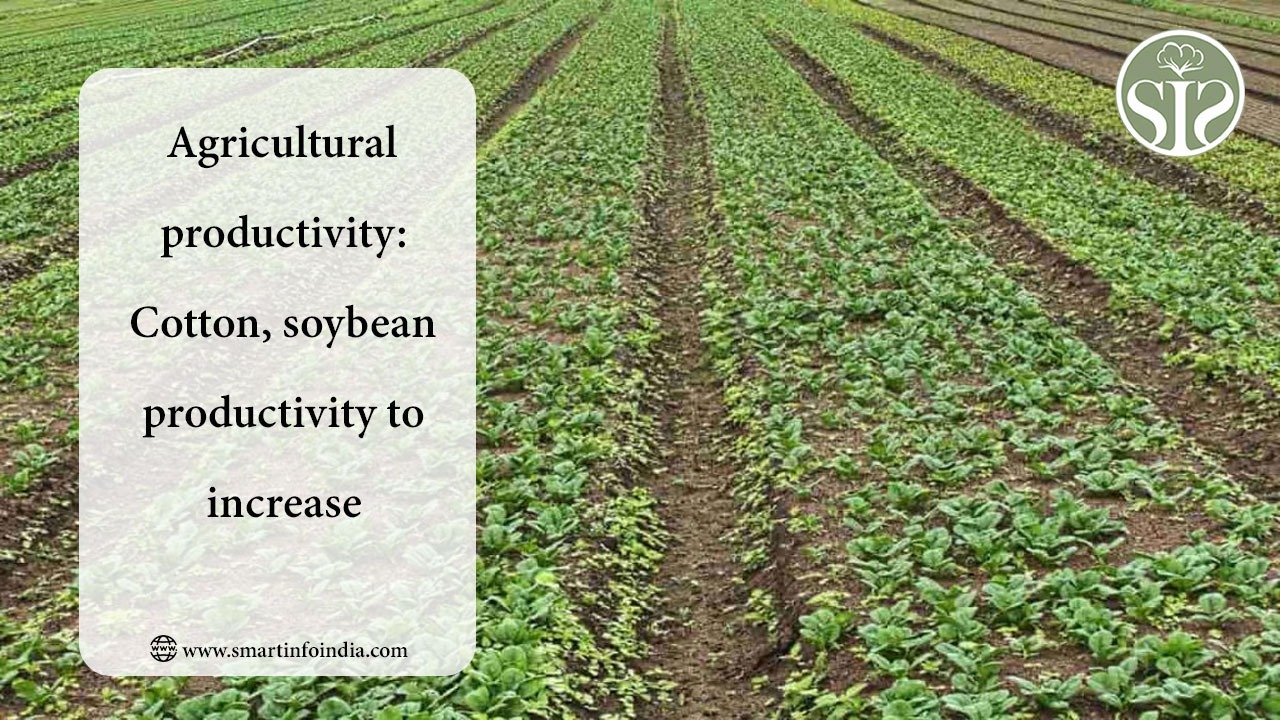
Agricultural productivity: Cotton, soybean productivity to increase

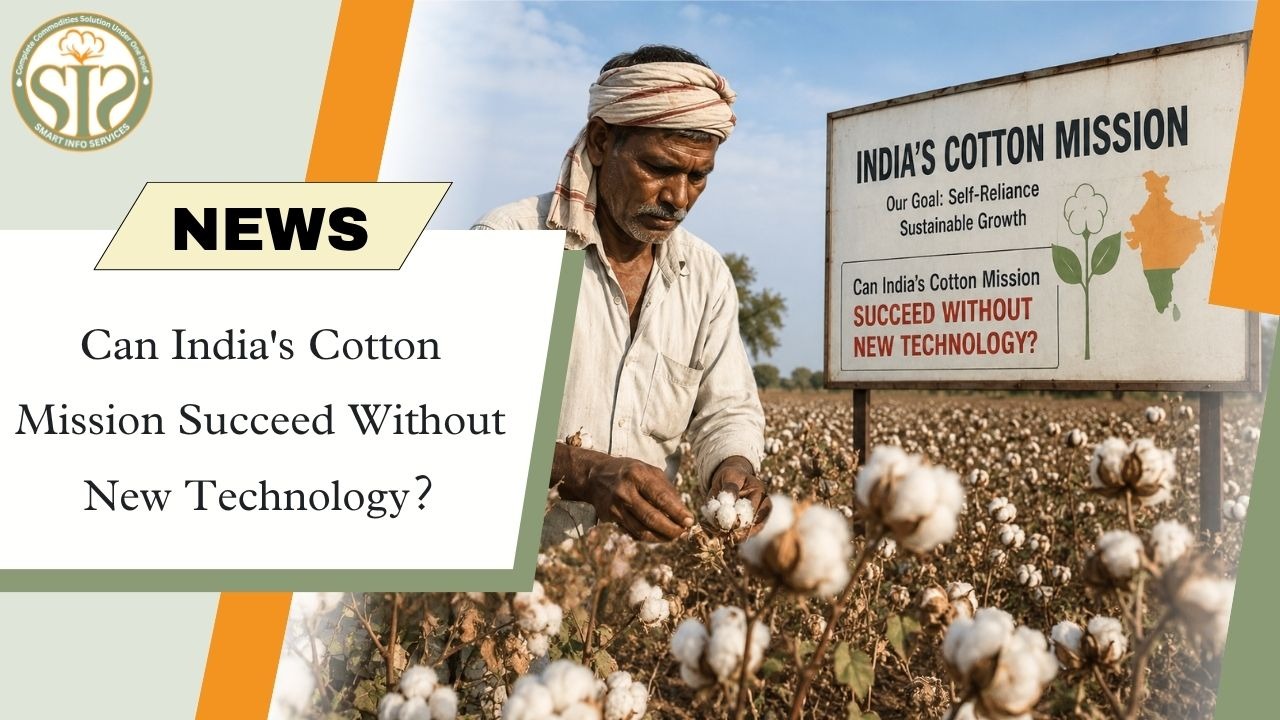
Productivity in agriculture: productivity for cotton and soybeans will riseMaharashtra News: Cotton and soybean are expected to produce good yields, leading the state's Kharif season this year. Agriculture department sources said that the productivity of both crops is likely to increase this year. Meanwhile, due to heavy rains in some parts of the state, water has accumulated in the fields of low-lying areas and the crops have started turning yellow and getting spoiled.If we look at sowing of soybean in the state since 2017, the average area has been 41 lakh hectares. However, this year farmers have increased the sowing area by 10 lakh hectares to 50 lakh hectares.The state's five-year average cotton area had become 42 lakh hectares. But in some areas, farmers switched from cotton to soybean. Due to this, cotton cultivation decreased to about 40 lakh hectares in the last season. It was estimated that the area would decrease further this year. But now it is clear that due to good rains, the area of cotton will not increase much this year, but it will not decrease either.Soybean crop has now reached the budding, branching to flowering stage. So cotton is now in the germination and sprouting stage in Vidarbha, Marathwada. According to the agriculture department, though cotton is in good condition, farmers and ginners should be cautious of pink bollworm. Keeping the ginning area clean and removing the previous fungus can help prevent bollworm infestation.Soybean and cotton are now facing two threats: excessive rainfall or rain at the time of harvesting. Last season, farmers had grown 66 lakh tonnes of soybean. Soybean productivity may increase from 1299 kg to 1413 kg per hectare compared to last year. If this happens, the total soybean production in the state is likely to exceed 72 lakh tonnes this year, believes the agriculture department.This year cotton production is also expected to increase from 88 lakh bales to 92 lakh bales (170 kg per bale). Last season, farmers got an average cotton productivity of 355 kg per hectare. If the weather remains favorable till harvesting, the productivity of cotton will increase by 40 to 50 kg this year. It is estimated that this year farmers can get about 400 kg of cotton per hectare.Read More :Bt Cotton Boosts Yield by 3-4 Quintals per Acre: Government Reports in Lok Sabha

Ministry of Textiles empowers Ginners to produce Kasturi Cotton Bharat brand

Ginners are authorized by the Ministry of Textiles to create the Kasturi Cotton Bharat trademark.Kasturi Cotton Bharat programme of Ministry of Textiles is a pioneering effort in traceability, certification and branding of Indian cotton. The details of Kasturi Cotton Bharat program and implementation of block chain technology for traceability.Kasturi Bharat initiative, a collaboration between the Government of India, trade bodies, and industry, was formalized with a budgetary support of Rs 30 crore including Rs15 crore from Trade & Industry Bodies through a MoU signed on15.12.2022 between Cotton Corporation of India on behalf of Government of India, Ministry of Textiles and The Cotton Textiles Export Promotion Council.To provide complete traceability of Kasturi Cotton Bharat tagged bales across the supply chain, QR based certification technology are being used at each stage of the processing and a Block-chain based software platform will provide end to end traceability and transaction certificate. In this regard, Microsite with QR code verification and Block Chain technology has been developed.The Kasturi Cotton Bharat programme is operational at the national level and its promotion is being made at national and international platform. Hence, the allocation of funds is not at state level.The implementation of Block chain Technology under the Kasturi Cotton Bharat program is designed for stakeholders across the entire Indian cotton value chain including Andhra Pradesh.All the ginners in the country including Andhra Pradesh have been empowered to produce Kasturi Cotton Bharat brand as per stipulated protocol and about 343 modernised ginning and pressing units including 15 ginning and pressing units of Andhra Pradesh have been registered so far for participating Kasturi Cotton initiative and about 100 bales of Andhra Pradesh have been certified under Kasturi Cotton Bharat brand.This information was given by the Union Minister of State for Textiles, Pabitra Margherita in a written reply today in the Lok Sabha.Read More :> Bt Cotton Boosts Yield by 3-4 Quintals per Acre: Government Reports in Lok Sabha

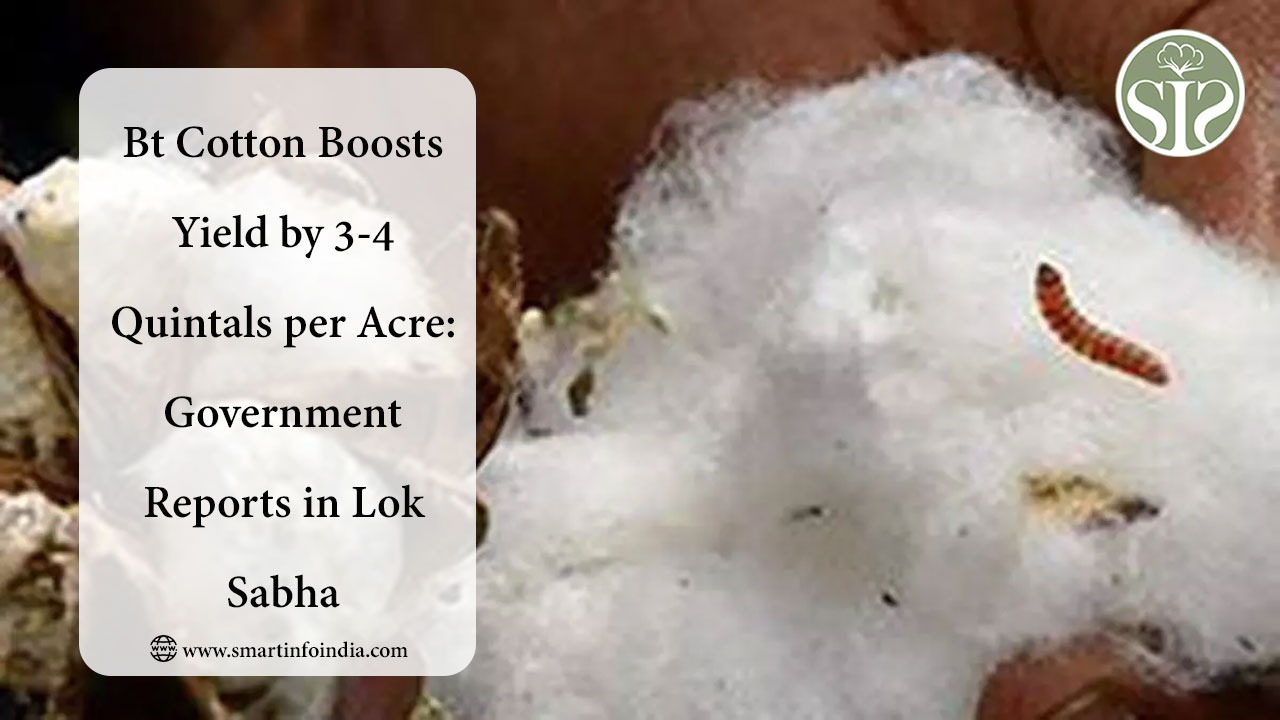
Bt Cotton Boosts Yield by 3-4 Quintals per Acre: Government Reports in Lok Sabha

Government Reports in the Lok Sabha Show That Bt Cotton Increases Yield by 3–4 Quintals per Acre.The Indian Council of Agricultural Research (ICAR) has partnered with private companies to develop crop varieties, transfer technologies, and build capacity. A recent study by ICAR's Central Institute for Cotton Research (CICR) in Nagpur found that Bt cotton can increase yield by 3-4 quintals per acre.In a written reply in the Lok Sabha on Tuesday, Ramnath Thakur, Union Minister of State for Agriculture and Farmers’ Welfare, reported that ICAR-CICR observed a significant yield increase with the adoption of Bt cotton. The study also highlighted increased income for farmers due to higher yields and reduced insecticide costs against the cotton bollworm.ICAR-CICR conducted the study to evaluate the impact of Bt cotton in Maharashtra during 2012-13 and 2013-14 and also assessed its effects on soil ecology. The findings showed a drastic reduction in bollworm infestations and a decrease in the number of insecticide applications from eight to four. The study found no adverse effects of Bt cotton cultivation on soil ecological parameters.According to the Minister, the current net return from Bt cotton is estimated at ₹25,000 per hectare in rainfed conditions with appropriate agronomy. With the rapid adoption of Bt cotton, over 96% of the cotton cultivation area is now under Bt cotton.One Scientist, One Product’ InitiativeResponding to a query on ICAR's initiatives, Bhagirath Choudhary, Union Minister of State for Agriculture and Farmers’ Welfare, mentioned the 'One Scientist, One Product' approach to enhance research productivity in agriculture, animal husbandry, fisheries, and allied sectors. Agricultural scientists are involved in various research projects, producing technologies, models, concepts, methodologies, and publications.As part of the Centre’s 100-day action plan, ICAR aims to develop 100 new seed varieties and 100 farm technologies. Over the past decade, ICAR has developed 150 bio-fortified varieties, including 132 field crops and 18 horticultural crops.ICAR PartnershipsChoudhary also stated that ICAR has signed agreements with private companies to scale up crop varieties, transfer technologies, and build capacity. These memoranda of understanding (MoUs) focus on technology dissemination without involving intellectual property rights issues or financial costs for ICAR. About 176 MoUs with farmer organizations aim to enhance capacity building and technology dissemination.APMC and MSPRegarding Agricultural Produce Market Committee (APMC) regulated markets, Ramnath Thakur informed that there are 7,085 APMC-regulated markets in India, with Maharashtra having the most at 929, followed by Uttar Pradesh with 633. The government supports strengthening APMCs by improving services and infrastructure.On the Minimum Support Price (MSP), Thakur stated that the government fixes MSPs for 22 mandated agricultural crops based on the Commission for Agricultural Costs and Prices (CACP) recommendations. The government paid ₹2.48 lakh crore in MSP during 2023-24, up from ₹2.37 lakh crore in 2022-23.Read More :> Cotton Spinning Units Worried Over Escalating Situation in Bangladesh

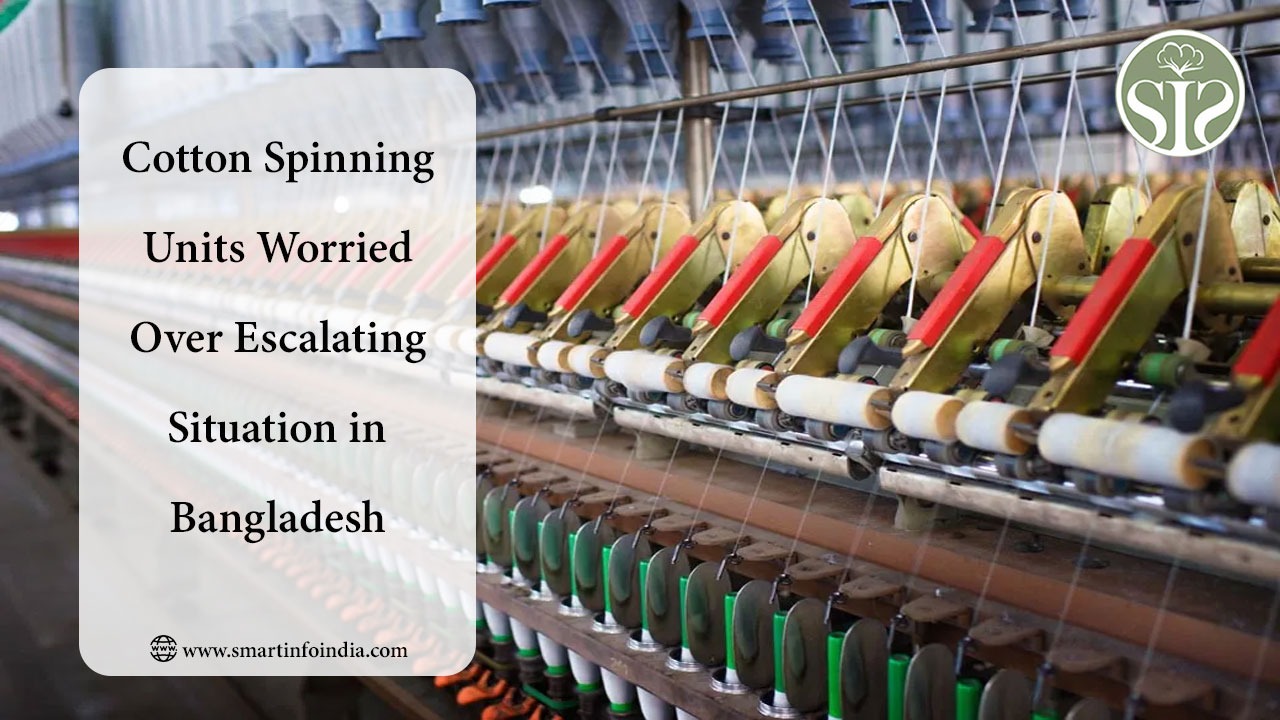
Cotton Spinning Units Worried Over Escalating Situation in Bangladesh

Cotton Spinning Units Concerned About Bangladesh's Getting WorseThe Indian cotton spinning industry, already grappling with sluggish global demand, is now facing additional uncertainty due to the political turmoil in Bangladesh, the largest textile player after China.Ripple Patel, Managing Director of Fiotex Cotspin Private Limited, expressed concerns over the recent developments, stating, “The industry is worried about the uncertainty surrounding the fate of the containers en route to Bangladesh and the pending orders. With this turmoil, the yarn industry will face tremendous heat as spinning units are already suffering losses due to muted global demand caused by ongoing geopolitical crises in Europe and the Middle East.”Patel noted that payment delays resulting from the closure of banking and trading activities in Bangladesh would further strain the industry. In FY24, India exported raw cotton and cotton yarn worth $2.4 billion, with 34.9% of its total cotton exports going to Bangladesh, which is twice the amount exported to China. India and Bangladesh conducted bilateral trade totaling $11.1 billion in this financial year, with imports at $1.8 billion and a trade surplus of $9.22 billion.*Patel added that since textiles are one of Bangladesh's largest industries, the next government will likely protect its interests. However, the next two to three months could be particularly challenging for the Indian spinning industry. Orders destined for Bangladesh are now in limbo, and spinners will struggle to find new buyers.Industry sources estimate that around 200 to 250 containers of cotton yarn are exported to Bangladesh each month. Industry players are in discussions with ministries, embassy officials, and authorities at Chittagong Port to closely monitor the situation and formulate strategies accordingly.Read More :>Indian Textile Sector Pushes for Reassessment of Quality Control Orders
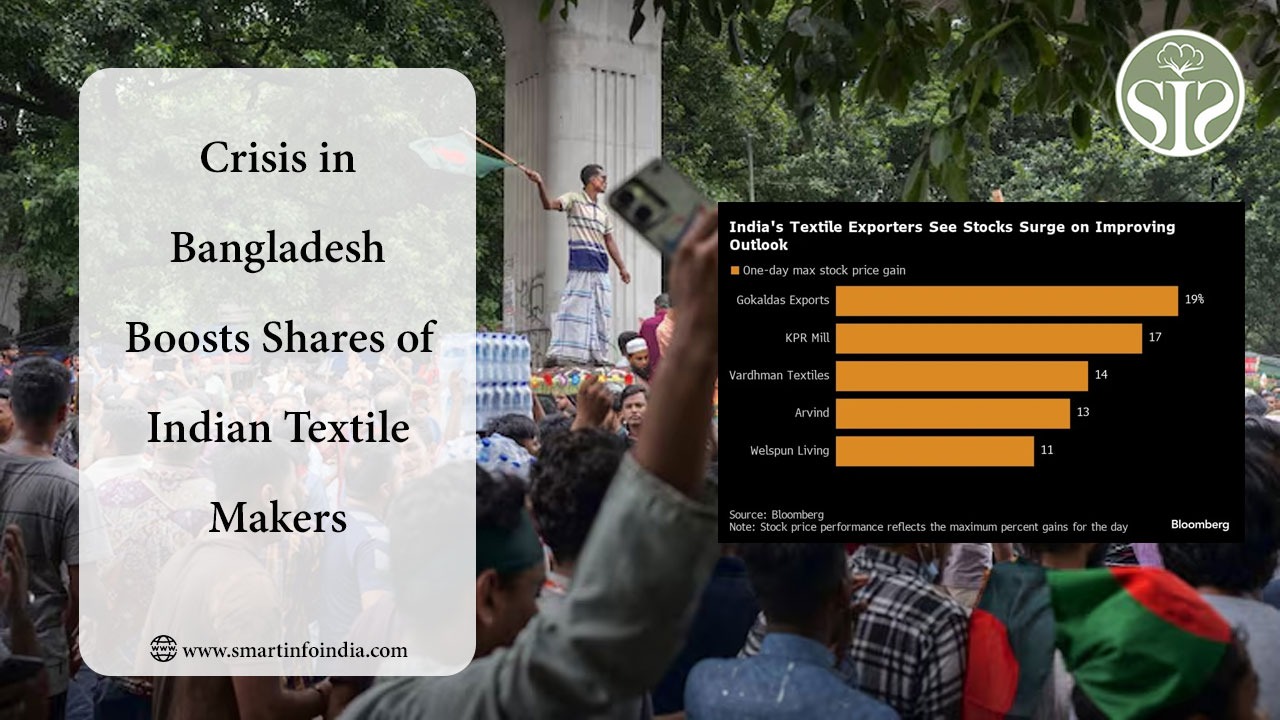
Crisis in Bangladesh Boosts Shares of Indian Textile Makers
Bangladeshi Crisis Increases Indian Textile Manufacturers' Stock PricesIndian textile makers’ shares surged on bets they stand to gain from political turmoil in Bangladesh that threatens to disrupt supply chains.Bangladesh’s textile exporters face the risk of losing business amid political instability that saw violent protests forcing Prime Minister Sheikh Hasina to flee the country on Monday.The stocks of Indian manufacturers including KPR Mill, Arvind Ltd., Gokaldas Exports Ltd., Vardhman Textiles Ltd., and Welspun Living Ltd. all jumped more than 10% in Mumbai, on expectations of a higher market share.Bangladesh has enjoyed rapid growth in its exports of ready-made garments and other textile products, making it the second-largest exporter of such products in the world behind only China. The country’s textile exports were worth $45 billion in 2022, more than double that of India.“If there are frequent disruptions to the supply chains in Bangladesh then global buyers may look at alternatives,” said Prerna Jhunjhunwala, an analyst at Elara Securities Ltd. “Indian players are well poised to take market share in that case as they have vertically integrated capacity to service the needs of global companies.”Bangladesh’s military has promised to install a new interim government in the country after Hasina, one of Asia’s longest-serving leaders, resigned and fled the country amid protests that left scores of people dead.Read more :- Bangladesh Crisis: Textile Orders Likely to Shift to Indian Hubs Like Tiruppur



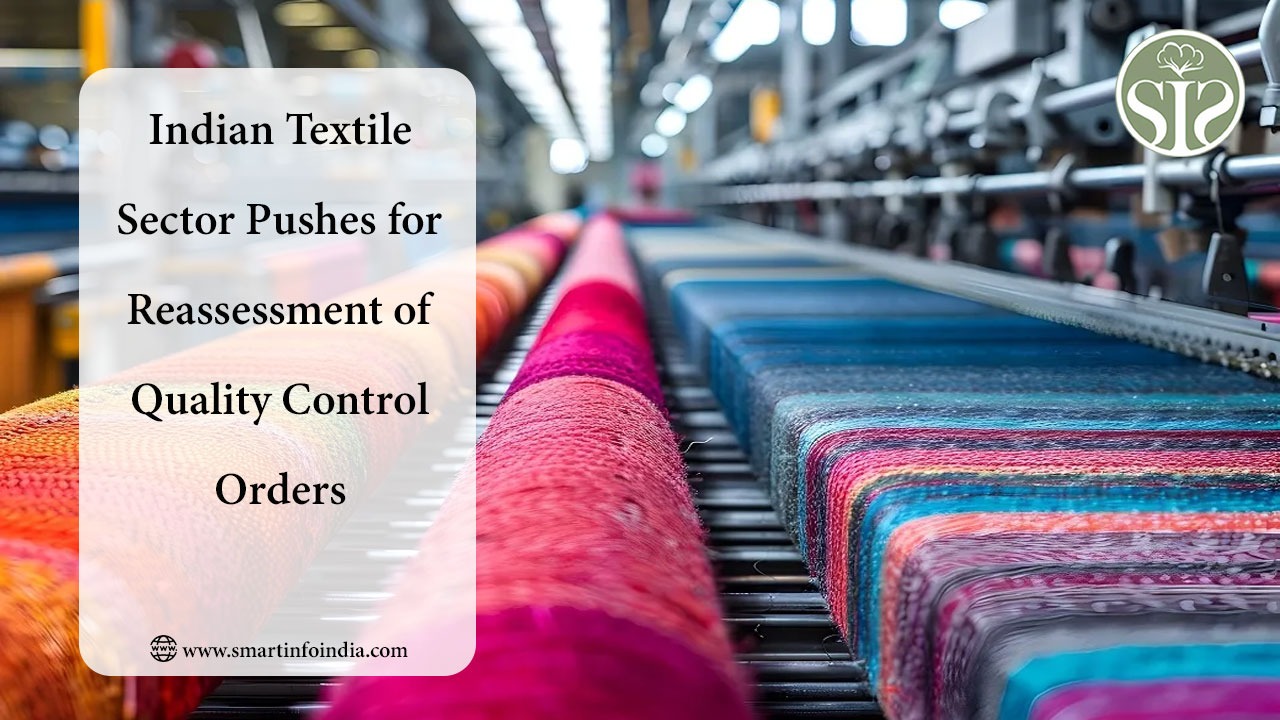
Indian Textile Sector Pushes for Reassessment of Quality Control Orders

The Indian Textile Industry Advocates for Reevaluating Quality Control OrdersThe Indian textile industry is calling on the government to reconsider the quality control orders (QCOs) imposed on upstream raw material products in the non-cotton sector. These QCOs, implemented over the last couple of years, were designed to ensure the import of quality raw materials in line with Bureau of Indian Standards (BIS) regulations.However, the downstream industry claims that these QCOs have had a detrimental effect, promoting monopolistic practices by a few producers of polyester and viscose fibers, along with their raw materials and yarn. The industry has appealed to Union Finance Minister Nirmala Sitharaman to reevaluate the QCOs to ensure the availability of raw materials at globally competitive prices and quality.Recently, the Supreme Court stayed the Gujarat High Court's order that reinstated anti-dumping duties on Purified Terephthalic Acid (PTA) imported from South Korea and Thailand.Ashish Gujarati, president of the Surat-based Pandesara Weavers Cooperative Society Limited, expressed in a letter to Finance Minister Sitharaman, “The government showed its sensitivity towards the downstream industry by challenging the Gujarat HC order in the Supreme Court. This court order will directly benefit fiber and yarn manufacturers and indirectly benefit the fabric and garment industry. It demonstrates that the government is very much concerned for the downstream and fabric industries. We are confident the government will take a positive approach if a sunset review begins.”Bharat Gandhi, chairman of the Federation of Indian Art Silk Weaving Industry (FIASWI), stated in a separate letter that QCOs cannot ensure quality. He emphasized that these orders have been disastrous for the industry, granting monopolistic advantages to a few upstream producers. The non-cotton fiber, yarn, and fabric industry is struggling to remain competitive in the global market due to dependency on local suppliers who have raised raw material prices because of restricted global supply through the QCOs. The industry maintains that QCOs fail to ensure a consistent supply of raw materials, rendering the downstream industry uncompetitive in the global textiles and garment market.Read More :Bangladesh Crisis: Textile Orders Likely to Shift to Indian Hubs Like Tiruppur
Related News

Youtube Videos

रुई बाज़ार में गिरावट का रुख 😱 जानिए कपास भाव 🔥Cotton Market Rate Today 30 Sep 2026
रुई बाज़ार में गिरावट का रुख 😱 जानिए कपास भाव 🔥Cotton Mark...
🔥 1200+ दिग्गज एक मंच पर! नागपुर में सजा Cotton Industry का महाकुंभ | India Cotton Summit 2026
🔥 1200+ दिग्गज एक मंच पर! नागपुर में सजा Cotton Industry का...
आज देशभर में रुई के भाव क्या रहे? 😱 Cotton Market Rate Today 🔥 29 Sep 2026
आज देशभर में रुई के भाव क्या रहे? 😱 Cotton Market Rate Toda...
Application Download
Whatsapp Contact