Filter

Recent News

CCI agrees to buy cotton at MSP, but sets conditions

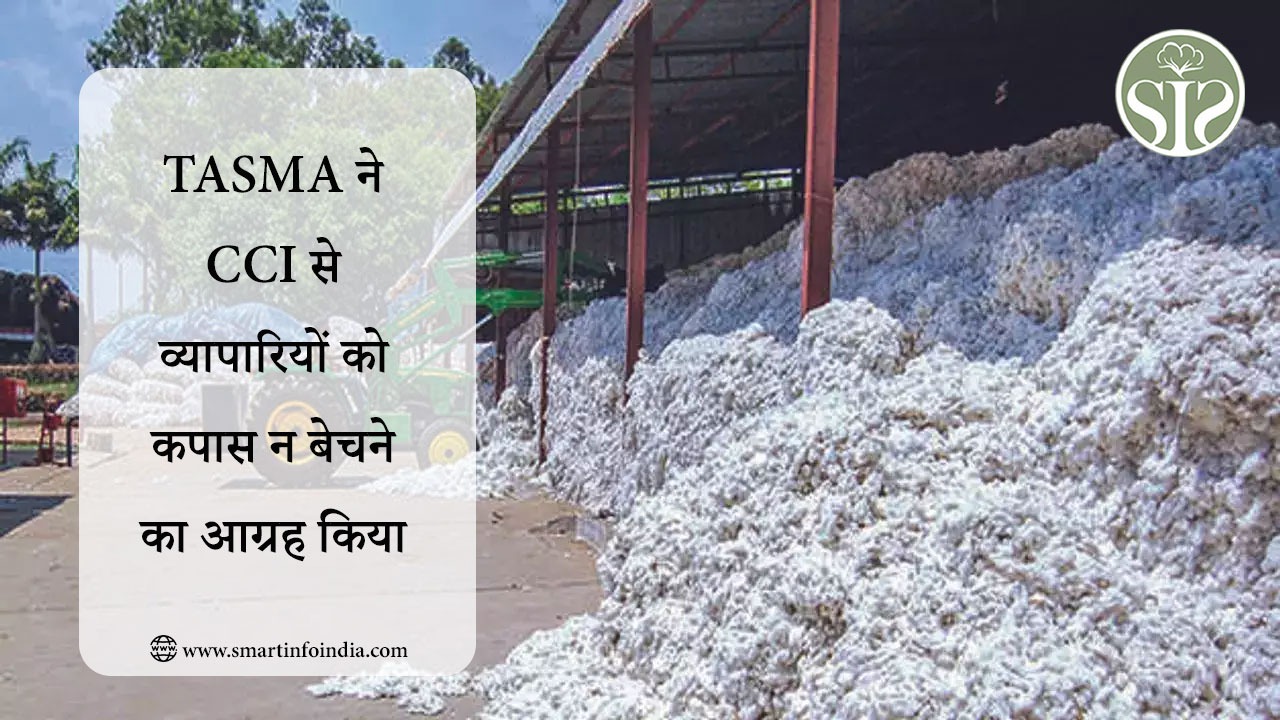
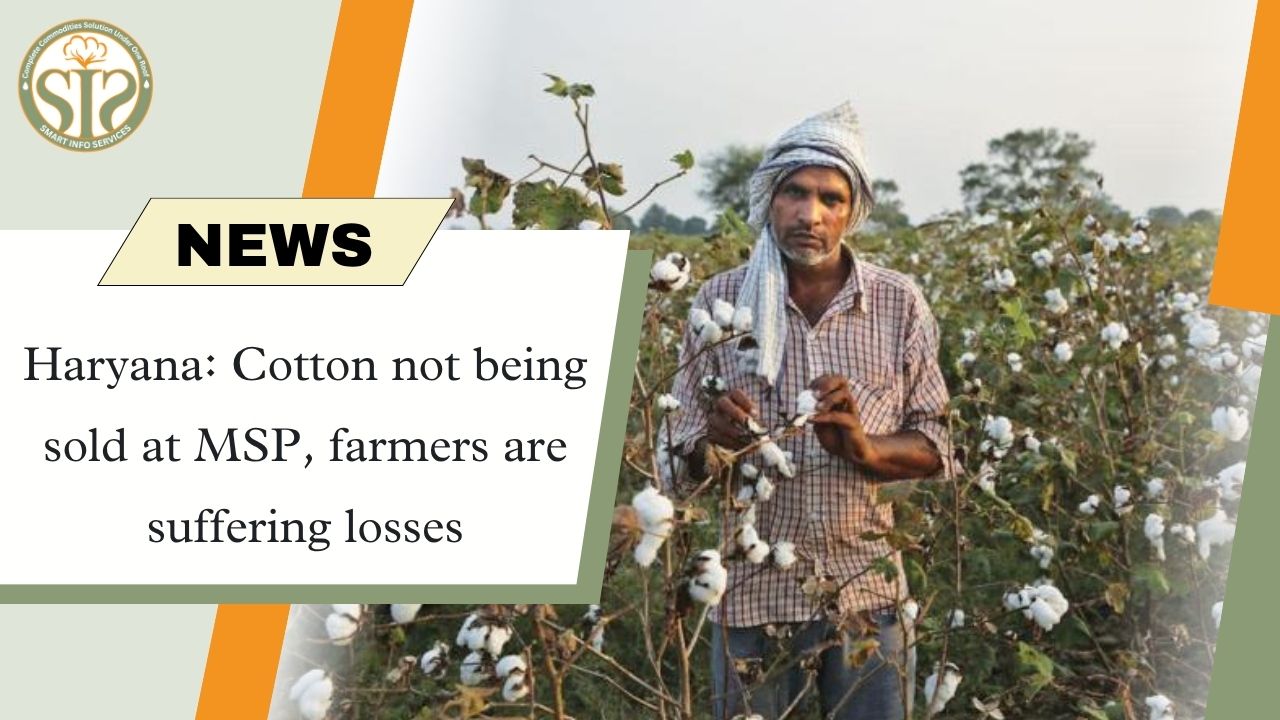
CCI agrees to buy cotton at MSP, but sets conditionsBATHINDA: The Cotton Corporation of India (CCI) on Tuesday assured farmers in Abohar that it will resume cotton procurement in the local grain market from December 7, but imposed two conditions - the cotton cannot be of inferior quality. .And the weight of the crop in one heap cannot exceed 30 quintals.CCI's assurance came during a meeting with farmers, which was called after farmers blocked the Abohar-Fazilka road.After this, Fazilka district administration organized talks between the two places.CCI had a few days ago stopped purchasing cotton at procurement centres, mainly Abohar, one of the largest cotton procurement centers in Punjab.With CCI away, cotton prices had declined and were even trading around Rs 4,500 per quintal at many places, while the minimum support price for 27.5-28.5 mm long staple stood at Rs 6,920 per quintal and for 24.5 Was Rs 6,620 per quintal. -25.5mm long staple.Farm unionists Gunwant Singh and Subhash Godara, who led the protest on Tuesday, said it was found that some traders were bringing poor quality cotton crop from villages in Rajasthan near Abohar.“Farmers have resolved that they will ensure that traders do not bring low quality crops from the neighboring state. Farmers in Rajasthan can bring their crops in smaller quantities after ensuring that the quality is not bad. If the quality is not up to standard, they will not get commensurate prices.MSP. After our protest, CCI has assured to start the procurement,” Gunwant said.A Cotton Corporation of India official said the procurement was being done as per the quality norms. Overall, so far 5.95 lakh quintals of raw cotton has been purchased from the procurement centers of Punjab. In such a situation, 1.12 lakh quintals of cotton has been purchased below the MSP.

Brazil's cotton production growth: increasing production and global dominance in 2023/24

Brazil's cotton production growth: increasing production and global dominance in 2023/24Marking a historic milestone, Brazil's cotton sector is expected to produce a record-breaking 14.7 million bales in the marketing year 2023/24, which would surpass the United States. Driven by optimal weather conditions and a strategic shift in marketing timelines, the strength of Brazilian cotton is set to reshape global trade dynamics, with exports increasing to 11 million bales and ending stocks that will be lost in the international cotton market. Shows the influential role of the country.highlightBrazil's Cotton Production Increase: Brazil's cotton production projections for marketing year (MY) 2023/24 have been revised upward, indicating a record crop and yield. Production is estimated at 14.7 million bales (3.2 million metric tons), with optimal weather conditions contributing to this achievement.Global production dynamics: Brazil is projected to overtake the United States in cotton production in 2023/24, marking a historic shift in the global cotton landscape.Area estimates and optimal weather conditions: The estimated area of cotton cultivation in Brazil for MY 2023/24 is 1.7 million hectares. The increase in production is attributed to favorable weather conditions, which have positively impacted yields in key states.Change in marketing year: Following USDA's revision, emphasizing the current nature of the projections, MY 2023/24 is now equivalent to cotton production entering the market in 2023 rather than 2024.Domestic consumption and exports: The Post estimates Brazil's domestic cotton consumption for my 2023/24 to be 3.3 million bales (750 thousand metric tons). Exports are estimated at 11 million bales (2.4 million metric tons) due to lower production in major cotton producing countries such as China, India and the United States as well as increasing global demand and consumption.Final Stock Projection: The post mine is predicted to end up with six million bales (1.3 million metric tons) of stock for 2023/24. This is largely influenced by high volumes of exports and domestic consumption.conclusionAs Brazil emerges as a major force in global cotton production, forecasts for MY 2023/24 underline not only the country's agricultural potential, but also its impact on shaping the trajectory of the cotton industry . With a strong production growth, Brazil is set to become an export leader, demonstrating the resilience and potential of its cotton sector. The historic shift in marketing dynamics has further strengthened Brazil's position as a major player, paving the way for an exciting era in the world of cotton trading.

Indian cotton prices fall to 2-year low on weak demand

Indian cotton prices fall to 2-year low on weak demandSpinning mills are buying cautiously in view of the global economic crisisCotton prices in India have fallen to a two-year low due to weak demand due to the economic crisis in western countries, especially the US and Britain, traders said.“There is practically no demand for cotton despite the low crop, which is in the range of 300 lakh bales (170 kg) including carryover stocks from last year. But demand for clothes in western countries is sluggish due to economic problems,'' said a source working for a multinational trading firm. Therefore, mills are not ready to buy even though farmers are ready to sell cotton (unprocessed cotton) at ₹7,000 per quintal“Due to lack of demand, cotton seed prices have fallen below Rs 3,000 per quintal, while ginned cotton prices have gone up to Rs 56,000-55,000 per candy (356),” said Ramanuj Das Boob, sourcing agent for Raichur-based multinational companies. It has reduced." Karnataka.CCI buys MSPRaw cotton prices have now fallen to ₹7,200-7,300 per quintal and in some cases to the minimum support level of ₹7,020 per quintal for long staple cotton. “This is at a level that farmers have not seen in the last two seasons,” Das Bub said.Currently, Shankar-6 cotton, the benchmark for exports, is quoted at ₹54,850 per candy (356 kg) in Rajkot, Gujarat. On the other hand, at the Rajkot Agricultural Produce Marketing Committee (APMC) yard, the price of raw cotton is ₹7,100 per quintal.In the global market, cotton futures on the Intercontinental Exchange, New York are currently quoted at 78.25 US cents per pound (₹51,600 per candy).The fall in cotton prices has resulted in the Cotton Corporation of India (CCI) procuring 2.5 lakh bales (170 kg each) from growers at MSP. It has spent more than ₹900 crore on these purchases so far.delayed arrival of poll“CCI procurement is not much compared to the arrival of 58 lakh bales so far. Last week, around 9 lakh bales reached various APMCs in the country. Daily arrivals were 1.1 lakh bales to 1.3 lakh bales, Popat said.“The arrivals have been low so far due to elections in Madhya Pradesh and Telangana. Now that they are over, inflows will increase and peak. This could put further pressure on prices,” said Das Boob.Popat said that spinning mills are facing problems due to fall in yarn prices. “CCH-30 (combed cotton hosiery) yarn prices have declined to Rs 230 per kg from Rs 245 a month ago. There is no movement of yarn,” he said.Indian Texpreneurs Federation (ITF) convenor Prabhu Dhamodharan said cotton prices are gradually coming down in line with the actual demand trend.challenging situationHe said, an estimate based on the usage survey and survey of 5 million spindles in Tamil Nadu shows that overall yarn production in South India has declined by about 17 per cent in November.“The current situation is challenging for many spinning mills. Yarn production in the sector during November was lower by about 35 to 40 million kg compared to the maximum utilization level. Besides, 200 mills in the southern region are using 10-20 per cent viscose to produce blended yarn,” Dhamodaran said.Lower prices may encourage purchasing by exporters. “Once the prices fall to ₹54,500-55,000 per candy level, exporters will start showing interest. Right now, only Bangladesh is buying,” said Das Bub.“Around 3.5 lakh bales have been lifted for export. But the shipment of cotton and yarn is less,” Popat said.growth of non-cotton fibersDhamodharan said two factors will keep cotton prices in check in the next few months. “A 15-20 per cent decline in production by the spinning sector in major consuming states like Tamil Nadu in the current quarter and increasing trend of spinners producing synthetic and cellulosic fiber blended yarns will keep prices under control for the next few months,” it said.Non-cotton fiber sales from manufacturers are seeing good year-on-year growth. The ITF convenor said the trade expects less volatility from the current season through September 2024. There will be a more stable trend within the fluctuations of ₹1,000-1,500 per candy, which is a very basic requirement for the export competitiveness and performance of the entire value chain.The source working with the multinational company, who did not want to be identified, said the current trend will continue for the next few months. “Something has to happen to increase demand. But we don't see anything happening now,' the source said.Although the US crop is down, Brazil is making up for it. “But weak demand is holding back the market,” the source said.Dhamodharan said that although retailers have started showing interest in placing fresh orders after their excessive inventories are exhausted, they are all playing it safe and keeping a tight control on their inventories."We need to wait until the first quarter of the upcoming calendar year to get accurate visibility of consumption trends across all developed markets," he said.
'India will be the largest cotton producer'

'India will be the largest cotton producer'Textiles Minister Piyush Goyal says the Indian textile industry is working towards achieving a target of $250 billion by 2030, including exports worth $100 billion; Inaugurates meeting of global cotton producing countries; Also introduced is 'Kasturi Cotton Bharat', a 'blockchain traceable' textile brandTextiles, Commerce and Industry Minister Piyush Goyal, while inaugurating the annual global meeting of the UN-recognized body of cotton producing and consuming countries in Mumbai on Saturday, said India will strive to become the largest cotton producer globally.Addressing the 81st Plenary Session of the International Cotton Advisory Committee (ICAC), the Minister said India has the largest area under cotton cultivation and is the second largest producer. “We need to become the world's largest producer,” Mr Goyal said, stressing that the Textile Advisory Group on Cotton will work towards improving productivity to the level of countries like Australia.India will provide leadership in cotton textiles and technical textiles sector. It has two advisory groups – for cotton and man-made fibres. These groups represent the entire textile value chain and take policy decisions with input from sector representatives. India has also launched PM MITRA – a central government scheme to set up mega textile parks and promote the entire value chain.Shri Goyal said that the National Technical Textiles Mission promotes research and development in technical textiles. These are man-made fabrics that are made for a specific function and are not usually used for apparel or aesthetic appeal.He said, the Indian textile industry is working towards achieving the target of $250 billion by 2030, which includes exports of $100 billion.Launching “Kasturi Cotton Bharat”, Shri Goyal said, in a fortnight, the Ministry of Textiles and the Department of Consumer Affairs will open state-of-the-art testing laboratories across the country to ensure that high quality textile products are manufactured and exported from India. To be. The brand, which he claimed would be traceable using blockchain technology, and would be “carbon positive.”The first set of textile products made from musk cotton was also introduced at the event. The minister said the drone-based pesticide spraying recently launched by Prime Minister Modi will benefit Indian cotton farmers. He said the use of innovation and Internet of Things will benefit Indian cotton farmers.Delegates from 35 countries are expected to participate in the four-day event on the theme “Cotton Value Chain: Local Innovation for Global Prosperity”.

Cotton pilot scheme successful, government will extend it by one year

Cotton pilot scheme successful, government will extend it by one yearA pilot project launched this April to boost cotton production in 10 states is likely to be extended by a year beyond March 2024, two officials aware of the development said. Cotton production in these states is estimated to increase by 20-25%, which is a substantial increase at a time when all-India cotton production is on the decline. Officials, speaking on condition of anonymity, said adoption of best agronomic practices, quality seeds and high-density planting systems have contributed to this growth.“The special project on cotton was launched in April 2023 to March 2024 to increase production during 2023-24, covering 15,000 farmers from 10 states. The final result of the data will be analyzed in January,” the second official said, adding that the data will be evaluated by the Indian Council of Agricultural Research (ICAR).Questions sent to the Commerce Ministry remained unanswered till press time.The 10 cotton growing states where the pilot project is underway are Uttar Pradesh, Haryana, Punjab, Rajasthan, Madhya Pradesh, Gujarat, Maharashtra, Tamil Nadu, Andhra Pradesh and Karnataka. The projected increase in production from the pilots could help India strengthen its cotton export ecosystem, and boost the country's position in global cotton export markets, where it competes with other cotton-exporting countries such as Bangladesh and Vietnam. Are facing challenges.India's exports of cotton, textiles, yarn and handloom products grew by 5.7% during April-October 2023. According to Commerce Ministry data released on November 15, exports during this period stood at $6,877 million compared to $6,509.51 million in the same period last year. According to the Index of Industrial Production (IIP) data released on November 10, 2023, textile production grew by 3.7% year-on-year this September. In August, textile production grew by 1.6%.Expecting growth in textile exports, CII National Committee on Textiles and Apparel Chairman Kulin Lalbhai said the last 12 months have been a bit tough on export demand as big global brands were reducing inventories. Lalbhai, who is also the vice-president of Arvind Fashion, said, "I believe the demand scenario will improve as the inventory position corrects, and brands start normalizing their purchases." "Currently, prices remain benign. Therefore, we do not expect any major increase in the next [few] quarters."However, on the production front, India has seen a steep decline in recent years. According to textile ministry data, annual production of cotton was 37 million bales (of 170 kg each) in 2017-18, which fell to 33.3 million bales in 2018-19. After seeing growth in 2019-20 (36.5 million bales), production fell again to 35.25 million bales in 2020-21 and 31.12 million in 2021-22. Cotton production in 2022-23 was 34.75 million bales. And in the current fiscal year, the Cotton Association of India estimates production may decline to 31.6 million bales.Cotton is one of the major sectors of economic activity for livelihood, and plays an important role in the development of the Indian economy. About six million farmers are engaged in cotton production in India, and 35 million farmers grow cotton worldwide.The ministry is also focusing on increasing presence in technical textiles, which is a growing market. Currently, India is exporting technical textiles including medical apparels to the tune of $2.5 billion and has set a growth target of $10 billion in the next five years. Technical textiles are engineered textile products used by various industries. Some examples of their uses are sports gear, PPE kits, masks, aprons, etc.“Indian textiles have become synonymous with unique designs, use of sustainable fibers and superior quality, making it the preferred choice for western markets,” said Anand Ramanathan, partner, consumer industry leader, consulting, Deloitte India. The 'One' strategy adopted by global brands post-pandemic and the product strength of Indian suppliers have opened up opportunities for global strategic partnerships for Indian brands.Ramanathan said these trends have been boosted by government support schemes and tax exemptions, which have helped textile exporters increase their production.India is actively working on free trade agreements to increase its overall exports to boost domestic growth. However, high interest rates in Western markets are dampening demand.India has signed 13 regional and free trade agreements with various countries such as Japan, South Korea, Association of Southeast Asian Nations (ASEAN) countries and members of the South Asian Association for Regional Cooperation (SAARC). India's merchandise exports to all these countries have registered growth in the last decade.

Global cotton production likely to exceed consumption for second consecutive year

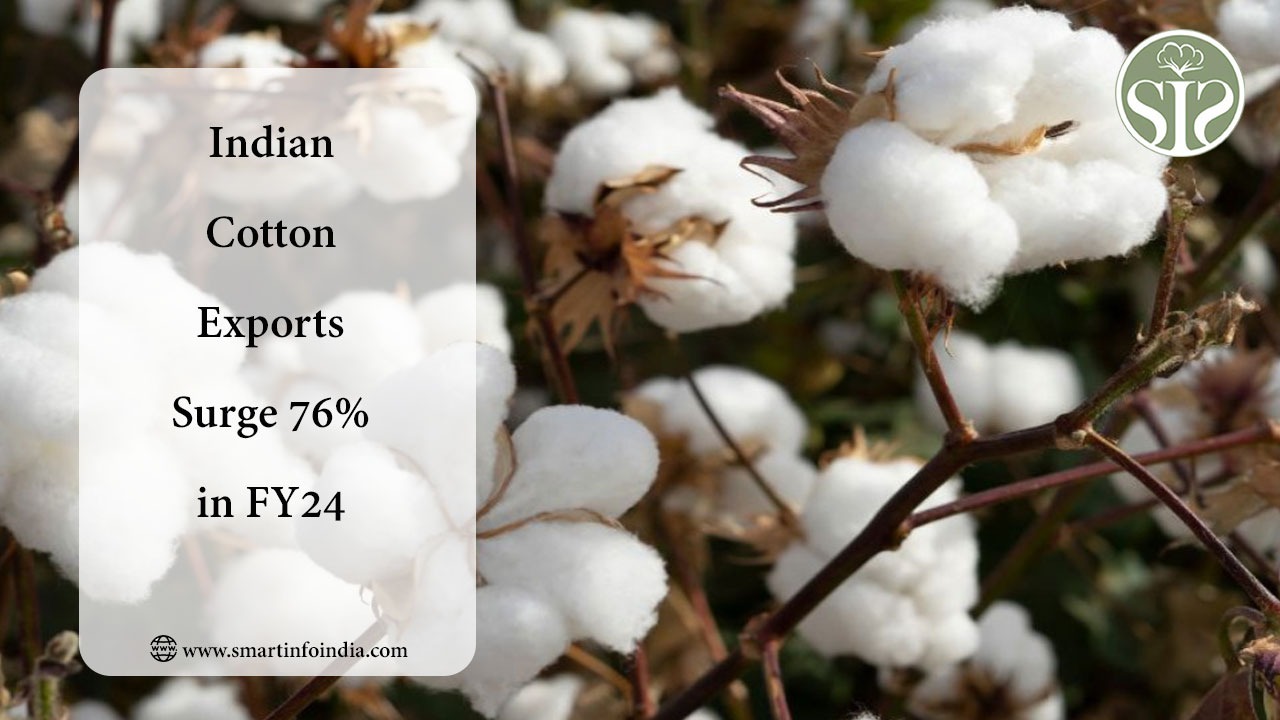
Global cotton production likely to exceed consumption for second consecutive yearGlobal cotton lint production is estimated at 25.4 million metric tons (MT) in the 2023-2024 season, up 3.25% from 24.6 million MT in 2022-2023. But according to the International Cotton Advisory Committee (ICAC), production is projected to decline marginally to 23.4 million metric tons in 2023-2024 from 23.5 million metric tons in 2022-2023.At the 81st Plenary Meeting in Mumbai, ICAC projected that in 2023-2024, India's share in global production will fall by 2% to 21%, but will remain at second position in the top list of cotton producers.Meanwhile, India's share in consumption is projected to be as high as 21% by 2023-2024. Consumption in top producer China will fall by 2% to 30%.The area under cotton in India is estimated to decline marginally. However, globally the trend is likely to reverse from 32 million hectares in 2022–2023 to 33 million hectares in 2023–2024. It was said, that the role of price volatility is affecting the cotton plantations across the world to a great extent.It was further said that world trade will reach 8 million metric tons in 2022-23 and is estimated to increase to 9.2 million metric tons in 2023-2024. In 2023-2024, the top exporting country – the United States – is likely to see its share of exports globally decline to 29% – from 34% in 2022-23.Additionally, long-staple (LS) and extra-long-staple (ELS) production in the US is expected to grow from 72,000 MT last year to 1,03,000 MT in 2022-2023. This growth will be driven by top producers in the category such as Egypt, India and China. India is likely to dominate consumption in this category even as demand declines – from 1,59,000 MT last year to 1,50,000 MT in 2022-2023.


November rains brought trouble for cotton farmers, rates fell

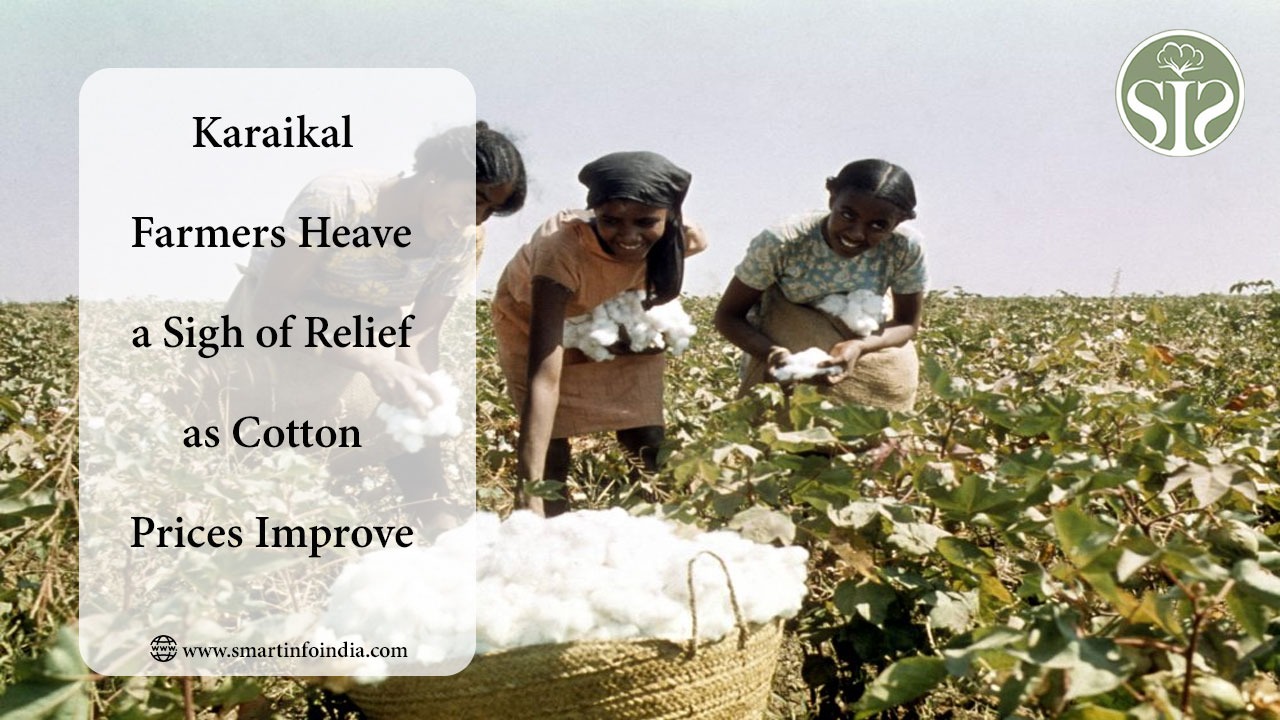
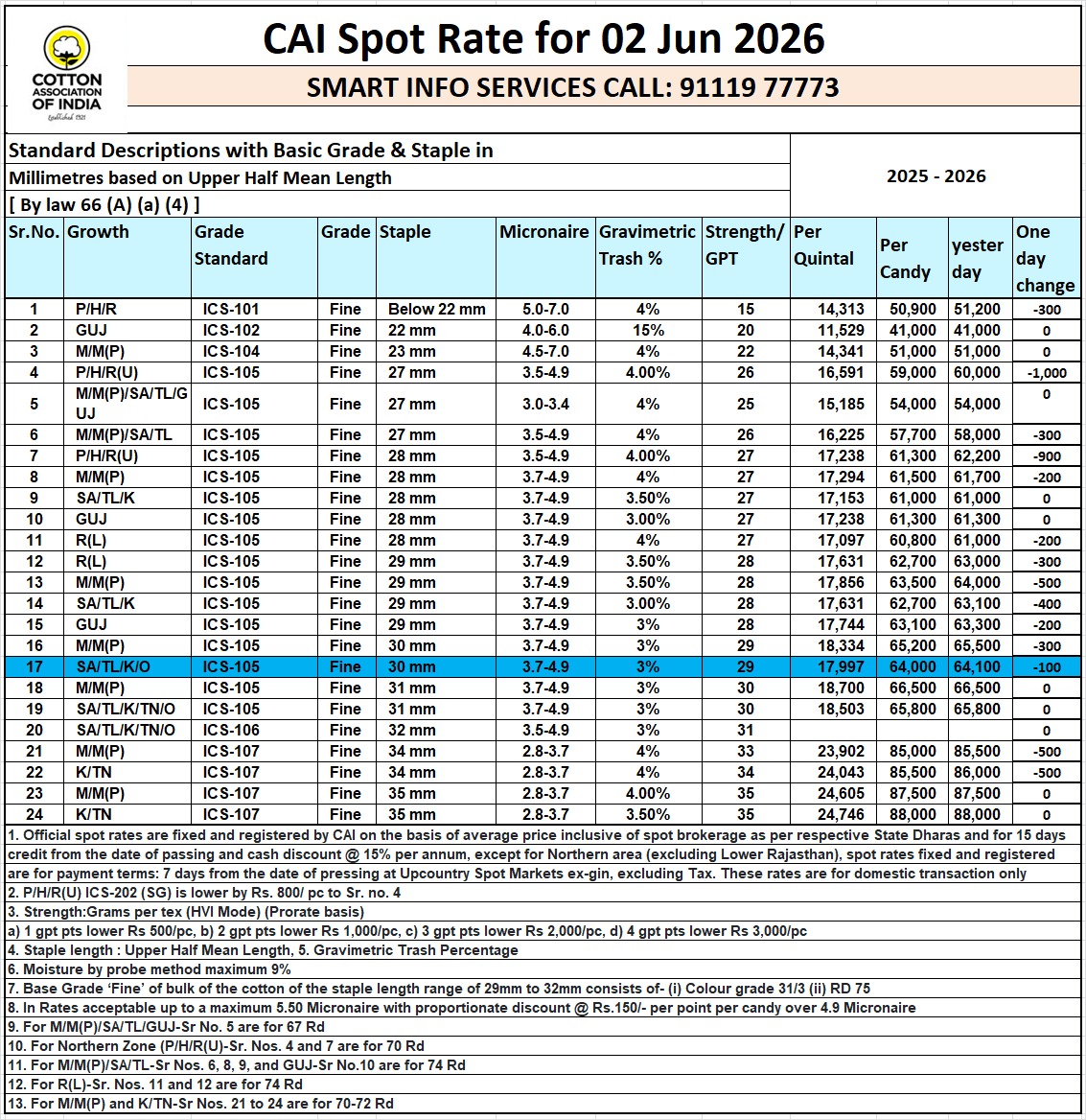
November rains brought trouble for cotton farmers, rates fellAfter rains in late November affected standing crops in parts of Vidarbha, rates of cotton, the region's main agricultural produce, have fallen below the minimum support price (MSP). Sources said the rates were barely above the MSP since the start of the season in October.Now, because there has been rain on the standing crops, there has been moisture in the cotton seeds, causing a decline in prices.Against the MSP of ₹7,020 per quintal, open market rates are now between ₹6,800 and ₹6,700, sources said. Traders say that this is a temporary incident caused by rain.Sudhir Kothari, director of Agricultural Produce Market Committee (APMC) in Hinganghat, said the rates have fallen due to cotton seeds taking up moisture. This is because the weight of cotton bolls increases due to water content. To compensate for the extra weight, ginners adjust prices downwards. However, if the sun shines again, prices are expected to improve in a week. Farmers will get lower prices only for existing offtake, Kothari said.Manish Jadhav, an activist of Shetkari Sangathan (Swabhimani) in Yavatmal, said the low prices have added to the problems of farmers as the rains are likely to affect their produce.Soybean yield has also seen a major decline due to yellow mosaic pest, but despite lower yields, rates for the crop are slightly higher than the MSP, activist Vijay Javandhia said.Once the market prices fall below the MSP, the government steps in to support the prices. Cotton is procured by the Cotton Corporation of India (CCI) which sets up MSP procurement centres. Traders said CCI centers have not yet started in Vidarbha as the rates are above the MSP.A survey is being conducted to assess the damage caused by rain in the state.

Copyright© 2023 | Smart Info Service
Application Download