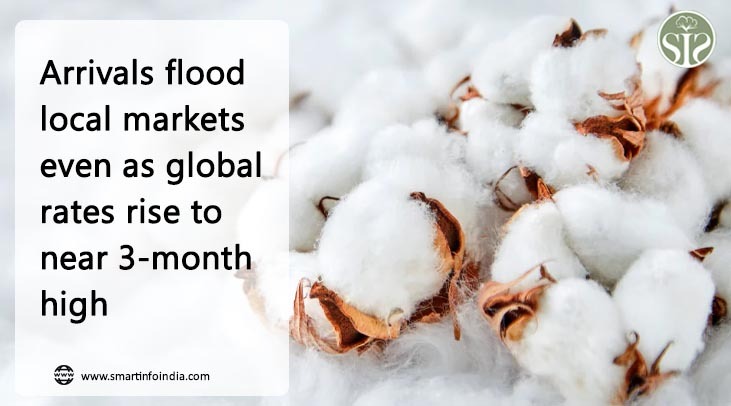
Arrivals flood local markets even as global rates rise to near 3-month high
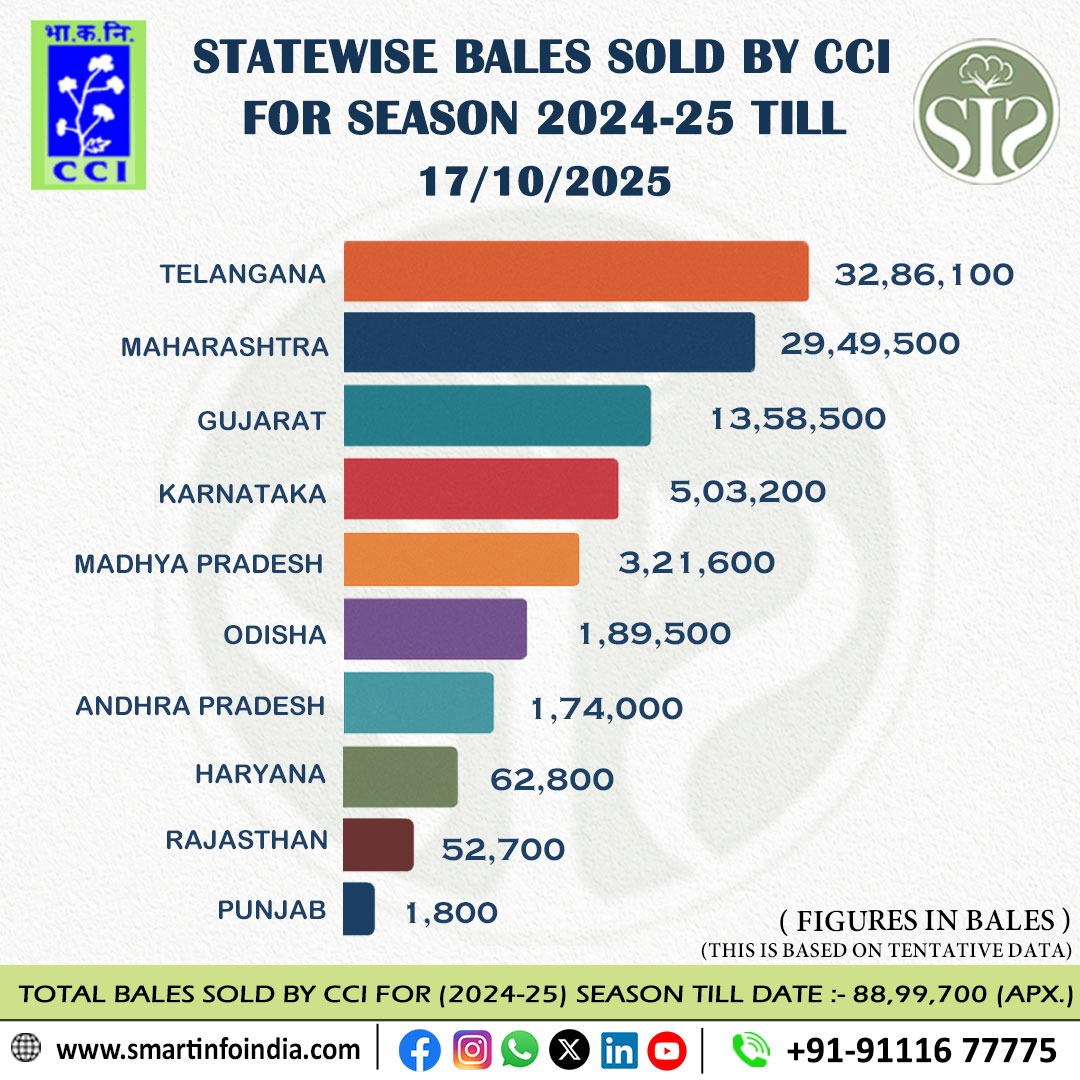
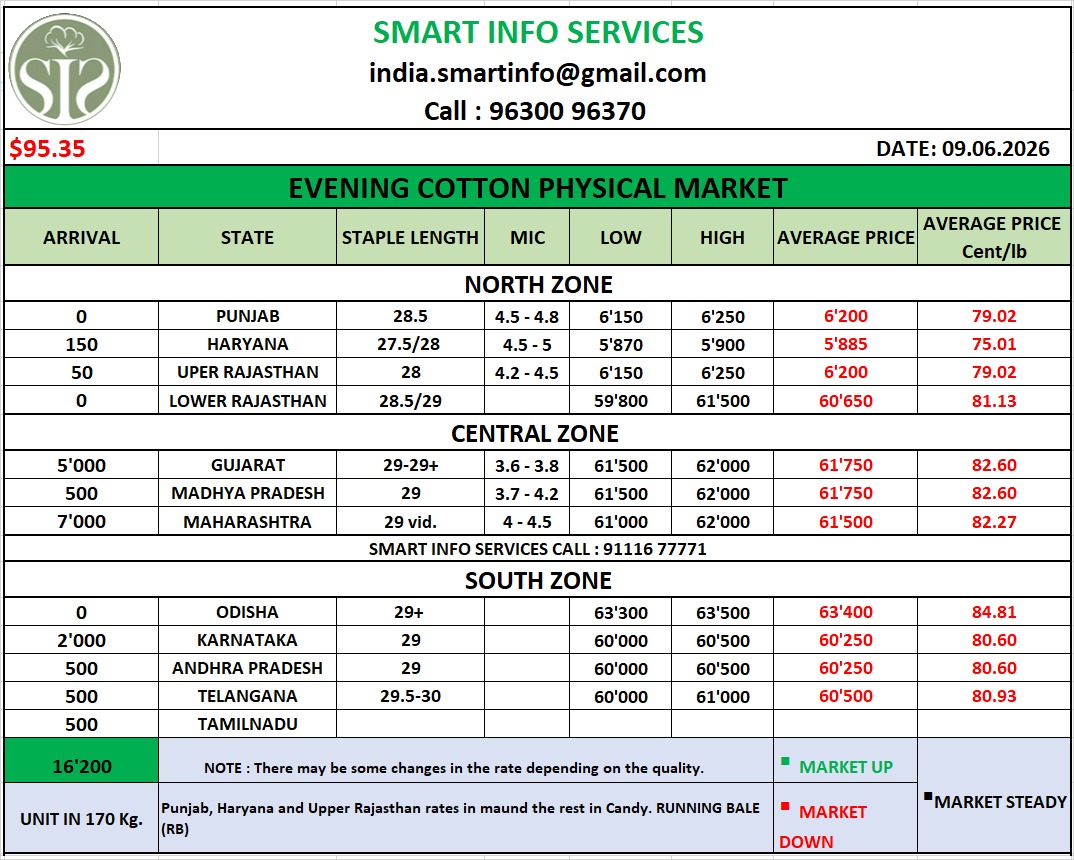
Arrivals flood local markets even as global rates rise to near 3-month high India’s domestic cotton prices are still stuck at the bottom despite volatile movements while global cotton prices have surged to near three-month highs. Textile industry players and traders say they have not seen the market fluctuate in such a volatile manner.According to Anand Popat, a Rajkot-based cotton, yarn and cotton waste trader, prices moved down on an hourly basis on Monday with any change in the fundamentals. “We are witnessing a short-term fluctuation with prices going up quickly and then taking a sharp u-turn,” said an industry insider, who did not wish to be identified. On Tuesday, prices of Shankar-6, the benchmark for exports, declined to ₹55,150 per candy of 356 kg. Prices are the lowest since January 18, when it ruled at this level before rising to ₹56,050 on January 25. Open interest upOn the InterContinental Exchange (ICE), New York, cotton March contracts quoted at 84.34 US cents a pound (₹55,450/candy) early on Tuesday. Over the past two sessions, prices on China’s Zhengzhou for March contracts have increased to 16,050 yuan a tonne (₹66,875/candy), up from 15,855 yuan (₹66,425) during the weekend.The open interest on ICE has increased to 0.46 million US bales (62 lakh Indian bales (170 kg each) signalling some bullishness, according to traders. “Currently, arrivals exceed demand. They are about two lakh bales (170 kg each) on a daily basis. Mills are buying some 1.25 lakh bales, additionally about 25,000 bales, while the Cotton Corporation of India (CCI) 25,000 bales and multinational companies (MNCs) 15,000-25,000 bales,” said Popat.MNCs are providing support to the cotton market with their purchases making up 40 per cent of the arrivals, said Ramanuj Das Boob, a sourcing agent for multinationals in Raichur, Karnataka.Last year stocks“Their purchases are providing liquidity in the market. They seem to be hedging by selling on ICE and buying here,” said Das Boob. A MNC official, who did not wish to be identified, said MNCs cannot go flat and need to hedge their positions on ICE. Das Boob said the Indian cotton crop was good and spinning mills were buying, though slowly. “Arrivals have been higher and they could be 170-175 lakh bales by January end and they are likely to be good in February too. Prices may rise once the arrivals drop to a trickle,” he said. Arrivals gave the impression that cotton production may be higher this year but they are faster than last year, said the MNC official. “In Telangana, arrivals are a shocking 35,000-40,000 bales daily. It has to drop to around 4,000 bales for prices to pick up. Popat said farmers are bringing to the market the stocks they held up last year, mixing with this year’s crop. “It is possible that the crop is good and last year’s held up stocks are also being brought to the market,” said the MNC official.Short-term swingsAccording to the Cotton Association of India, arrivals on Tuesday were 2.02 lakh bales with Maharashtra accounting for 60,000 bales, Gujarat 48,000 bales and Telangana 34,000 bales. But Prabhu Dhamodharan, Convenor, Indian Texpreneurs Federation (ITF), said, “In this volatile environment, textile markets are behaving with short-term swings, both upside and downside. This leads to mills taking very careful and calibrated steps in cotton buying decisions.” Mills are buying cotton based only on their “own yarn and fabric order visibility,” he said. Yarn movement in the domestic market is better than on the export front. “This means, garment manufacturers are getting orders,” said Poppat. However, he said the higher arrivals trend will likely not continue for long. The MNC official said the higher arrivals may end soon.Cotton output estimateHowever, Dhamodharan said, “Yarn spreads continue to be at lower levels in major products with compressed margins and this factor also makes mills more careful in their buying decisions.”The industry insider said the trade would like to be bullish though several factors, including speculation, decide on the price behaviour. Traders such as Popat are pegging cotton production at 315 lakh bales this season, despite a section pegging it lower. According to the Committee on Cotton Production and Consumption, the production this season (October 2023-September 2024) is estimated at 317.57 lakh bales against 336.60 lakh bales the previous season. source : businessline