Recent News

Punjab: There may be a major reduction in cotton yield due to pest attack

Punjab: There may be a major reduction in cotton yield due to pest attackBathinda: With the cotton marketing season for 2022-23 almost over, cotton (raw cotton) arrives. Nearly a third have been recorded in Punjab. Previous year, 2021-22. Both record the advent of the Punjab State Agricultural Marketing Board (PSAMB), which Various crops in the mandis, and cotton-trading body the Indian Cotton Association Limited (ICAL), have also reported the same.According to PSAMB, cotton arrivals in the 2022-23 marketing season till August 5 this year have been recorded at 8.7 lakh quintals, while for the entire 2021-22 it was 28.89 lakh quintals. ICAL records arrival of 2.52 lakh bales (1 bales 170 kg as against 7.19 lakh bales till August this year, cotton area in Punjab to remain almost the same in 2021-22 at around 2.5 lakh ha, usually cotton arrivals 31 July By almost ends August and September are negligible.In the past, there has been an outbreak of pests like white fly and pink bollworm. This was cited as the main reason behind the big drop in production. Poor seed and fertilizer quality is also being seen as a reason. Farmers also claim that the pesticides supplied to them are of poor quality and have failed to control the pest attacks. In view of the transition, the sowing of the crop has come down from below 2 lakh hectares in the last few years to 1.75 per cent, reported consistently for two lakh hectares in the 2023-24 season. This also happened when the state government was giving more emphasis on the crop. Diversification and cotton was being looked at as an option. The bad days for water-drinking paddy co-cotton really began in 2015, when a whitefly attack was first reported on the crop, destroying nearly half the crop. Thereafter, the acreage of cotton began to decline and farmers' production continued. Some people are facing miseries with few exceptions. years thereafter. Even cotton prices are crashingPsychological barrier of Rs 10,000 per quintal (very high). minimum support price) failed to enthuse growers. “We were growing cotton for a long time, but frequent pest attacks forced us to switch to paddy.The cotton belt which includes Bathinda, Mansa, Fazilka and. Muktsar is the major cotton producing district of Punjab. To make matters worse, even the latest cotton crop on 1.75 lakh hectares faced problems of its own kind. Firstly, there was an attack of pests on the crop at an early stage of the season. Parts of Bhathida, Mansa and Fazilka later caused problems for the farmers due to heavy rains. An official in the Punjab agriculture and farmers' welfare department, who did not wish to be named, said efforts were being made to protect the crop from the pest attack. Farmers are being advised to use the spray when needed.

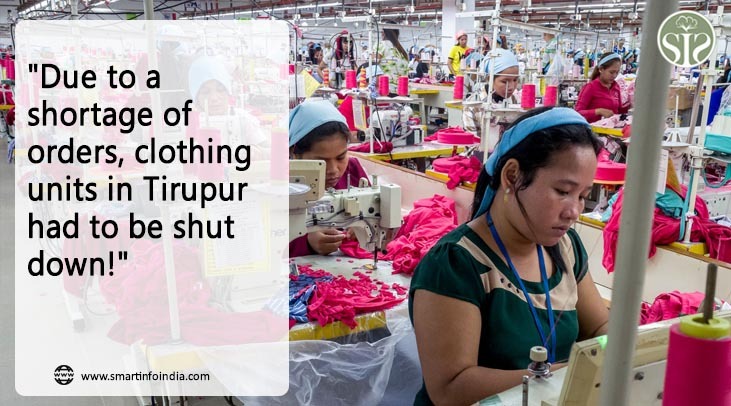
"Garment units in Tiruppur had to be closed due to lack of orders!"

"Garment units in Tiruppur had to be closed due to lack of orders!"President of the South India Hosiery Manufacturers Association, A.C. Easwaran urged the Center to check garment imports from Bangladesh and ban cotton exports when the new cotton season starts from October 1.According to the South India Hosiery Manufacturers Association, about 40% of Tiruppur hosiery manufacturing units supplying the domestic market have shut down due to lack of orders.In the memorandum given to the central government, the president of the association, A.C. Easwaran said several units in Tiruppur are shutting down production due to a drop in orders. The value of clothing imports from Bangladesh has increased 15 times in the last six years. In 2016-2017, apparel worth ₹288 crore was imported and in 2022-2023, it was around ₹4,500 crore. When India signed a free trade agreement with Bangladesh in 2011, there was a 12% duty on imports from Bangladesh. However, there was no duty now and there were unconfirmed reports that goods from China enter India through Bangladesh. In Bangladesh, the textile industry was supported by the government with subsidies. Tirupur's industries were unable to compete with imports from Bangladesh as the cost of production here was high, he said.Mr Easwaran urged the Center to check apparel imports from Bangladesh and ban cotton exports when the new cotton season begins on October 1. He said, only surplus cotton should be allowed for export so that the prices of cotton and yarn remain stable. The domestic textile and apparel industry was expected to consume about 300 lakh bales of cotton. If cotton prices fall below the minimum support price, the Cotton Corporation of India should take steps to buy cotton from farmers. He said that the government should monitor the sale of cotton by the corporation to the industry.

Tamil Nadu: Farmers in Karaikal say pest attack on cotton crop is affecting yield and quality.

Tamil Nadu: Farmers in Karaikal say pest attack on cotton crop is affecting yield and quality.Pest attack on the cotton crop as a result of summer rains has affected the production and quality of the product this year, cotton farmers in Karaikal said, and demanded that the Puducherry government expedite insurance for yield loss. Pest attacks have added to the woes of farmers due to poor prices for private procurement of cotton.“Sucking pests like mealybugs (‘maavu poochi’) and aphids (‘aswini poochi’) have affected the quantity and quality of our produce. The fall in demand has already affected prices, and with the decline in quality Because prices have come down to Rs 50 per kg. We request to expedite insurance to cover our losses,'' said farmer-representative BG Somu. According to the Puducherry agriculture department, this year Karaikal has around Cotton was cultivated on 1,200 hectares, double that of last year.A surplus in supply led to a reduction in demand, as the average selling price fell from Rs 90 to Rs 65.Due to unseasonal rains, the crops got attacked by pests during the tillering period. Noting that the pest is not uncommon this year, agriculture department officials assured that cotton was covered under the crop insurance scheme. A senior agriculture department official said, "We are regularly giving expert recommendations for pest control to farmers. Crop labor costs have gone up for farmers, while procurement rates have come down. This has resulted in loss of their profits." has increased."Representatives of Karaikal District Delta Farmers Welfare Association met Collector A Kulothungan on Thursday and urged him to provide insurance for the lost produce. “Crop insurance is pending for the past few years. The loan waiver announced by the government is yet to materialize, and pending old loans have put cultivation of the upcoming crop in question and made our cotton cultivation unviable We request the Puducherry government to settle the old loans and help us take new loans," said P Rajendhiran, president of the association.

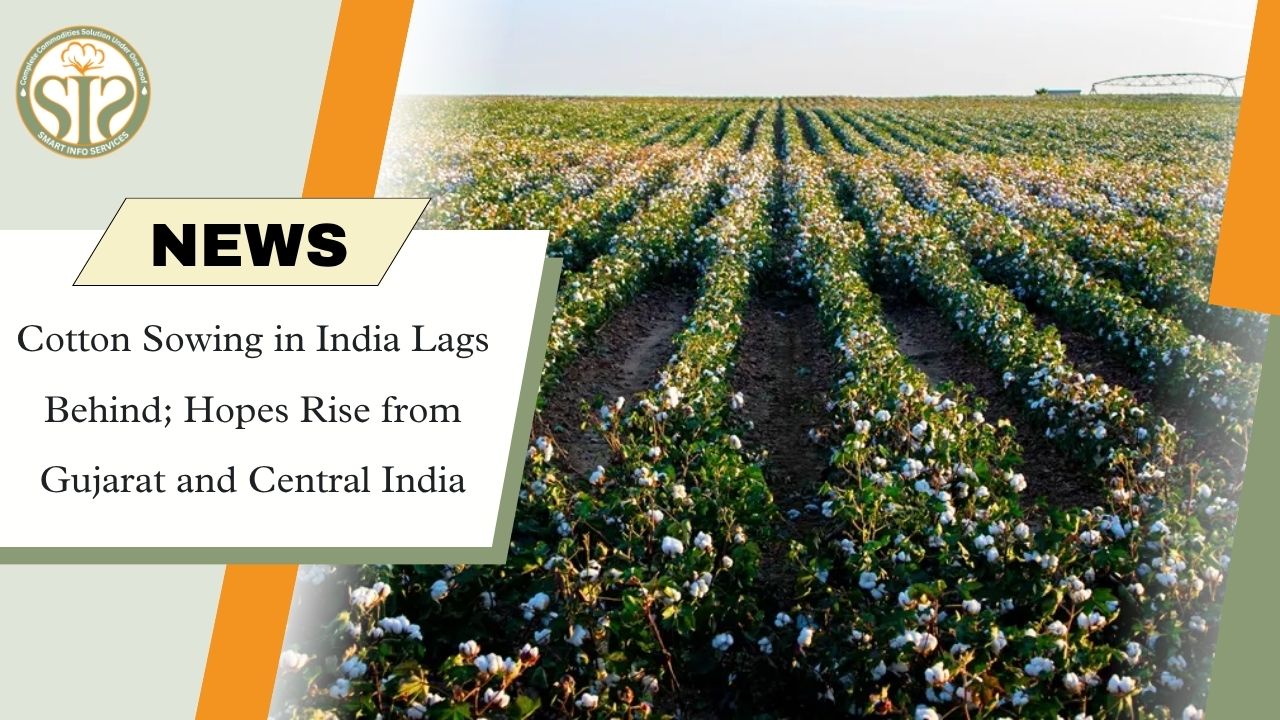
"Sowing of cotton in Gujarat is the highest in 9 years, more than 26 lakh hectares!"

"Sowing of cotton in Gujarat is the highest in 9 years, more than 26 lakh hectares!"Cotton sowing in Gujarat has broken the record of last eight years and farmers have sown the fiber crop in 26.64 lakh hectare (LH) so far this kharif season. This comes at a time when other major cotton growing states are showing a declining trend.Data released by the state agriculture directorate showed that till July 31, farmers in Gujarat, India's largest cotton producer, have completed cotton sowing in 26,64,565 hectares (ha). While this is the highest sowing area since 2015-16, when farmers sowed cotton in 27.21 lakh hectares, it is also the third highest sowing area for cotton in Gujarat in the last decade.In 2014-15, Gujarat recorded 28.83 lakh hours of cotton sowing, followed by 27.21 lakh hours in 2015-16. In fact, cotton sowing in Gujarat has crossed the 26 lakh hectare mark for the first time since 2019-20.The cotton acreage of 26.64 lakh hours is much higher than the 25.29 lakh hours recorded during kharif season of 2022-23 and 1.6 lakh hours more than the corresponding figure of last year. Overall, this is about 13 per cent higher than the cotton acreage of 23.60 lakh haunches in the last three years, the data shows.Meanwhile, according to the central government data, cotton acreage in the country stood at 116.75 lakh hours, which is 1.16 per cent lower than 117.91 lakh hours recorded in the same period last year.Apart from Gujarat, Rajasthan, Madhya Pradesh and Haryana have registered an increase in cotton sowing area by 1.38 lakh hours, 0.44 lakh hours and 0.20 lakh hours respectively. However, Karnataka, Telangana, Punjab and Maharashtra registered a decline of 2.33 lakh hours, 1.21 lakh hours, 0.84 lakh hours and 0.33 lakh hours, respectively.The acreage of Gujarat is second only to Maharashtra at 40.58 lakh per hour. Till 28 July, sowing in Telangana was 16.48 lakh hours and the third highest in the country. Cotton sowing has been recorded in Rajasthan, Haryana, Madhya Pradesh and Karnataka at 7.28 lakh hours, 6.65 lakh hours, 6.30 lakh hours and 5.06 lakh hours respectively.Within Gujarat, Surendranagar has emerged as the largest cotton district with farmers sowing the crop in 3.85 lakh hours. It is followed by Amreli (3.65 lakh hours), Bhavnagar (2.59 lakh hours), Rajkot (2.44 lakh hours) and Morbi (2.19 lakh hours).Overall, the 11 districts of Saurashtra region have 19.03 lakh hectare cotton sowing area, which is more than 71 per cent of the state's total sowing area of 26.64 lakh hectare. As per the data, cotton has been sown for 2.92 lakh hours in eight districts of Central Gujarat, 2.32 lakh hours in six districts of North Gujarat, 1.65 lakh hours in seven districts of South Gujarat and 0.70 lakh hours in Kutch.Admitting that cotton prices are also a factor, Bhupat Metalia, executive committee member of the Gujarat Spinners Association, said: “Cotton prices were set to skyrocket in 2021-22. But that was an isolated incident and prices have stabilized at around Rs 8,000 per quintal in 2022-23, which is higher and more realistic than 2020-21."About a month ago, China resumed import of cotton yarn from India and this is likely to provide relief to cotton prices in India," he added.Metalia, who is also a cooperative leader, said that although groundnut can bring higher returns in absolute terms, sharecroppers hailing from tribal areas of Gujarat, Madhya Pradesh and Maharashtra complain about the laborious practice of harvesting groundnut and the land The owners agree to enter into contracts with the farmers. only if the latter would allow them to grow cotton. That is why the area under cotton is increasing, he said.

Related News

Youtube Videos

आज कपास बाजार में कहीं तेजी, कहीं गिरावट 🔥 आवक 98,000 गांठ | 24 Nov 2026
आज कपास बाजार में कहीं तेजी, कहीं गिरावट 🔥 आवक 98,000 गांठ...

मध्य प्रदेश में कपास फसल भरपूर! 😱 पर मिलें सुस्त? | जनवरी से 11% ड्यूटी लगेगी? 🔥Podcast
मध्य प्रदेश में कपास फसल भरपूर! 😱 पर मिलें सुस्त? | जनवरी स...
CCI के पास 3-4 लाख गांठ कपास बचने का अनुमान! 😱 बाजार पर कितना होगा असर? | 21 Nov 2026
CCI के पास 3-4 लाख गांठ कपास बचने का अनुमान! 😱 बाजार पर कित...
Application Download
Whatsapp Contact