Recent News

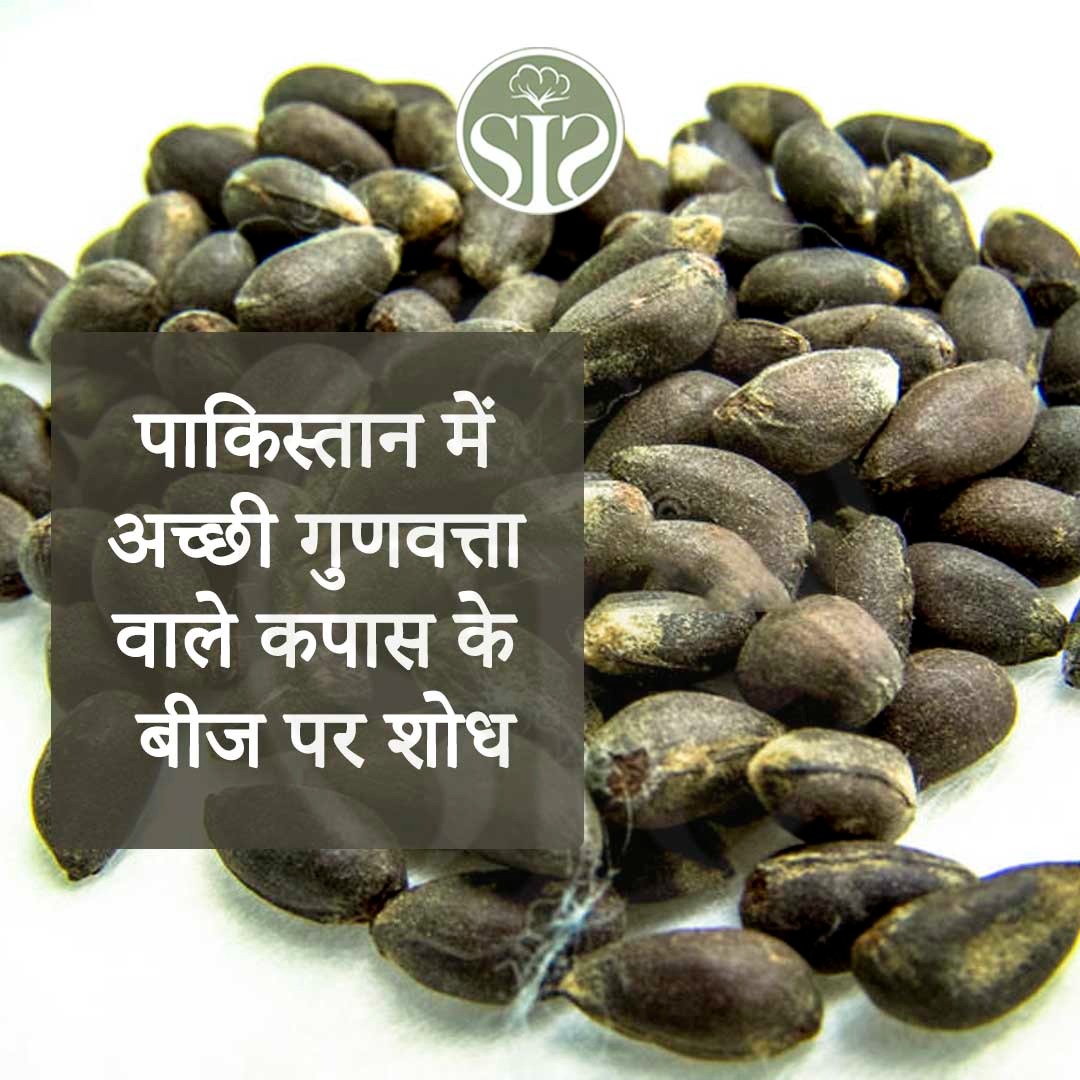
Research on good quality cotton seed in Pakistan

Research on good quality cotton seed in Pakistan Agriculture experts in Pakistan have identified the shortage of certified cotton seeds in Sindh and the sale of substandard seeds by private companies as the main reasons for losses related to the cotton crop, and have called for a dialogue between institutions to produce good quality cotton seeds. Cooperation is said to be indispensable. Under the aegis of the Seed Production and Development Center (SPDC), the Vice-Chancellor of Sindh Agricultural University (SAU) inaugurated an experimental field for the production and expansion of cotton varieties, for the development of which an agreement has been signed with United Bank Limited (UBL). The agreement was signed. Speaking at the inaugural function, SAU Vice-Chancellor Dr. Fateh Marri said that cotton was the crop that was most affected by the recent floods, which caused billions of rupees in losses to farmers in Sindh. Farmers are facing shortage of certified cotton seeds during the current season.He said that to tackle the problem, SAU in collaboration with UBL is doing research on certified cotton and wheat seeds. About 80 percent of the cotton seed requirement in the province is being met by private companies, most of which are unregistered companies, that buy cotton seed from cottonseed factories and sell it without processing, causing irreparable loss to cotton farmers.Dr. Fateh Marri said that his university has developed a new variety of cotton named SAU-1, which is in the registration stage and research work is going on in collaboration with UBL to meet the shortage of quality certified cotton and wheat seeds. Used to be.SPDC Director Prof. Zahoor Ahmad Soomro said that more productive and disease-resistant seeds will be produced through the research sector, after which the farmers of the state will be able to get rid of substandard seeds.Renowned agricultural breeder Karam Khan Kaleri said that SAU has taken important steps in the field of wheat and cottonseed. Institutions will have to make joint efforts to reduce the agrarian crisis, especially with regard to seeds.Dr. Shahnawaz Marri, coordinator of the project, said that apart from experts, university graduates are also involved in the research work. By the end of the project, they will emerge as a trained force for propagation of new seeds.👇🏻👇🏻👇🏻👇🏻https://smartinfoindia.com/hi/news-details-hindi/Evening-dollor-against-reupee-closing-market-nifty-sensex

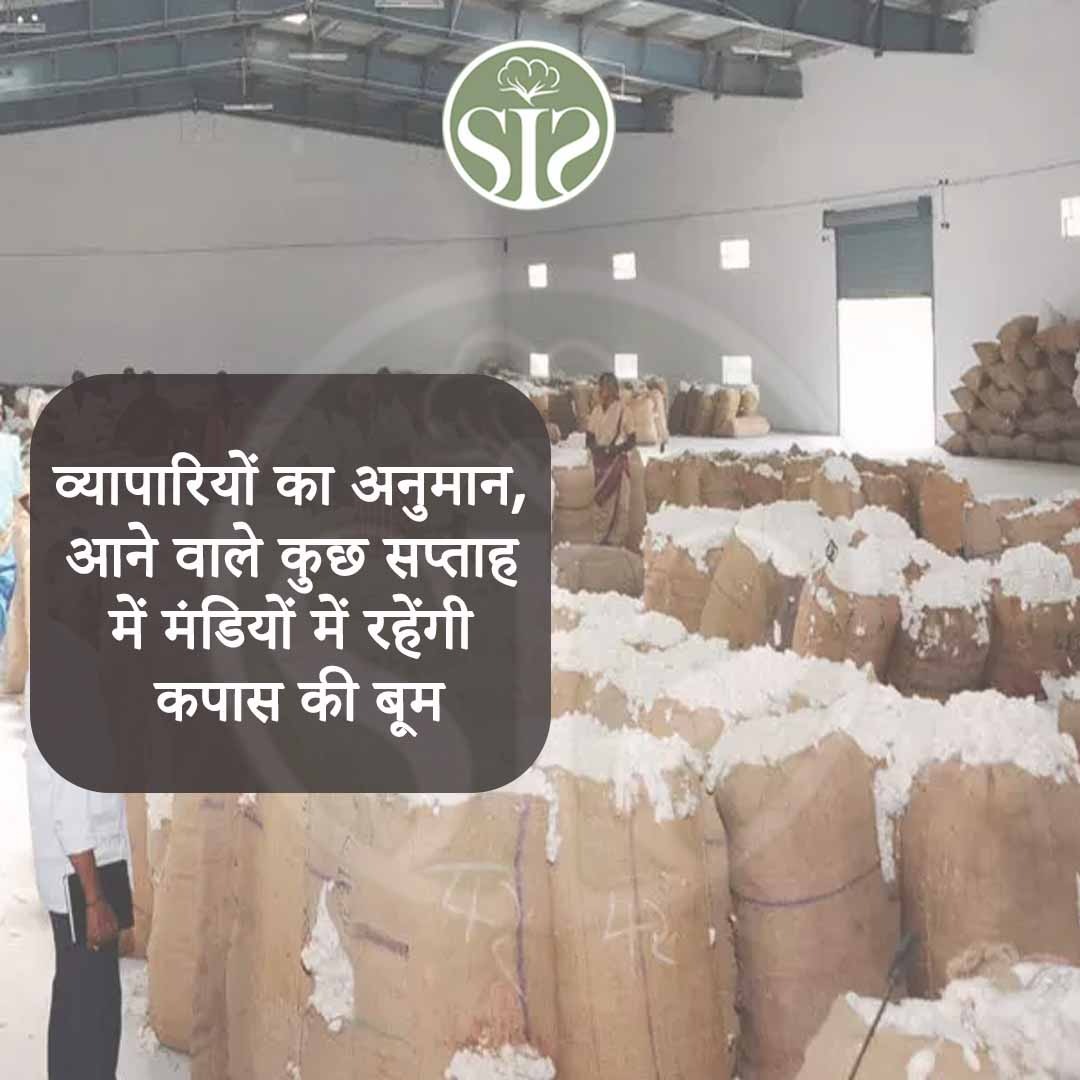
Traders estimate, there will be cotton boom in the mandis in the coming few weeks

Traders estimate, there will be cotton boom in the mandis in the coming few weeksTraders in Maharashtra estimate that farmers will bring cotton in bulk in the next two to three weeks. The signs of farmers running out of cotton are now visible. Farmers who are expecting a rise in prices but cannot wait much longer are selling cotton. The price in Amravati market committee is Rs 8050 to 8100 per quintal.Cotton prices were under pressure in the month of March. Farmers who had no option but to sell cotton, sold it till March. But knowing that the farmers could not wait much longer, the traders kept the prices down in the market.Meanwhile, farmers increased sales as they felt prices were not rising. But when it was realized that farmers with storage capacity would not sell cotton unless the price was increased, the price was raised. Still, it is estimated that 20 to 25 percent cotton is left with the farmers.Three crore bales have been produced in the country. According to this, now 60 lakh bales of cotton are left with the farmers. If the farmers of Maharashtra are to be believed, they have 20 per cent stock left. It is estimated that 775 lakh quintals of cotton is left for 15 lakh bales. Needy farmers will sell cotton for Kharif. Big farmers will keep stock in anticipation of price rise.Cotton arrivals marginally increased in the market last week due to marginal correction in prices. Now traders are estimating how much cotton is left with the farmers. The prospects of a price rise have turned a bit hazy. Cotton season is in its last leg, so the market remains volatile at this time. But the price has closed at an average of eight thousand rupees.The Cotton Association of India has predicted that the state will produce 78 lakh bales of cotton this year. Last month's production was estimated at 80 lakh bales. It has subsided now.The average price of cotton in March and April last year was Rs 9,300 per quintal. At some places this rate went up to 10,000. Cotton is yet to get that price this year. This is what farmers were expecting this year, but the fluctuating prices have started confusing them.

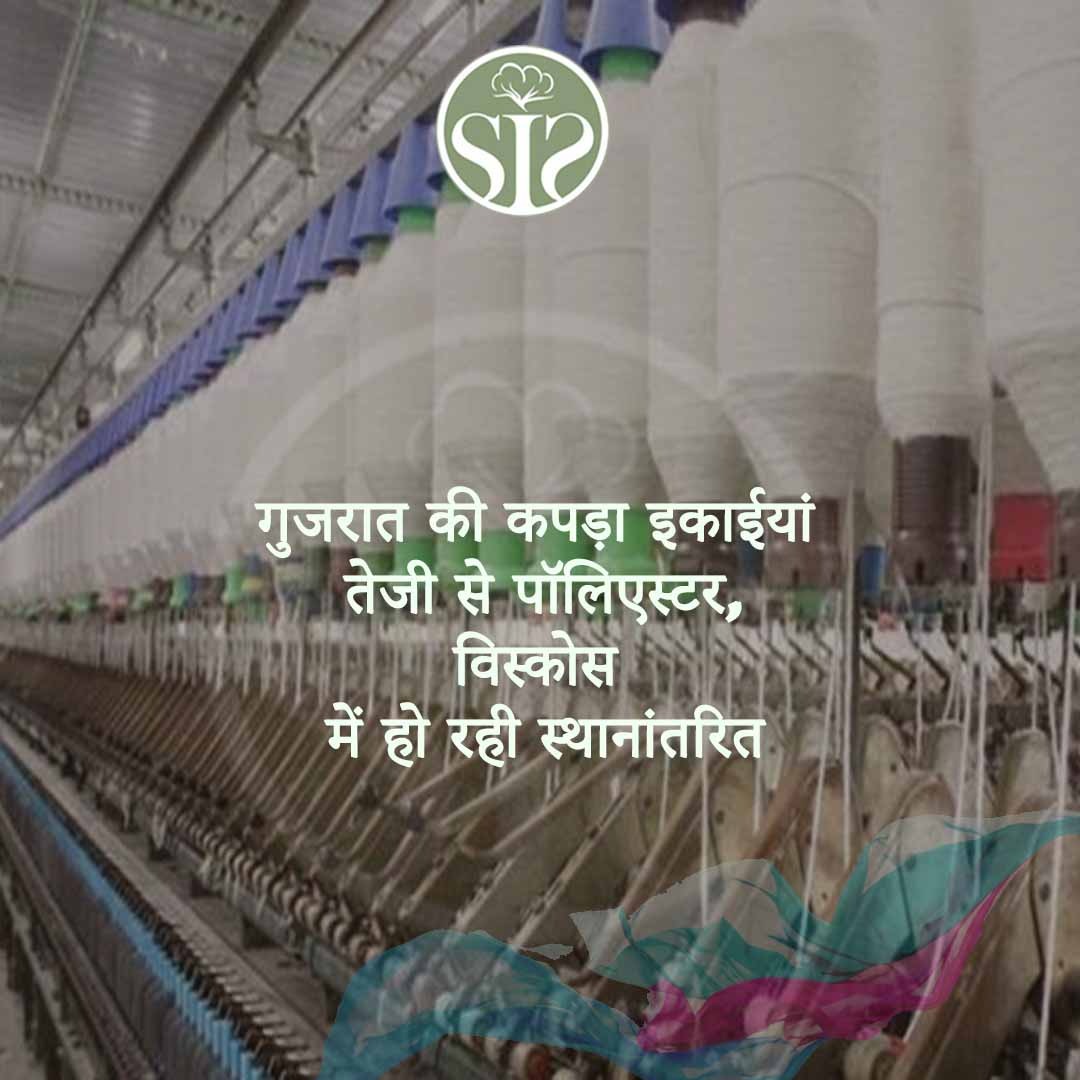
Textile units in Gujarat rapidly shifting to polyester, viscose

Textile units in Gujarat rapidly shifting to polyester, viscoseLast year, the textile sector saw a mix in cotton and now many players in the value chain have moved to polyester and viscose. High cotton prices have hurt the textile industry so much that industrialists are looking for alternative avenues for business. Many garment manufacturers in Ahmedabad are shifting towards polyester and viscose fabrics. Market sources say that cotton textile units need to make only minor changes to start manufacturing polyester and viscose.more volatility in pricesAccording to industry estimates, less than 5% of textile companies that were solely in cotton have adopted the man-made fiber. Last year, cotton prices had touched a record high of Rs 1.10 lakh per candy (356 kg). This year the prices have come down to an average of Rs 60,000 per candy. Experts say, the recent estimates by Cotton Association of India (CAI) indicate lower crop production and hence there will be more volatility in cotton prices.no other optionDhruv Patel, Managing Director, Diamond Textile Mills Pvt Ltd said, “For over five decades we had a cotton textile business with integrated spinning, weaving and processing facilities. For the last nine months, we have completely shifted to polyester yarn and viscose. We get fiber, manufacture yarn and weave it into fabric. We are also supplying yarn to manufacturers in Surat. Due to high cotton prices, we had no option but to turn to polyester and viscose. We have not completely exited the cotton business, but feel that the time is not right for cotton and hence we have decided to diversify.customer demandP R Kankaria, Chairman, Kankaria Textile Industries Pvt Ltd said, “Our core business is cotton fabric processing but the high cotton prices last year taught us many lessons. A section of our customers demand polyester and viscose, which are cheaper. We started sourcing polyester from Surat and viscose from South India. Polyester, viscose and rayon are part of our portfolio this year and we also managed to bag export orders from China. We have started printing shirting fabric, dress material for ladies and home textile in viscose. “We buy gray fabric from Surat, which is not a huge cost, and process it here.”Blend of polyester up to 65%"Gujarat is a hub for cotton textiles, but last year more than 5% of its cotton capacity has been replaced by polyester and viscose," said Saurin Parikh, president of the Spinners' Association Gujarat. Akash Sharma, director, Aakash Fashion Pvt Ltd, said, “We started polyester and viscose printing three years back. We used to be into 100% cotton, but blending has started of late. Blending up to 65% polyester as it is at least 25% cheaper than pure cotton. Earlier we used to print 1.2 million meters of cotton shirts every month, however, the capacity utilization has come down due to higher cotton prices. Now we print seven lakh meters of blended shirting fabric, whereas our pure cotton shirting fabric volume is only one lakh meters in a month.”

Confusion over Indian cotton production, stakeholders estimate total production at 337.23 lakh bales

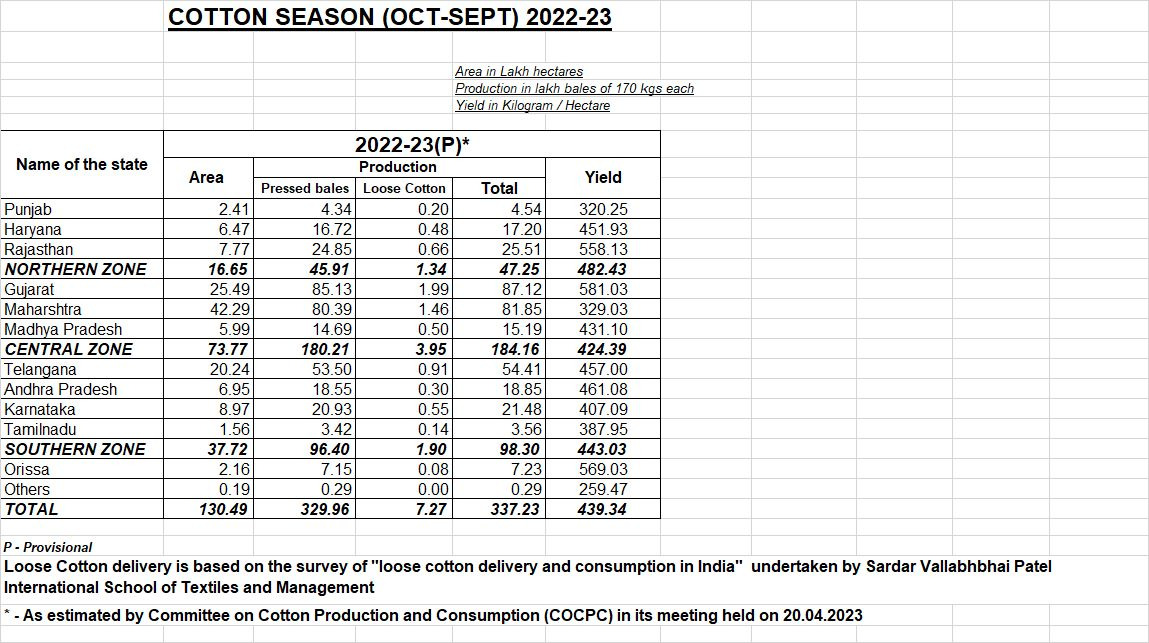
Confusion over Indian cotton production, stakeholders estimate total production at 337.23 lakh bales The Committee on Cotton Production and Consumption (CCPC), a government-constituted body comprising all stakeholders of the textile industry including farmers, has estimated cotton production for the current season till September at 337.23 lakh bales (170 kg each). The projection of the CCPC headed by the Central Textiles Commissioner on Thursday is against the estimated 341.91 lakh bales in November last year.“There are various estimates of cotton crop rounding, but the CCPC estimate reflects the reality,” said a business source in a multinational company (MNC). As per CCPC estimates, the area under cotton this season is over 130.49 lakh hectare (LH) and the yield is estimated at 439.34 kg/ha. In the last season, cotton was cultivated in 119.10 lakh hectares and the productivity was 445 kg/ha.Production in the northern region including Punjab, Haryana and Ganganagar areas of Rajasthan is estimated at 47.25 lakh bales (44.44 lakh bales a year ago). The production in the central region of Maharashtra, Gujarat and Madhya Pradesh is estimated at 184.16 lakh bales (160.20 lakh bales). The southern region formed by Telangana, Tamil Nadu, Andhra Pradesh and Karnataka is estimated to produce 98.30 lakh bales (100.85 lakh bales). 7.52 lakh bales (6.54 lakh bales) are expected to arrive from other parts of the country.The problem with crop estimates this year is that people have gone by the earlier trend of market arrivals. We are passing through an unusual year when farmers have withheld their produce. He had never done this before in Karnataka and Maharashtra.                        According to the Southern India Mills Association (SIMA), farmers and traders have withheld cotton this year due to a shortage in the availability of the raw material. This year, farmers have not been able to get more than Rs 9,000 per quintal, though they are above the minimum support price of Rs 6,080. Currently, the model price (the rate at which most of the trades take place) is hovering around ₹8,000.According to agriculture ministry data, cotton arrivals in the country during March 1 to April 21 stood at 33.72 lakh bales, as against 22.45 lakh bales in the same period a year ago. “If the cotton production forecasting agencies were allowed to control market conditions, we would not have had such confusion,” said an expert in the textile industry in the southern region. CAI's forecast of a 14-year low crop has pushed cotton futures on MCX up to ₹64,020 per candy (356 kg) for delivery in June. The spot price of Shankar-6 cotton, a benchmark for exports, is currently quoted at ₹63,000 per candy. The price has gained more than ₹2,500 this week.In the global market, cotton for May delivery was trading at 79.05 cents per pound (Rs 51,350 per candy) on the Intercontinental Exchange in New York. This has resulted in Indian cotton enjoying a premium and in turn hurting its export prospects. The US Department of Agriculture has forecast India's cotton production to fall to a 19-year low this year.
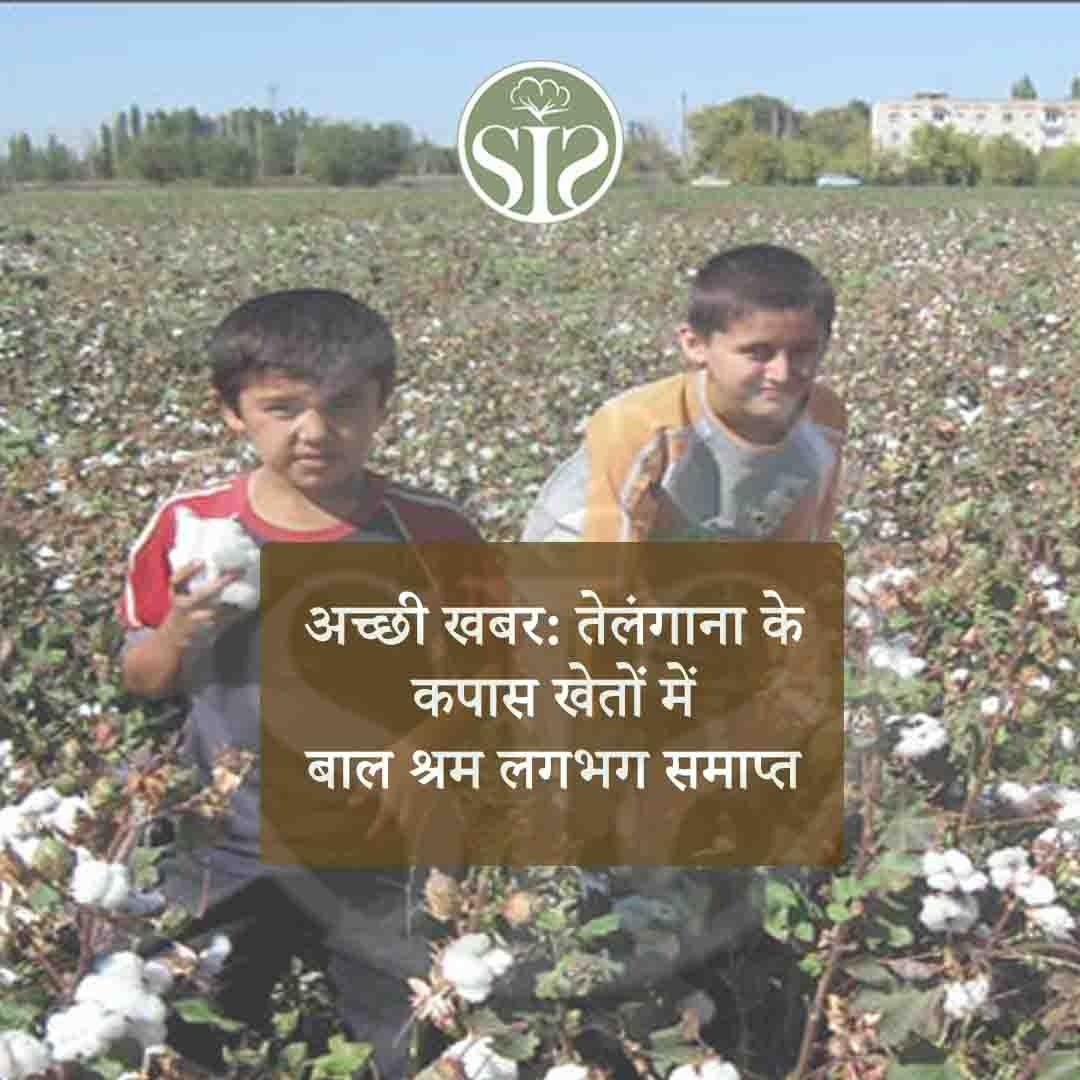
Good news: child labor almost eliminated in Telangana's cotton fields

Good news: child labor almost eliminated in Telangana's cotton fieldsAfter three years of persistent advocacy-cum-awareness campaigns for child labor eradication, jointly organized by the International Labor Organization (ILO)'s 'Fundamental Principles and Rights at Work in Cotton Supply Chain' project and Telangana, the results showed That the involvement of child labor in this supply chain has disappeared. According to state government officials, several reports have also indicated positive results of invisible child labor in the cotton fields.Labor Additional Commissioner E Gangadhar said the project was implemented in the four major cotton districts of Nalgonda, Warangal Rural, Adilabad and Adilabad. “I can confirm that we almost do not see child labor in cotton fields in these regions. Maharashtra, Gujarat, Haryana, Karnataka, Rajasthan, Andhra Pradesh, Madhya Pradesh, Punjab and Telangana are the major cotton producing states and Telangana alone is the country It accounts for about 15% of the total cotton growing area of India.According to data from the Periodic Labor Force Survey (PLFS) 2018-19, there are mainly three types of labor in cotton cultivation in Telangana – own cultivation, family labor and casual labor (which constitute 46 per cent of the state's majority workforce). In addition, the proportion of women under 18 in casual labor is higher than that of men.According to studies, children under the age of 18 working in cotton fields cite a variety of reasons, with a majority (83.9 percent) citing the need to supplement family income, followed by fewer farmers. Age is a priority for labor. Lack of supervision and absenteeism by school teachers for children working in cotton fields has also been cited as a reason. Other important reasons for teenagers below 18 working in cotton fields include advances taken from cotton farmers by elders in the family.👇🏻👇🏻👇🏻👇🏻https://smartinfoindia.com/hi/news-details-hindi/Vietnam%27s-exports-march-economy-projected-world-trade-organization-epidemic

Vietnam's exports fell 14.8% in March

Vietnam's exports fell 14.8% in MarchIn 2022, Vietnam's economy is projected to grow by 8.02% year-on-year, which exceeded expectations. But by early 2023, exports have shrunk, slowing economic growth. Vietnam is one of the world's largest exporters of clothing, footwear and furniture, but in the first quarter of 2023, Vietnam is facing "volatile and complex developments in the world economy".The deceleration in GDP growth was mainly due to a decrease in consumer demand. Overseas sales decreased 14.8% year-on-year in March, and exports fell 11.9% in the first quarter, a sharp turnaround from last year. In 2022, Vietnam's exports of goods and services are expected to be US$384.75 billion. Among them, merchandise exports were US$371.85 billion, up 10.6% over the previous year. Services exports were around US$12.9 billion, a year-on-year increase of 145.2%.The World Trade Organization predicts that global merchandise trade will grow by 1.7% in 2023. This growth is lower than the 2.7% growth rate expected in 2022 and below the average growth rate of 2.6% over the past 12 years. However, this figure was higher than the 1.0% forecast made in October last year.A key factor is the easing of China's epidemic control policy, which is expected to release consumer demand and in turn boost international trade. In the latest report, the WTO's forecasts for both trade and GDP growth are lower than their averages over the past 12 years (2.6% and 2.7%, respectively).👇🏻👇🏻👇🏻👇🏻https://smartinfoindia.com/hi/news-details-hindi/Closed-sensex-market-strengthened-dollor-rupee-boom-nifty

Despite negativity, global textile trade hopes up: ITMF

Despite negativity, global textile trade hopes up: ITMFThe global textile industry is facing high production costs and low demand from June 2022. However, according to the 19th ITMF GTIS, the expectations of companies regarding the business environment in the six months from November 2022 are improving. Nevertheless, weak demand and inflation remain major concerns in the industry.bad situationGlobal trade conditions in the textile industry have been negative since June 2022 and are still getting worse. Companies across all segments across the world are facing a 'perfect storm' scenario with high production costs and relatively low demand. At the same time, according to the International Textile Manufacturers Federation (ITMF), companies' expectations for the business environment in six months from November 2022 are improving.'Weak demand' a major concernThere has also been a steady decline in order numbers since November 2021, mostly in line with the business situation trend. The rate of decline has however slowed down in March 2023 due to weak demand. 'Weak demand' in the global textile value chain from July 2022 has indeed been rated as a major concern and has grown in importance in the last survey. Inflation remains another major concern around the world.No orders canceled since 4 monthsThirty-three percent of 19th GTIS respondents did not cancel an order during the previous four months (down from 58 percent last January). The phenomenon is stronger in South America and affects spinners and weavers relatively more. Sixty-eight percent of respondents also rated inventory levels as average. The number of companies reporting high inventory levels is higher in Asia and Europe. Among segments, it is the highest for home textile producers.👇🏻👇🏻👇🏻👇🏻https://smartinfoindia.com/hi/news-details-hindi/Look-business-pakistan%27s-cotton-fiber-poyster-usman-naseem-market-sindh

Related News

Youtube Videos

साप्ताहिक कपास बाज़ार में गिरावट 😱 | नए सीजन 2026-27 की शुरुआत | Weekly Cotton Market 3 Oct 2026
साप्ताहिक कपास बाज़ार में गिरावट 😱 | नए सीजन 2026-27 की शुर...
Cotton Breaking 🔥 कॉटन, सीड, खल तीनों का भाव | जानिए आज का कपास बाज़ार | 1 October 2026
Cotton Breaking 🔥 कॉटन, सीड, खल तीनों का भाव | जानिए आज का...
रुई बाज़ार में गिरावट का रुख 😱 जानिए कपास भाव 🔥Cotton Market Rate Today 30 Sep 2026
रुई बाज़ार में गिरावट का रुख 😱 जानिए कपास भाव 🔥Cotton Mark...
Application Download
Whatsapp Contact