Recent News

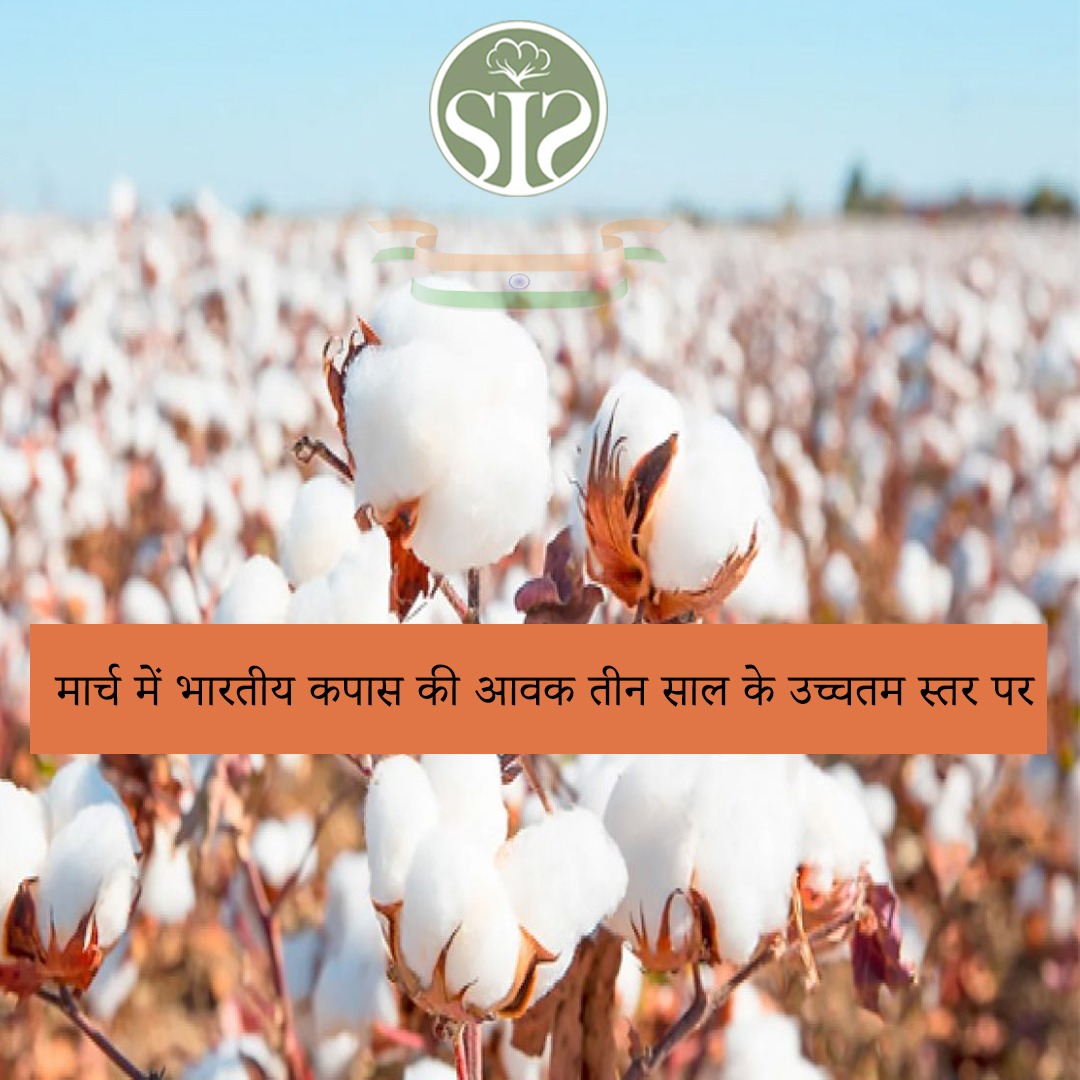
Indian cotton arrivals at three-year high in March

Indian cotton arrivals at three-year high in MarchCotton arrivals in India have started rising to a three-year high in March. Traders and industry leaders said natural fiber prices are likely to stabilize between Rs 60,000 and Rs 62,000 per candy (356 kg) in view of good quality of arrivals. Prabhu Dhamodharan, convener of the Indian Texpreneurs Federation (ITF), said, "We are seeing a steady increase in arrivals in all markets."Rising arrivals have left the market confused about the exact production of cotton this season (October 2022-September 2023). Cotton arrivals between March 1 and March 18 are at a three-year high of 2.43 lakh tonnes, according to data from Agmarknet, a unit of the agriculture ministry. Ramanuja Das Bubb, sourcing agent for multinational companies from Karnataka said “The arrivals are good and their quality is excellent. We are facing a peculiar situation this season as farmers have withdrawn their produce and are now ready to sell Are".Sanjay Gupta, MD & CEO, NCML said, “The arrivals have shown improvement in the last 15 days. However, all India arrivals (Oct-Mar'20) are 30 per cent lower than last season due to holding of stocks by farmers”. Anand Popat, a trader from Rajkot said, “The arrivals have increased as the prices have stabilized in the region of ₹60,000 per candy. But for rains, the arrival is between 1.6 lakh bales (170 kg each) and 1.8 lakh bales,” in cotton, yarn and cotton waste.Arrivals pick up Agmarknet data showed cotton arrivals rose to 77,498 tonnes last week from 49,573 tonnes a year ago and 30,334 tonnes in 2022. Last week, the Cotton Association of India (CAI) reduced the estimated cotton crop for the current season to 313 lakh bales from last season's 307.05 lakh bales. In its second advance estimate, the Center reduced its crop forecast to 337.23 lakh bales (311.18 lakh bales in the previous season) and the USDA estimated it at 313.76 lakh bales.Currently ginned (processed) cotton prices of Shankar-6 grade, the benchmark for exports, are ruling at ₹61,750 per candy in Gujarat. Cotton (raw cotton) is at Rs 7,900 per quintal as against the minimum support price of Rs 6,080 per quintal. In the global market, cotton futures for delivery in May on the Intercontinental Exchange (ICE), New York, was trading at 77.90 US cents per pound (₹50,900 per candy). Cotton for delivery in April closed at Rs 61,160 per candy on MCX.“In the last few weeks, cotton prices have stabilised. We expect this to continue till at least April 10,” said Das Bub. “Demand has stagnated due to global macroeconomic factors such as rising interest rates, volatile financial environment and recession fears. Cotton prices are trading lower in the range of 60,000-62,000," said Sanjay Gupta.“Spinning mills have started building up inventory, though prices have stabilized gradually, but low demand for yarn is almost affecting their procurement.” “Mills are still not convinced about higher inventories due to muted global demand signals for textile and apparel products. Dhamodharan said, we are only seeing pockets of recovery from some countries due to lack of their reserves.Sanjay Gupta said that ginners are facing the problem of disparity due to reduction in the prices of seed and oil cake. “Yarn sales are not promising, but demand for better quality yarn is allowing mills to run at good capacity. The arrivals are expected to increase in the coming weeks as there will be additional pressure on prices as farmers liquidate some part of their stocks. Most of the markets and buyers are still cautious about buying. ITF convenor said that the trend of increase in sugar demand is also not going as expected.As per production forecasts, 13 million bales may hit the market in the next 4-5 months. ITF's Dhamodharan said the current cotton season is expected to be quite long and "signs of weak demand may continue to keep a check on cotton prices".👇🏻👇🏻👇🏻👇🏻https://smartinfoindia.com/news-details-hindi/PAKISTAN-SLOW-TRADING-COTTON-MARKET-BEARISH-PUNJAB

If import duty is not removed, it will be difficult to run spinning mill after June: CAI President

If import duty is not removed, it will be difficult to run spinning mill after June: CAI President In its recently released report, CAI has once again reduced the estimate of cotton crop to 313 lakh bales. Important excerpts of CAI Chairman Atul Ganatraji's interview with a channel on reduction in crop estimate and current condition of cotton industry-Question- Is the reason for the reduction in cotton crop by CAI is the low yield of cotton? Are cotton yields a cause for concern?Answer- In yesterday's meeting, about 25 members from all the 10 cotton producing states participated in this meeting. The idea was that definitely the yield is the main factor in the reduction in the size of the crop. Since last 5 years our production and yield is going down. Also this year, another important factor is that 90% farmers are already in cotton. Have uprooted the plants and are not doing 3rd and 4th picking as the rate of cotton is very less at 7000-8000 as compared to last year's 12000-15000. This top picking (forward) cotton comes to around 3 million bales. And this 30 lakh bales will not be available this year also this reduction in our yield is a matter of concern for the entire textile industry.Question- Why is our cotton production falling?Answer- Our seed technology is very old, we have not changed the seed since 2003. Countries like America, Brazil and Australia are using new technology, so their yield is double than ours. We have recommended the government to change the technology otherwise our spinning industries will suffer. Our cotton consumption is increasing and in the last 15 months 2 million new spindles have been added in India. And in coming 7 months 8-10 lakh new spindles will be erected so our Indian consumption is very high and our production is decreasing year by year so it is very important to bring new seeds and new technology. Till now we could survive even with less crop as we had opening stock of cotton from 125 lakh bales and 75 lakh bales from 2020 (due to corona) but now our opening stock is negligible.Question- How is the situation of arrival and how much cotton is with the farmers?Answer- Till February 20, 1,55,000 bales have arrived in India. According to our crop, 313 lakh bales means, 50% has arrived and 50% is in the hands of the farmers. In North India 20-25% crop, in Central India 40-50% crop, in South India 30-40% crop is in the hands of farmers.Question- If farmers do not sell cotton, it will be carried forward to the next year, then in the CAI meeting next month, there will be further reduction in crop numbers?Ans- Actually it is very difficult to understand the mind of farmers last year farmers saw rate of cotton 12000 to 15,000 per quintal and this year the prices are very low at 7-7500 so big farmers can move their whole cotton higher Farmers can carry forward a minimum of 15 lakh bales for the next season and a maximum of 25 lakh bales for the next season for rate expectation. If this happens, there is a possibility of further reduction in the number (harvest) of CAI in the coming months. We are advising Indian mills to buy cotton.Question- How is the demand for spinning mills?Answer- Spinning mills are running at 95% average capacity in India and monthly consumption is at peak. The monthly consumption of cotton is 28-30 lakh bales. The demand from Indian mills is very good, mills are buying 1-1.10 lakh bales for daily consumption. cotton export is 10-15,000 per day now indian mills have no problem getting cotton but in month of april but in april when arrival will reduce then it may be difficult for spinning mills to cover cotton Lets do it. Since our consumption is high and production is low, the government should remove 11 per cent import duty on cotton. Indian spinning mills will have a tough time after June-July if the import duty is not removed. And we will see the repeat of last season 2022.

Barren fields, dwindling yields: Bt cotton betrays Madhya Pradesh farmers

Barren fields, dwindling yields: Bt cotton betrays Madhya Pradesh farmersPink bollworm incidence increased from 5.17 per cent to 73.82 per cent between 2010 and 2017 in Maharashtra, Gujarat and Madhya Pradesh. Adoption of Bt cotton rose to 81 percent in 2007 and 93 percent in 2011 as farmers thought pest-resistant varieties were their best bet. Unlike other crops, new seeds have to be bought from the market every time for the cultivation of GM varieties. ... All the claims made about Bt cotton have been proven wrong. As far as increase in yield is concerned, if you check the irrigation data, it will become clear that only production has not increased."At a time when the much-hyped Bt cotton crop is troubling farmers, the central government is slowly setting the stage for the rollout of genetically modified mustard. Last October, the Ministry of Environment, Forest and Climate Change approved field trials of Dhara Mustard Hybrid-11, developed by Deepak Pantal, former vice-chancellor of Delhi University. While the government argues that the genetically modified variety will increase mustard production and reduce the country's dependence on edible oil imports, anti-GMO activists are wary. In front of them is the poor performance of Bt cotton, the first genetically modified crop in the country.He has seen how claims of better yield guarantees and less need for pesticides and chemical fertilizers have blown away with the wind. Apparently, the only things Bt cotton farmers found were barren fields and increased input costs.Madhya Pradesh, which accounts for 18.69 lakh bales of cotton (5.47 lakh hectare) out of the total 352 lakh bales (in 1,18.81 lakh hectare) produced in the country. Khargone, Barwani, Khandwa and Burhanpur are the major cotton producing districts here.According to the statistics of the Farmers Welfare and Agriculture Development Department, cotton is grown in a total of 2,11,450 hectares in Khargone. Chhagan Chauhan (50), a resident of Mogargaon, has come to Khargone's cotton market to sell 2.6 quintals of cotton. This year has proved to be better for him. "Today, I got Rs 8,500 per quintal. This price is good for me," he says with a smile. Last year, incessant rains and pest attacks destroyed half of his crop. “Ideally, the 10 packets of Bt cotton seeds that I sprinkled in the field should have yielded me around 40 quintals of cotton. But I got only 16 kg. Thankfully, the pests spared me this time.Shyam (24), a resident of Temla, has been helping his father Anil Dhangar (55) cultivate Bt cotton on seven acres for the last two years. When asked about the challenges they face, Anil says, “Getting a good price for the produce and deworming are our biggest concerns.” He says, “Look, the pink colored moth (Pectinophora gossypiella) has made a home here by damaging the seed kernel. Now, this cotton boll will not become a flower to bear fruit. The only thing left is to remove it. be given to the field as soon as possible," he says, adding that the pest attack started late this year compared to last year, when about 40 per cent of the crop was affected.There are four types of caterpillars found in cotton – pink bollworm, spotted bollworm, American bollworm and tobacco cutworm. Among them, attacks of pink and American bollworms are common in India. A 2018 survey conducted by the Central Institute of Cotton Research found that pink bollworm outbreaks had increased from 5.17 per cent to 73.82 per cent between 2010 and 2017 in Maharashtra, Gujarat and Madhya Pradesh.Ironically, the government allowed commercial cultivation of the first generation Bt cotton (Bt-1 cotton) in 2002 to prevent pest attacks, while its second generation (Bt-II) was introduced in 2006 using two Bt (Bacillus thuringiensis) was launched in combination. ) protein (Cry1Ac+Cry2Ab) with promise for specifically targeting the pink bollworm. Adoption of Bt cotton rose to 81 percent in 2007 and 93 percent in 2011 as farmers thought pest-resistant varieties were their best bet.

Bad condition of cotton in Punjab, crop sales 25 percent less than last year

Bad condition of cotton in Punjab, crop sales 25 percent less than last year  According to ICAL, the collective production of cotton in the three states of North India is estimated at 42.09 lakh bales as compared to 48.37 lakh bales in the previous year.In a major setback to the Punjab government's efforts to diversify farmers, cotton production in the state is estimated to be at its lowest in years this year. As of March 9, the state's arrival stood at 28.89 lakh quintals, against last year's arrival of only 7 lakh quintals, according to data from the Punjab State Agricultural Marketing Board. According to the sales of the cotton crop recorded by PSAMB, it is less than a quarter as of March 9 compared to the previous year.effect of pest attackBesides PSAMB, the revised estimates by cotton trade body Indian Cotton Association Limited (ICAL) about the arrival of the crop in the state mandis are also highly dismal. The revised estimates put the arrival of the crop at around 2.50 lakh bales (1 bale = 170 kg) as against last year's arrival of 7.20 lakh bales. Frequent pest attack in the last two years is said to be behind the very low production of the crop. In the current season, apart from pest attack, non-availability of canal water initially in the sowing season and then incessant rains are said to be the reasons for the poor performance of the crop. It is being said that looking at the production trends, farmers have lost confidence in the crop and thus, not much change in crop area is expected in the upcoming sowing season.Cotton production less in North IndiaHowever, the crop is still fetching Rs 8,000 per quintal against the MSP of Rs 6,280 per quintal for the 27.5-28.5 mm long staple. Like Punjab, production in neighboring Haryana is also low and according to ICAL's revised estimates, arrivals in mandis are estimated at 1.2 million bales from 1.5 million bales last year. However, cotton production in Rajasthan is expected to increase to 27.60 lakh bales from last year's 26.12 lakh bales. According to ICAL, the collective production of cotton in the three states of North India is estimated at 42.09 lakh bales as compared to 48.37 lakh bales in the previous year.very little inputPunjab's cotton coordinator Rajneesh Goyal said, "The arrival of cotton is very less as compared to last year. As per the trends, the total arrivals in the mandis have been much less as compared to previous years. As per the arrivals recorded by ICAL till February 28, Punjab has received 1.69 lakh bales, while Haryana has recorded 6.86 lakh bales and Rajasthan 22.53 lakh bales. Till February 28, a total of 31.08 lakh bales have arrived in the three states.

Lower prices may push India's palm oil imports to 4-year high: Industry official

Lower prices may push India's palm oil imports to 4-year high: Industry officialIndia's palm oil imports could rise 16% to a four-year high of 9.17 million tonnes in 2022/23, a senior industry official told Reuters on Tuesday, as consumption looks to bounce back after two years of contraction. ready for.Higher buying by the world's biggest importer of vegetable oils could provide further support to palm oil futures, which were trading near their highest levels in four months.Sudhakar Desai, president of the Indian Vegetable Oil Producers Association, said, “Consumption has declined for two consecutive years due to the pandemic. This year, it will decline by around 5% as restrictions have been eased and prices have fallen. "He said consumption growth would be met by higher imports of palm oil, which is trading at a discount to rivals soya oil and sunflower oil.Traders estimate India's palm oil imports in the first four months of the 2022/23 marketing year, which began on November 1, jumped 74% from a year earlier to 3.67 million tonnes.India mainly buys palm oil from Indonesia, Malaysia and Thailand. It imports soybean and sunflower oil from Argentina, Brazil, Russia and Ukraine.Desai said the country's total vegetable oil imports are likely to increase to 14.38 million tonnes in the current year from 14.07 million tonnes a year ago.Soybean oil imports could fall to 3.16 million tonnes from 4.05 million tonnes, while sunflower oil imports could rise to 2 million tonnes from 1.93 million tonnes, he said.

Farmers anger erupted on Maharashtra leaders, expressed dissatisfaction over prices of onion and cotton

Angry farmers, nervous leadersFarmers anger erupted on Maharashtra leaders, expressed dissatisfaction over prices of onion and cottonResentment is growing among onion and cotton growers in the state against the central government's failure to help farmers distressed by falling prices. The BJP ministers had to face this discontent in the form of farmers' anger.On Sunday, angry farmers threw onions at the vehicle of Maharashtra Deputy Chief Minister Devendra Fadnavis. Union Minister of State and BJP Lok Sabha MP Bharti Pawar and state Agriculture Minister Abdul Sattar also faced the wrath of the farmers.In a video that has gone viral on social media, angry farmers can be seen surrounding Bharti Pawar while the minister tries to pacify their anger by saying that the Center is procuring onions through NAFED (National Agricultural Cooperative Marketing Federation of India) Is and is making sure. That there is no restriction on the export of onions as well. He said that onion prices are low in the international market and hence the prices have come down in the domestic market. Apart from this, the arrival of onion in the market is very high.Maharashtra's Agriculture Minister Abdul Sattar also faced the wrath of farmers at an agricultural exhibition in Amravati. The farmers told him that the prices of onions have gone down even below the prices of old newspapers. Farmers argue that last year they sold a quintal of cotton for Rs 14,000, but currently they get only Rs 8,000 per quintal. “We are not even able to recover the input cost. If the government fails to help us, we are left with no option but to commit suicide.However, in the video the farmers can be seen blaming the Centre's wrong export-import policies for their plight. The angry farmers argued that the Center keeps on changing its policies continuously and the farmers are facing the brunt of it."The Center should compensate us by buying our onions at the international market rate and also give us all possible help," the farmers insisted. Meanwhile, Devendra Fadnavis faced the wrath of farmers in Amravati, where the latter threw onions at his vehicle before the police swung into action and detained the protesters.

Related News

Youtube Videos

आज देशभर में रुई के भाव 😱 | नए कपास सीजन का ताज़ा अपडेट | Cotton Market Rate Today 5 Oct 2026
आज देशभर में रुई के भाव 😱 | नए कपास सीजन का ताज़ा अपडेट | C...
साप्ताहिक कपास बाज़ार में गिरावट 😱 | नए सीजन 2026-27 की शुरुआत | Weekly Cotton Market 3 Oct 2026
साप्ताहिक कपास बाज़ार में गिरावट 😱 | नए सीजन 2026-27 की शुर...
Cotton Breaking 🔥 कॉटन, सीड, खल तीनों का भाव | जानिए आज का कपास बाज़ार | 1 October 2026
Cotton Breaking 🔥 कॉटन, सीड, खल तीनों का भाव | जानिए आज का...
Application Download
Whatsapp Contact