Recent News

Indian cotton yarn journey, from knitting to packing

Indian cotton yarn journey, from knitting to packingIndia is hoping its labour-intensive textiles and apparel (T&A) companies will help it address a jobs crisis, and has promised to pump about $2 billion into the industry over the next few years to generate more than 1 million jobs.About a third of the money would go into setting up seven so-called Mega Integrated Textile Region and Apparel parks, each spanning across more than 1,000 acres (404 hectares).The government says India's T&A companies, small and large, are too scattered across the vast country, which delays delivery and raises cost.At a Dubai expo late last year, a senior Indian textile ministry official laid out the typical cotton-to-clothes network in India:Cotton is grown in states such as Telangana and Andhra Pradesh in the south; then goes further south to Tamil Nadu for spinning into yarn; weaving happens in the western states of Gujarat and Maharashtra; processing occurs in neighbouring Rajasthan; from where it goes to the national capital region of Delhi in the north, Bengaluru in the south and Kolkata in the east for garment-making.Cotton produced by a farmer in Telangana can move thousands of kilometres to become a T-shirt, compared with barely a few hundred kilometres in Bangladesh, though the latter is reliant on cotton produced in India and China.Some Indian textiles industry officials say many companies have now moved their factories closer to raw materials.Here is an illustration of how cotton is turned into shirts in India, using the example of Texport Industries, whose buyers include Walmart Inc, Kohl's Corp, Tommy Hilfiger and Nautica.YARNTexport, whose main factories are in the town of Hindupur in Andhra Pradesh, sources white or dyed yarn from suppliers in Gujarat, Maharashtra and Tamil Nadu. The supplies come from factories located anywhere between 350 km (215 miles) and 1,450 km (900 miles) away.FABRICthe Hindupur factories use South Korean knitting machines to produce rolls of fabric from yarn to make products such as T-shirts for Tommy Hilfiger.The factories buy woven fabrics to make shirts and tops for Kohl's from firms spread across various textile clusters in Tamil Nadu, located within a radius of 350 km.GARMENTSThe in-house and third-party fabric rolls then move to giant plants nearby where thousands of people work machines, scissors and hot irons in eight-hour shifts.The dyed and washed rolls are unrolled using machines. Plain ones are shaped by machines in batches, checked ones using scissors.An army of mostly women seamstresses then stitch them into T-shirts, shirts, tops and kids' jumpsuits that are inspected, washed, dried, pressed, tagged and then packed into cartons to be trucked to the seaport in Chennai, some 400 km away, before they are shipped to nearly two dozen countries, mainly the United States.

Wait for revival of demand for cotton yarn gets longer in north India

Wait for revival of demand for cotton yarn gets longer in north IndiaThe prices of cotton yarn continued to remain stable in north India as recent rains and low temperature has prolonged the delay in revival of summer clothing demand. To some extent, desperation for sale increased on the part of traders, brokers and spinning mills. Some were even offering unofficial discounts on market rates to lure they buyers.“We cannot have big hope from summer season as downstream industry has ample stocks of grey fabrics, finished fabrics and readymade garments. Cotton yarn prices were ruling at discount of ₹10-15 per kg on spinning mills’ rates which shows poor demand from downstream industry,”He also cautioned for downward trend after mid-February as Chinese new cotton arrival will depress market sentiments globally including in India.Panipat market also noted similar trend on demand front. According to the trade sources, new cotton yarn and recycled cotton yarn were traded at previous prices. Recycled yarn is not getting support for the last few weeks as there is ample availability of raw material i.e., fibre of used clothing. Poor demand from furnishing segment was also depressing market sentiments. Normally furnishing demand picks up before Diwali.In Ludhiana market too, cotton yarn demand remained weak. Cotton yarn of 20 and 30 counts in combed variety were traded stable at ₹360-370 per kg and ₹390-400 per kg respectively. Carded yarn in 30 counts was quoted at ₹360-370 per kg,In Delhi, cotton yarn of 30 count combed was traded steady at ₹350-360 per kg, 40 count combed at ₹420-430 per kg, 30 count carded at ₹340-350 per kg and 40 count carded at ₹380-395 per kg, according to TexPro. 10 count weaving (O/E) yarn was quoted at ₹125-130 per kg, and 16 count weaving (O/E) at ₹165-170 per kg.In Panipat, cotton yarn prices were recorded as: 10s recycled yarn (white) at ₹95-100 per kg, 10s recycle yarn (dyed) at ₹90-100 per kg, and 20s recycled yarn (dyed) at ₹100-125 per kg. 10s optical yarn was traded at ₹90-100 per kg in the market. 2/40 combed yarn of new cotton fibre was traded at ₹400-410 per kg.

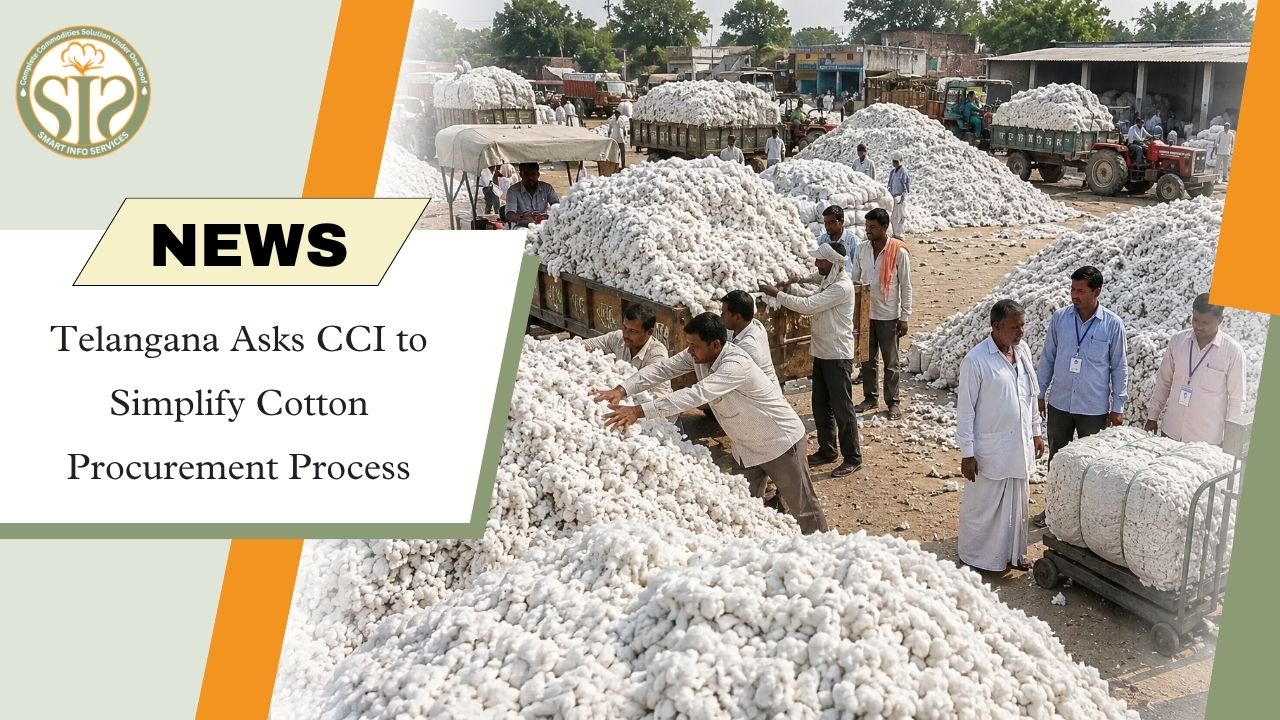
Agriculture Minister S. Niranjan Reddy said that there was a huge demand for the cotton being grown in Telangana and the government has decided to establish a cotton research centre at Adilab

Agriculture Minister S. Niranjan Reddy said that there was a huge demand for the cotton being grown in Telangana and the government has decided to establish a cotton research centre at Adilabad.Similarly the government has also decided to establish redgram seed research centre at Tandur in Vikarabad district.Disclosing these details at a review meeting here on Tuesday, Mr. Niranjan Reddy said that agriculture is one of the fields which creats more employment and hence the government has been taking all steps to strengthen it.“We have to identify the technology that will be useful for our agriculture. Focus should be on crop colonies like banana, potato, chilly, cotton seed, redgram and other vegetables. We have to take steps to grow vegetables not only surrounding Hyderabad but also in the towns and corporations across the state,” said Mr. Niranjan Reddy adding that it was decided to constitute a committee to continuously monitor the cultivation of oil palm in scientific manner.The Minister said that additional land would be acquired for oil fed factory at Aswaraopet, land would be acquired for a factory at Vensur in Khammam district, factory at Beechupally will be transformed as oil palm factory, another two factories would be established at Siddipet and Mahabubabad.“Four factories will become operational in the next six months. Oil palm cultivation will be taken up in about 20 lakh acres in the next four years. It was also decided to increase the potato cultivation in the state and cold storage facility will be increased for storing potato seed. It was decided to hand over the 10 acres of land in Koheda market to the warehousing corporation for the construction of cold storage,” said Mr. Niranjan Reddy stating that while the national average in agriculture development was 8.5 per cent it was 15.8 per cent in Telangana.

Related News

Youtube Videos

🔥 आज के कपास और रुई के ताज़ा भाव | Cotton Rate Today | Kapas Bhav | Cotton Market 7 Oct 2026
🔥 आज के कपास और रुई के ताज़ा भाव | Cotton Rate Today | Kapa...
🔥 आज के कपास और रुई के ताज़ा भाव | Cotton Rate Today | Kapas Bhav | Cotton Market 6 Oct 2026
🔥 आज के कपास और रुई के ताज़ा भाव | Cotton Rate Today | Kapa...
आज देशभर में रुई के भाव 😱 | नए कपास सीजन का ताज़ा अपडेट | Cotton Market Rate Today 5 Oct 2026
आज देशभर में रुई के भाव 😱 | नए कपास सीजन का ताज़ा अपडेट | C...
Application Download
Whatsapp Contact