Filter

Recent News

Garment exporters under pressure from US tariffs, AEPC chief seeks relief and budget support

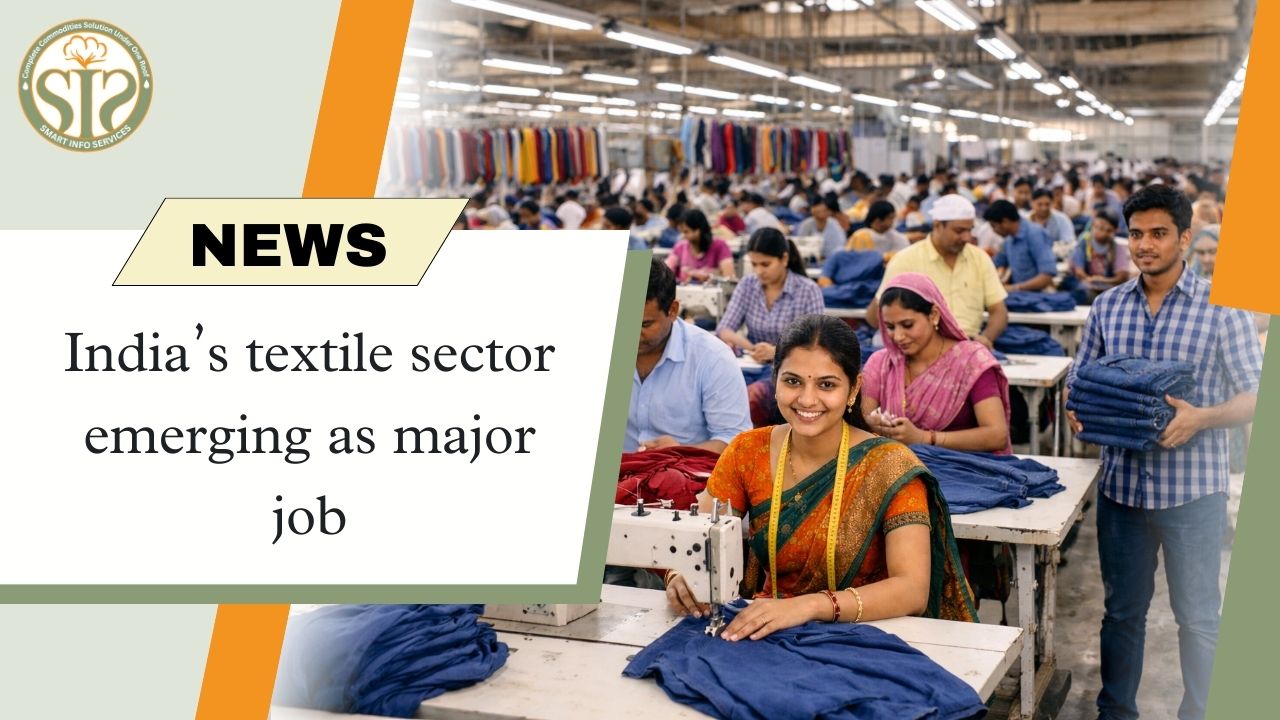
New AEPC chief seeks trade relief, Budget support as US tariff squeezes apparel exportersA Sakthivel, Founder of Tiruppur-based Poppys Knitwear Pvt Ltd, is considered the father of the apparel industry. With over five decades in the industry, he assumed charge as Chairman of the Apparel Export Promotion Council (AEPC) on Tuesday for a record fifth term. In his first interview to a media house after taking over as Chairman, Sakthivel shares with businessline his views on how US tariffs are affecting textile exporters, besides a host of other topics.The US tariff is the biggest issue currently facing the textiles industry. How is the industry going to handle it if this prolongs?The industry is making efforts to diversify export markets beyond the US, especially towards Russia, Japan, South Korea, Chile, and South Africa. The recently concluded FTAs with the UK, New Zealand and Oman will help exporters diversify into these markets and improve the global position of the Indian apparel industry.The industry is also intensifying efforts to scale efficiencies, higher value-added product manufacturing, and fast-tracking sustainability compliance in line with global buyer requirements. This will partially offset the tariff burden. Engagement with the Government is ongoing to seek appropriate trade reliefs and targeted market-linked support schemes to neutralise the tariff disadvantage faced by Indian exporters.The industry is strongly advocating expeditious conclusion of the India–US Bilateral Trade Agreement negotiations to achieve a long-term resolution to the tariff issue.Has the industry accepted the increased US tariffs?The industry has not accepted the increased tariff as a permanent reality, but is managing pragmatically in the short term. India faces a 50 per cent tariff - higher than Bangladesh, Vietnam (20 per cent), and Cambodia/ Indonesia/ Malaysia (19 per cent).What is your primary agenda as chairman of AEPC?The foremost will be product and market diversification. We need to promote export of man-made fibre garments for which global demand is high and we have a scant share. India’s apparel export is highly cotton-centric and its apparel exports are largely concentrated in the US, EU, and UK.We need to diversify exports towards non-conventional and non-traditional destinations. The focus will be on making Indian apparel exports sustainable, especially in view of recent and upcoming EU regulations around sustainability.What is the industry’s demand from the Union Budget?The industry wishes for strengthening interest subvention under the Export Promotion Mission, including enhancement of the interest subvention rate from 2.75 per cent to 5 per cent and relaxation of the current annual value cap of ₹50 lakh per year, to ease credit constraints for MSME exporters.We need reintroduction of a concessional tax rate of 15 per cent under the Income Tax Act to incentivise new manufacturing companies and boost investments in the sector. We need provision of accelerated depreciation benefits for apparel exporters to strengthen the liquidity position and global competitiveness of Indian exporters.The loan moratorium falling due between September 1 and December 31, 2025 must be extended. The industry wants introduction of a new Technology Upgradation Scheme focused on micro units in the MSME segment, in view of the expiry of ATUFS and the non-coverage of micro enterprises under the PLI scheme, to stimulate capital upgradation.The industry in Tiruppur is the worst affected. Hailing from Tiruppur, is there anything that you wish to do for your hometown?Given the inability to compete on price in the short run, Tiruppur exporters are encouraged to leverage their strong sustainability, compliance, and responsible manufacturing credentials as key differentiators.Tiruppur is known as the knitwear capital of India. This is the right time to transform it into the apparel capital of India through greater product diversification across all apparel categories, including woven products.We will encourage Tiruppur manufacturers to establish factories to make swimwear, pullovers and jerseys, brassieres and sportswear.read more :- Sharp jump in cotton imports from zero duty window


Sharp jump in cotton imports from zero duty window

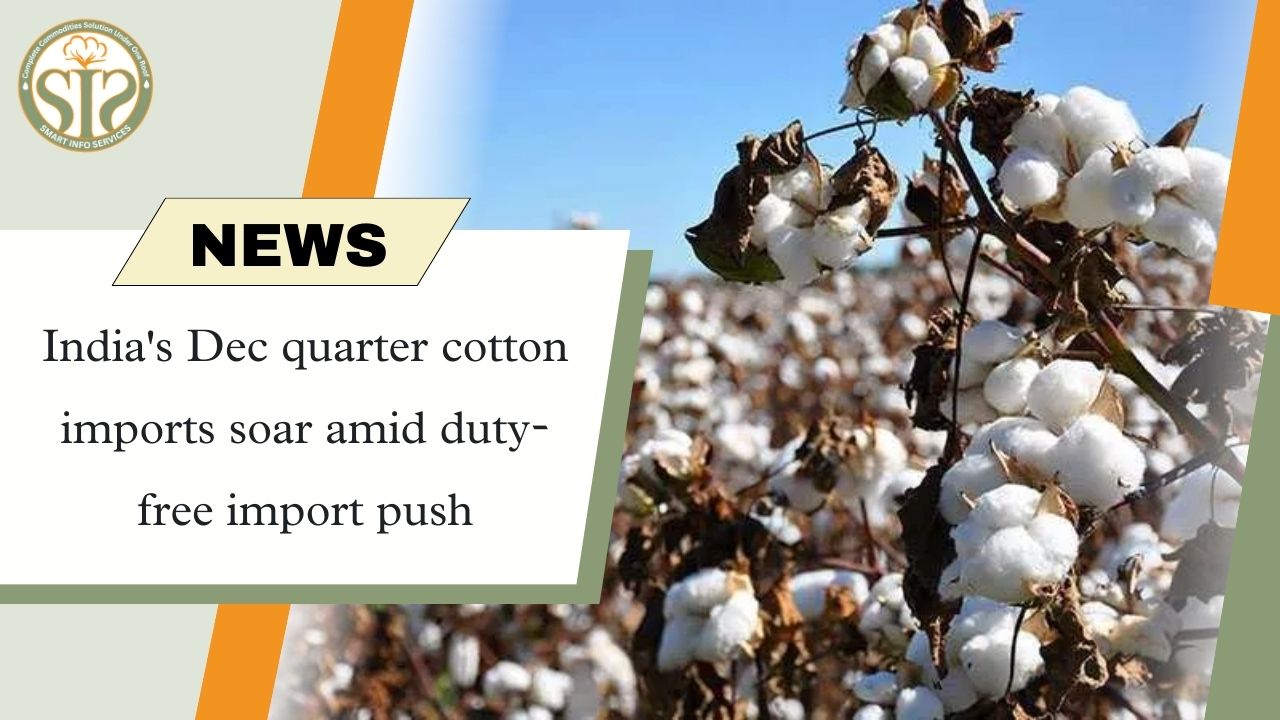
Cotton imports zoom as traders reap zero duty window benefit.India imported cotton at a record pace, procuring nearly 3 million bales in the December quarter, as buyers rushed to take advantage of the duty-free window till the year-end.This could lead to a second consecutive year of record imports in FY26 amid lower domestic production, rain-damaged crop quality, and higher local prices.Trade bodies, global merchants, and textile mills estimate that total imports during the October-September cotton marketing season could reach 5-6 million bales, depending on government policy, US tariffs, and trade pacts with the EU and the UK.Acting on a longstanding demand from the cotton textile and yarn industry, the government scrapped a 11% import duty on cotton from August 19 till December 31. The industry had anticipated shortages as the area under cotton cultivation has been declining for the past two years.Cotton acreage fell 3.5% in kharif 2025 from the year earlier, adding to a sharper 9.5% decline in kharif 2024 over 2023."The top 10 mills in the country have covered their cotton requirements until May or June through imports," said Atul Ganatra, chairman, Radhalakshmi Group and former president of the Cotton Association of India (CAI).In addition to the strong imports in the first quarter of the cotton marketing year, the industry expects another 2-3 million bales to be imported in the rest of the year.A key reason is the widespread damage to the quality of Indian cotton due to adverse weather conditions. "The quality of at least 50% of this year's cotton production has been affected, which is reflected in parameters such as strength and shine," said K Selvaraju, secretary general of the Southern India Mills Association (SIMA).Export commitments require specific grades of cotton that are contamination-free and of extra- long staple (ELS), for which India depends on imports. "We will import 300,000 bales of Australian cotton between June and August. At least 500,000 bales of duty-free extra-long staple cotton will be imported by September to meet our normal demand for this variety. More than 500,000 bales may also come from Africa, which attracts lower duties," said Ganatra.Cotton imported by processing mills for their captive consumption attracts only 4% import duty. Large mills can import at lower effective duties when domestic prices remain higher than international prices.Meanwhile, state-owned Cotton Corporation of India (CCI) is holding more than 20% of this year's crop through price support procurement at the minimum support price.read more :-Bangladesh proposes safeguard tariff on Indian cotton yarn imports

Bangladesh Considers 20% Safeguard Duty on Indian Cotton Yarn Imports

Bangladesh Textile Industry Seeks Safeguard Duty on Indian Cotton Yarn ImportsNagpur: Bangladesh’s textile industry is pushing for the imposition of a 20% safeguard tariff on imports of cotton yarn, blended yarn, and grey mélange from India. The proposal comes amid political and economic uncertainty ahead of elections, with industry players seeking protection for domestic manufacturers.A safeguard tariff is a temporary duty imposed to shield local industries from rising imports. According to reports, a note by a foreign trade research officer in Bangladesh has been circulated among key authorities, including the trade and tariff commission and commerce ministry, recommending the duty. The matter was discussed in a meeting held on January 5, although no official decision has been announced yet.The development has raised concerns in India, particularly among textile manufacturers in regions like Vidarbha, where a significant portion of yarn production is exported to Bangladesh. Industry leaders warn that such a move could deal a double blow—impacting both yarn exports and domestic cotton prices.The timing is critical, as India recently reinstated an 11% import duty on raw cotton from January 1, after temporarily lifting it in August. While the earlier duty relaxation allowed cheaper imports and supported the textile sector, the reimposition has already pushed domestic cotton prices closer to the Minimum Support Price (MSP) of ₹8,110 per quintal for premium grades.Higher cotton costs are squeezing margins for Indian textile manufacturers. If Bangladesh goes ahead with the safeguard tariff, it could further weaken India’s export competitiveness in a key market.According to industry estimates, nearly 30% of yarn produced in Vidarbha—around 3,000 tonnes per month—is exported to Bangladesh, with about 45 manufacturing units dependent on this trade. Any disruption could lead to a surplus in the domestic market, potentially dragging down yarn and cotton prices.The demand for a safeguard duty in Bangladesh is reportedly linked to misuse of duty-free import provisions. Certain licensed importers were allowed to import yarn from India duty-free, provided it was used for export-oriented garment production. However, authorities found that some firms diverted these inputs to produce garments for the domestic market, distorting trade practices.Industry experts believe that any tariff imposition could significantly alter trade dynamics between the two countries, affecting both textile exports and the broader cotton value chain.Read More :- Rupee opens 07 paise down at 89.95

Cotton prices firm: End of import duty exemption, impact of Bangladesh tariffs?

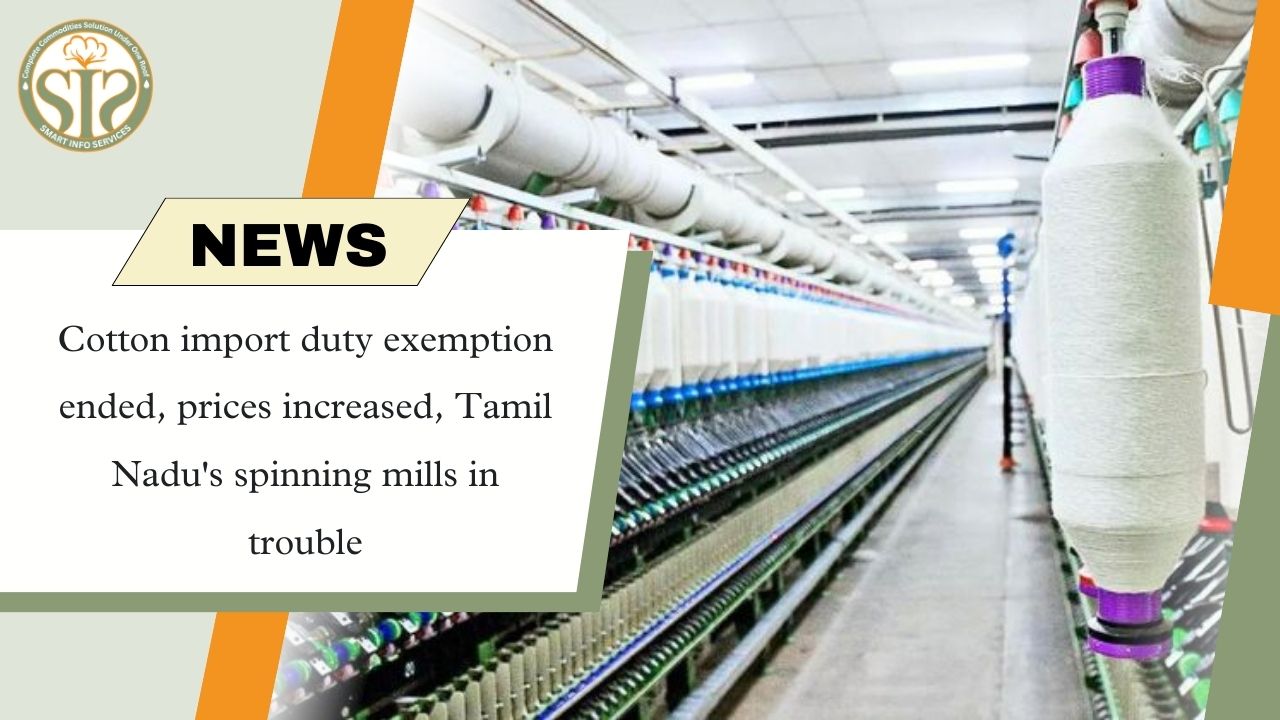
Cotton Prices: Cotton Prices Strengthen After Import Duty Exemption Ends; Will Bangladesh's Tariff Plans Have an Impact?Cotton prices have improved in major markets across the country after the import duty exemption on raw cotton expired on December 31.  According to trade sources, raw cotton prices have increased by Rs 400 to 500 per quintal in different markets. Despite this increase, prices still remain below the Minimum Support Price (MSP) of Rs 8,100 per quintal.Meanwhile, a new concern is emerging for the Indian cotton and yarn market from Bangladesh. Bangladesh, which has been the largest buyer of Indian yarn for the past few years, is now considering imposing tariffs on imports to protect its domestic yarn producers. The Bangladesh Trade and Tariff Commission recently discussed a proposal to impose a 20 percent duty on yarn imports in a meeting, although no official announcement has been made yet.Apprehension of Impact on Indian Yarn ExportsAccording to Atul Ganatra, former president of the Cotton Association of India, if Bangladesh imposes a duty on yarn imports, it will directly impact India's domestic yarn market. India exports approximately 30 percent of its total yarn production, while domestic consumption accounts for about 70 percent. Bangladesh is a major importer of Indian yarn, and a tariff there could reduce the competitiveness of Indian yarn. Trade sources believe that Bangladesh might impose a duty of between 10 and 20 percent. This would increase the landed cost of Indian yarn, making it more expensive in the Bangladeshi market.Improvement in Domestic Market PricesAfter the expiry of the import duty exemption, prices have increased in several cotton-producing regions of the country. According to Ramanuj Das Boobh, a sourcing agent from Raichur, raw cotton prices have risen to Rs 8,000 per quintal, compared to around Rs 7,500-7,600 a week ago. Meanwhile, pressed cotton prices have also increased by ₹1,000 to ₹1,500 per candy (356 kg). He said this is an opportune time for the Cotton Corporation of India (CCI) to announce the price for the 2025-26 crop, as any delay could lead mills to enter into more import contracts.Procurement and Stock SituationThe government agency, Cotton Corporation of India (CCI), is actively procuring cotton at the Minimum Support Price (MSP) and has so far purchased over 68 lakh bales. Prices have also increased by ₹400–500 per quintal in the Khandesh region of Maharashtra. According to Pradeep Jain, founder president of the Khandesh Gin Press Factory Owners Association, approximately 40 percent of the crop in the region has arrived in the markets, while the remaining crop is being held back by farmers, and harvesting is complete.2024-25 Crop Almost Sold OutAkola-based broker Arun Khetan said that the CCI has sold almost the entire 2024-25 season's crop and now has less than three lakh bales in stock. The market expects the CCI to announce a price of around ₹57,000 per candy for the 2025-26 crop.read more :- Rupee opens steady at 90.17 /USD

Indonesia's move: Cotton imports provide relief to the textile industry.

Indonesia protects domestic textile sector from cotton import surge.he Indonesian government’s new policy, which was signed on 22 December, aims to implement safeguard measures when a rise in imports could pose a serious threat to domestic producers, according to local news publication Jakarta Globe ID.This follows the Indonesian Trade Safeguard Committee (KPPI) carrying out an investigation, which suggested that rising cotton woven fabrics had already impacted the country’s local textile sector.The Bea Masuk Tindakan Pengamanan (BMTP) duty will be on top of existing import duties, including most-favoured-nation rates and preferential tariffs under international trade agreements.It is expected to be applied for three years with a declining tariff each year. In the first year, duties will range from Rp3,000 ($0.18) to Rp3,300 per metre based on tariff classification. In the second year, the rate will be Rp2,800-Rp3,100 per metre, and in the final year it will be Rp2,600-Rp2,900.Imports that come from 122 developing countries that are WTO members will be excluded. This includes Malaysia, Thailand, the Philippines, as well as some countries in Africa and Latin America.The publication points out that if the origin requirements are not met, or if a retroactive verification is still underway, the imported products will remain subject to the safeguard duty in accordance with its rules.read more:-  Cotton prices surge in the global market.

Related News

Youtube Videos

जानिए आज का कपास बाज़ार? 😱 Cotton Market Rate Today #kapasbajar
जानिए आज का कपास बाज़ार? 😱 Cotton Market Rate Today #kapasba...
ऐसा रहा आज कपास बाज़ार 😱 राजस्थान कपास बुआई | Cotton Market 22 July
ऐसा रहा आज कपास बाज़ार 😱 राजस्थान कपास बुआई | Cotton Market...
कपास बाज़ार में आज क्या हुआ? 😱 Cotton Market Rate 21 July 2026
कपास बाज़ार में आज क्या हुआ? 😱 Cotton Market Rate 21 July 2...
कैसा रहा आज का कपास बाज़ार? 😱 Cotton Market Rate Today | 20 July 2026
कैसा रहा आज का कपास बाज़ार? 😱 Cotton Market Rate Today | 20...
इस हफ्ते कपास में तेज़ी या मंदी? 😱 CCI ने बेचीं 3.18 लाख गांठें | Weekly Cotton Market
इस हफ्ते कपास में तेज़ी या मंदी? 😱 CCI ने बेचीं 3.18 लाख गा...
Cotton rate today: आज के कपास के भाव 🤔 #kapas  #youtube
Cotton rate today: आज के कपास के भाव 🤔 #kapas #youtube
रुई बाज़ार में आज तेज़ी का रुख 😱 CCI ने बेचीं 40,000+ गठानें #kapas
रुई बाज़ार में आज तेज़ी का रुख 😱 CCI ने बेचीं 40,000+ गठानें...
ऐसा रहा आज कपास बाज़ार 😱  राजस्थान कपास बुआई | Cotton Market 15 July
ऐसा रहा आज कपास बाज़ार 😱 राजस्थान कपास बुआई | Cotton Marke...
कपास की कीमतों में उछाल 😱 Cotton market rate today #kapasnabhav
कपास की कीमतों में उछाल 😱 Cotton market rate today #kapasna...
CCI Update: आज कितनी रुई गठानें बिकीं? 😱 Cotton market price today
CCI Update: आज कितनी रुई गठानें बिकीं? 😱 Cotton market pric...
साप्ताहिक कपास बाजार में तेज़ी 😱 Weekly cotton market review #kapas
साप्ताहिक कपास बाजार में तेज़ी 😱 Weekly cotton market review...
जानिए आज का कपास बाज़ार 😱 Cotton market rate today #kapas
कपास की कीमतों में उछाल 😱 Cotton market rate today #kapas
रुई बाज़ार में आज तेज़ी का रुख 😱 CCI ने बेचीं  70,000+ गठानें  #kapas
रुई बाज़ार में आज तेज़ी का रुख 😱 CCI ने बेचीं 70,000+ गठानें...
कैसा रहा आज का कपास बाज़ार? 😱 | Cotton Market Rate Today | 06 July 2026
कैसा रहा आज का कपास बाज़ार? 😱 | Cotton Market Rate Today |...
Application Download
Whatsapp Contact