STAY UPDATED WITH COTTON UPDATES ON WHATSAPP AT AS LOW AS 6/- PER DAY
Start Your 7 Days Free Trial TodayMaharashtra: daily arrivals at the market of 30,000 quintals of cottonCurrently, 30,000 to 32,000 quintals of cotton are arriving in the country's markets every day, which is less than last season. Experts believe that due to the decrease in the arrival of cotton, its prices are improving.Last year, in early October, six to seven thousand bales of cotton were being imported into the country every day, but this year this figure is much less. The main reason for this is the decrease in cotton cultivation in North India this year. Currently, cotton is being imported only from North India, while cotton picking has started recently in states like Gujarat and Madhya Pradesh. Due to this, the arrival of cotton is low across the country, due to which there is no huge fall in prices. In the next seven to eight days, the arrival of cotton may increase to 50,000 to 55,000 quintals, and it is likely to increase further in November. However, farmers have very low stock of cotton at this time.The arrival of cotton is still low in Khandesh and other parts of the state, due to which the purchase of cotton has not started in the villages. Differences in cotton prices are being seen in different states and regions. The price of quality cotton in Khandesh is currently Rs 8,100 per quintal, while new cotton is being purchased at the rate of Rs 7,500 per quintal.Low stock with farmersAt present, cotton imports in the country have come to a standstill, and farmers have also not yet started storing cotton on a large scale. Due to drought conditions this year, cotton production per acre has been limited to only 80 kg to one quintal. Apart from this, heavy rains in Maharashtra, Gujarat and Madhya Pradesh have also damaged the cotton crop, which has seen a decline in production.Read More :- India braces for above – average rains, rising temperatures in October
Early trading has the rupee flattening at 83.96 against the US dollar.Rupee paused its slide and traded flat at 83.96 against the US dollar in early deals on Friday amid retreating crude oil prices and a weak American currency against major Asian rivals.Read More :> India braces for above – average rains, rising temperatures in October
October will bring above-average precipitation and temperatures in IndiaIndia is likely to receive above average rainfall in October after unusually high volumes for the past three months, a senior weather department official said on Tuesday, which could damage summer-sown crops ready for harvesting.October's rainfall is projected at more than 115% of the 50-year average, said Mrutyunjay Mohapatra, director-general of the India Meteorological Department (IMD).Farmers have begun harvesting summer-sown crops such as rice, cotton, soybeans, corn, and pulses. Rainfall during this period could disrupt the harvesting and damage the crops.Even in September above-average rainfall, arising from a delayed monsoon withdrawal, damaged some summer-sown crops in certain regions of India.India received 11.6% more rainfall than average in September, following 9% and 15.3% above-average rainfall in July and August respectively, the IMD data showed.The weather department is predicting heavy rain in the first half of October, right when most farmers are harvesting their crops. This has farmers really worried," said a Mumbai-based dealer with a global trade house.However, the rains in October may also enhance soil moisture, benefiting the planting of winter-sown crops such as wheat, rapeseed, and chickpea.The withdrawal of the monsoon started nearly a week later than usual this year, but it is likely to fully withdraw from the country around mid-October, Mohapatra said.India's annual June-September monsoon provides almost 70% of the rain it needs to water farms and replenish reservoirs and aquifers, and is the lifeblood of a nearly $3.5 trillion economy. Without irrigation, nearly half of Indian farmland depends on the rains that usually run from June to September.In October, maximum and minimum temperatures in most parts of the country are likely to be above normal, Mohapatra said.Read More :- ICF Appeals to Centre to Remove Cotton Import Duty
This evening, the rupee fell 15 paise to settle at 83.97 against the US dollarAt the close of trading, the BSE Sensex plunged 1,769.19 points or 2.10 per cent to close at 82,497.10. The NSE's 50-share index, Nifty, fell 546.80 points or 2.12 per cent to close at 25,250.10.Read More :- Vidarbha Cotton Association Seeks Mandi Cess Waiver and GST on Cotton Seed Cake (khal)
The Vidarbha Cotton Association wants GST on cotton seed cake (khal) and a waiver of the mandi cess.The Vidarbha Cotton Association (VCA), representing farmers and ginners in the region, has called attention to key issues affecting the cotton industry. During Union Textile Minister Giriraj Singh’s recent visit to Nagpur, the association submitted a charter of demands outlining their concerns.One of the main requests is for the waiver of the mandi cess on cotton, particularly for cotton transported directly to factories without passing through mandi premises. The VCA argued that farmers receive minimal benefits from mandi services in such cases, as all necessary transactions occur at the factory. The association claims that this mandi tax, which varies across different mandis, imposes an unnecessary burden on farmers, leading to reduced cotton prices. "Waiving the mandi cess would enable farmers to secure better prices for their cotton, thereby improving their income," the letter stated.Additionally, the VCA is advocating for the imposition of a 4% GST on cotton seed cake. Currently exempt from GST, cotton seed cake is a key input in agriculture and animal husbandry, but its tax-free status complicates tax procedures for businesses. The association believes that imposing a 4% GST would streamline tax operations, promote transparency, and align with a more unified tax structure.* The VCA also pointed out that the absence of GST on cotton seed cake triggers the reverse charge mechanism (RCM) on cotton, creating cash flow challenges for traders and ginners, who face reduced working capital after paying GST under RCM. Introducing a 4% GST on cotton seed cake would eliminate the need for RCM on cotton, easing financial strain and simplifying operations for traders and ginners, according to the association.Read More :- Bumper arrival of cotton in Khargone market, farmers got price up to Rs 7250
The rupee fell 11 paise to open at 83.93 against the dollar in early tradeRupee opened at 83.91 per dollar in early trade at the Interbank Foreign Exchange market. After initial deals, it reached 83.93 per dollar, which shows a decline of 11 paise from the previous close price.Read More :- ICF Appeals to Centre to Remove Cotton Import Duty
This evening, the rupee ended the day 3 pip down versus the US dollar at 83.82At the close of trading, the BSE Sensex fell 33.49 points or 0.04 per cent to close at 84,266.29. The NSE's 50-share index, Nifty, fell 13.95 points or 0.054 per cent to close at 25,796.90.Read More :- Bumper arrival of cotton in Khargone market, farmers got price up to Rs 7250
ICF Requests the Center to Eliminate the Import Tax on CottonThe Indian Cotton Federation (ICF), formerly known as the South India Cotton Association, held its 45th Annual General Meeting at GKS Cotton Chambers on September 29, 2024.J. Thulasidharan was re-elected as President of ICF for 2024–2025, with Adhitya Krishna Pathy and P. Nataraj continuing as Vice Presidents. Nishanth A. Asher and Chetan H. Joshi retained their positions as Honourary Secretary and Honourary Joint Secretary, respectively.During the meeting, J. Thulasidharan highlighted that the previous fiscal year was one of the most challenging due to a decline in textile demand. However, the industry is optimistic about the upcoming cotton season (2024–25), expecting higher yields compared to the previous season. Current estimates suggest the cotton crop could range between 330 to 340 lakh bales, which is a significant increase from last year’s figures. Incentives and a rise in the Minimum Support Price (MSP) have encouraged farmers to focus on improving both yield and quality.Thulasidharan pointed out that India’s raw material (cotton) prices are higher than global rates due to the prevailing import duty. He urged the government to address this issue to benefit both farmers and the industry. Lower interest rate financing and securing raw material availability were emphasized as critical for the sector’s growth.He also mentioned that Union Textile Minister Giriraj Singh, during a July 2024 meeting of the Textile Advisory Group (TAG), promised to review the parity between domestic and global cotton prices and explore reintroducing a new strain of BT cotton to enhance yields.Nishanth Asher reiterated that to maintain competitiveness, the Government must play a central role in addressing challenges such as price volatility, supply chain issues, and trade barriers. He emphasized that ICF would continue advocating for policies that support farmers, businesses, and trade.The federation’s primary appeal to the Union Government was to remove the import duty on cotton. Thulasidharan explained, "India's cotton prices are currently higher than global rates due to the import duty. Removing this duty would create a level playing field and help the Indian textile industry grow."Read More :> Bumper arrival of cotton in Khargone market, farmers got price up to Rs 7250
Surge in cotton prices in Khargone market, with farmers receiving up to Rs 7250Khargone: These days, there is a huge arrival of white gold, i.e. cotton in the major cotton market of Madhya Pradesh, due to which the faces of the farmers are blooming. The prices of cotton in the market have reached Rs 7250 per quintal, due to which there is enthusiasm among the farmers. On Monday, a record arrival of 7000 quintals of cotton was recorded in the market, in which high quality cotton was sold at high prices. Other crops like wheat, maize, and soybean also got fair prices, but their arrival was relatively less.Major cultivation of cotton in Khargone districtCotton is cultivated on a large scale in Khargone district, where farmers grow cotton on about 2 lakh 18 thousand hectares of land. According to market sources, on Monday, farmers arrived with 7000 quintals of cotton through 25 bullock carts and 470 other vehicles. The maximum price of high quality cotton was Rs 7250 per quintal, while the minimum price was recorded at Rs 4000 per quintal. The average price of cotton was Rs 5500 per quintal, which gave good income to the farmers.Read More :- Gujarat High Court Nullifies GST Orders on Cotton Seed Oil Cakes
Cotton Seed Oil Cakes: GST Orders are nullified by the Gujarat High CourtThe Gujarat High Court has set aside tax demands related to the supply of cotton seed oil cakes to traders, providing relief to the petitioner, a partnership firm involved in extracting and supplying cotton seed oil cakes.The petitioner argued that the product, known as "khol" in Gujarat, is used exclusively as cattle feed, with no other commercial purpose. However, GST officials rejected this claim during an audit, contending that the GST exemption applied only if the cakes were supplied directly for cattle feed, not for further trade. They claimed the petitioner had failed to prove that the cakes were specifically used as cattle feed, leading to short-payment of GST.The petitioner countered by asserting that it had sold the cakes for cattle feed purposes and was not responsible for verifying their ultimate use after sale. Therefore, it had rightly claimed the GST exemption.The court ruled in favor of the petitioner, stating that the supply to traders alone does not determine GST liability, as the end use of the product was not disputed. The ruling is particularly relevant in light of a government notification issued on September 29, 2017, exempting cotton seed oil cakes from GST. However, authorities had argued that the exemption was not retroactive, as the case involved transactions from an earlier period.Sandeep Sehgal, a tax partner at AKM Global, noted that the decision brings considerable relief to businesses within the cattle feed supply chain, ensuring they can claim GST exemption irrespective of whether the product is supplied to traders or directly to consumers.Read More :> Maharashtra Govt Distributes ₹2,399 Cr As Subsidy To Cotton & Soybean Farmers Ahead Of Assembly Elections
The rupee fell 2 paise to 83.81 against the US dollar in early trade.Mumbai, Oct 1 (PTI) Rupee fell 2 paise to 83.81 against the US dollar in early trade on Tuesday, tracking massive outflow of foreign funds amid volatile global markets.Read More :> India's monsoon rains hit four – year high in boost to crop output
The monsoon rains in India reached a four-year high, increasing crop yieldIndia's monsoon rainfall this year was its highest since 2020, with above-average precipitation for three consecutive months, helping the country recover from last year's drought, the state-run weather department said on Monday.India's annual monsoon provides almost 70% of the rain it needs to water farms and replenish reservoirs and aquifers, and is the lifeblood of a nearly $3.5 trillion economy. Without irrigation, nearly half of Indian farmland depends on the rains that usually run from June to September.Rainfall over the country from June through September was 107.6% of its long period average, the highest since 2020, according to the India Meteorological Department (IMD).India received 11.6% more rainfall than average in September, following 9% and 15.3% above-average rainfall in July and August respectively, the IMD data showed.Above-average rainfall in September, arising from a delayed monsoon withdrawal, damaged some summer-sown crops like rice, cotton, soybean, corn, and pulses in certain regions of India.However, the rains may also enhance soil moisture, benefiting the planting of winter-sown crops such as wheat, rapeseed, and chickpea.India badly needed good rainfall in 2024 after its driest year in five years in 2023, which depleted reservoir levels and trimmed production of some crops. This forced New Delhi to impose curbs on exports of rice, sugar and onions.Rainfall distribution was generally good, which helped farmers expand areas under most crops, said Ashwini Bansod, vice president, commodities research at Phillip Capital India."This means we could have larger harvests of some summer-sown crops, potentially helping the government to relax trade restrictions in certain cases," she said.India on Saturday lifted curbs on exports of non-basmati white rice. That came a day after New Delhi cut export duty on parboiled rice to 10%, buoyed by a new crop in the offing and higher inventories in state warehouses.Read More :- Maharashtra Govt Distributes ₹2,399 Cr As Subsidy To Cotton & Soybean Farmers Ahead Of Assembly Elections
Before the assembly elections, the Maharashtra government distributes ₹2,399 Cr in subsidies to farmers of cotton and soybeansWith the Maharashtra assembly elections a month away, the Mahayuti government is focusing on farm issues, especially cotton and soybean growing farmers. In the cabinet meeting held on Tuesday, the government made a major announcement of distribution of Rs 2399 crores as subsidy to soya-cotton farmers.In the first phase, Rs 2,398 crore 93 lakh rupees are being deposited in the accounts of 49 lakh 50 thousand account holders. A total of Rs 4,194 crores are alloted through the DBT system, out of which Rs 1,548 crore 34 lakh have been provided for cotton and Rs 2,646 crore 34 lakh for soybeans growers. Total 96 lakh account holder farmers will benefit out of this scheme, said state minister Dhananjay Munde."The distribution of subsidies to cotton and soybean farmers for the kharif season of 2023 was launched today (Monday, September 30) in the state cabinet meeting. Chief Minister Eknath Shinde, Deputy Chief Minister Devendra Fadnavis and Ajit Pawar deposited the subsidy in the farmers' accounts online," the chief minister's office informed.Read More :- Cotton farming crisis in Andhra Pradesh: rising costs and falling yields

This evening, the rupee fell 9 paise to settle at 83.79 against the US dollarAt the close of trading, the BSE Sensex fell 1,272.07 points or 1.49 per cent to close at 84,299.78. The NSE's 50-share index, Nifty, fell 368.10 points or 0.41 per cent to close at 25,810.85.Read More :- Cotton farming crisis in Andhra Pradesh: rising costs and falling yields
In early trade, the rupee drops 6 paise to 83.75 against the US dollar.Rupee depreciated 6 paise to 83.75 against the US dollar in early trade on Monday amid negative equity market sentiment and outflow of foreign funds.Read More :>Cotton farming crisis in Andhra Pradesh: rising costs and falling yields
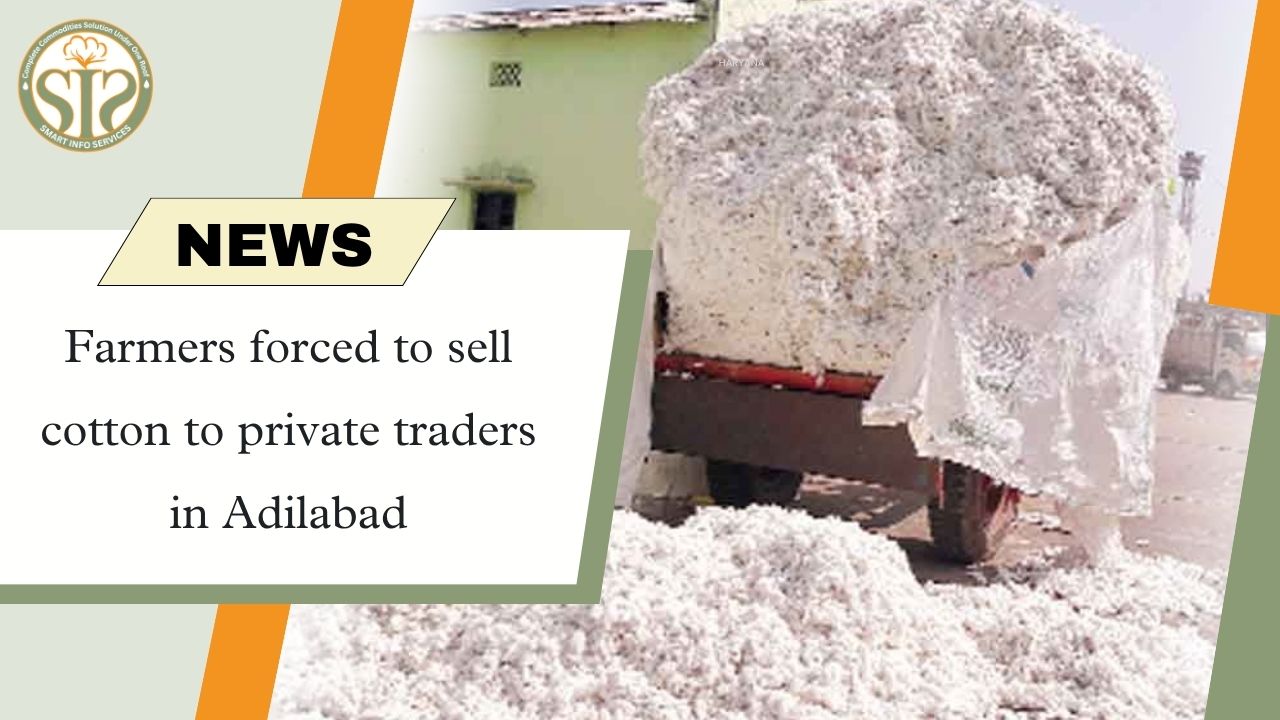
Andhra Pradesh's cotton agricultural crisis: declining yields and growing expendituresFarmers who have been struggling with cotton farming for four consecutive years are still sowing the crop with hope, but due to bad weather and pests, they are continuously suffering losses.Increase in pesticide cost:Infestation of pests on clothes and indiscriminate use of pesticides is increasing the cost of farmers. Cotton yield has decreased due to lack of rain and pest attack, due to which farmers are in debt.Disorganized procurement centersAlthough cotton picking has started, the government has not yet set up procurement centers. Private traders have brought down the prices of cotton to Rs 5,500 to Rs 6,500 per quintal, causing losses to farmers. Farmers have demanded the government to immediately intervene and set up CCI procurement centers.Debt and yield problemsThe cost of cotton cultivation is increasing, while the amount of yield per acre has decreased to only 4-5 quintals. Farmers say that if the price of cotton does not increase, they will have to suffer even bigger losses.Outbreak of Jaju diseaseThe outbreak of Jaju disease has increased on cotton plants, affecting the yield. Cotton leaves are turning red and production is falling drastically. Farmers are worried about this crisis and are demanding help from the government.Read More :> Textile Mills Urge Cotton Corporation of India to Establish Warehouses in Tamil Nadu


| title | Created At | Action |
|---|---|---|
| Maharashtra: 30,000 quintals of cotton arriving in the market every day | 04-10-2024 18:06:33 | view |
| Rupee turns flat at 83.96 against US dollar in early trade | 04-10-2024 17:19:33 | view |
| India braces for above – average rains, rising temperatures in October | 03-10-2024 23:46:26 | view |
| The rupee declined by 15 paise to close at 83.97 against the US dollar this evening | 03-10-2024 23:17:10 | view |
| Vidarbha Cotton Association Seeks Mandi Cess Waiver and GST on Cotton Seed Cake (khal) | 03-10-2024 20:48:44 | view |
| Rupee opened at 83.93 per dollar in early trade, down 11 paise | 03-10-2024 17:25:28 | view |
| The rupee closed 3 paise lower at 83.82 against the US dollar this evening | 01-10-2024 23:31:50 | view |
| ICF Appeals to Centre to Remove Cotton Import Duty | 01-10-2024 19:56:48 | view |
| Bumper arrival of cotton in Khargone market, farmers got price up to Rs 7250 | 01-10-2024 19:04:43 | view |
| Gujarat High Court Nullifies GST Orders on Cotton Seed Oil Cakes | 01-10-2024 18:44:06 | view |
| The rupee fell 2 paise to 83.81 against the US dollar in early trade. | 01-10-2024 17:21:48 | view |
| India's monsoon rains hit four – year high in boost to crop output | 01-10-2024 01:13:26 | view |
| Maharashtra Govt Distributes ₹2,399 Cr As Subsidy To Cotton & Soybean Farmers Ahead Of Assembly Elections | 01-10-2024 00:02:47 | view |
| The rupee declined by 9 paise to close at 83.79 against the US dollar this evening | 30-09-2024 23:30:38 | view |
| Rupee falls 6 paise to 83.75 against US dollar during early trade | 30-09-2024 17:25:40 | view |
| Cotton farming crisis in Andhra Pradesh: rising costs and falling yields | 28-09-2024 18:06:14 | view |