Filter

Recent News

CM will connect Madhya Pradesh cotton farmers with the global market

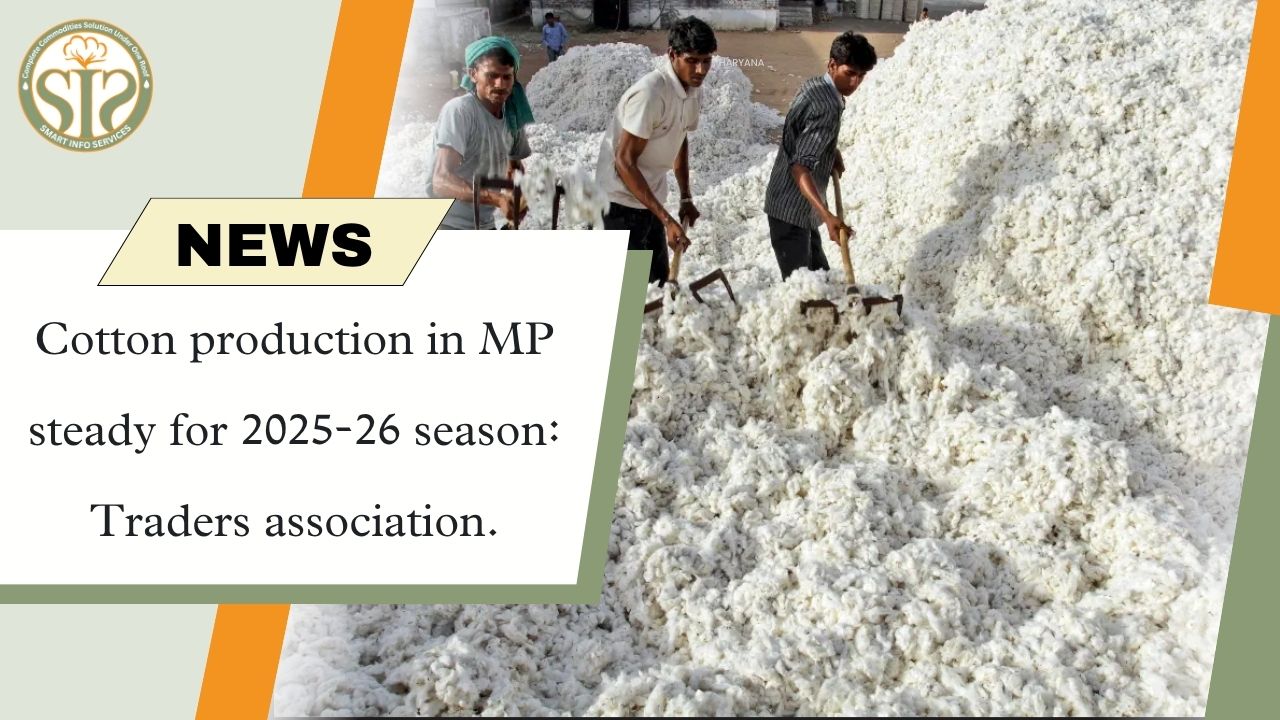
Cotton farmers of Madhya Pradesh will have access to global markets: Chief Minister Dr. Mohan YadavChief Minister Dr. Mohan Yadav has said that Madhya Pradesh is one of the leading states in organic cotton production in India. The state contributes about 40% of the country's total organic cotton production. With the foundation stone of the first PM Mitra Park to be laid by Prime Minister Shri Narendra Modi in Dhar district, Madhya Pradesh is set to become the cotton capital of India.Cotton farmers will now have direct access to international markets. The PM Mitra Park will prove to be a milestone in giving global recognition to the hard work of farmers. Dr. Yadav described it as the foundation of the state's industrial future and a gateway to new opportunities for farmers. Thanks to the visionary leadership of Prime Minister Modi, farmers' produce will now reach global markets directly from the fields and the cotton producing region of Madhya Pradesh will play an important role in this change.According to Chief Minister Dr. Yadav, PM Mitra Park is an industrial project that will transform the lives of farmers, workers, women and youth. Cotton producers will now be directly connected to cotton-based industries, making cotton more than just a crop and becoming the industrial identity of Madhya Pradesh.Madhya Pradesh is one of the top cotton-producing states in the country. The Malwa region—which includes Indore, Dhar, Jhabua, Alirajpur, Khargone, Barwani, Khandwa and Burhanpur—produces the highest amount of cotton. Madhya Pradesh has already gained fame for organic cotton production, making it an extremely suitable state for the textile industry. This is why Dhar was chosen for the PM Mitra Park.PM Mitra Park will have world-class facilitiesSpread over about 2,158 acres, the park is being developed with world-class infrastructure, including: a 20 MLD common effluent treatment plant, a 10 MVA solar power plant, assured supply of water and electricity, modern roads and 81 plug-and-play units.Amenities such as housing for workers and women employees and social infrastructure will make it not only an industrial area but also an ideal industrial township.Investors show interestInvestors have shown deep faith in PM Mitra Park and investment proposals worth a total of ₹27,109 crore have been received so far. This will lead to setting up of industries and create new employment opportunities for the local people. Leading textile organizations and industry groups have shown interest in investing here. This will benefit the state industrially and boost exports.The textiles and apparels produced in Dhar will soon reach the global markets directly. Madhya Pradesh is fast emerging as a textile hub.Theme of the park in line with Prime Minister Modi's visionIn line with the vision of Prime Minister Modi, this park will establish a complete value chain: "From farm to fiber, from factory to fashion and from fashion to overseas."The raw cotton obtained from the farmers will be converted into yarn, then textiles and apparels and finally exported. The entire value chain will be consolidated at one place, making this park unique and a model for others.Employment and economic growthThe PM Mitra Park is expected to generate around 3 lakh jobs, including 1 lakh direct and 2 lakh indirect jobs. The expansion of cotton-based industries will allow farmers to get double the value of their crops. This opportunity will not only create jobs but also boost economic activity in rural areas, boosting everything from local markets to exports.read more :- Rupee opened 01 paisa stronger at 88.26

Maharashtra Kharif: Cotton dominates despite rain

Maharashtra: Kharif crop cultivation: Despite timely rains, cotton continues to dominate Kharif crops.Kharif crop cultivation: Despite timely rains, cotton continues to dominate in Manora. Although traditional Kharif crops have declined, cotton cultivation has increased by 135 percent. Farmers have set a new record by relying on cotton even in late rains. (Kharif crop cultivation)Kharif crop cultivation: Despite the late onset of monsoon, farmers of Manora taluka have focused on cotton cultivation this year. (Kharif Crop Cultivation)Due to lack of timely rains, the area under traditional Kharif crops like tur, soybean, moong, urad, jowar has decreased, but cotton cultivation has reached new peaks. (Kharif Crop Cultivation)Rainfall and crop statusManora taluka has received 830 mm of rain till September 9, which is 116.4% of the average rainfall of this season.The total area sown for Kharif crops was 52,414 hectares, which is more than the average of 51,630 hectares.The area under traditional crops has decreased; however, the area under cotton has increased to 17,072 hectares.Half of the cotton cultivation in the district takes place in Manora.In Washim district, the area under cotton cultivation has increased much more than expected this year.Estimated area in the district – 26 thousand 438 hectaresActual cultivation – 32 thousand 194 hectaresOf this, almost half of the cultivation has been done in Manora taluka alone, i.e. an increase of 135.23 percent.Strategic steps of farmersFarmers were worried due to less rain till the end of June. However, farmers showed courage and sowed cotton based on the available water.The late but good rains boosted the cotton crop, while other crops were affected due to limited area.The confidence of the farmers of Manora taluka in cotton was once again evident. This year's figures show that despite the uncertainty of the weather, cotton is the mainstay of the taluka.read more :- CCI sells 85% cotton through e-bidding, weekly sales 7.74 lakh bales

US tariffs may cause 5-10% drop in textile industry revenue: Crisil

US tariffs to reduce domestic textile industry revenues by 5-10%: Crisil RatingsAccording to a report by Crisil Ratings, the 50 per cent US tariff is likely to result in a 5-10 per cent decline in revenues of domestic textile manufacturers, along with a reduction in operating profitability.The US has imposed a 50 per cent tariff on imports of Indian goods from August 27, including a 25 per cent penalty on buying Russian crude oil. Although US President Donald Trump and Prime Minister Narendra Modi have assured that trade talks are on, no agreement has been reached yet.The domestic textile industry saw a 2-3 per cent growth in exports to the US in the first quarter of the current financial year (Q1 FY26). However, before the imposition of higher tariffs, exports had picked up due to advance loading of some orders.Major share of revenue from exportsExports contribute to at least three-fourths of the domestic textile industry's revenue. The total market size of the industry is estimated to be ₹81,000 crore in FY25E, up from ₹75,000 crore in FY24. Of this, exports to the US stood at ₹26,000 crore (estimated) in FY25E, up from ₹25,000 crore in the same period last year.The impact of tariffs on the industry is likely to be more pronounced as exports to the US exceed exports to other countries. Exports to other countries stood at ₹23,000 crore in FY25E, up from ₹20,000 crore in FY24.. Crisil analysed 40 home textile companies that account for 40-45 per cent of industry revenues.Maintaining competitive edgeAccording to the report, these three factors could cushion the blow:Sales growth during April-August 2025Diversification into alternative geographiesLimited capacities from competing countries such as China, Pakistan and TurkeyAdditionally, a debt-free balance sheet would partially offset the impact on the credit profile, the report said.Manish Gupta, deputy chief rating officer, Crisil Ratings, said, "With limited capacity to manufacture cotton-based home textile products in competing countries, India should be able to maintain its competitive position in the US market in the near future. This should limit the decline in overall industry revenue to 5-10 per cent in FY26."UK, EU emerge as alternative marketsGrowing trade with the European Union (EU) and the United Kingdom (UK) will help manufacturers offset lower purchases in the US, the report said. These geographies contributed nearly 13 per cent of India's domestic textile exports in FY25.India recently signed its free trade agreement with the UK and is in the final stages of negotiations with the EU.Goutam Shahi, director, Crisil Ratings, said, "It will take time to ramp up revenues from alternate export destinations. Meanwhile, operating profitability on exports to the US may decline sharply in the remainder of this fiscal year, as Indian exporters absorb some part of the higher duties and some expected slowdown in demand from the US due to inflation."read more :- Textile-apparel sector dependent on domestic consumption: SIMA
Textile-apparel sector dependent on domestic consumption: SIMA

Domestic consumption, key for Indian textile and apparel sector, says SIMADomestic consumption of textiles and apparel is expected to play a critical role in managing the “temporary dip” in exports to the US because of 50% Trump tariff, said the newly-elected chairman of the Southern India Mills Association (SIMA) Durai Palanisamy in a press release on Thursday.Though the recent U.S. tariffs have created notable challenges, the industry remains optimistic. Currently, the U.S. accounts for nearly 28% of India’s total textile exports, valued at around $ 11 billion.The industry is actively working with the government to explore new market opportunities and diversify its export base. With continued policy support, rationalisation of tax structures and strategic market access initiatives, the industry is confident of sustaining momentum both in domestic and global markets, he said.Domestic consumption of textiles and apparel is expected to play a critical role in managing the “temporary dip” in exports to the US because of 50% Trump tariff, said the newly-elected chairman of the Southern India Mills Association (SIMA) Durai Palanisamy in a press release on Thursday.Though the recent U.S. tariffs have created notable challenges, the industry remains optimistic. Currently, the U.S. accounts for nearly 28% of India’s total textile exports, valued at around $ 11 billion.The industry is actively working with the government to explore new market opportunities and diversify its export base. With continued policy support, rationalisation of tax structures and strategic market access initiatives, the industry is confident of sustaining momentum both in domestic and global markets, he said.Accumulation of GST at 18% on textile machinery continues to be a significant burden for the highly capital-intensive textile industry, severely impacting working capital and new investments in the absence of the Technology Upgradation Scheme. Resolving this issue, along with addressing the challenges arising from the implementation of Quality Control Orders on MMF and its products, are critical to enhance the industry’s competitiveness, he said.The next-generation industry leaders to explore emerging global markets and focus on manufacturing innovative products using MMF, Mr. Palanisamy added.Durai Palanisamy, Executive Director of Pallava Textiles, was elected chairman of the SIMA for 2025-2026 at the 66th annual meeting of the association held in Coimbatore on September 11.S. Krishnakumar, Managing Director, Sulochana Cotton Spinning Mills, Tiruppur, was elected deputy chairman of the association, and K Sivaraj, Managing Director, Sivaraj Spinning Mills, Dindigul, was elected the vice-chairman of the association.At the annual meeting of the SIMA Cotton Development and Research Association (SIMA CDRA) held on Thursday, S.K. Sundararaman, Managing Director, Shiva Texyarn, Coimbatore was re-elected as its chairman for 2025-2026. Durai Palanisamy, Executive Director, Pallava Textiles, Erode, and S. Krishnakumar, Managing Director, Sulochana Cotton Spinning Mills, Tiruppur, were re-elected as deputy chairman and vice-chairman respectively.read more :- INR Opens Stronger by 04 Paise at 88.40

"Ministry of Textiles Meeting–MSME Exporters Cooperation".

Meeting Summary – Ministry of Textiles, New DelhiAn important meeting was held at the Ministry of Textiles, New Delhi, under the chairmanship of Secretary Mrs. Padmini Singla. The meeting was attended by Mr. Latil Gupta, Chairman of the Cotton Corporation of India (CCI), along with representatives of ginners’ associations from major cotton-producing states across the country.During the meeting, Mrs. Singla listened carefully to the industry’s suggestions and concerns and presented a positive and visionary outlook. Most of the issues related to ginners were discussed in detail, while it was noted that some matters require further deliberation.Key outcomes of the meeting:1. CCI will review cotton lint standards and make them more practical.2. The provisions related to blacklisting will be largely removed.3. Fresh tenders will be issued based on revised and updated conditions.4. Ginners’ associations have been requested to present a draft framework for the evaluation of L1 and other bidders.The meeting proved to be highly productive and was appreciated by all stakeholders. Notably, for the first time, various ginners’ associations from across the country came together on one platform to collectively present their issues and suggestions.Associations that participated in the meeting:* Maharashtra Cotton Ginners Association* Vidarbha Cotton Association* Marathwada Cotton Association* Khandesh Cotton Association* Telangana Cotton Association* Saurashtra Cotton Association* North India Cotton Association* Upper Rajasthan Cotton Association* Madhyanchal Cotton Association* Punjab Cotton Association* Haryana Cotton Association* Odisha Cotton Association* Andhra Pradesh Cotton AssociationAll associations praised the leadership and visionary approach of Mrs. Padmini Singla. The attending representatives believed that this meeting was a reassuring and significant step toward concrete solutions for the industry.read more :-

Cotton stock at 5-year high in 2025-26

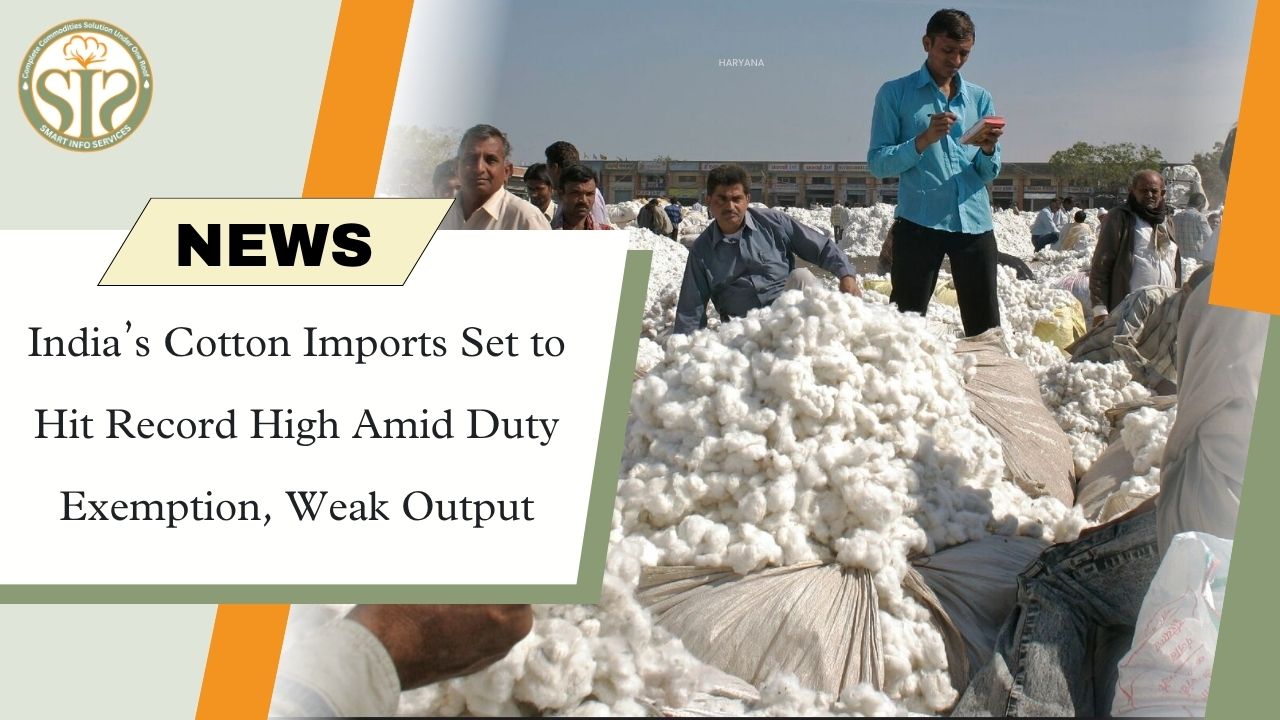
India’s carry-forward cotton stocks for 2025-26 seen at 5 year high of 60.69 lakh balesIndia’s cotton carry-forward stocks for the new season 2025-26 starting October are estimated at 60.59 lakh bales of 170 kg each, the highest in five years. Cotton stocks at the beginning of the current 2024-25 season ending September stood at 39.19 lakh bales.“The increase in closing stocks is mainly on account of higher imports of 41 lakh bales over last year’s 15 lakh bales. Also, the opening stocks are the highest after Covid year 2020-21 during which it was around 120 lakh bales,” Atul S Ganatra, President, Cotton Association of India (CAI), told businessline.The government has recently removed the 11 per cent import duty on cotton till the year-end to help textiles sector deal with the US tariff issue. “We expect around 20 lakh bales to be imported during the October-December quarter,” Ganatra said.For the current 2024-25 season, CAI has revised upwards the imports by 2 lakh bales from its earlier projections to 41 lakh bales after the gGovernment removed the import duty. The cotton imports for the 2024-25 season are higher by about 25.80 lakh bales over the previous year’s 15.20 lakh bales. Up to August 31, 36.75 lakh bales are estimated to have arrived at the Indian ports, Ganatra said For the 2024-25 season, CAI has revised the cotton pressing numbers by one lakh bales to 312.40 lakh bales, based on the latest report submitted by the upcountry associations and trade sources. About 307.09 lakh bales have already arrived till August and balance 5.31 lakh bales are expected during September. The pressing estimates in Maharashtra have been increased by 1 lakh bales to 91 lakh bales, and in Andhra Pradesh by 0.5 lakh bales to 12.5 lakh bales. However, in Telangana, the pressing estimate have been reduced by 0.5 lakh bales to 49 lakh bales.CAI has maintained the consumption estimate at 314 lakh bales for 2024-25, same as projected previously. The consumption till August was estimated at 286 lakh bales.The exports for the 2024-25 season are projected at 18 lakh bales, lower by 10.36 lakh bales over previous year’s 28.36 lakh bales.read more:- Book slots for cotton sale through the app, get rid of crowd in the market

Related News

Youtube Videos

साप्ताहिक कपास बाजार में तेज़ी 😱 CCI ने बेचे 2 लाख+ बेल्स | Weekly Cotton Market 25 July 2026
साप्ताहिक कपास बाजार में तेज़ी 😱 CCI ने बेचे 2 लाख+ बेल्स |...
आज देशभर में रुई के भाव 😱 Cotton Market Rate Today #kapasbajar
आज देशभर में रुई के भाव 😱 Cotton Market Rate Today #kapasba...
जानिए आज का कपास बाज़ार? 😱 Cotton Market Rate Today #kapasbajar
जानिए आज का कपास बाज़ार? 😱 Cotton Market Rate Today #kapasba...
ऐसा रहा आज कपास बाज़ार 😱 राजस्थान कपास बुआई | Cotton Market 22 July
ऐसा रहा आज कपास बाज़ार 😱 राजस्थान कपास बुआई | Cotton Market...
कपास बाज़ार में आज क्या हुआ? 😱 Cotton Market Rate 21 July 2026
कपास बाज़ार में आज क्या हुआ? 😱 Cotton Market Rate 21 July 2...
कैसा रहा आज का कपास बाज़ार? 😱 Cotton Market Rate Today | 20 July 2026
कैसा रहा आज का कपास बाज़ार? 😱 Cotton Market Rate Today | 20...
इस हफ्ते कपास में तेज़ी या मंदी? 😱 CCI ने बेचीं 3.18 लाख गांठें | Weekly Cotton Market
इस हफ्ते कपास में तेज़ी या मंदी? 😱 CCI ने बेचीं 3.18 लाख गा...
Cotton rate today: आज के कपास के भाव 🤔 #kapas  #youtube
Cotton rate today: आज के कपास के भाव 🤔 #kapas #youtube
रुई बाज़ार में आज तेज़ी का रुख 😱 CCI ने बेचीं 40,000+ गठानें #kapas
रुई बाज़ार में आज तेज़ी का रुख 😱 CCI ने बेचीं 40,000+ गठानें...
ऐसा रहा आज कपास बाज़ार 😱  राजस्थान कपास बुआई | Cotton Market 15 July
ऐसा रहा आज कपास बाज़ार 😱 राजस्थान कपास बुआई | Cotton Marke...
कपास की कीमतों में उछाल 😱 Cotton market rate today #kapasnabhav
कपास की कीमतों में उछाल 😱 Cotton market rate today #kapasna...
CCI Update: आज कितनी रुई गठानें बिकीं? 😱 Cotton market price today
CCI Update: आज कितनी रुई गठानें बिकीं? 😱 Cotton market pric...
साप्ताहिक कपास बाजार में तेज़ी 😱 Weekly cotton market review #kapas
साप्ताहिक कपास बाजार में तेज़ी 😱 Weekly cotton market review...
जानिए आज का कपास बाज़ार 😱 Cotton market rate today #kapas
कपास की कीमतों में उछाल 😱 Cotton market rate today #kapas
Application Download
Whatsapp Contact