Filter

Recent News

Tariff crisis: Textile orders worth Rs 40 billion cancelled in Tirupur

Existence of textile exporters in danger due to tariff; Tirupur most affected, orders worth Rs 40 billion cancelledThe 50 per cent tariff imposed by the US has increased the difficulties of the Indian textile industry. Exporters are not able to bear the impact of the tariff. In such a situation, the textile industry needs immediate incentives. According to the report of MK Research, the earlier imposed tariff has led to a decline in the margins of the textile industry. The additional tariff will further reduce the margins of the industry, which is struggling to remain competitive in the global markets.According to the report, the textile industry is not getting new orders from the US due to high tariffs. Old orders are also being cancelled, due to which inventory is increasing. In such a situation, government help is necessary for the industry and especially micro, small and medium enterprises (MSMEs), because their books are not as strong as those of large exporters. The industry needs fiscal incentives to bear the tariff shock and remain relevant in the global supply chain. If necessary steps are not taken immediately, not only will the existence of small companies be in danger, but a large number of jobs will also be lost.Tirupur most affected, orders worth Rs 40 billion cancelledThe Tirupur cluster, which has a 55-60 percent share in the country's knitwear exports, is badly affected by the tariff. Clothes worth about Rs 700 billion are exported from here. Due to the tariff, orders worth about Rs 40 billion that Tirupur used to get from the US have been cancelled.India has about four percent share in the global textile market, which is much less than Bangladesh (13 percent) and Vietnam (9 percent).Pressure due to these reasons tooPayments are getting delayed by US retailers.Rising inventory has created additional pressure on domestic companies.MSMEs are extremely vulnerable to barriers in international trade.Due to implementation challenges in free trade agreements, its full benefit is not being received.Tirupur most affected, orders worth Rs 40 billion cancelledThe Tirupur cluster, which has a 55-60 percent share in the country's knitwear exports, is badly affected by the tariff. Clothes worth about Rs 700 billion are exported from here. Due to tariffs, Tirupur has lost orders worth about Rs 40 billion from the US.India has a share of about four per cent in the global textile market, which is much less than Bangladesh (13 per cent) and Vietnam (9 per cent).There is also pressure due to these reasons* Payments are getting delayed by US retailers.* Rising inventory has created additional pressure on domestic companies.* MSMEs are extremely vulnerable to barriers in international trade.* Full benefits are not being reaped due to implementation challenges in free trade agreements.read more:-  Rupee open Falls 02 Paise to 88.13/USD

*Interview of Sanchit Rajpal, ED of Manjit Cotton, on CNBC Awaaz*

*Interview of Sanchit Rajpal, ED of Manjit Cotton, on CNBC Awaaz**Reduction in cotton sowing** Cotton sowing in 2024-25: 112.13 lakh hectares* Estimated in 2025-26: 109.17 lakh hectaresThat is, there has been a decline of about 3% in sowing.*India's situation and yield*Today, about 50 countries of the world grow cotton.* India is number 1 in area, but in terms of productivity (yield) we come at 35th place.* The average production in India is 600 kg / hectare, whereas in China, Brazil and America it has reached 2500–2800 kg / hectare.The main reason for this is that till now only 3-4 generations of BT seeds are being used in India, whereas the world has reached 6-7 generations today.Therefore, it is very important to bring new seeds and technology to increase production. This will not only increase productivity, but farmers will also be attracted towards cotton cultivation.*Impact on global market and export** Cotton prices have been under pressure for the last few years.* Global demand remained weak and the situation worsened due to tariff war.* India once used to export up to 20% of its production, but today the situation has changed and it has started depending on imports.*Impact of prices and MSP** MSP (minimum support price) in India is a support for farmers, but it affects the industry.* Due to high MSP, the industry has to buy expensive cotton, whereas cotton is available cheaper in the international market.* This is the reason why textile exports slowed down and countries like Bangladesh got a competitive edge.*Cotton vs Man-made fiber** Tensil, bamboo and other man-made fibers are now rapidly emerging as alternatives in the market.* Man-made fibers are more consistent than cotton.* Still, the global trend is towards sustainability and hence cotton is expected to remain important.*Forward Outlook** Given the current conditions—such as tariffs, mill conditions and global demand—cotton prices are likely to remain under pressure in the near future.read more :- INR drop 11 Paise, Closes at 88.11 per Dollar
Cotton prices fell: Farmers' problems increased

Cotton Market: Cotton prices will make farmers cry; consequences before the season starts?Cotton Market: The central government has decided to reduce the import duty on cotton from 11 percent to zero by December 31. This will benefit the textile industry, but farmers will be disappointed once again. Cotton prices are likely to remain at the guaranteed price this season. (Cotton Market)Results before the cotton season starts?The central government has taken this decision with one month left for the cotton season to start.This exemption has been given so that the textile industry can get cheap cotton. However, it is clear that this will not boost domestic cotton, but will lead to a fall in prices.Effects of zeroing import dutyTraders will import cheap cotton from abroad instead of buying from the domestic market.This will reduce the demand for our cotton.As a result, farmers will not get the expected prices and prices will fall in the cotton market.This year's guaranteed priceLong-strand cotton: 7,710 to 8,110 per quintal.To get this price, farmers have to sell cotton at CCI (Cotton Corporation of India) procurement center.It is also mandatory for farmers to keep a record of the cotton sown in their fields.Cotton prices in the last 5 yearsAnnual average price (₹/quintal)2021 12,0002022 8,0202023 7,0202024 7,5212025 8,110It is clear from the above data that after 2021, cotton prices have fallen continuously and this year too farmers will not get much relief.Picture of cotton sowing in the districtThis year cotton has been sown in about 3 lakh hectares.Compared to last year, there has been a decrease of about 1 lakh hectare in cotton cultivation.There is a continuous decline in the cotton acreage due to farmers not getting the expected price.The decision of the Central Government to make the import duty on cotton zero will reduce the domestic demand. As a result, prices will fall. Farmers will have to sell cotton at the CCI procurement center. - Rajendra Shelke Patil, Farmer, DhamoriThe textile industry will benefit from the abolition of import duty. They will be able to import good goods at a lower price. However, due to this, the ginning industry is likely to collapse. - Rasdeep Singh Chawla, Secretary, Maharashtra Ginning AssociationThere is already pressure on the prices of cotton, in such a situation, this decision of the Central Government will increase the problems of the farmers. The textile industry will get relief, but farmers may have to face disappointment once again.read more :-  Cotton prices fell: Farmers' problems increased
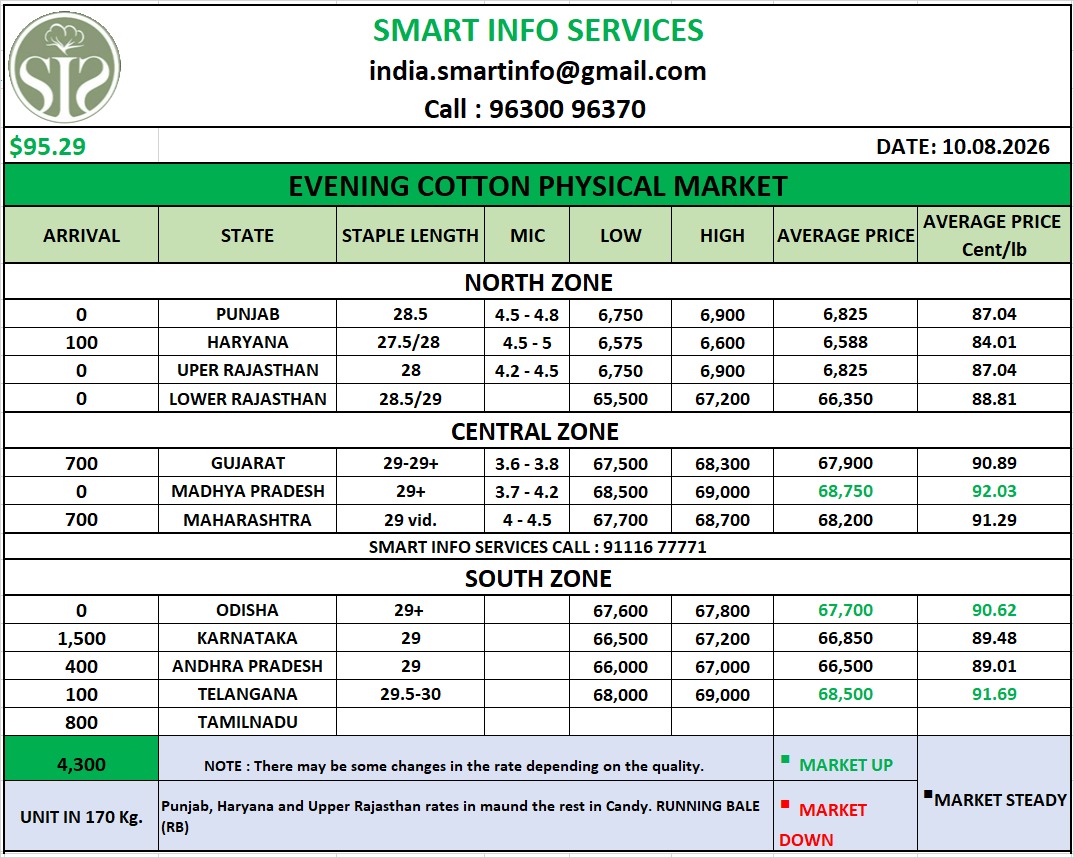
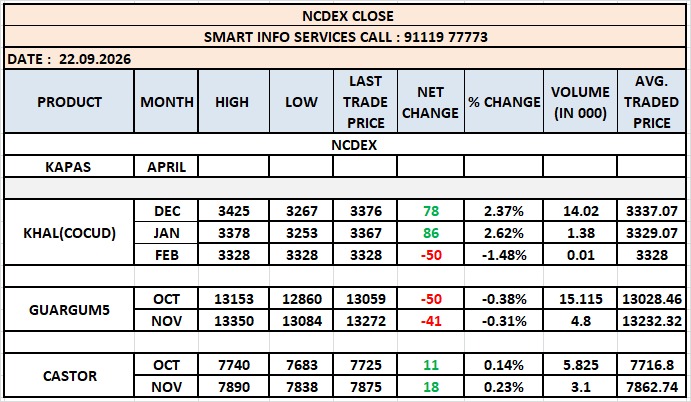


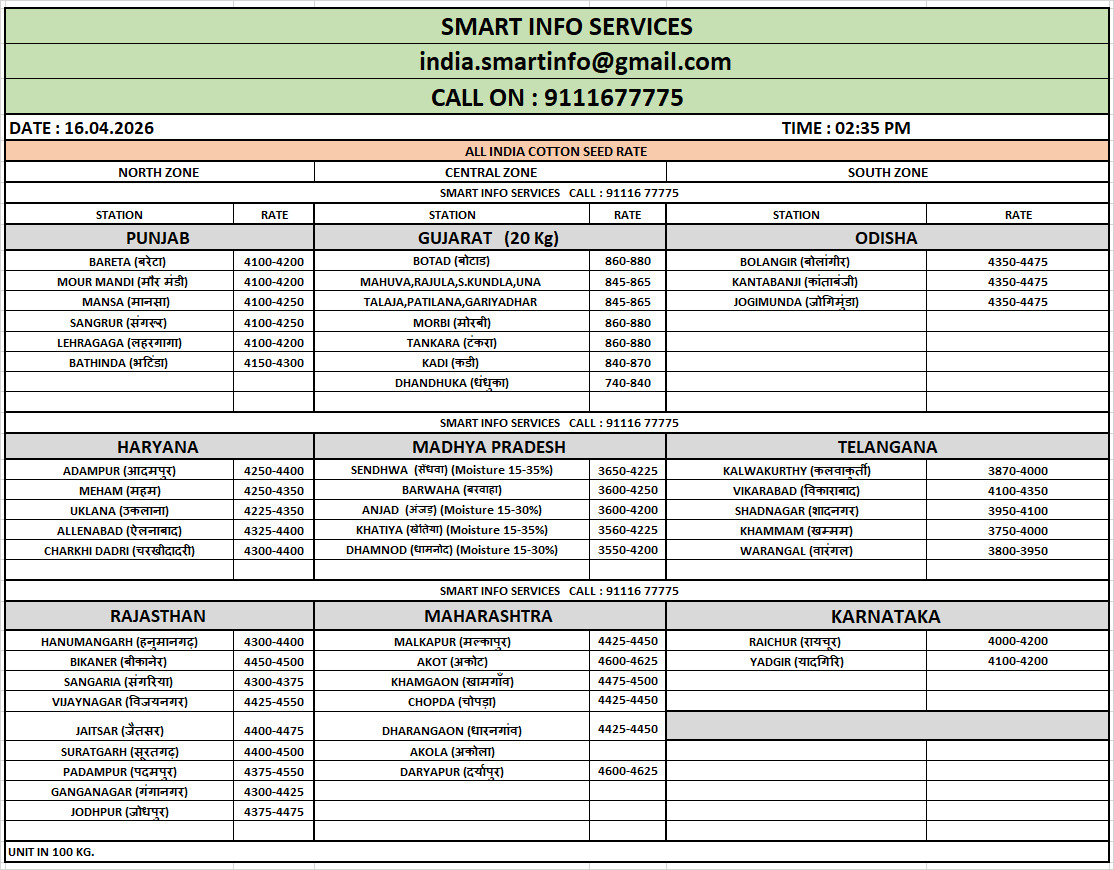
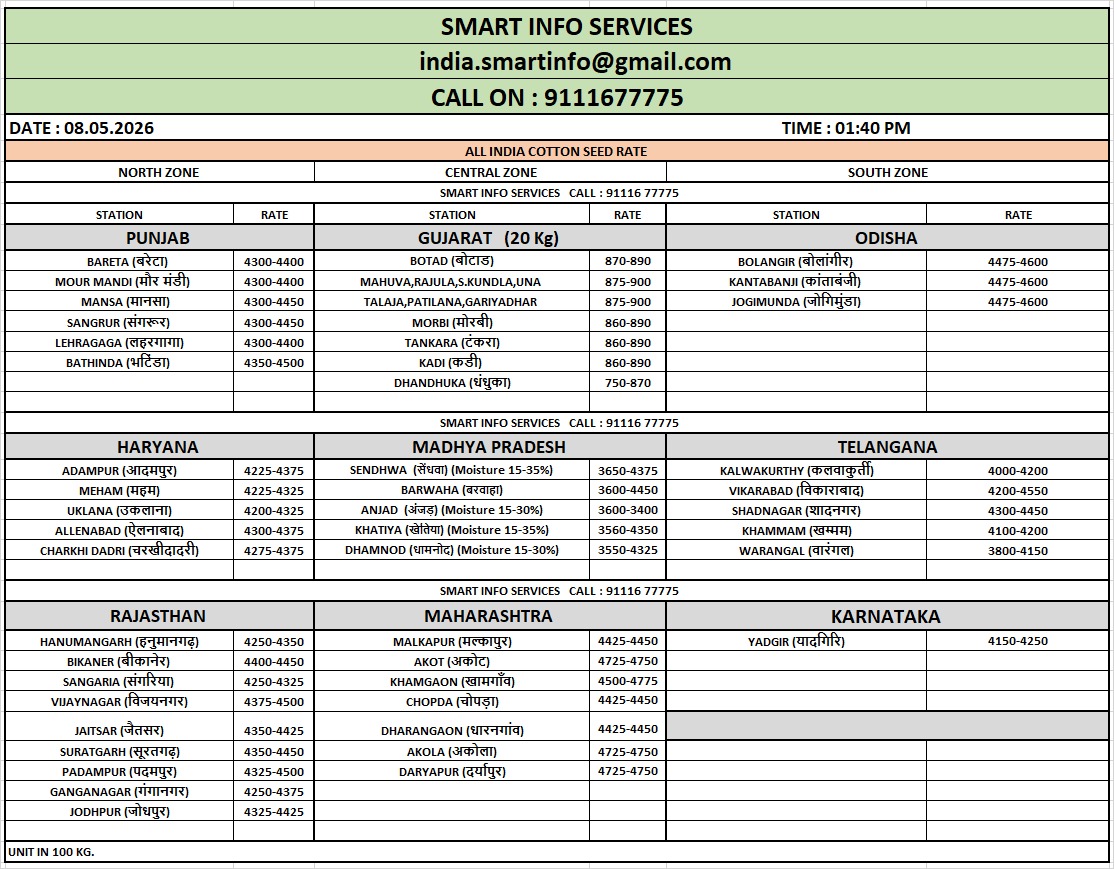
India lags behind Vietnam-Bangladesh in US textile imports

India trails Vietnam and Bangladesh in US textile import growth US textile and apparel imports from India grew more slowly than from Vietnam and Bangladesh during January–July 2025, according to a comparative analysis by the Confederation of Indian Textile Industry (CITI) based on the latest OTEXA trade data.Imports from Bangladesh increased by 21.1 per cent in the first seven months of this year, and from Vietnam by 17.7 per cent, while imports from India rose by 11.4 per cent. In contrast, US imports from China saw a sharp decline of 19.9 per cent during the same period.CITI noted that in July 2025, US imports from Vietnam and Bangladesh rose by 14.2 per cent and 5.2 per cent, respectively, over July 2024. While growth momentum moderated compared to June 2025, both countries continued to strengthen their market position in the US.According to trade data, US imports from Vietnam increased to $1.86 billion in July 2025 from $1.63 billion in July 2024. Overall imports from Vietnam grew to $10.41 billion in January–July 2025 compared with $8.84 billion in the corresponding period of last year.US imports from Bangladesh rose 5.2 per cent to $0.750 billion in July 2025 against $0.710 billion in July 2024. Cumulative imports expanded to $5.110 billion during January–July 2025, up from $4.220 billion in the same period last year.In July 2025, imports from India increased 9.1 per cent to $0.860 billion from $0.79 billion in July 2024. Total imports from India grew to $6.220 billion in January–July 2025 compared with $5.58 billion a year earlier.read more:- INR Opens Stronger by 26 Paise at 88.00

India's cotton procurement set to reach record level

Towards a record purchase of cotton in India India’s cotton sowing area has slightly declined this season, but the country is poised to purchase a record quantity of seed cotton (kapas) after an 8.27 per cent increase in the minimum support price (MSP). The government will procure cotton through the Cotton Corporation of India (CCI). With the exemption of import duty until the end of December 2025 keeping prices from rising, farmers will have little choice but to sell to the government.According to the Ministry of Agriculture, India’s cotton sowing area stood at 108.77 lakh hectares as of August 29, 2025, 2.62 per cent lower than 111.39 lakh hectares during the same period last year. The five-year average is 129.50 lakh hectares. Cotton sowing typically begins in May in north India and continues until the third week of September in central states.The ministry estimated cotton production at 306.92 lakh bales of 170 kg each, 5.8 per cent lower than the 2023–24 marketing season. The Cotton Association of India (CAI) projected production at 311.40 lakh bales in its August 2025 report. Lower acreage may reduce production in the 2025–26 marketing season, beginning in October. However, government procurement is expected to remain strong due to current market dynamics. The MSP for medium staple cotton was raised by 8.27 per cent to ₹7,710 per quintal this year.Trade sources noted that while higher MSP benefits farmers, it makes Indian cotton less competitive globally. ICE cotton December 2025 contracts traded at 66.03 US cents per pound, equivalent to ₹45,700 per candy of 356 kg (₹128 per kg). Even after adding import costs, foreign cotton will remain cheaper, while Indian cotton will cost no less than ₹63,000 per candy under the increased MSP.The government recently extended duty-free cotton imports until December 2025, allowing the domestic textile industry continued access to cheaper cotton for an additional three months. The duty removal was initially limited to 40–42 days until the end of September, when the current marketing season ends, but was extended into the new season starting in October, when arrivals will pick up mid-month.Market experts believe duty-free imports during the first three months of the new season will prevent domestic prices from rising. With domestic demand slowing due to cheaper imports, farmers will be compelled to sell to the CCI. Experts estimate procurement may reach 140 lakh bales, around 40 per cent higher than the current season’s 100 lakh bales, setting a new record for government cotton purchases.read more:-  Cotton crisis in Punjab: 20 thousand acres of crop affected due to rain

Cotton crisis in Punjab: 20 thousand acres of crop affected due to rain

Punjab: Cotton in crisis : Incessant rains dampen hope of good crop, 20 thousand acres of cotton affected.The first harvest of cotton has begun in some parts of Punjab, but unfavorable rains for the major kharif crop have left farmers worried about financial losses.According to information received from the field, more than 20,000 acres of land under cultivation have been adversely affected by waterlogging.Wet climatic conditions have exposed the crop to fungal attack, while as the crop moves towards mass harvest, an infestation of the deadly pink bollworm is also looming. Agriculture officials said a good crop was expected, but rains lashed the region, reducing the chances of revival of the cotton crop in the parched Malwa region.Official information revealed that Mansa has been the most rain-affected district, with more than 13,500 acres of cotton crops affected.In Fazilka, 6400 acres of cotton fields have been completely damaged due to waterlogging, while other areas of the Abohar region of the district are also likely to suffer crop loss due to rains in the dry zone.Harpreet Kaur, Chief Agricultural Officer (CAO) of Mansa, said that repeated rains in the last week have affected the cotton crop. Our field teams are advising farmers on damage control, which is in the final stages of harvesting," said Kaur. She added that dewatering of the fields can bring relief only if there is no rain again at this critical juncture.Cotton farmer Jasdeep Singh said, "Rains are becoming a serious threat to the crop." Abohar Agriculture Officer Parminder Singh Dhanju said that more than 6400 acres of cotton has been damaged in Saidanwali, Khuiyan Sarwar, Alamgarh, Dewan Kheda and surrounding areas.Heavy rains on August 4 flooded the sandy fields, killing the plants. "The first harvest of cotton has started and the cotton buds are being attacked by fungus due to the recent rains," Dhanju said.*Minor impact in Bathinda and Muktsar.*According to Chief Agriculture Officer Jagdish Singh, many areas have seen outbreaks of pink gorse and this attack may spread further. The official said that there has been limited impact on the kharif crop due to low rainfall in Bathinda.Prolonged cloudiness has increased its effect, but there has been no widespread adverse effect on the crop. We are hopeful that the cotton crop in the district will be better this time," he said.read more :- Triple threat to Indian agriculture: floods, rains, crop diseases

Triple threat to Indian agriculture: floods, rains, crop diseases

Triple crisis on India's farmland: Punjab, Maharashtra, Madhya Pradesh hit by floods, rains and crop diseasesNew Delhi: India's agricultural heartlands Punjab, Maharashtra and Madhya Pradesh are facing crop destruction due to floods, incessant monsoon rains and viral outbreak on crops.Millions of acres of Kharif crops have been destroyed, leading to urgent demands for financial relief.Floods in Punjab submerge 4 lakh acres of farmland:Punjab Agriculture and Farmers Welfare Minister Mr Gurmeet Singh Khudian has appealed to the Centre for an immediate relief package after over four lakh acres of farmland have been inundated due to floods. Amritsar, Gurdaspur and Kapurthala districts have been the worst affected, where standing paddy crops have suffered the most damage just weeks before harvesting."These floods have caused unprecedented damage to crops, rural infrastructure and livelihoods," Khudian said.Maharashtra reels under monsoon fury:In Maharashtra, incessant monsoon rains between August 15 and 20 inundated about 14.44 lakh hectares of land in 29 districts. Nanded was the worst-affected district, with 6.20 lakh hectares of land inundated, followed by Washim, Yavatmal and Dharashiv. Crops such as soybean, cotton, maize, urad, tur, green gram, vegetables, fruits, bajra, sugarcane, onion, jowar and turmeric have been affected.Soybean crops in Madhya Pradesh under threat from yellow mosaic virus:Madhya Pradesh, India’s leading soybean-producing state, is facing a severe outbreak of yellow mosaic virus (YMV) in Mandsaur and adjoining districts. The infection has affected the health and productivity of crops in several villages, raising concerns about yield losses and regional oilseed production targets for 2025.Impact on Rabi Crop Planning:The destruction of Kharif crops in Punjab, Maharashtra and Madhya Pradesh is expected to accelerate preparations for the upcoming Rabi season. Farmers may quickly start land preparation and sowing to recover from the losses and ensure timely sowing, which will be crucial to maintain production and ensure income. Adequate soil moisture this year will help in timely sowing. Agricultural experts have stressed that careful planning and adequate support measures will be necessary to prevent further losses in the Rabi season.read more:- India's cotton crisis: From big exporter to net importer

India's cotton crisis: From big exporter to net importer

*From large exporter to net importer: India’s looming cotton crisis.*BT cotton, a GM variety once glorified as white gold, has run its course. This lies at the heart of the crunch. It no longer defends against pests.New Delhi: The current summer-sown season will be his last tryst with cotton, a crop that once brought prosperity in his entire village, said Kailash Rao Kadam, a 55-year-old grower from western Maharashtra.Although farmers like him commonly face fluctuations in profits, the lowest prices in three years, which cotton buyers however deem high because the fibre is much cheaper abroad, and a decline in productivity have convinced Kadam to switch to something else.The worsening terms of trade has turned India, a large exporter, into a net importer. Cotton imports this year, at 300,000 bales, have outweighed its exports of 1,700,000 bales. “If I continue with cotton, it will make me a beggar,” Kadam said over the phone from Aurangabad.The popular BT cotton, a genetically-modified variety once glorified as white gold, has run its course. This lies at the heart of the crunch. It no longer defends against pests, having lost its effectiveness over the years, and alternatives are few and far between.Many farmers, especially in Punjab, have switched to desi (traditional) varieties to fend off voracious whiteflies, which can devour whole fields overnight, said Joginder Dhinsa, a grower from Mansa.The crisis has deepened this year because the government has allowed duty-free imports for a four-month period until December to cushion the textile sector, battling losses amid high domestic prices of the fibre. The highly labour-intensive sector is also bracing for the worst impacts of US President Donald Trump’s 50% tariff.A inter-ministerial meeting last week acknowledged the need for a technology breakthrough soon enough and reviewed implementation of a five-year cotton productivity mission worth ₹2500 crore announced by finance minister Nirmala Sitharaman in this year’s Union Budget.The slide in cotton output is alarming. In the 2024-25, the country is expected to produce 29.4 million bales (of 170 kg each), the lowest in more than a decade. At the peak of BT cotton’s successful run in 2013-14, output stood at 39.8 million bales.The cotton productivity mission will focus on developing “climate-smart, pest-resistant, and high-yielding cotton varieties, including extra long Staple (ELS) cotton, using advanced breeding and biotechnology tools”, an official said.“Biotechnology tools” mean India could give a go ahead to an upgraded or next generation home-grown GM technology in cotton, although the government is against allowing transgenic food crops.Notes from the review meet showed that GM upgrades in the pipeline include field trials of a proprietary ‘BioCotX24A1’ transgenic technology of Bioseed Research India Ltd. The company has sought permission for a second round of field trials from Genetic Engineering Assessment Committee, the GM regulator.Another firm, Rasi Seeds Pvt Ltd, has sought clearances for first-stage field trials for a gene that is aimed to give protection against the pink bollworm, the main pest BT cotton was meant to kill.“The government is also looking at modernising 1000 ginning mills to bolster the sector under the plan announced as part of the budget,” an official said.read more :- Modi-Trump increased cooperation

Related News

Youtube Videos

साप्ताहिक कपास बाजार में तेज़ी 😱 CCI ने बेचे 2 लाख+ बेल्स | Weekly Cotton Market 25 July 2026
साप्ताहिक कपास बाजार में तेज़ी 😱 CCI ने बेचे 2 लाख+ बेल्स |...
आज देशभर में रुई के भाव 😱 Cotton Market Rate Today #kapasbajar
आज देशभर में रुई के भाव 😱 Cotton Market Rate Today #kapasba...
जानिए आज का कपास बाज़ार? 😱 Cotton Market Rate Today #kapasbajar
जानिए आज का कपास बाज़ार? 😱 Cotton Market Rate Today #kapasba...
ऐसा रहा आज कपास बाज़ार 😱 राजस्थान कपास बुआई | Cotton Market 22 July
ऐसा रहा आज कपास बाज़ार 😱 राजस्थान कपास बुआई | Cotton Market...
कपास बाज़ार में आज क्या हुआ? 😱 Cotton Market Rate 21 July 2026
कपास बाज़ार में आज क्या हुआ? 😱 Cotton Market Rate 21 July 2...
कैसा रहा आज का कपास बाज़ार? 😱 Cotton Market Rate Today | 20 July 2026
कैसा रहा आज का कपास बाज़ार? 😱 Cotton Market Rate Today | 20...
इस हफ्ते कपास में तेज़ी या मंदी? 😱 CCI ने बेचीं 3.18 लाख गांठें | Weekly Cotton Market
इस हफ्ते कपास में तेज़ी या मंदी? 😱 CCI ने बेचीं 3.18 लाख गा...
Cotton rate today: आज के कपास के भाव 🤔 #kapas  #youtube
Cotton rate today: आज के कपास के भाव 🤔 #kapas #youtube
रुई बाज़ार में आज तेज़ी का रुख 😱 CCI ने बेचीं 40,000+ गठानें #kapas
रुई बाज़ार में आज तेज़ी का रुख 😱 CCI ने बेचीं 40,000+ गठानें...
ऐसा रहा आज कपास बाज़ार 😱  राजस्थान कपास बुआई | Cotton Market 15 July
ऐसा रहा आज कपास बाज़ार 😱 राजस्थान कपास बुआई | Cotton Marke...
कपास की कीमतों में उछाल 😱 Cotton market rate today #kapasnabhav
कपास की कीमतों में उछाल 😱 Cotton market rate today #kapasna...
CCI Update: आज कितनी रुई गठानें बिकीं? 😱 Cotton market price today
CCI Update: आज कितनी रुई गठानें बिकीं? 😱 Cotton market pric...
साप्ताहिक कपास बाजार में तेज़ी 😱 Weekly cotton market review #kapas
साप्ताहिक कपास बाजार में तेज़ी 😱 Weekly cotton market review...
जानिए आज का कपास बाज़ार 😱 Cotton market rate today #kapas
कपास की कीमतों में उछाल 😱 Cotton market rate today #kapas
Application Download
Whatsapp Contact